

Abnormal vaginal bleeding is common and often has a noncancerous explanation, but a new or unexplained change deserves attention. This article focuses on endometrial cancer, the type that begins in the uterine lining and accounts for most uterine cancers, and on the symptoms that help determine whether care should be scheduled promptly or sought immediately. The National Cancer Institute explains the relationship between uterine and endometrial cancer, while symptom patterns still require an individual medical evaluation.
The most useful question is not whether one symptom “looks like cancer.” It is whether the bleeding, discharge, pain, or weakness is different from your usual pattern, keeps returning, or is becoming harder to manage. Symptoms alone cannot confirm uterine cancer, but they can identify a need for gynecologic follow-up or urgent stabilization.
Abnormal Bleeding Is the Main Symptom Patients Should Notice
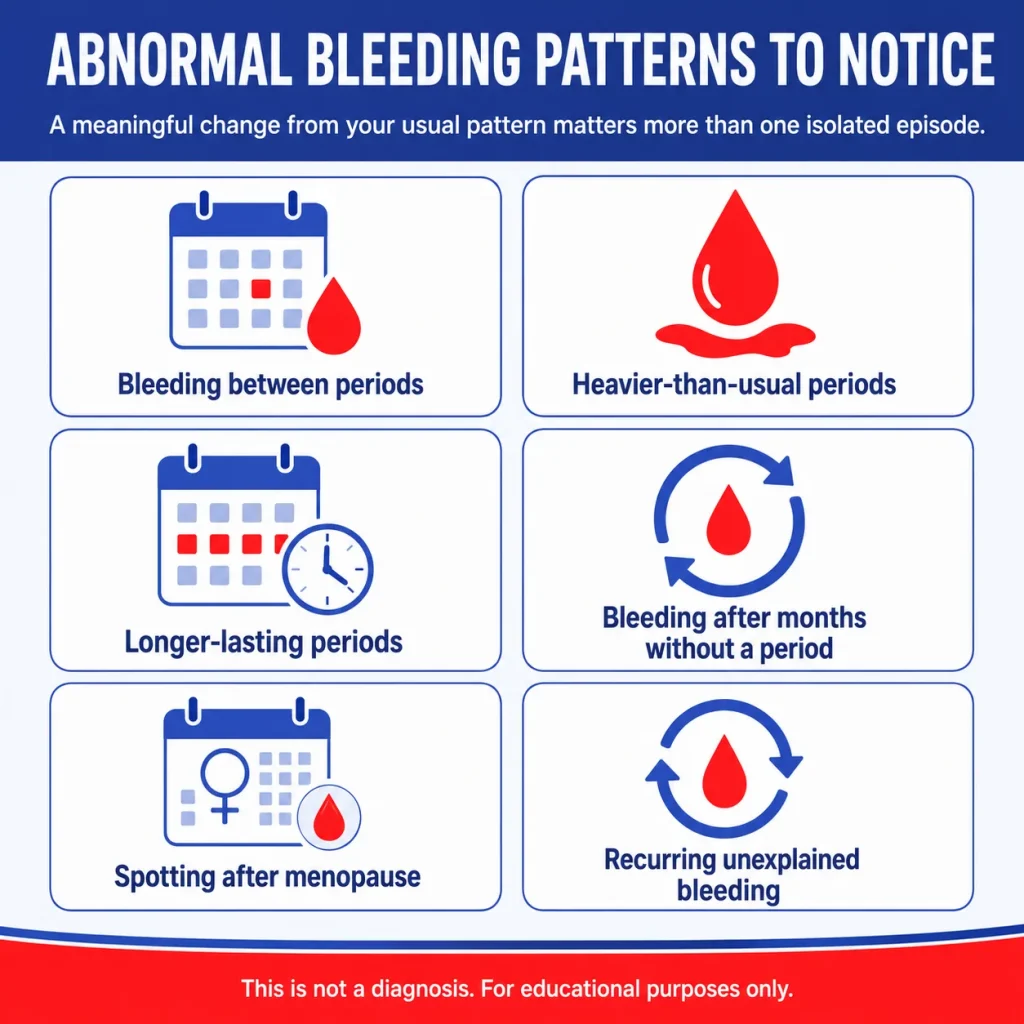
The CDC identifies vaginal bleeding or discharge that is not normal for you as a key uterine cancer symptom. The change may involve timing, amount, duration, or a return of bleeding after periods have stopped. The American Cancer Society notes that abnormal bleeding is the most common symptom of endometrial cancer, although many noncancerous conditions can cause the same pattern.
Changes worth discussing with a medical provider include:
• Bleeding or spotting between menstrual periods
• Periods that become substantially heavier or last longer than usual
• Bleeding that returns after months without a period
• Spotting, bleeding, or blood-tinged discharge after menopause
• Recurring bleeding without a clear explanation
There is no single menstrual pattern that is normal for everyone. What matters is a meaningful change from your baseline, especially when it persists or is accompanied by pelvic symptoms, unusual discharge, or signs of blood loss. For a broader discussion of symptoms that warrant evaluation, see Angleton ER’s guide to cancer warning signs and when to seek care.
Postmenopausal Bleeding Always Deserves Medical Evaluation
Any vaginal bleeding or spotting after menopause should be reported to a medical provider, even if it is light, happens only once, or appears as pink or brown discharge. ACOG advises patients to discuss every episode of bleeding after menopause with an obstetrician-gynecologist because symptoms alone cannot identify the source.
Noncancerous causes are common. Hormone-related tissue thinning, polyps, fibroids, medication effects, or other uterine and vaginal conditions may produce bleeding. The point of evaluation is not to assume cancer; it is to rule out important causes rather than guessing from the amount or appearance of blood. Current ACOG guidance on evaluating postmenopausal bleeding emphasizes prompt assessment, which may include pelvic imaging and sampling of the uterine lining based on the patient’s situation.
Pelvic Pain, Pressure, and Unusual Discharge May Add to the Concern
Abnormal bleeding is the central warning sign, but ongoing pelvic changes can add urgency to follow-up. The CDC also lists pelvic pain or pressure as a possible uterine cancer symptom. These symptoms are nonspecific, which means their location or intensity cannot diagnose the cause.
• Persistent pelvic aching, pressure, or fullness
• Lower-abdominal discomfort that continues or worsens
• Watery, pink, brown, or blood-tinged vaginal discharge
• Pain or pressure that interferes with walking, work, sleep, or ordinary activity
• Bleeding combined with a new, persistent pelvic symptom
A stable symptom may be appropriate for timely outpatient assessment. Severe, rapidly worsening, or disabling pain changes the decision because the immediate concern may be bleeding, infection, a pregnancy-related emergency, or another acute pelvic condition rather than cancer itself.
Heavy Bleeding Can Cause Weakness and Other Blood-Loss Symptoms
Prolonged or substantial bleeding can reduce red blood cells and hemoglobin, leading to anemia or, in severe cases, acute blood-loss symptoms. The National Heart, Lung, and Blood Institute lists tiredness, weakness, paleness, shortness of breath, dizziness, and fainting among common anemia symptoms. A racing or irregular heartbeat can also occur when the body is working harder to deliver oxygen.
Urgency increases when bleeding is accompanied by reduced stamina, lightheadedness, shortness of breath, a fast heartbeat, pale appearance, fainting, or severe weakness. At that point, the immediate question is how the bleeding is affecting circulation and oxygen delivery, regardless of whether a later cancer evaluation finds a malignant cause. Angleton ER’s article on what CBC and ER blood tests can and cannot show about cancer explains the limited but important role of blood counts in assessing anemia and other urgent abnormalities.
When Abnormal Bleeding Needs Emergency Care
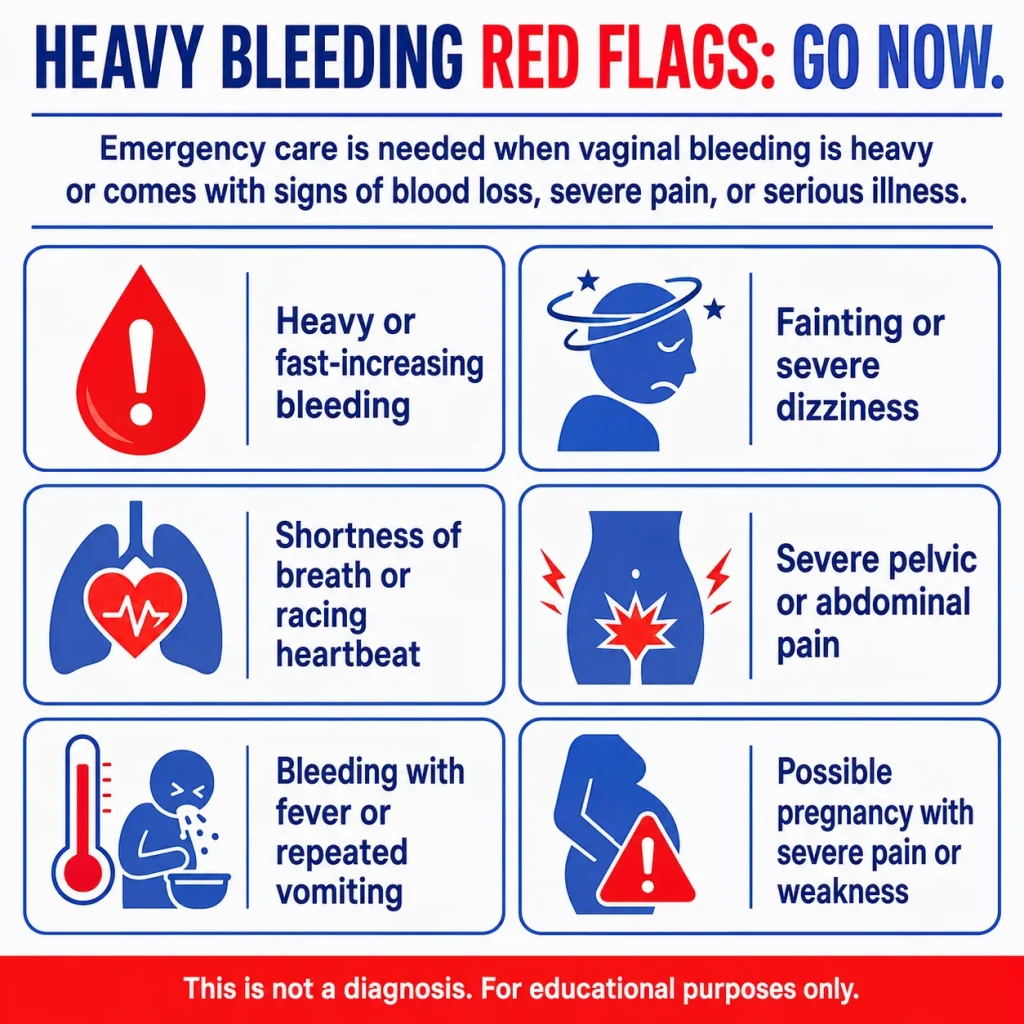
Seek emergency evaluation for:
• Heavy, rapidly increasing, or difficult-to-control vaginal bleeding
• Fainting, confusion, severe dizziness, or pronounced weakness
• Shortness of breath, chest discomfort, or a racing heartbeat with bleeding
• Severe or rapidly worsening pelvic or abdominal pain
• Bleeding with fever, repeated vomiting, dehydration, or feeling seriously ill
• Possible pregnancy with bleeding plus severe pain, faintness, shoulder pain, or weakness
ACOG recommends emergency care when very heavy bleeding occurs with shortness of breath, chest pain, lightheadedness, or dizziness. Do not wait to count an exact number of pads if the bleeding is escalating quickly or you feel unsafe standing, walking, or driving. Call 911 when symptoms are life-threatening or transportation by car would be unsafe.
Arrange timely medical follow-up for:
Postmenopausal spotting, bleeding between periods, persistently heavier or longer periods, recurring unexplained bleeding, unusual discharge, or ongoing pelvic pain when you are otherwise stable. MedlinePlus recommends contacting a provider for unexplained bleeding between periods, any bleeding after menopause, heavy periods, or bleeding accompanied by pelvic pain, fatigue, or dizziness.
What Medical Evaluation May Involve
Evaluation usually begins with details that help identify the bleeding source and urgency: menstrual and menopause history, the amount and timing of bleeding, medications such as blood thinners or hormone therapy, pregnancy possibility when relevant, associated pain or discharge, and symptoms of anemia. A pelvic examination may be performed, and blood testing may be ordered when significant bleeding or blood loss is suspected.
Follow-up may involve pelvic or transvaginal ultrasound, gynecologic assessment, examination of the uterine lining, hysteroscopy, or endometrial tissue sampling. The American Cancer Society describes gynecologic examination, ultrasound, and endometrial sampling among the tests used when endometrial cancer is suspected. Imaging can identify bleeding-related complications or an abnormal area, but it does not by itself prove cancer; Angleton ER’s guide to what CT, ultrasound, and MRI can and cannot show explains that distinction.
Emergency care can assess and stabilize serious bleeding, pain, dehydration, infection concerns, or anemia. A complete uterine-cancer evaluation usually continues through an obstetrician-gynecologist or another appropriate specialist, particularly when tissue sampling or longitudinal follow-up is needed.
Urgent Bleeding and Pelvic Symptoms in Angleton
For women in Angleton and nearby Brazoria County communities, heavy vaginal bleeding with faintness, severe weakness, shortness of breath, intense pelvic pain, or rapidly worsening symptoms should not wait for a scheduled appointment. Angleton ER provides 24/7 emergency evaluation with laboratory testing, IV treatment, monitoring, stabilization, and CT, X-ray, or ultrasound when the ER physician determines imaging is medically appropriate. Stable postmenopausal bleeding or another persistent abnormal bleeding pattern still requires timely follow-up with the appropriate women’s-health provider.
Frequently Asked Questions
Does postmenopausal spotting need to be checked if it happens only once?
Yes. Even one episode of spotting or blood-tinged discharge after menopause should be discussed with a medical provider. The amount is not enough to determine the cause, and evaluation is needed to rule out uterine disease and other conditions.
Can uterine cancer cause bleeding that looks like a regular period?
It can cause bleeding that may be mistaken for a menstrual change, particularly before menopause. New bleeding between periods, a period that becomes unusually heavy or prolonged, or bleeding after months without a period should be evaluated rather than assumed to be a normal cycle variation.
Can fibroids and uterine cancer cause similar symptoms?
Yes. Fibroids and other noncancerous conditions can cause heavy bleeding, pelvic pressure, pain, or prolonged periods. Because symptoms overlap, a medical history, examination, imaging, and sometimes tissue testing are used to identify the cause.
Is watery or blood-tinged vaginal discharge a warning sign?
It can be. Watery, pink, brown, or blood-tinged discharge may have benign causes, but new or recurring discharge, especially after menopause or with bleeding or pelvic pain—should be assessed.
Can abnormal uterine bleeding cause anemia?
Yes. Ongoing or heavy blood loss can lower hemoglobin and cause fatigue, weakness, dizziness, shortness of breath, paleness, or a fast heartbeat. Severe symptoms or active heavy bleeding require urgent evaluation.
Can an emergency room diagnose uterine cancer during one visit?
Usually not definitively. The ER can evaluate heavy bleeding, severe pain, anemia, infection, pregnancy-related emergencies, and other immediate risks, and it may identify findings that need follow-up. Confirming uterine cancer generally requires gynecologic evaluation and tissue sampling.