

Can Blood Tests Show Cancer?
Blood tests can sometimes show signs that something may be wrong in the body, but they usually do not confirm cancer by themselves. A blood test may reveal an abnormal pattern, such as anemia, very high or very low white blood cells, unusual platelet levels, or signs of infection or organ stress. Those results can raise concern and may lead a doctor to recommend more testing.
The important difference is this: blood tests may provide a clue, but most cancers require additional evaluation before anyone can make a diagnosis. That may include a physical exam, imaging, repeat labs, specialist review, or sometimes a biopsy.
Blood tests may show signs that something is wrong
Routine blood work can reveal changes such as:
- Low red blood cells or low hemoglobin
- High or low white blood cells
- High or low platelets
- Signs of infection or inflammation
- Dehydration
- Electrolyte problems
- Liver, kidney, or other organ stress
These findings can be important, but they need medical context. A number that looks abnormal online may have many possible explanations, and some are temporary or unrelated to cancer.
A normal blood test does not always rule out cancer
It is also possible for someone to have cancer and still have normal routine blood work, especially early on or depending on the type of cancer. Some cancers do not affect blood counts until later, while others may cause symptoms before routine labs clearly change.
That is why symptoms, exam findings, medical history, imaging, and follow-up testing matter.
What Is a CBC Blood Test?
A CBC, or complete blood count, is one of the most common blood tests. It looks at the main types of cells in your blood: red blood cells, white blood cells, and platelets. Doctors use a CBC to help evaluate infection, anemia, bleeding concerns, immune changes, and other medical problems.
A CBC can be very useful, but it is not a complete cancer test.
Red blood cells and hemoglobin
Red blood cells carry oxygen through the body. Hemoglobin is the protein inside red blood cells that helps carry that oxygen. When hemoglobin is low, it is often called anemia.
Anemia can cause symptoms such as fatigue, weakness, dizziness, shortness of breath, fast heartbeat, or pale skin. Many things can cause anemia, including iron deficiency, bleeding, inflammation, chronic illness, nutritional deficiencies, or other medical conditions.
Anemia does not automatically mean cancer. But if it is severe, persistent, unexplained, or paired with concerning symptoms, it may need further evaluation.
White blood cells
White blood cells help the body fight infection and respond to inflammation. A white blood cell count may rise during infection, stress, inflammation, medication effects, or other illnesses. It may fall because of certain infections, immune conditions, medications, or blood-related problems.
Very abnormal white blood cell results, especially when paired with symptoms, may need timely medical review. Still, a high or low white blood cell count does not automatically mean cancer.
Platelets
Platelets help blood clot. If platelets are too low, a person may bruise or bleed more easily. If they are too high, the result may reflect inflammation, infection, iron deficiency, or other conditions.
Unusual bruising, bleeding gums, frequent nosebleeds, tiny red or purple spots on the skin, blood in stool or urine, or prolonged bleeding should not be ignored, especially if platelet results are very abnormal.
What CBC Results Can Suggest About Cancer
CBC results can sometimes suggest that further testing is needed. The key word is suggest. A CBC may raise concern, but it usually cannot diagnose most cancers on its own.
Doctors look at the pattern of results, how abnormal the numbers are, whether symptoms are present, and whether the changes are new or ongoing.
Anemia that is unexplained or severe
Anemia may need further evaluation when it is significant, persistent, unexplained, or worsening over time. It can be especially important to seek medical guidance if anemia is paired with symptoms such as:
- Severe fatigue
- Shortness of breath
- Dizziness or fainting
- Blood in the stool
- Black stools
- Vomiting blood
- Unexplained weight loss
- Ongoing abdominal pain
- Heavy or unusual bleeding
Cancer is only one possible cause of anemia. Many non-cancer causes are common. But anemia should not be dismissed when symptoms are severe or when the reason is unclear.
Very abnormal white blood cell counts
White blood cell counts can change for many reasons. Infection is one of the most common causes. However, very high, very low, or unusual white blood cell patterns may require additional testing.
This is especially true if abnormal results are paired with symptoms such as fever, frequent infections, easy bruising, night sweats, swollen lymph nodes, severe weakness, or unexplained weight loss.
A provider may recommend repeat blood work, a closer review of the blood cells, imaging, or specialist follow-up depending on the situation.
Low or abnormal platelet counts
Platelet changes can happen for many reasons, including infection, inflammation, medications, immune conditions, iron deficiency, or blood-related disorders. Platelet results are more concerning when they are very abnormal or when symptoms are present.
Patterns matter more than one number
One abnormal result does not tell the whole story. Providers look at the full picture, including:
- Your symptoms
- Your medical history
- Physical exam findings
- How abnormal the result is
- Whether the result is new
- Whether multiple blood cell lines are abnormal
- Whether the result improves or worsens over time
- Whether additional tests are needed
A mildly abnormal lab may be temporary. A pattern of multiple abnormal results, especially with symptoms, may need closer evaluation.
What Blood Tests Usually Cannot Tell You
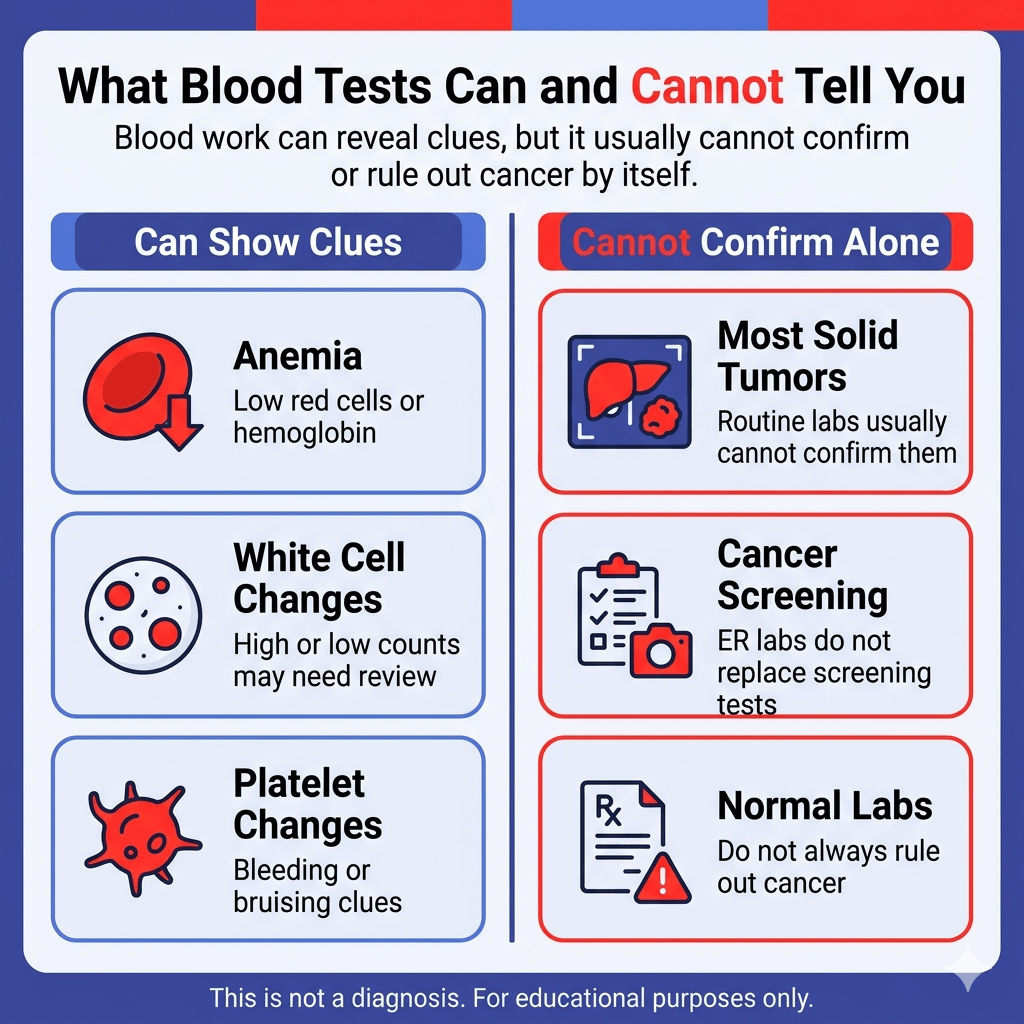
Blood tests are helpful, but they have limits. It is easy to become worried after seeing an abnormal result in an online portal, but lab numbers should not be interpreted alone.
Routine blood work usually cannot confirm most solid tumors
Many cancers that involve organs or tissues do not show up clearly on routine blood work. These may require other forms of evaluation, such as a physical exam, imaging, endoscopy, biopsy, pathology review, or specialist care.
For example, a blood test may show anemia or inflammation, but it usually cannot say exactly why those changes are happening without more information.
Blood tests cannot replace cancer screening
Routine ER labs are not the same as cancer screening. Screening is usually planned based on age, risk factors, family history, symptoms, and recommended preventive care guidelines.
Cancer screening may involve tests such as imaging, colon evaluation, gynecologic testing, prostate-related discussions, skin checks, or other follow-up care depending on the patient. ER testing is usually focused on urgent symptoms and immediate safety concerns.
Blood tests do not always explain symptoms immediately
Symptoms such as fatigue, pain, weight loss, swelling, weakness, or bleeding may require more than one type of evaluation. Sometimes blood work provides a clear direction. Other times, it is only one piece of the puzzle.
That does not mean symptoms are “not real.” It means more context may be needed.
ER Lab Results vs Cancer Screening: What Is the Difference?
This distinction is important. Emergency lab testing and cancer screening serve different purposes.
ER labs are designed to evaluate urgent problems
In an emergency setting, blood work is usually used to look for serious or time-sensitive problems. These may include severe anemia, infection, dehydration, electrolyte imbalance, organ stress, bleeding concerns, kidney issues, liver abnormalities, or other urgent findings.
ER lab results can help determine whether a patient needs immediate treatment, monitoring, imaging, fluids, medication, stabilization, or transfer to a higher level of care.
Cancer screening is usually planned follow-up care
Cancer screening or a cancer workup often happens through primary care, specialists, imaging centers, gastroenterology, gynecology, oncology, hematology, or other appropriate follow-up pathways.
That type of evaluation may involve repeat testing, imaging, biopsy, pathology, or specialist interpretation. It is usually more detailed than emergency blood work.
Abnormal ER labs may lead to further testing
If ER labs show concerning abnormalities, they may help guide the next step. That may include additional testing during the visit, imaging when appropriate, treatment for urgent symptoms, or instructions for follow-up after discharge.
Sometimes the ER can identify an urgent problem that needs immediate care. Other times, the safest next step is outpatient follow-up with a primary care doctor or specialist.
When Abnormal Blood Work Should Be Checked Promptly
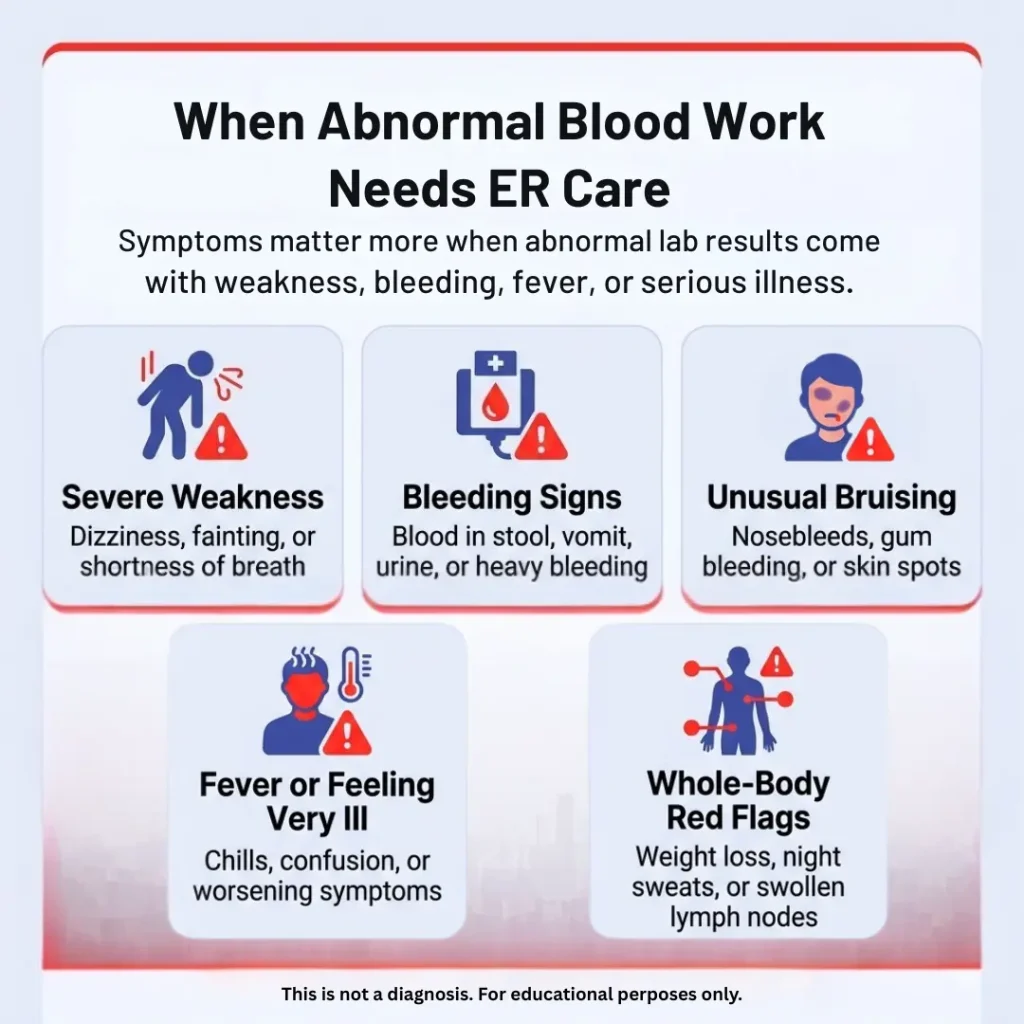
Abnormal blood work should be reviewed with a medical professional, especially if you feel unwell or your symptoms are worsening. Some symptoms deserve more urgent attention.
Severe fatigue, weakness, dizziness, or fainting
Severe weakness, dizziness, fainting, shortness of breath, or feeling like you may pass out can be related to anemia, dehydration, infection, blood pressure problems, heart strain, or other urgent conditions.
If these symptoms are new, severe, or worsening, it is safer to be evaluated promptly.
Unusual bruising or bleeding
Bleeding symptoms should not be ignored, especially if they happen with abnormal blood counts. These may include:
- Nosebleeds that are frequent or hard to stop
- Bleeding gums
- Blood in the stool
- Black or tar-like stools
- Vomiting blood
- Blood in the urine
- Heavy bleeding
- Bruising without a clear reason
- Tiny red or purple spots on the skin
These symptoms can have many causes, but some need timely evaluation.
Fever with abnormal labs or feeling seriously ill
Fever, chills, confusion, dehydration, rapid worsening, severe weakness, or feeling seriously ill may indicate an infection or another urgent condition. This is especially important if recent blood work was abnormal or if the person has a weakened immune system.
Symptoms paired with weight loss, night sweats, or swollen lymph nodes
Unexplained weight loss, night sweats, persistent fevers, swollen lymph nodes, severe fatigue, or frequent infections should be discussed with a medical provider. These symptoms do not automatically mean cancer, but they should not be ignored when they persist or occur with abnormal blood counts.
Can Blood Tests Detect Blood Cancer?
Blood tests may sometimes show signs that raise concern for blood-related cancers, but the CBC alone is usually not the final answer.
Blood cancers may affect CBC results
Blood cancers such as leukemia, lymphoma, or other blood-related conditions can sometimes affect red blood cells, white blood cells, or platelets. A CBC may show very abnormal counts or unusual patterns.
However, abnormal blood counts can also happen for many non-cancer reasons, including infections, inflammation, medications, immune conditions, nutritional deficiencies, dehydration, and other illnesses.
A CBC alone is not usually the final answer
The right next step depends on the full clinical picture, not just one lab number.
Symptoms that make abnormal blood counts more concerning
Abnormal blood counts may deserve closer evaluation when paired with symptoms such as:
- Severe fatigue
- Frequent infections
- Unexplained bruising or bleeding
- Night sweats
- Unexplained weight loss
- Persistent fevers
- Swollen lymph nodes
- Severe weakness
These symptoms can have different causes, but they are worth discussing with a medical professional.
What to Ask After Receiving Abnormal Blood Test Results
Seeing abnormal lab results online can be stressful. Before assuming the worst, ask focused questions that help you understand the result.
Helpful questions include:
- Which result is abnormal?
- How abnormal is it?
- Is it mildly abnormal or significantly abnormal?
- Could it be temporary?
- Does it match my symptoms?
- Were any other blood counts abnormal too?
- Do I need repeat blood work?
- Do I need imaging or another test?
- Should I follow up with primary care or a specialist?
- What symptoms mean I should seek urgent care?
It is also reasonable to ask whether the result needs immediate attention or whether it can be reviewed in a scheduled follow-up visit. The answer depends on the result, your symptoms, and your overall health.
How to Prepare for an ER or Doctor Visit About Abnormal Labs
If you are seeking care for abnormal blood work, bring as much useful information as you can. This can help the medical team understand what changed and what needs attention.
Before your visit, try to:
- Bring recent lab results if available
- Write down your symptoms and when they started
- Mention bleeding, bruising, fever, night sweats, weight loss, swollen lymph nodes, or severe fatigue
- List medications and supplements
- Share known medical conditions
- Mention any history of cancer, anemia, kidney disease, immune problems, or recent infection
- Ask what follow-up is needed after the visit
Do not delay care if symptoms are severe. It is helpful to bring records, but urgent symptoms should be evaluated even if you do not have every document with you.
If you are in Angleton or a nearby community and you have severe weakness, dizziness, fainting, heavy bleeding, blood in stool or vomit, fever with worsening symptoms, dehydration, confusion, or concerning abnormal lab results, Angleton ER provides 24/7 emergency care. Our emergency team can evaluate urgent symptoms, perform appropriate lab testing, and help determine whether your condition needs immediate treatment, stabilization, imaging, or follow-up with another provider.
Frequently Asked Questions
Can routine blood work detect cancer?
Routine blood work can sometimes show abnormalities that raise concern, but it usually cannot detect or confirm most cancers by itself. Blood tests may show anemia, abnormal white blood cells, platelet changes, inflammation, or organ stress. Those findings may lead to further testing, but they are not usually enough for a cancer diagnosis.
Does cancer show up in a CBC blood test?
Some cancers, especially blood-related cancers, may affect CBC results. A CBC may show abnormal red blood cells, white blood cells, or platelets. However, many abnormal CBC results are caused by non-cancer conditions, and many cancers do not clearly show up on a CBC.
Can you have cancer with normal blood test results?
Yes. Some people with cancer may have normal routine blood work, especially early on or depending on the type of cancer. Normal labs can be reassuring in some situations, but they do not always rule out cancer if symptoms or exam findings remain concerning.
What CBC results may be concerning?
CBC results may be more concerning when they are very abnormal, persistent, unexplained, or paired with symptoms. Examples include severe anemia, very high or very low white blood cells, low platelets, or multiple abnormal blood cell counts at the same time. Symptoms such as fainting, bleeding, fever, severe weakness, night sweats, weight loss, or swollen lymph nodes may make evaluation more urgent.
Does anemia mean cancer?
No. Anemia does not automatically mean cancer. It can happen from iron deficiency, bleeding, inflammation, nutritional problems, chronic illness, infection, or other causes. Anemia may need further evaluation if it is severe, unexplained, persistent, or linked with symptoms such as blood in stool, black stools, shortness of breath, fainting, or unexplained weight loss.
Can high or low white blood cells be a sign of cancer?
High or low white blood cells can sometimes be related to blood-related cancers, but infection, inflammation, medications, immune problems, and other conditions are also common causes. The level, pattern, symptoms, and whether the result changes over time all matter.
Can abnormal platelets be related to cancer?
Abnormal platelets can be related to many conditions, and cancer is only one possible cause. Low platelets may increase bleeding or bruising risk, while high platelets may happen with inflammation, infection, iron deficiency, or other illnesses. Unusual bruising, bleeding, tiny red or purple spots, or prolonged bleeding should be checked promptly.
Can the ER diagnose cancer from blood tests?
The ER can evaluate urgent symptoms and identify concerning lab abnormalities, but ER blood tests usually do not provide a final cancer diagnosis. If results raise concern, the ER may perform additional testing when appropriate, stabilize urgent problems, and guide next steps for follow-up with a primary care provider or specialist.
When should I seek urgent care for abnormal blood test results?
Seek urgent evaluation if abnormal blood work is paired with severe weakness, dizziness, fainting, shortness of breath, heavy bleeding, blood in stool or vomit, black stools, fever with worsening symptoms, confusion, dehydration, unusual bruising, or feeling seriously ill. These symptoms may point to a condition that should not wait.