
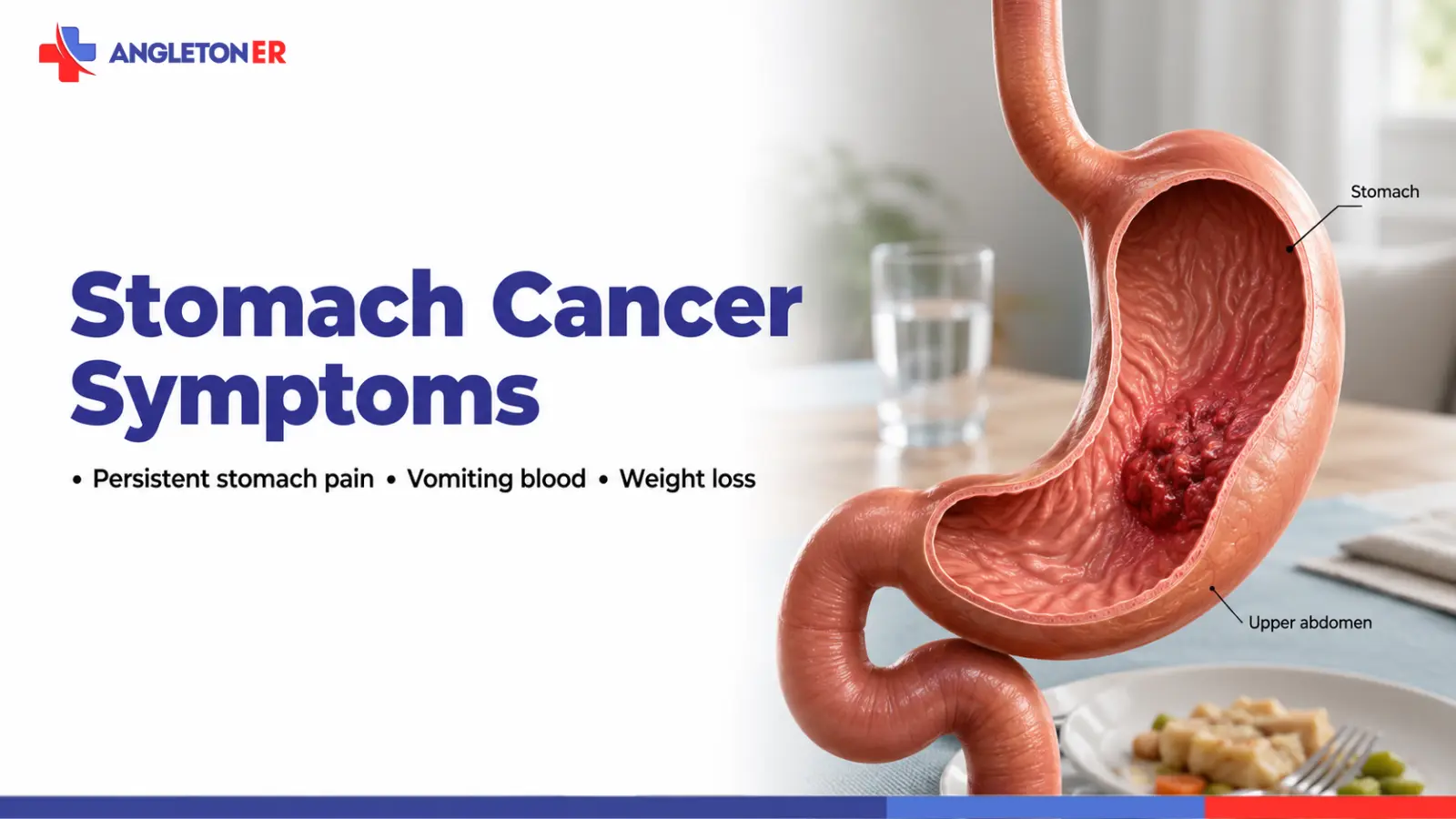
Stomach discomfort is common, and most episodes of indigestion, nausea, or bloating are not caused by cancer. Concern rises when symptoms do not settle, keep returning, grow more intense, or begin to affect eating, hydration, strength, or body weight. The National Cancer Institute overview of stomach cancer symptoms includes indigestion, stomach discomfort, bloating after eating, mild nausea, appetite loss, vomiting, unexplained weight loss, stomach pain, and blood in the stool. None of these symptoms confirms cancer on its own.
The practical question is not whether one symptom “feels like cancer.” It is whether the pattern has become persistent, progressive, unexplained, or unsafe to manage at home. Readers who want a broader overview of symptom patterns can also review cancer warning signs that deserve medical evaluation, while this guide stays focused on stomach and upper digestive symptoms.
When Stomach Symptoms Stop Feeling Temporary
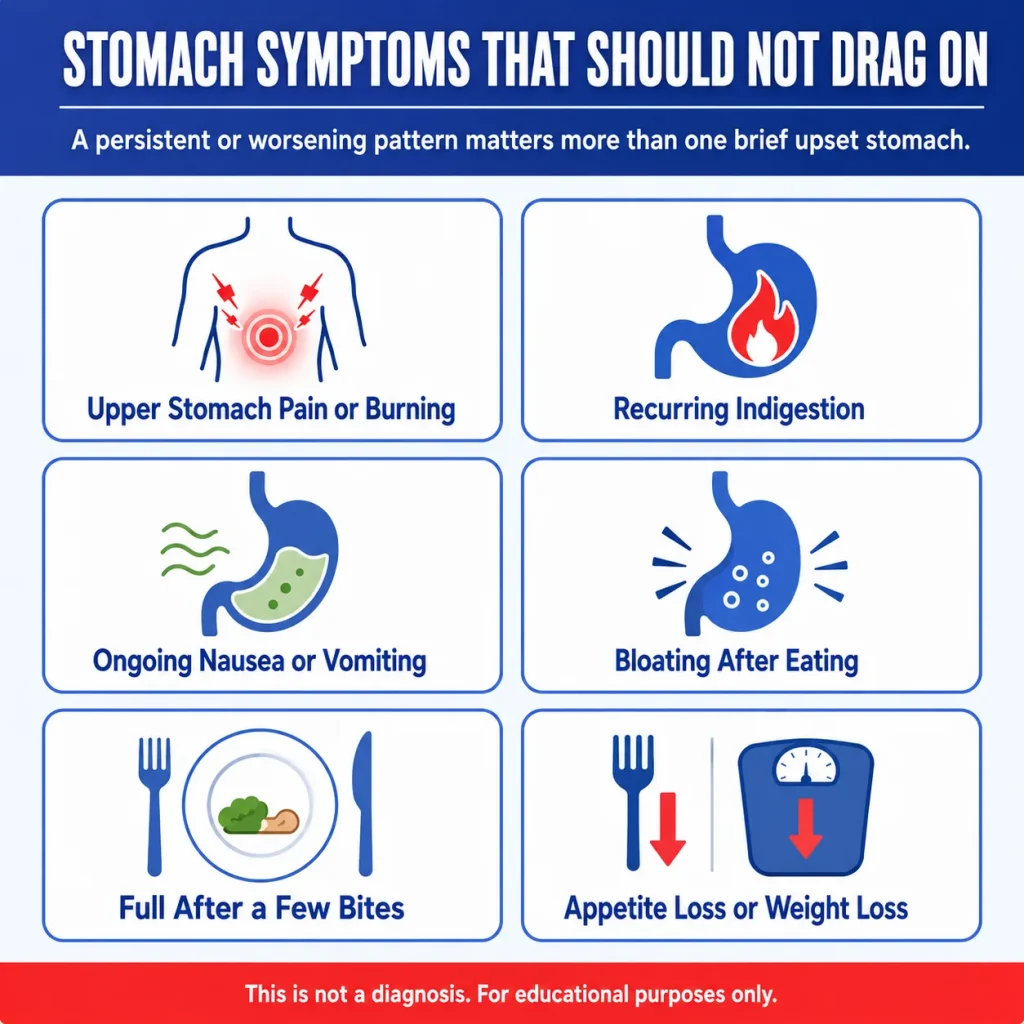
An occasional sour stomach after a heavy meal is different from discomfort that continues for days or weeks, returns repeatedly, or no longer responds as expected to ordinary treatment. Symptoms deserve evaluation when they become a pattern rather than an isolated episode.
• Persistent upper-abdominal pain, pressure, burning, or discomfort
• Indigestion or heartburn that keeps returning or is becoming harder to control
• Ongoing nausea or recurrent vomiting
• Bloating, pressure, or discomfort after eating
• Symptoms that increasingly interfere with meals, sleep, work, or normal activity
The location or intensity of pain cannot identify stomach cancer. Some serious conditions cause modest discomfort, while severe pain can come from many non-cancer problems. What matters most is the course of the symptoms and whether other changes are appearing with them.
Early Fullness, Appetite Loss, and Unexplained Weight Loss
Feeling full after only a few bites is sometimes called early satiety. When that change continues, a person may gradually eat less, lose interest in food, and lose weight without intending to. The American Cancer Society list of stomach cancer signs and symptoms includes poor appetite, unintentional weight loss, abdominal discomfort, early fullness, nausea, vomiting, and dark or black stool.
These symptoms can also occur with ulcers, gastritis, reflux, medication effects, infection, gallbladder or pancreatic disease, and other digestive problems. They become more concerning when several occur together or when appetite and weight changes are accompanied by pain, vomiting, weakness, or bleeding. A noticeable decline in intake or weight should be discussed with a medical professional even when the pain is not severe.
Fatigue, Weakness, and Other Signs of Possible Stomach Bleeding
Bleeding in the stomach may be obvious, but it can also be slow and difficult to see. The NIDDK guidance on gastrointestinal bleeding symptoms explains that chronic bleeding can be intermittent, may produce black or tarry stool, and can lead to anemia. A person may first notice unusual tiredness, reduced stamina, weakness, dizziness, shortness of breath, or a pale appearance.
Blood testing may identify anemia or another abnormality, but it cannot determine the cause by itself. Angleton ER has a separate explanation of what CBC and ER lab results can and cannot show about cancer. In this symptom pattern, an abnormal blood count is a clue that must be interpreted alongside bleeding signs, the physical exam, and follow-up testing.
Vomiting Blood or Passing Black Stool Requires Immediate Attention
Vomiting blood is an emergency warning sign regardless of whether cancer is ultimately involved. According to MedlinePlus guidance on vomiting blood, blood may look bright red, dark red, or like coffee grounds. Black, sticky, tarry-looking stool can also indicate bleeding higher in the digestive tract.
• Bright red or dark blood in vomit
• Vomit that looks like coffee grounds
• Black, sticky, or tarry stool
• Bleeding accompanied by dizziness, pronounced weakness, fainting, shortness of breath, or a racing heartbeat
Do not wait to see whether these signs stop on their own. They can reflect significant upper gastrointestinal bleeding and require prompt emergency evaluation. Angleton ER also provides focused guidance on when bleeding symptoms require ER care, without assuming a specific cause.
Stomach Cancer Symptoms Can Resemble Ulcers, Gastritis, or Reflux
Symptoms overlap substantially across digestive conditions. The NIDDK description of gastritis and gastropathy symptoms includes upper-abdominal discomfort, nausea, vomiting, early fullness, appetite loss, and weight loss. Similarly, peptic ulcer symptoms may include upper-abdominal pain, early fullness, nausea, vomiting, bloating, and bleeding.
Because the same symptoms can arise from several conditions, patients should not try to separate cancer from an ulcer, gastritis, or reflux by pain quality, meal timing, or internet comparisons. Evaluation is warranted when symptoms persist, worsen, remain unexplained, or occur in combination. Visible bleeding, faintness, severe pain, or dehydration changes the decision from routine follow-up to urgent care.
When to Seek Emergency Care and When to Arrange Follow-Up
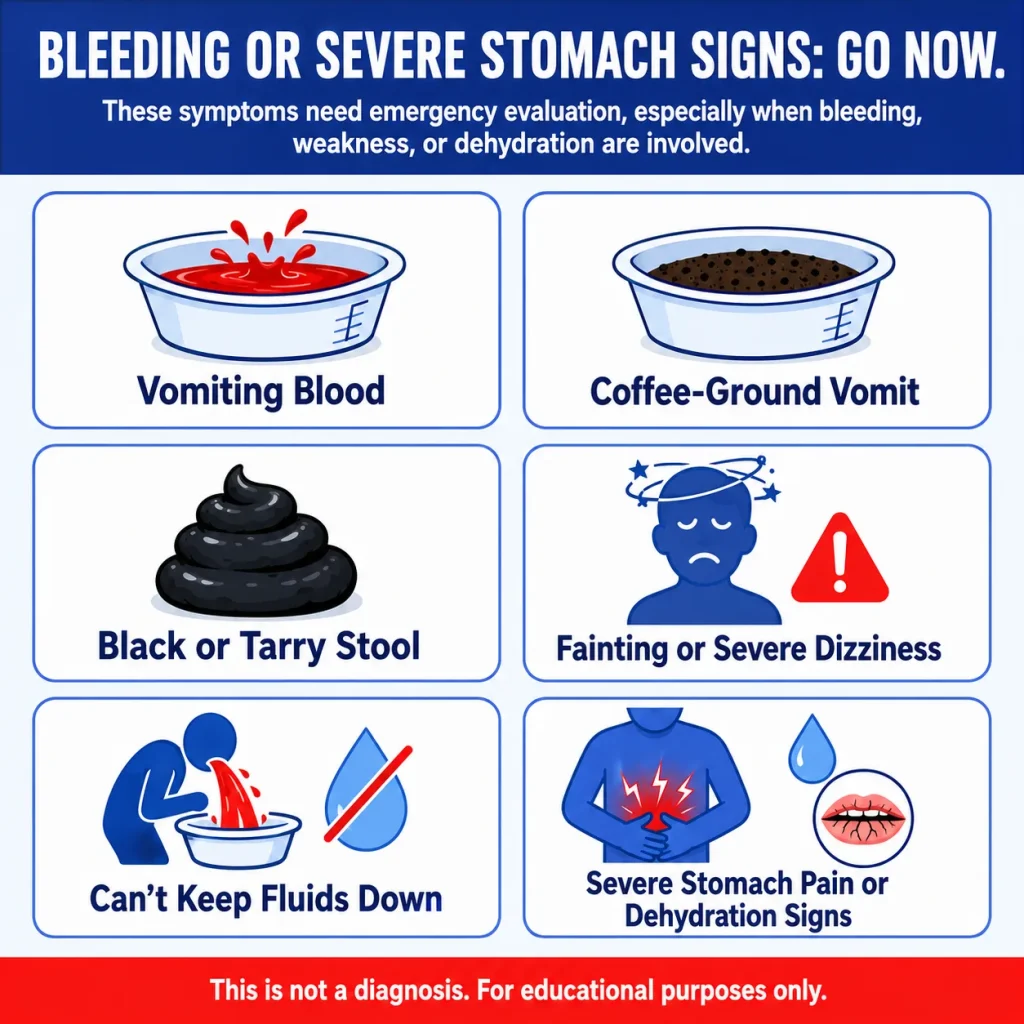
Seek emergency evaluation for:
• Vomiting blood or coffee-ground-like material
• Black or tarry stools
• Fainting, confusion, severe dizziness, or pronounced weakness
• Severe or rapidly worsening abdominal pain
• Repeated vomiting with an inability to keep fluids down
• Very little urination, marked dry mouth, unusual sleepiness, or other signs of serious dehydration
• Bleeding symptoms with shortness of breath or a racing heartbeat
Repeated vomiting can cause dangerous fluid loss. MedlinePlus information on dehydration notes that severe dehydration may require intravenous fluids, and loss of consciousness or changes in alertness are emergency signs. If symptoms feel life-threatening or it is unsafe to drive, call 911.
Arrange timely medical follow-up for:
Persistent stomach pain, recurring indigestion, early fullness, unexplained appetite loss, unintentional weight loss, ongoing nausea, or symptoms that continue despite ordinary treatment should be evaluated even when they are not severe enough for the ER. A scheduled visit allows a clinician to review the full timeline, medication use, prior digestive problems, family history, and the need for gastroenterology follow-up. For more detail on urgent pain patterns, see when abdominal pain becomes an ER emergency.
What Medical Evaluation May Involve
Evaluation may begin with a detailed symptom history, a physical examination, vital signs, and blood tests to look for anemia, dehydration, infection, or other abnormalities. Imaging may be used when severe pain, bleeding, obstruction, or another urgent abdominal problem is suspected. Emergency testing is directed by the immediate safety question, not by a promise that one scan can confirm or exclude cancer.
Confirming or excluding stomach cancer generally requires coordinated follow-up. The National Cancer Institute description of stomach cancer diagnosis explains that evaluation may include blood tests for anemia, stool testing for hidden blood, and upper endoscopy with biopsy. Pathology examines the sampled tissue to determine whether cancer cells are present.
An ER can assess active bleeding, blood loss, dehydration, severe pain, and other immediate complications. It may identify findings that require treatment, transfer, or urgent specialist involvement. It usually cannot complete the entire gastric cancer workup during one visit. Angleton ER also explains what ER imaging can and cannot show about cancer, which is important when a CT or ultrasound is ordered for severe symptoms.
Emergency Evaluation for Serious Stomach Symptoms in Angleton
For patients in Angleton and nearby Brazoria County communities, vomiting blood, black tarry stools, fainting, severe weakness, intense or rapidly worsening abdominal pain, or an inability to keep fluids down should not wait for a routine appointment. Angleton ER provides 24/7 emergency evaluation with on-site laboratory testing, CT, X-ray, ultrasound, IV fluids, medication, monitoring, stabilization, and transfer coordination when medically appropriate. The emergency team can address the immediate complication while explaining what outpatient gastroenterology, endoscopy, biopsy, or other follow-up may still be required.
Frequently Asked Questions
Can stomach cancer cause symptoms before severe stomach pain develops?
Yes. Stomach cancer may cause indigestion, early fullness, appetite loss, nausea, unexplained weight loss, fatigue, or subtle bleeding before severe pain appears. These symptoms are not specific to cancer, but a persistent or worsening pattern should be evaluated.
Is feeling full after only a few bites a concerning symptom?
It can be, especially when early fullness continues, reduces food intake, or occurs with appetite loss, weight loss, pain, nausea, vomiting, or weakness. A single episode after a large meal is different from a repeated change in how much you can eat.
Can stomach cancer symptoms be mistaken for an ulcer or gastritis?
Yes. Stomach cancer, ulcers, gastritis, and reflux can share symptoms such as upper-abdominal discomfort, indigestion, nausea, early fullness, appetite changes, and bleeding. Symptoms alone cannot reliably distinguish them.
Can stomach bleeding occur without visible red blood?
Yes. Blood may be altered during digestion and appear as black, sticky, tarry stool or coffee-ground-like vomit. Slow bleeding may also show up through anemia-related fatigue, weakness, dizziness, pale skin, or shortness of breath.
Can normal blood test results rule out stomach cancer?
No. Normal routine blood tests do not rule out stomach cancer. Blood work may reveal anemia or another clue, but diagnosis usually depends on the full clinical evaluation and, when indicated, upper endoscopy and biopsy.
Can an emergency room diagnose stomach cancer during one visit?
Usually not definitively. The ER can evaluate bleeding, dehydration, severe pain, blood loss, and other urgent complications, and it may find abnormalities that require follow-up. Confirming stomach cancer generally requires coordinated specialist testing and pathology.