
Medical disclaimer: This article is for general information only and is not a substitute for professional medical advice, diagnosis, or emergency care.
Quick summary
Spleen pain is usually felt in the upper left side of your abdomen, under the left rib cage. It can be caused by:
- An enlarged spleen (splenomegaly)
- Infections (such as mono/glandular fever, some viral or parasitic illnesses)
- Liver disease and portal hypertension
- Blood cancers and blood disorders
- Trauma or a ruptured spleen
- Rare metabolic or storage diseases
Some problems are mild or temporary. Others — especially splenic injury or rupture — can be life-threatening.
Get emergency help immediately if you have:
- Sudden, severe pain under the left ribs
- Pain after a fall, car accident, or sports injury to the left side
- Pain with dizziness, fainting, confusion, very pale or clammy skin, or a racing heartbeat
These may be signs of internal bleeding.
Diarrhea angle:
An enlarged spleen does not usually cause diarrhea directly. However, infections and systemic diseases that enlarge the spleen can also affect your digestive system and cause diarrhea, nausea, or stomach upset.
What and where is the spleen?
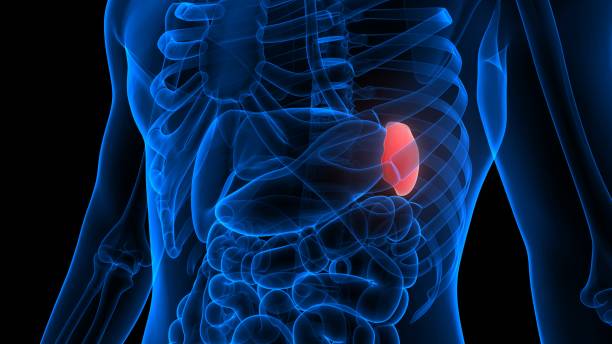
The spleen is a soft, fist-sized organ that sits:
- In the upper left part of the abdomen
- Just under the left rib cage, slightly behind the ribs
- Close to the stomach, left kidney, pancreas, and diaphragm
This location is the same in women and men.
In most healthy adults, the spleen is not easy to feel from the outside and doesn’t normally cause pain.
What does the spleen do?
Your spleen has three main jobs:
- Filter the blood
- Removes old or damaged red blood cells
- Helps clear bacteria and other unwanted material
- Support the immune system
- Stores and activates certain white blood cells
- Helps your body fight infections
- Store blood cells
- Holds a reserve of red blood cells and platelets (cells that help blood clot)
Because of these roles, serious spleen problems can affect:
- Infection risk (especially after spleen removal)
- Blood counts (low red cells, white cells, or platelets)
- Bruising or bleeding
An enlarged spleen isn’t a disease by itself—it’s a sign that something else is going on in your body. Many different conditions can cause splenic enlargement, ranging from mild infections to more serious blood disorders or liver problems. That’s why your healthcare provider will need to investigate the underlying cause before deciding on treatment.
If an enlarged spleen is left untreated, it can eventually start to malfunction. In rare cases, a severely enlarged spleen can rupture, leading to sudden internal bleeding—a medical emergency.
What is splenomegaly (enlarged spleen)?
Splenomegaly means the spleen is larger than normal.
Doctors may suspect an enlarged spleen if:
- They can feel it below the left rib cage during a physical exam
- Imaging (ultrasound, CT, or MRI) shows the spleen is bigger than expected for your age and body size
How do underlying conditions cause spleen enlargement?
A variety of underlying health issues can lead to an enlarged spleen, often by putting extra work or stress on the organ. Here’s how some of the most common culprits affect the spleen:
- Infections: Whether it’s viral (like mononucleosis), bacterial (such as tuberculosis), or parasitic (malaria, toxoplasmosis), infections challenge the spleen’s immune duties. To fight off germs, the spleen ramps up activity, producing more white blood cells, which can cause it to grow larger.
- Liver disease and portal hypertension: Problems like chronic hepatitis or cirrhosis can back up blood flow through the liver. This increases pressure in nearby vessels—a situation called portal hypertension—which causes blood to pool in the spleen and stretch it out over time.
- Cancers and blood disorders: Conditions such as leukemia, lymphoma, and myeloproliferative neoplasms fill the spleen with abnormal cells. At the same time, disorders like hemolytic anemia force the spleen to work overtime to filter out defective or overabundant blood cells, leading to swelling.
- Autoimmune and inflammatory conditions: Diseases like lupus, rheumatoid arthritis, and sarcoidosis cause the immune system to stay on “high alert.” This ongoing immune activity can make the spleen grow due to increased workload.
- Inherited metabolic or storage diseases: Rare genetic conditions, including Gaucher disease or Niemann-Pick disease, can result in a build-up of materials the body can’t break down. These materials accumulate in the spleen, adding bulk and causing it to enlarge.
- Blood clots (thrombosis): A clot in a blood vessel that supplies the spleen (or liver) can block normal blood flow, trapping blood within the spleen and leading to congestion and swelling.
Sometimes, the change is due to a single cause; other times, multiple issues combine to make the spleen larger than normal.
Normal spleen size and “borderline” enlargement
Exact “normal” measurements vary by height, sex, and the imaging method, but in adults:
- A normal spleen is usually about the size of a fist
- On imaging, it often measures less than about 10–12 cm (4–5 inches) in length
Terms you might see on imaging reports:
- “Borderline” or “mild splenomegaly” – spleen is just above the normal upper limit
- “Moderate” or “massive splenomegaly” – spleen is clearly and often markedly enlarged
These labels do not tell you the exact cause. Your doctor interprets them together with your symptoms, blood tests, and other findings.
In many cases, if the underlying problem improves, a mildly enlarged spleen can shrink back toward normal over time.
What complications can arise from an enlarged spleen?
An enlarged spleen isn’t just a curious finding on your scan—it can lead to several serious problems if not addressed:
- Loss of healthy spleen tissue: When the spleen grows too large, parts of it may not get enough blood. Areas that are starved of circulation can become damaged or even die (splenic infarction).
- Overactive spleen function: A big spleen sometimes works overtime, filtering out and destroying more blood cells than it should. This can leave you with:
- Low red blood cells (anemia)
- Low white blood cells (increased risk of infection)
- Low platelets (higher risk of bleeding or bruising)
- Risk of rupture: A greatly enlarged spleen is more fragile and stretched thin. It can tear or rupture—with or without a direct blow (like during contact sports, a fall, or a car accident). This is a medical emergency, since a ruptured spleen causes dangerous internal bleeding.
If you know you have an enlarged spleen, your doctor may recommend avoiding activities with a risk of blows to your abdomen—even things like rough games or certain types of exercise.
What does spleen pain feel like?
People describe spleen pain in different ways, but common patterns include:
- A dull ache or pressure under the left ribs
- A feeling of fullness or heaviness in the upper left abdomen
- Sharp or stabbing pain that may worsen with:
- Deep breaths
- Coughing
- Bending or twisting
- Running or other vigorous movement
Because the spleen sits high and slightly toward the back, pain may be felt:
- In the front of the upper left abdomen
- Along the side under the left ribs
- Deeper, toward the back of the upper left side
- Referred to the left shoulder (classic in cases of irritation or bleeding around the diaphragm)
Is spleen pain felt in the front or the back?
Both can happen:
- Many people feel spleen-related discomfort in the front or side under the left ribs
- Some feel a deep ache that seems to come from the back of the upper left abdomen
- A ruptured or very irritated spleen can cause left shoulder pain
However, back or shoulder pain on its own is very common and often has other causes (muscles, spine, joints). You cannot diagnose spleen pain based on location alone.
Can spleen pain come and go?
Yes. Some people notice:
- Ongoing dull discomfort that flares at times, or
- Short episodes of pain that come and go
Intermittent pain does not mean there is no problem. Any new, persistent, or recurring pain under the left ribs should be checked by a doctor.
Symptoms of spleen problems and enlarged spleen
Many people with an enlarged spleen have no symptoms. When symptoms do occur, they may include:
- A feeling of fullness or pressure under the left ribs
- Discomfort or pain in the upper left abdomen
- Feeling full very quickly after small meals (early satiety)
- Fatigue, weakness, or shortness of breath (if you have anemia)
- Frequent infections (if white blood cell function/count is affected)
- Easy bruising or bleeding (if platelets are low)
- A lump or fullness under the left ribs (especially if the spleen is very large)
Other symptoms can reflect the underlying disease, such as:
- Fevers or chills
- Night sweats
- Unexplained weight loss
- Liver-related signs (e.g., jaundice, swollen belly)
These are warning signs, especially when combined with an enlarged spleen, and should not be ignored.
Can an enlarged spleen cause diarrhea?
Short answer: not usually by itself.
The spleen is not part of the digestive tract, so an enlarged spleen does not typically cause diarrhea directly.
However, spleen problems often occur together with conditions that do affect the gut, such as:
- Viral infections (including mononucleosis/glandular fever)
- Parasitic infections (like malaria in some regions)
- Systemic illnesses such as some cancers or autoimmune diseases
- Liver disease or portal hypertension, which can cause fullness, nausea, and poor appetite
These conditions can cause both:
- Splenomegaly (an enlarged spleen), and
- Digestive symptoms, including diarrhea, nausea, or stomach upset
Why do spleen pain and diarrhea sometimes occur together?
Often, they share a common cause, such as:
- An infection affecting multiple organs
- A chronic disease (for example, certain blood cancers or inflammatory diseases)
- Side effects of medications or treatments
A ruptured spleen does not typically cause diarrhea. Its main red flags are sudden severe pain, dizziness, low blood pressure, and signs of internal bleeding, not bowel changes.
If you have persistent diarrhea plus left-sided pain, especially with blood in the stool, weight loss, fevers, or severe cramps, you should see a doctor. These symptoms are more likely due to bowel conditions, even if your spleen is also enlarged.
Why does my spleen hurt after I eat or when I move?
If your spleen is enlarged, it takes up more space than usual in the upper left abdomen.
You may notice more discomfort when:
- You eat a meal and your stomach expands
- You run, bend, twist, or lift
- You cough or take a deep breath
That movement or expansion can make existing discomfort more noticeable because:
- The stomach presses against the enlarged spleen
- The diaphragm and surrounding muscles move around it
This doesn’t mean that food or exercise is the root cause. It usually means something else has enlarged your spleen and those activities are triggering the pain.
New or worsening pain with eating, movement, or breathing — especially if sudden or severe — should be checked by a doctor.
Common causes of spleen pain and splenomegaly
Infections
Infections are a common reason for an enlarged spleen. Examples include:
- Viral infections – such as mononucleosis (Epstein–Barr virus), cytomegalovirus (CMV), viral hepatitis, and HIV
- Bacterial infections – such as bacterial endocarditis (infection of heart valves), syphilis, tuberculosis
- Parasitic infections – especially malaria in certain regions or after travel
These conditions stimulate the immune system and make the spleen work harder as it filters blood and helps fight infection, which can cause it to enlarge and sometimes to ache.
Liver disease and portal hypertension
The spleen and liver share major blood vessels. Conditions such as:
- Cirrhosis
- Chronic hepatitis
- Blocked or scarred blood vessels
can raise the pressure in the portal venous system (portal hypertension). This can cause:
- A congested, enlarged spleen
- Symptoms such as fullness or pain in the upper left abdomen
Blood cancers and blood disorders
Several blood and bone marrow problems involve the spleen, including:
- Leukemias
- Lymphomas
- Myelofibrosis and other myeloproliferative diseases
- Hemolytic anemias and thalassemia
In these conditions, the spleen may enlarge because it is:
- Filtering abnormal blood cells
- Helping make blood cells when the bone marrow is not working properly
This can lead to low red cells, white cells, or platelets, causing fatigue, infections, or bruising.
Metabolic and storage diseases (including ASMD)
Some rare inherited disorders cause fatty or storage materials to build up in organs, including the spleen. Examples include:
- Acid sphingomyelinase deficiency (ASMD) – a rare condition in which a fatty substance (sphingomyelin) builds up in the spleen, liver, lungs, and other organs, often causing marked splenomegaly
- Gaucher disease and other storage disorders
These conditions are usually diagnosed and managed by specialist teams using genetic tests and disease-specific treatments.
Trauma and ruptured spleen
A direct blow to the left side can bruise or tear the spleen. Causes include:
- Car crashes
- Falls
- Sports collisions
- Rib fractures
Injury may cause:
- Sudden, sharp pain in the upper left abdomen or under the left ribs
- Pain that worsens with movement or deep breaths
- Pain that spreads to the left shoulder
- Signs of internal bleeding: dizziness, fainting, very pale or clammy skin, fast heart rate, low blood pressure
A ruptured spleen is a medical emergency and requires urgent hospital care.
Other structural and vascular causes
Other possible causes include:
- Blood clots (infarction) in the blood vessels supplying the spleen
- Cysts or benign growths in the spleen
- Tumors, including cancers that spread (metastasize) to the spleen
- Accessory spleens (small extra bits of splenic tissue) – usually harmless, but occasionally a source of confusion on imaging
These are usually picked up on imaging (ultrasound, CT, MRI).
Is spleen pain dangerous? When it’s an emergency
Not all discomfort in the spleen area is dangerous, but some situations need urgent care.
Call emergency services or go to an emergency department immediately if:
- You have sudden, severe pain under the left ribs or in the upper left abdomen
- You have pain in that area after an injury to your left side (fall, car crash, sports impact, assault)
- You have left-side pain plus:
- Dizziness, feeling faint, or confusion
- Very pale, cold, or sweaty (clammy) skin
- A racing heartbeat or very low blood pressure
- Shortness of breath or a feeling that “something is very wrong”
These can be signs of internal bleeding or another serious condition.
When spleen pain needs urgent vs routine evaluation
Seek same-day or urgent medical care if:
- Pain under your left ribs is new and moderate to severe, or clearly getting worse
- You have pain plus fever, chills, or feeling very unwell
- You have unexplained weight loss or night sweats
- You have a known disease that can affect the spleen (such as mono, liver disease, or a blood disorder) and your symptoms change or worsen
Arrange a routine appointment if:
- You have mild but recurring discomfort or fullness in the spleen area
- You are worried that your spleen might be enlarged
- You have an incidental imaging result mentioning borderline or mild splenomegaly and want to understand what it means
How doctors diagnose spleen problems
Medical history
Your clinician will ask about:
- Location, type, and timing of the pain
- Recent infections, travel, or injuries
- Other symptoms: fevers, weight loss, night sweats, bowel changes, bruising, shortness of breath
- Existing conditions and medications
Physical examination
They will:
- Gently feel (palpate) the abdomen to see if the spleen can be felt below the left ribs
- Listen for tenderness or guarding in the area
- Look for signs of liver disease, enlarged lymph nodes, anemia, or bruising
Note: A normal spleen is usually not palpable, and even an enlarged spleen may be subtle — especially in people with certain body types.
Blood tests
Common tests include:
- Full blood count (red cells, white cells, platelets)
- Liver function tests
- Markers of infection or inflammation
- Tests for specific conditions (e.g., mono, malaria, autoimmune disorders, blood cancers) depending on suspicion
Imaging
- Ultrasound – often the first test to check size and basic structure
- CT or MRI – used if:
- More detail is needed
- Trauma or rupture is suspected
- Doctors need to examine nearby organs or blood vessels
Specialized tests
Depending on the findings, your doctor may order:
- Bone marrow tests (for blood cancers and marrow disorders)
- Genetic or enzyme tests (for storage/metabolic diseases such as ASMD)
- More detailed imaging of blood vessels (if clots or portal hypertension are suspected)
Can you check your spleen at home? (Self-test)
Searches like “enlarged spleen self test” or “how to check your spleen at home” are common, but:
- A normal spleen is usually not easy to feel through the abdominal wall
- Even doctors sometimes have difficulty feeling the spleen, depending on body shape and muscle tension
- Pressing hard on a very enlarged spleen is discouraged, because the organ is more fragile and theoretically at higher risk of injury
For these reasons, self-testing is not reliable and may be unsafe. If you are worried about your spleen, it is better to see a healthcare professional who can:
- Examine you, and
- Decide if imaging is needed
Treatment options for spleen pain and splenomegaly
There is no one “spleen medication.” Treatment focuses on:
- The underlying cause
- Preventing complications
- Protecting an enlarged or injured spleen
Treating the underlying cause
Examples include:
- Infections
- Viral infections (such as mono) usually get supportive care and rest
- Bacterial infections may need antibiotics
- Parasitic infections (like malaria) require specific drugs
- Liver disease & portal hypertension
- Managing hepatitis or cirrhosis
- Avoiding or strictly limiting alcohol
- Treating pressure problems in the portal vein system
- Blood cancers & blood disorders
- Chemotherapy, immunotherapy, targeted drugs, or other hematology/oncology treatments
- Sometimes radiation therapy or bone marrow transplant in selected cases
- Autoimmune and storage diseases
- Immunosuppressive drugs or disease-specific therapies under specialist care
Protecting an enlarged spleen
If your spleen is enlarged, your doctor will often advise you to:
- Avoid contact sports (like football, rugby, martial arts) and high-impact activities
- Use seat belts properly in vehicles
- Follow any activity restrictions after infections such as mono
- Seek urgent help after any significant blow to your left side
These measures reduce the risk of splenic rupture.
Splenectomy (spleen removal) and life afterward
Sometimes, removing the spleen (splenectomy) is necessary, for example:
- A ruptured or severely injured spleen
- Certain blood disorders that don’t respond to other treatments
- Some cases of hypersplenism (overactive spleen destroying blood cells)
hypersplenism, an enlarged spleen may become overactive, trapping or removing too many blood cells from your circulation. This can lead to problems like anemia (low red blood cell count), leukopenia (low white blood cell count), or thrombocytopenia (low platelet count). After splenectomy:
- Most people can live a relatively normal life
- The risk of serious infections from some bacteria (like pneumococcus, meningococcus, Hib) is higher
You may need:
- Extra vaccines (including against pneumococcus, meningococcal infections, Hib, and annual flu, as recommended in your country)
- Sometimes long-term or standby antibiotics
- A plan for urgent medical care if you develop fever or signs of infection
Your healthcare team will create an individual prevention plan based on national guidelines (such as CDC/ACIP in the U.S. or local equivalents).
Pain relief and home care
While you are waiting for evaluation or recovering:
- Some over-the-counter pain relievers may be safe for short-term use, but only if your clinician approves (because some drugs can affect the liver, kidneys, or clotting).
- Gentle rest and avoiding activities that clearly worsen pain may help.
- Many people find it more comfortable to sleep:
- On the side opposite the pain, or
- With a pillow supporting the upper abdomen
There is no proven “spleen sleep position” in scientific studies. Comfort suggestions are just that — ways to feel a bit better while the real problem is being treated.
Natural remedies and supplements
Be cautious with advice like “heal your spleen naturally” or “spleen detox.” Most such claims:
- Are not backed by strong clinical evidence
- May involve herbs or supplements that affect bleeding, clotting, or medication interactions
Always talk to your healthcare provider before starting supplements, especially if you:
- Have blood disorders or liver disease
- Are taking blood thinners or other important medications
- Have had your spleen removed or are immunocompromised
Lifestyle, diet, and prevention
Are there foods to avoid with an enlarged spleen?
There is no single diet proven to shrink an enlarged spleen, but diet recommendations often focus on the underlying condition:
- If you have liver disease:
- Avoid or strictly limit alcohol
- Follow a liver-friendly diet as advised by your specialist
- If you have blood cancers or chronic illnesses:
- Focus on adequate calories and protein
- Aim for a balanced, nutrient-dense diet
- If you are immunocompromised or have no spleen:
- You may be advised to be extra careful with raw or undercooked foods (like undercooked meat, unpasteurized dairy, or raw shellfish) to reduce infection risk
In general, a balanced diet with plenty of fruits, vegetables, whole grains, and lean proteins supports overall health, but no specific food “fixes” the spleen.
General prevention tips
You can’t prevent every spleen problem, but you can:
- Stay up-to-date with vaccines, especially if you have spleen disease or have had a splenectomy
- Practice good hygiene (handwashing, safe food and water)
- Manage chronic conditions (like liver disease, autoimmune disease, blood disorders) as advised
- Use seat belts and appropriate protective gear to reduce trauma risk
Frequently Asked Questions
What does spleen pain feel like?
Spleen pain often feels like:
• A dull ache or pressure under the left ribs
• Sometimes a sharp or stabbing pain, especially with deep breathing or movement
• Occasionally pain that spreads to the left shoulder or seems deep in the upper left back
Because many conditions cause similar pain, only a clinician can determine whether your spleen is involved.
Where do you feel spleen pain?
Most people feel spleen pain:
• In the upper left abdomen, under the left rib cage
• Sometimes in the left side or toward the upper left back
• Occasionally in the left shoulder (referred pain)
Can an enlarged spleen cause back pain?
An enlarged spleen can create a deep ache that feels like it is coming from the upper left back because of its position near the diaphragm and back of the abdomen. But back pain alone is very common and usually has other causes, such as muscles, joints, or the spine.
Can spleen pain go away on its own?
Sometimes mild discomfort improves as a short-term illness resolves (for example, a viral infection). However:
• Persistent, severe, or recurring pain should not be ignored
• Because spleen pain can sometimes signal serious conditions (like bleeding or blood cancers), you should not assume it is safe to wait it out
Even though spleen pain may seem minor at first, it’s important to remember that an enlarged or injured spleen can be a symptom of a wide range of underlying issues—some harmless, some potentially serious. If left untreated for a long time, a malfunctioning or severely enlarged spleen could lead to complications, including the risk of rupture and internal bleeding (a true medical emergency). If you notice ongoing or worsening pain, especially alongside other symptoms like fever, unexplained bruising, or significant fatigue, seek medical attention promptly.
How long does an enlarged or injured spleen take to heal?
It depends on the cause and severity:
• Mild enlargement from infections such as mono may improve over weeks to a few months
• Injuries or ruptures may need hospital treatment or surgery, with recovery measured in weeks to months
Your doctor will give you specific timelines based on your diagnosis and follow-up imaging.
Can you live without a spleen?
Yes. Many people live without a spleen after trauma or surgery. However, they:
• Have a higher risk of certain serious infections
• Usually need extra vaccines and sometimes preventive antibiotics
• Are advised to seek urgent care if they develop fever or signs of infection
What organ is under your left rib cage?
Under the left rib cage, you can find:
• The spleen
• Part of the stomach
• Part of the colon (splenic flexure)
• The pancreas tail
• The top of the left kidney
• The left lung and heart sit above, but can refer pain to this area
This is why left upper abdominal pain can have many possible causes, not just the spleen.
When should I worry about spleen pain?
Be especially concerned if you have:
• Sudden, severe pain under the left ribs
• Pain after a fall, crash, or hit to the left side
• Pain with dizziness, fainting, very pale/clammy skin, or a racing heartbeat
These can be emergencies. For milder or recurring pain, book an appointment with your doctor to investigate the cause.
APA Reference List
Centers for Disease Control and Prevention. (2025). Recommended adult immunization schedule, United States, 2025. https://www.cdc.gov/vaccines/hcp/imz-schedules/downloads/adult/adult-combined-schedule.pdf
Centers for Disease Control and Prevention. (2025, October 7). Adult immunization schedule notes. https://www.cdc.gov/vaccines/hcp/imz-schedules/adult-notes.html
Cleveland Clinic. (n.d.). Enlarged spleen (splenomegaly): Symptoms, causes & treatment. Retrieved December 8, 2025, from https://my.clevelandclinic.org/health/diseases/17829-enlarged-spleen
Cleveland Clinic. (n.d.). Spleen: Function, location & size, possible problems. Retrieved December 8, 2025, from https://my.clevelandclinic.org/health/body/21567-spleen
Gov.uk. (2022, March 9). Information for patients with an absent or dysfunctional spleen. UK Health Security Agency. https://www.gov.uk/government/publications/splenectomy-leaflet-and-card/information-for-patients-with-an-absent-or-dysfunctional-spleen
Immunize.org. (2025). Vaccinations for adults without a spleen. https://www.immunize.org/clinical/a-z/vaccinations-adults-without-spleen/
Mayo Clinic. (2023, August 25). Enlarged spleen (splenomegaly) – Symptoms and causes. https://www.mayoclinic.org/diseases-conditions/enlarged-spleen/symptoms-causes/syc-20354326
Mayo Clinic. (2023, August 25). Enlarged spleen (splenomegaly) – Diagnosis and treatment. https://www.mayoclinic.org/diseases-conditions/enlarged-spleen/diagnosis-treatment/drc-20354331
MD Anderson Cancer Center. (2023). Management of adult asplenic/hyposplenic patients (Clinical management algorithm). https://www.mdanderson.org/content/dam/mdanderson/documents/for-physicians/algorithms/clinical-management/clin-management-asplenia-web-algorithm.pdf
NHS. (2017). Spleen problems and spleen removal. https://www.nhs.uk/tests-and-treatments/spleen-problems-and-spleen-removal/
NHS Inform. (2023, May 29). Spleen problems and spleen removal. https://www.nhsinform.scot/illnesses-and-conditions/stomach-liver-and-gastrointestinal-tract/spleen-problems-and-spleen-removal/
News-Medical. (2019, February 27). Enlarged spleen (splenomegaly). https://www.news-medical.net/health/Enlarged-Spleen-(Splenomegaly).aspx
South Tees Hospitals NHS Foundation Trust. (2024, May 1). Splenic injury. https://www.southtees.nhs.uk/resources/splenic-injury/
StatPearls. (2023). Physiology, spleen. In StatPearls [Internet]. StatPearls Publishing. https://www.ncbi.nlm.nih.gov/books/NBK537307/
StatPearls. (2023). Splenomegaly. In StatPearls [Internet]. StatPearls Publishing. https://www.ncbi.nlm.nih.gov/books/NBK430907/
UIC College of Pharmacy, Drug Information Group. (2021). What vaccines should be administered to adult patients who have asplenia or hyposplenia? https://dig.pharmacy.uic.edu/faqs/2021-2/january-2021-faqs/what-vaccines-should-be-administered-to-adult-patients-who-have-asplenia-or-hyposplenia/
WebMD. (2024, March 5). Enlarged spleen: Causes, symptoms, and treatments. https://www.webmd.com/digestive-disorders/enlarged-spleen-causes-symptoms-and-treatments