

Trying to snack when you have both chronic kidney disease and diabetes can feel like you are being pulled in two directions at once. One side of the conversation is about blood sugar, carbs, and timing. The other is about sodium, potassium, phosphorus, protein, and how kidney needs can change over time. For many people in Angleton and across Brazoria County, the result is not just confusion. It is frustration. The safest place to start is with one simple idea: there is no single snack list that fits every person with CKD and diabetes, so the goal is not perfection. The goal is choosing snacks that are simpler, more portion-aware, and easier on both blood sugar management and kidney-conscious eating.
Medical disclaimer: This article is for educational purposes only. It is not medical advice, diagnosis, or a substitute for care from your doctor, diabetes care team, or renal dietitian. Snack choices may need to change based on your CKD stage, blood sugar patterns, medications, potassium and phosphorus levels, and whether you are on dialysis.
Why Snack Choices Get Harder When You Have CKD and Diabetes
With diabetes, snacks matter because carbohydrates raise blood glucose, and timing can matter too depending on insulin, sulfonylureas, activity, and your daily schedule. NIDDK notes that meals and snacks should help keep blood glucose in the target range your healthcare professional recommends, and that the best timing for snacks can depend on medicines, activity, and other health conditions.
With CKD, the challenge changes. Healthy kidneys help balance salts and minerals in the blood, but CKD can make that harder. NIDDK explains that what you eat and drink can affect sodium, potassium, phosphorus, fluid balance, and how well CKD treatments work. It also stresses that nutrition needs change as CKD advances.
That is why one snack that looks “healthy” on paper may still not be right for every person. A snack might be fine for diabetes but too salty for CKD. Another might seem kidney-friendly but contain more carbs than someone expected. A third might be okay in moderation but not as an all-day grazing habit. The point is not to fear snacks. The point is to choose them more deliberately.
What Makes a Snack Work for Both CKD and Diabetes
A good snack for both conditions usually starts with reasonable carb awareness. NIDDK explains that carbs turn into glucose, so they matter for blood sugar control, and MedlinePlus notes that some people with diabetes may need carbohydrate snacks at certain times depending on treatment and low blood sugar risk. That does not mean every snack has to be “no carb.” It means snacks should not quietly turn into a high-sugar, high-refined-carb habit.
The next piece is lower sodium. NIDDK specifically warns that packaged snacks such as chips and crackers are often high in salt, and much of the sodium people eat comes from packaged, prepared, and restaurant foods. For someone with CKD, that matters because extra sodium can worsen fluid retention and blood pressure strain.
The third piece is potassium and phosphorus awareness when needed. Not everyone with CKD needs the same restrictions, but NIDDK says people with CKD may need to choose foods more carefully as the disease advances, especially when potassium or phosphorus is high. It also recommends checking ingredient lists for phosphorus additives and watching for products with potassium chloride.
The fourth piece is simplicity. In real life, simpler snacks are easier to portion, easier to repeat, easier to label-check, and easier to connect with your own blood sugar patterns. That matters much more than trying to build a “perfect” snack every time.
Snack Ideas That Often Work Better for CKD and Diabetes
These are general educational snack ideas, not a one-size-fits-all prescription. They are built around three basic principles: less processed foods more often, better sodium awareness, and more careful carb portions. They also avoid turning this article into another meal plan or a giant grocery list.
Fresh vegetable-based snacks
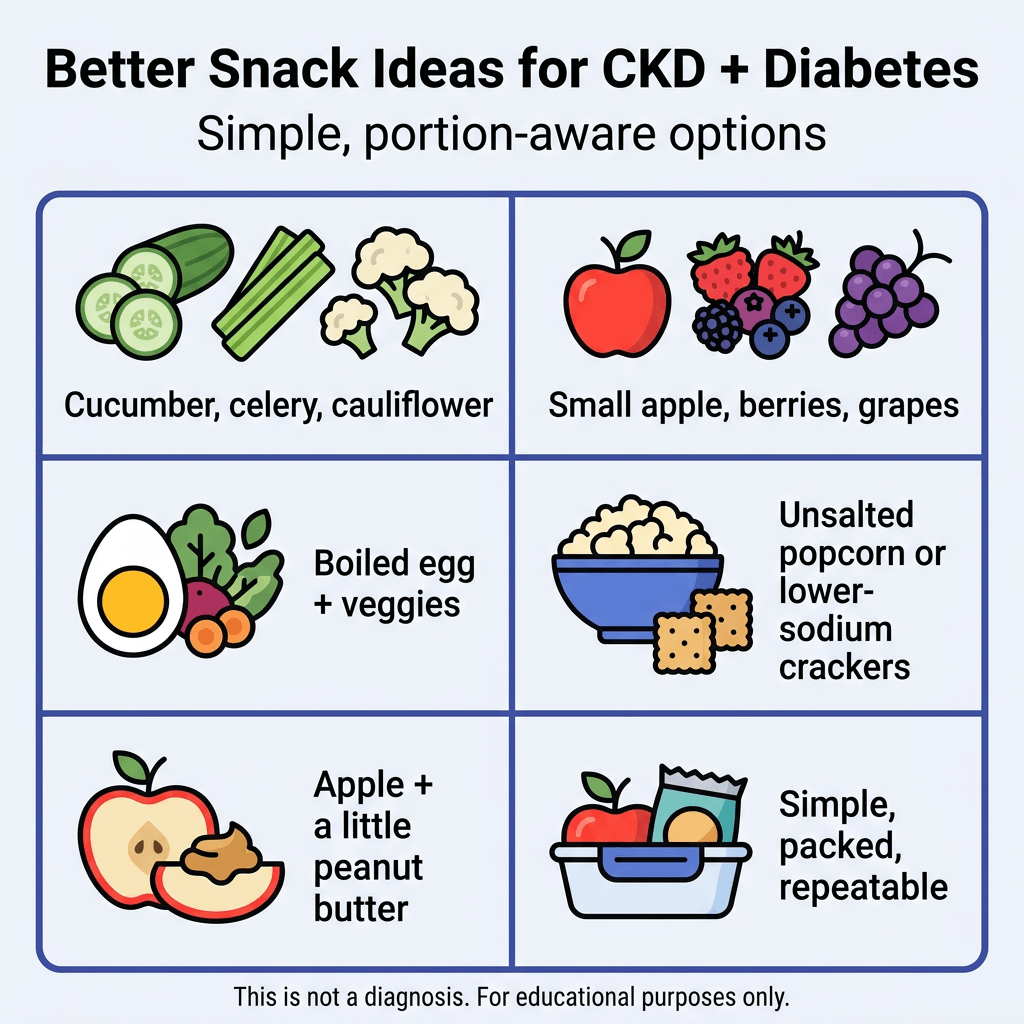
For many people, nonstarchy vegetables are a practical place to start. MedlinePlus lists options like broccoli, cucumber, cauliflower, and celery sticks as lower-carb snack ideas for diabetes, and NIDDK includes nonstarchy vegetables among healthy foods for diabetes meal planning. Examples that may work for some people include:
- cucumber slices
- celery sticks
- cauliflower florets
- bell pepper strips
- a small portion of broccoli if it fits your potassium plan
These kinds of snacks can be helpful because they are simple, crunchy, and usually easier than salty packaged snacks. Still, CKD limits are individual, so vegetable choices may need adjustment if potassium is running high.
Fruit snacks in careful portions
Fruit can still fit, but portion size matters because fruit contains carbohydrates, and some fruits are also higher in potassium than others. NIDDK notes that some fruits have more carbs than others, and CKD guidance emphasizes that potassium goals should be individualized. A modest portion of fruit may fit better than a very large bowl or frequent fruit snacking all day.
Examples that may work for some people include:
- a small apple
- a small serving of berries
- grapes in a measured portion
- pear slices
- pineapple in a modest portion if it fits your plan
Protein-paired snacks
Some people do better when a snack is not only carbohydrate by itself. A smaller carb paired with some protein may feel steadier and more filling. The kidney side of that decision still matters, though, because CKD guidance says protein needs may need adjustment over time and processed meats are often high in sodium and additives.
General examples include:
- a boiled egg with cucumber slices
- a small serving of tuna mixed simply, eaten with lettuce or crackers that fit the plan
- a little unsalted peanut butter with apple slices, if it fits your potassium, phosphorus, and calorie goals
- a small serving of plain yogurt if dairy works for your kidney plan and diabetes goals
The point is not to make every snack protein-heavy. It is to avoid the habit of choosing only fast carbs or only highly processed convenience foods.
Crunchy snacks that are better than chips
Many people want something salty and crunchy, which is why snack foods become a problem area. NIDDK specifically names chips and crackers as common high-salt snacks. A better approach is to look for simpler, lighter options instead of treating packaged salty snacks as the default.
Examples may include:
- unsalted popcorn in a modest portion
- lower-sodium crackers in a measured serving
- cucumber or celery with a simple dip that fits your plan
- cauliflower or other crunchy vegetables instead of chips
Easy grab-and-go snack ideas
A snack only helps if it is realistic. That matters for workdays, errands, long appointments, and school pickups. Practical options may include:
- one small apple
- a measured portion of grapes
- celery or cucumber packed in a container
- a boiled egg
- a small pack of lower-sodium crackers
- a small portion of nuts or seeds if they fit your plan and are not turning into a high-calorie habit
Snacks That Often Cause Problems for CKD and Diabetes
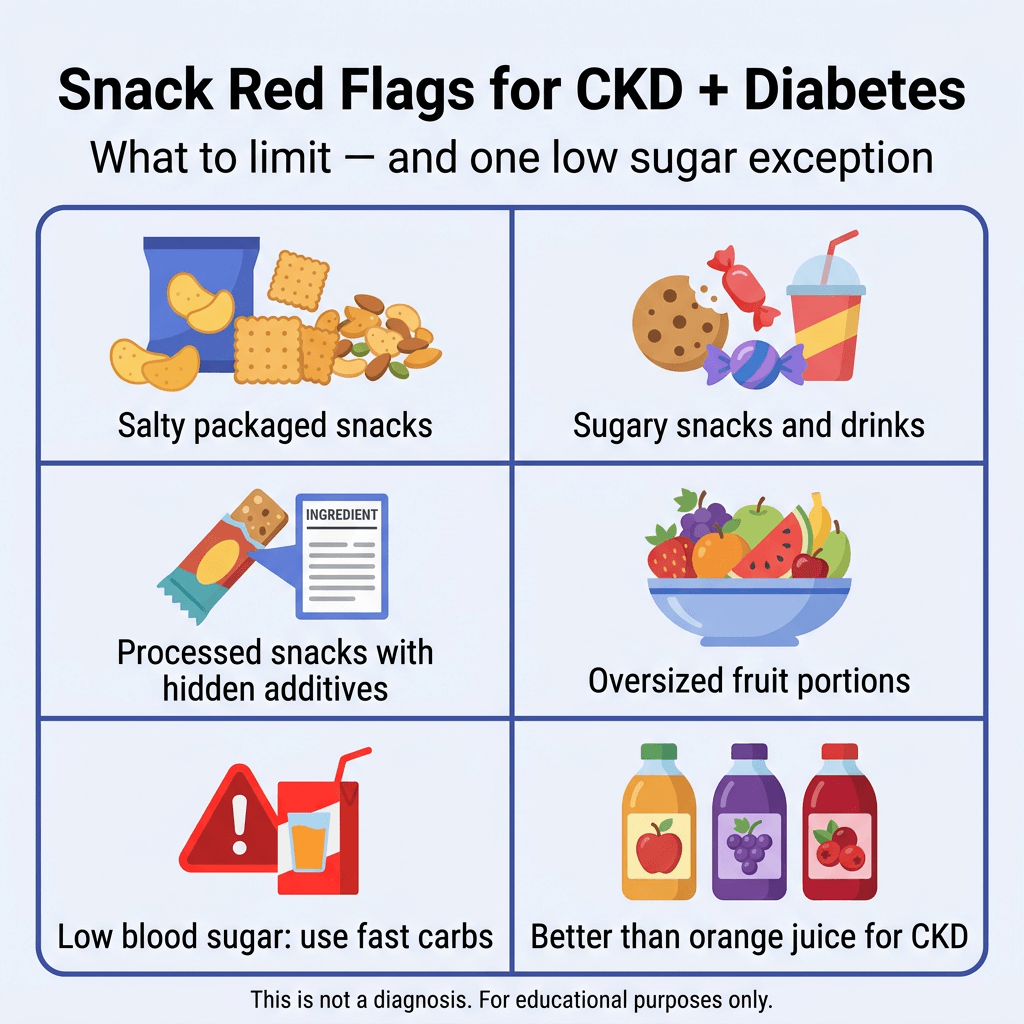
The most obvious troublemakers are salty packaged snacks. Chips, flavored crackers, processed snack mixes, and similar convenience foods can push sodium up quickly without offering much nutrition in return. NIDDK specifically warns that many snack foods are high in salt.
Another common problem is sugary snacks that spike blood sugar fast. Cookies, pastries, candy, sweet snack bars, and sugary drinks fit poorly with diabetes management because NIDDK recommends planning meals and snacks with fewer sugary foods and drinks.
A third problem is hidden phosphorus additives in processed foods. NIDDK advises checking ingredient lists for words containing “PHOS,” because added phosphorus is common in processed foods and drinks. That matters even more when someone with CKD is relying heavily on packaged snack foods.
Finally, some snacks look healthy but still need caution. Large fruit portions can add more carbs than expected. Salt substitutes may contain potassium chloride. Nuts and seeds may be low in carbs, but MedlinePlus notes they can also be high in calories, so portion control still matters.
How To Build a Smarter Snack Without Overthinking It
A useful first question is: Why am I having this snack? Is it real hunger? A long gap between meals? A planned pre-exercise snack? A response to feeling low? Or is it just convenience or stress? That question matters because the best snack choice changes depending on the reason. NIDDK notes that meal and snack timing can depend on diabetes medicines, activity, work schedule, and other conditions.
A simple structure is to keep the snack modest, less processed, and easier to explain. For example, fruit in a measured portion, vegetables with a simple side, or a small carb plus some protein may work better than eating directly from a large bag of crackers or snack mix.
It also helps to watch your own patterns. If a certain snack leaves you hungry again in 20 minutes, seems to push blood sugar up sharply, or keeps showing up in the middle of swelling or poor lab control, that is useful information. The goal is not to guess forever. It is to notice what is working and what is not.
What To Do If Blood Sugar Runs Low
This is the one place where “everyday snack” thinking changes. Low blood sugar is not the same thing as routine snacking. NIDDK says that for many people with diabetes, low blood glucose means a reading below 70 mg/dL, though the exact target should be confirmed with the care team. If blood glucose is below target, NIDDK recommends taking 15 to 20 grams of glucose or carbohydrates right away and then rechecking after 15 minutes.
NIDDK gives examples such as glucose tablets, glucose gel, regular soda, or fruit juice. It also adds one important kidney-specific detail: if you have kidney disease, do not drink orange juice for low blood sugar because it is high in potassium; apple, grape, or cranberry juice are better choices. That detail is especially useful for people trying to manage both CKD and diabetes at the same time.
So for routine life, juice is not usually the go-to snack for someone trying to manage diabetes carefully. But in a true low-blood-sugar situation, the rules change, and fast-acting carbs become the priority.
When Snack Choices May Need To Change
Snack advice becomes more personal when potassium is high, phosphorus is high, or protein goals have changed. NIDDK explains that CKD eating plans often need adjustment as kidney disease advances, and people on dialysis may need a different protein approach than people who are not on dialysis.
Diabetes treatment can also change the picture. NIDDK notes that insulin and some other diabetes medicines increase the risk of low blood glucose, which can affect whether snacks are needed, when they are needed, and what kind of snack makes the most sense.
That is why a snack guide like this is helpful, but only up to a point. It should reduce confusion, not replace individualized advice when the situation becomes more specific.
If snack choices are starting to feel more stressful than helpful, that usually means the issue is no longer just about snacks. For people in Angleton and Brazoria County, Angleton ER can evaluate urgent symptoms such as dehydration, vomiting, weakness, or signs of low blood sugar, and help point you toward the follow-up care you may need next.
Frequently Asked Questions
What are the best snacks for CKD and diabetes?
Usually the best snacks are simple, portion-aware, and less processed. Nonstarchy vegetables, measured fruit portions, and modest snacks that are not overloaded with salt or sugar tend to work better than chips, pastries, or sugary drinks.
Can people with CKD and diabetes eat fruit as a snack?
Yes, many can, but portion size still matters because fruit contains carbs, and some fruits may also be higher in potassium. The right fruit choice depends on your kidney plan and blood sugar goals.
Are nuts okay for CKD and diabetes?
Sometimes, but they are not automatic “free snacks.” MedlinePlus notes that nuts and seeds may be low in carbs but can also be high in calories, and CKD plans may also need to consider potassium and phosphorus.
What snacks should be avoided with CKD and diabetes?
Common trouble spots include salty packaged snacks, sugary desserts, sweet drinks, and heavily processed foods with hidden sodium or phosphorus additives.
How can I snack without spiking my blood sugar?
Keep portions in check, avoid turning every snack into a high-carb event, and use simpler foods more often. Snack timing may also depend on your medicines and daily routine.
Do all people with CKD need to avoid potassium-rich snacks?
No. Potassium limits are individualized and usually depend on lab results and stage of disease.
What should I eat if my blood sugar gets low and I also have kidney disease?
If your blood sugar is below target, use fast-acting carbs as directed by your care team. NIDDK says apple, grape, or cranberry juice are better choices than orange juice for people with kidney disease because orange juice is high in potassium.
Are protein bars good for CKD and diabetes?
Some may fit, but many are processed, high in added sugar, high in sodium, or contain ingredients that do not fit well with CKD. Labels matter.
Can someone with stage 3 CKD use these snack ideas?
Yes, as a general starting point. But stage 3 CKD still varies from person to person, so labs, blood pressure, medications, and diabetes control still matter.
When should someone ask for a personalized snack plan?
It is a good idea when blood sugar swings are frequent, lows happen often, labs are changing, swelling is worsening, appetite is poor, or food restrictions are becoming hard to manage.