
Yes. A heart attack can sometimes happen without being recognized at the time. A so-called silent heart attack is still a myocardial infarction – an injury to heart muscle caused by interrupted blood flow – but the warning signs may be absent, mild, vague, or easy to explain away. The American Heart Association describes silent ischemia and silent heart attacks as events that can occur with no obvious warning symptoms.
The word silent can be misleading. It does not always mean that a person felt absolutely nothing. Often, the more important issue is that what they felt did not seem dramatic or “heart-related” enough to trigger concern. That is why pain intensity, the ability to keep functioning, or temporary improvement should not be used as proof that the heart is safe.
Can You Really Have a Heart Attack Without Knowing It?
A silent heart attack is a heart attack that is not recognized when it happens. According to the National Heart, Lung, and Blood Institute (NHLBI), heart attacks can occur with very mild symptoms or even no symptoms. Symptoms also vary from one person to another, so the absence of a dramatic, crushing chest-pain episode does not rule out myocardial infarction.
The underlying event is not “less real” because it was missed. A heart attack still means that heart muscle has been deprived of adequate blood and oxygen. If you want the broader explanation of how narrowed coronary arteries can contribute to heart injury, Angleton ER has a separate guide to coronary heart disease. This article stays focused on the harder question: why a heart attack may not feel obvious while it is happening.
What Can a Silent Heart Attack Feel Like?
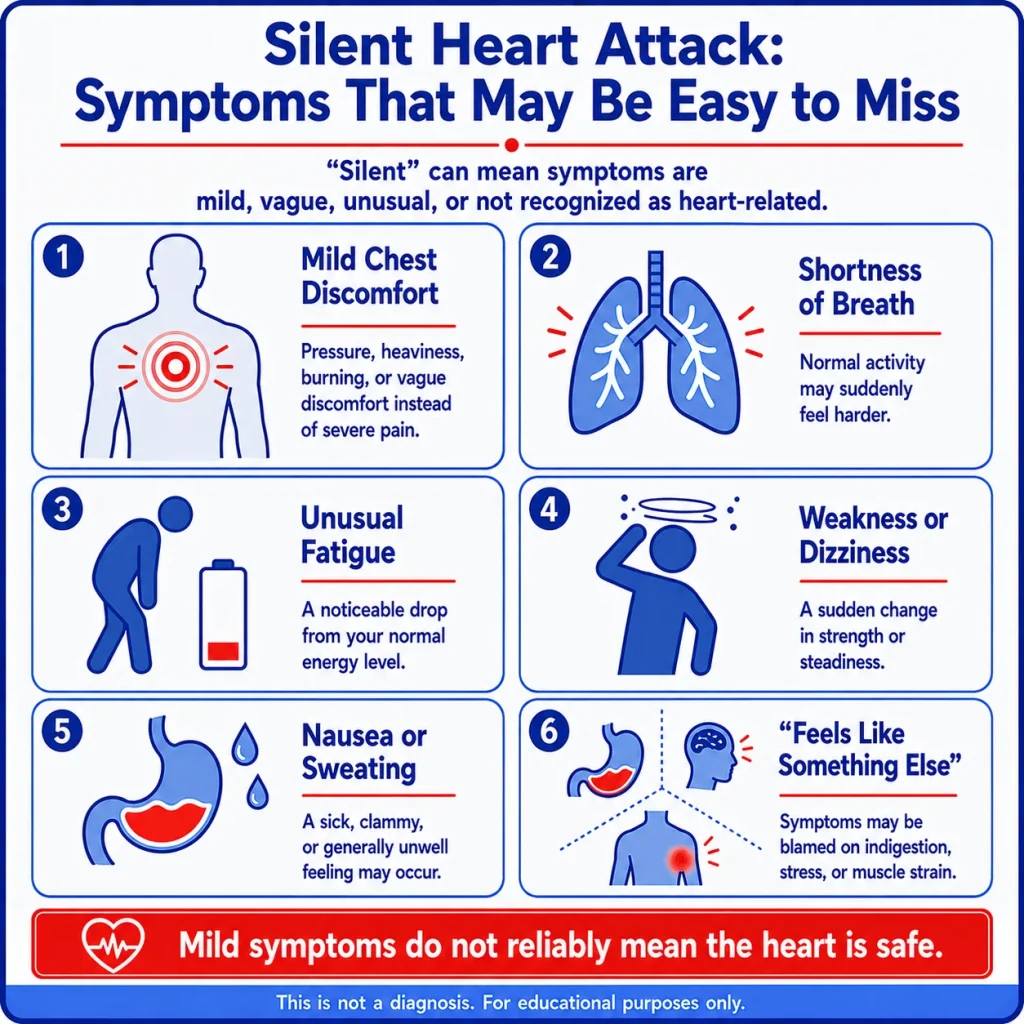
Subtle heart-attack symptoms can resemble ordinary discomfort rather than a medical emergency. The CDC lists heart attack symptoms that can include chest discomfort, shortness of breath, weakness or light-headedness, sweating, unusual tiredness, nausea, or vomiting. In a silent or unrecognized event, these signs may be less intense, less familiar, or not connected together in the person’s mind.
• Mild pressure, heaviness, burning, or vague discomfort in the chest rather than severe pain
• Unexplained shortness of breath or a sudden sense that normal activity feels harder
• Unusual fatigue, weakness, or a noticeable drop from your normal energy level
• Nausea, sweating, dizziness, or a general feeling that something is not right
• Discomfort that seems easy to blame on indigestion, muscle strain, stress, or another everyday problem
None of these symptoms, by itself, proves that a heart attack is occurring. The concern comes from the overall situation: a new or unexplained change, especially when several symptoms appear together or the person feels distinctly different from normal.
Why Can a Heart Attack Go Unrecognized?
The Symptoms May Not Match Expectations
Many people expect a heart attack to look like a sudden collapse with severe, unmistakable chest pain. In reality, the American Heart Association notes that some heart attacks start slowly with mild pain or discomfort. When a person is waiting for a dramatic warning sign, a quieter presentation can be easier to dismiss.
The same problem can happen when chest pain is not the main feature. MedlinePlus notes that some people may have little or no chest pain and may instead experience symptoms such as shortness of breath, fatigue, weakness, nausea, or dizziness. A symptom can be medically important even when it does not match the picture someone had in mind.
Everyday Explanations Can Seem More Likely
Mild chest discomfort may feel like reflux or a strained muscle. Fatigue may be blamed on poor sleep. Breathlessness may be attributed to exertion, illness, aging, or stress. Mayo Clinic’s overview of silent heart attack specifically notes that people may mistake the symptoms for heartburn, the flu, or a strained chest muscle.
Those explanations can be reasonable possibilities, but they are not reliable at-home exclusions. Stress can also produce very real physical symptoms; our separate article on stress and heart-related symptoms explains that overlap in more depth. The practical point here is narrower: when a symptom is new, unexplained, or meaningfully different from your usual pattern, the familiar explanation should not automatically win.
Mild Symptoms Do Not Mean the Heart Is Safe
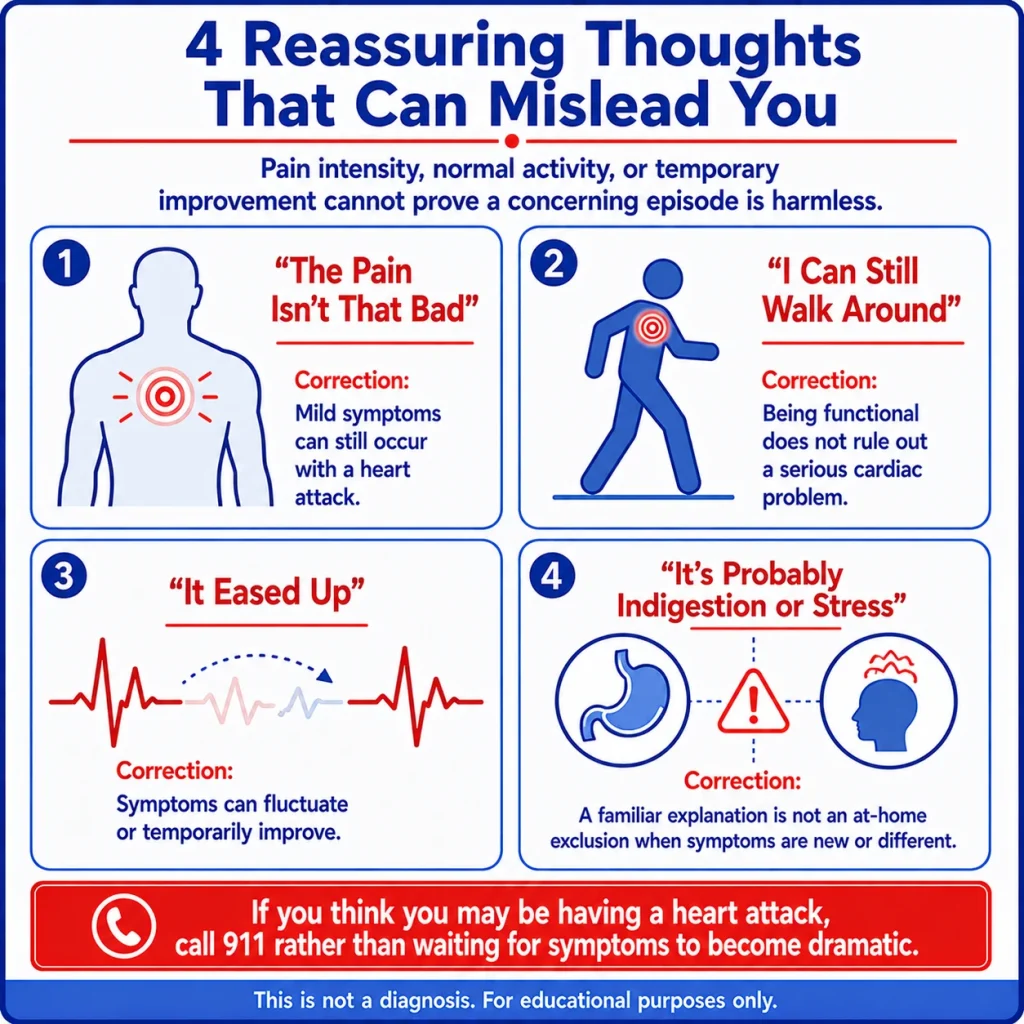
Symptom severity is not a dependable measure of how serious the underlying heart problem is. The NHLBI explains that heart attack symptoms can be mild or severe, and the 2021 AHA/ACC chest pain guideline summary emphasizes that people may describe pressure, tightness, squeezing, heaviness, burning, or discomfort rather than simply “pain.”
That means statements such as “the pain is not that bad,” “I can still walk around,” or “it eased up” are not safe rule-out tests. Symptoms can fluctuate, and a person can remain functional while a serious cardiac problem is developing. If the overall pattern is concerning, waiting for it to become unbearable creates unnecessary risk.
What If a Silent Heart Attack Is Discovered Later?
Some people first learn that a previous heart attack may have occurred during a later medical evaluation. The NHLBI’s heart attack diagnosis guidance explains that clinicians may use an electrocardiogram, blood testing, medical history, physical examination, and heart imaging to determine whether a heart attack is happening or whether evidence suggests one has already occurred.
The exact workup depends on the situation. A later finding should be interpreted by a clinician rather than by comparing a single test result with an online checklist. This article does not turn that process into a testing guide because the key issue for a person with symptoms now is whether the current situation needs urgent evaluation.
When Subtle or Unexplained Symptoms Should Still Be Treated as Urgent
Do not wait for symptoms to become dramatic if something feels newly or significantly wrong. The CDC advises calling 911 when heart attack symptoms occur, and the American Heart Association gives the same emergency guidance even when a person is not sure that a heart attack is happening.
Urgent concern is especially reasonable with new or unexplained chest pressure or discomfort, trouble breathing, fainting or near-fainting, marked weakness, chest symptoms with sweating or nausea, or several concerning symptoms developing together. AHA heart attack warning-sign guidance is clear that uncertainty should not delay emergency action.
If you think you may be having a heart attack, call 911 rather than trying to determine at home whether the event is “silent.” Emergency medical services can begin assessment and treatment during transport. The decision should be based on the possibility of a serious problem, not on whether the symptoms are dramatic enough to fit a stereotype.
Emergency Heart-Symptom Evaluation in Angleton
For people in Angleton and nearby Brazoria County communities, Angleton ER provides 24/7 emergency evaluation for chest pain and heart-related symptoms, with EKG testing, on-site lab testing, imaging when medically appropriate, monitoring, and stabilization based on the emergency physician’s evaluation and plan of care. If symptoms may be life-threatening or you suspect a heart attack, call 911 first.
Frequently Asked Questions
Can you have a heart attack and feel completely normal?
Yes, it is possible, although “silent” more often means that symptoms were absent, mild, unusual, or not recognized as heart-related. A later medical evaluation may reveal evidence that a heart attack occurred.
What are the most easily missed symptoms of a silent heart attack?
Mild chest discomfort, unusual fatigue, shortness of breath, nausea, sweating, dizziness, weakness, or a general unwell feeling can be easy to minimize. The key concern is a new or unexplained change, not any single symptom in isolation.
Can a silent heart attack happen without chest pain?
Yes. Some heart attacks occur with little or no chest pain. Shortness of breath, fatigue, weakness, nausea, dizziness, or other less obvious symptoms may be more noticeable.
Can a silent heart attack be discovered after it has already happened?
Yes. A clinician may identify evidence of a prior heart attack during later evaluation using the medical history together with heart testing. No single online symptom checklist can confirm that a past event occurred.
Does mild heart attack pain mean the heart attack is less serious?
No. The intensity of pain does not reliably measure the seriousness of the underlying problem. Mild symptoms should not be used as reassurance when the overall pattern could represent a heart attack.
Should I seek emergency evaluation if my symptoms are vague but unusual for me?
Yes, if the symptoms are new, concerning, or suggest a possible heart emergency – particularly chest discomfort, breathing difficulty, fainting, marked weakness, sweating or nausea with chest symptoms, or several symptoms together. If you think a heart attack may be occurring, call 911.