

When people first hear they need to “eat for their kidneys,” the advice can feel confusing fast. One source says cut salt. Another says watch potassium. Another mentions phosphorus, protein, fluids, and labels. For many families in Angleton and across Brazoria County, what helps most at the start is not a complicated menu, but a clear food list they can use while shopping, cooking, or checking the pantry. The most important thing to know is that there is no single renal diet food list that fits every person with kidney disease. Food choices often need to be adjusted based on CKD stage, blood test results, medicines, and whether the person is on dialysis.
Medical disclaimer: This article is for educational purposes only. It is not medical advice, diagnosis, or a substitute for care from your doctor or renal dietitian. A kidney diet may need to change based on sodium, potassium, phosphorus, protein, fluid needs, and other health conditions such as diabetes or high blood pressure.
What a kidney diet food list is
A kidney diet food list is a general reference guide that helps people choose foods more carefully when kidney function is reduced. Healthy kidneys help keep the right balance of salts, minerals, and fluids in the body. When the kidneys are not working well, what you eat and drink can affect swelling, blood pressure, potassium, phosphorus, comfort, and how well treatments work.
That does not mean everyone with kidney disease needs the exact same restrictions. NIDDK explains that some people with CKD need closer attention to sodium, some need help keeping potassium in range, some need to lower phosphorus, and some need a more moderate protein intake. Dialysis can change those needs even more.
The best way to use this article is as a starting-point food guide, not as a strict personal prescription. It is meant to help readers recognize which foods often fit better, which foods are more likely to need limits, and which label details matter most.
What a kidney-friendly food list usually focuses on
Most kidney diet advice comes back to a few big themes.
The first is sodium. Too much sodium causes the body to hold on to fluid. That can increase swelling and raise blood pressure, which puts more stress on the kidneys and heart. NIDDK notes that much of the sodium people eat comes from packaged, prepared, and restaurant foods rather than just table salt.
The second is potassium. CKD can make it harder for the kidneys to remove extra potassium from the blood. But not every person with CKD needs the same potassium restriction. NKF and NIDDK both stress that potassium intake should match the person’s blood levels and care plan, not internet guesses.
The third is phosphorus. As kidney disease gets worse, phosphorus can build up more easily. NIDDK and NKF both warn that processed foods with phosphate additives can be a major source of phosphorus, and those additives are often absorbed very efficiently by the body.
The fourth is protein. People with CKD still need protein, but some may need a more moderate intake so extra waste does not build up in the blood. At the same time, too little protein can lead to poor nutrition. That balance is one reason food lists should stay general unless a clinician or dietitian has given more specific targets.
Printable kidney diet food list: foods that often fit better
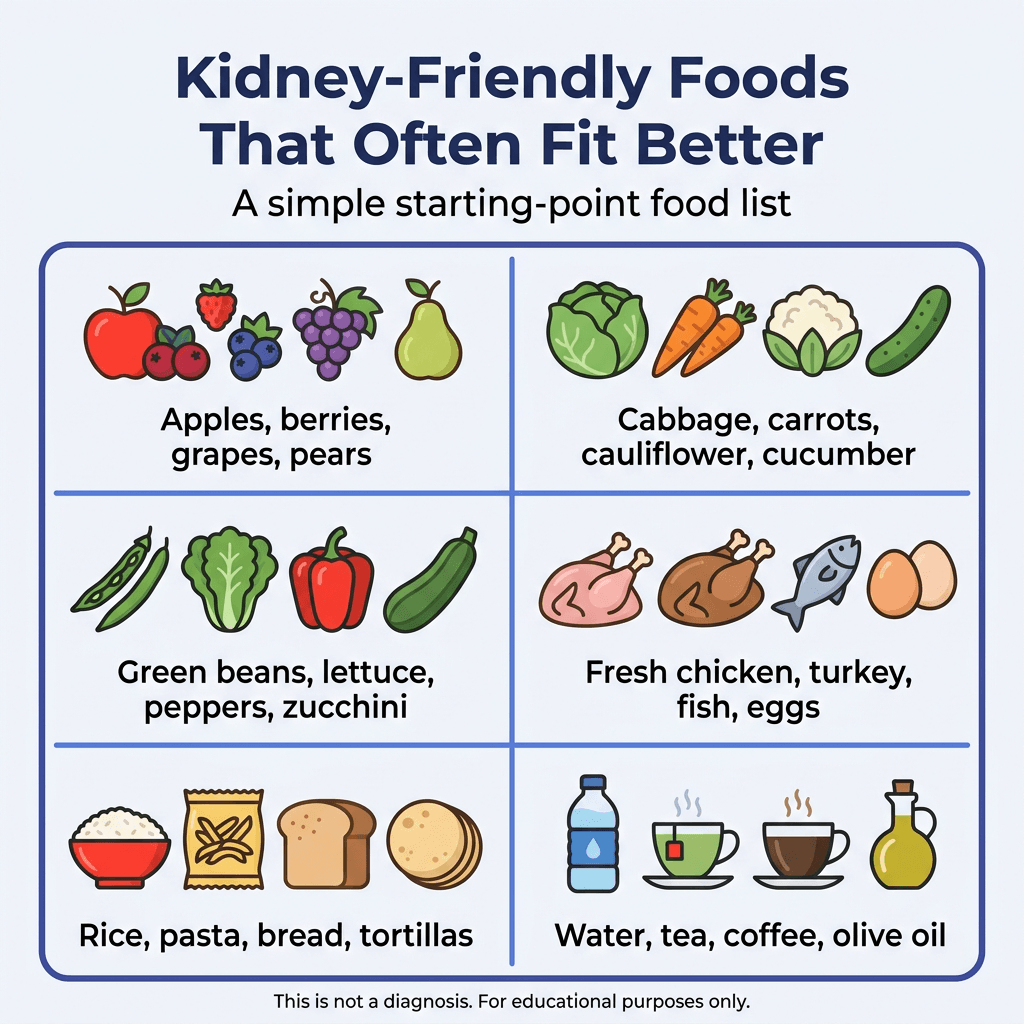
This section is designed to work like a simple reference sheet. These foods often fit better in a kidney-conscious plan, especially when the goal is to reduce sodium and rely less on heavily processed foods. Some items may still need adjustment if potassium, phosphorus, protein, or fluids are being monitored more closely.
Fruits that often fit better
If your care team has asked you to watch potassium, common lower-potassium fruit choices often include:
- apples
- berries
- grapes
- pears
- pineapple
- plums
- peaches
- watermelon in moderate portions
Vegetables that often fit better
Vegetables that are commonly listed as lower-potassium or easier-to-work-with options include:
- cabbage
- carrots
- cauliflower
- cucumber
- green beans
- lettuce
- onion
- peppers
- zucchini
- yellow squash
Protein foods that may fit better
Kidney-friendly eating usually leans toward less processed protein choices, such as:
- fresh chicken
- turkey
- fish
- eggs or egg whites
- unprocessed meats in moderate portions
Grains and starches that are often easier to work with
For many people, these are simpler foundation foods:
- rice
- pasta
- bread in reasonable portions
- tortillas
- unsalted or lower-sodium crackers
- hot cereals like oatmeal or cream of rice, depending on the overall plan
Drinks that often fit better
In many kidney-conscious plans, the easier drink choices are:
- water
- unsweetened tea
- coffee in appropriate amounts
- juices that fit the person’s potassium plan, if allowed
- lighter beverage choices instead of dark colas with phosphate additives
Foods that are often limited with kidney disease
A printable food list is just as useful when it shows what often needs more caution.
High-sodium foods to limit
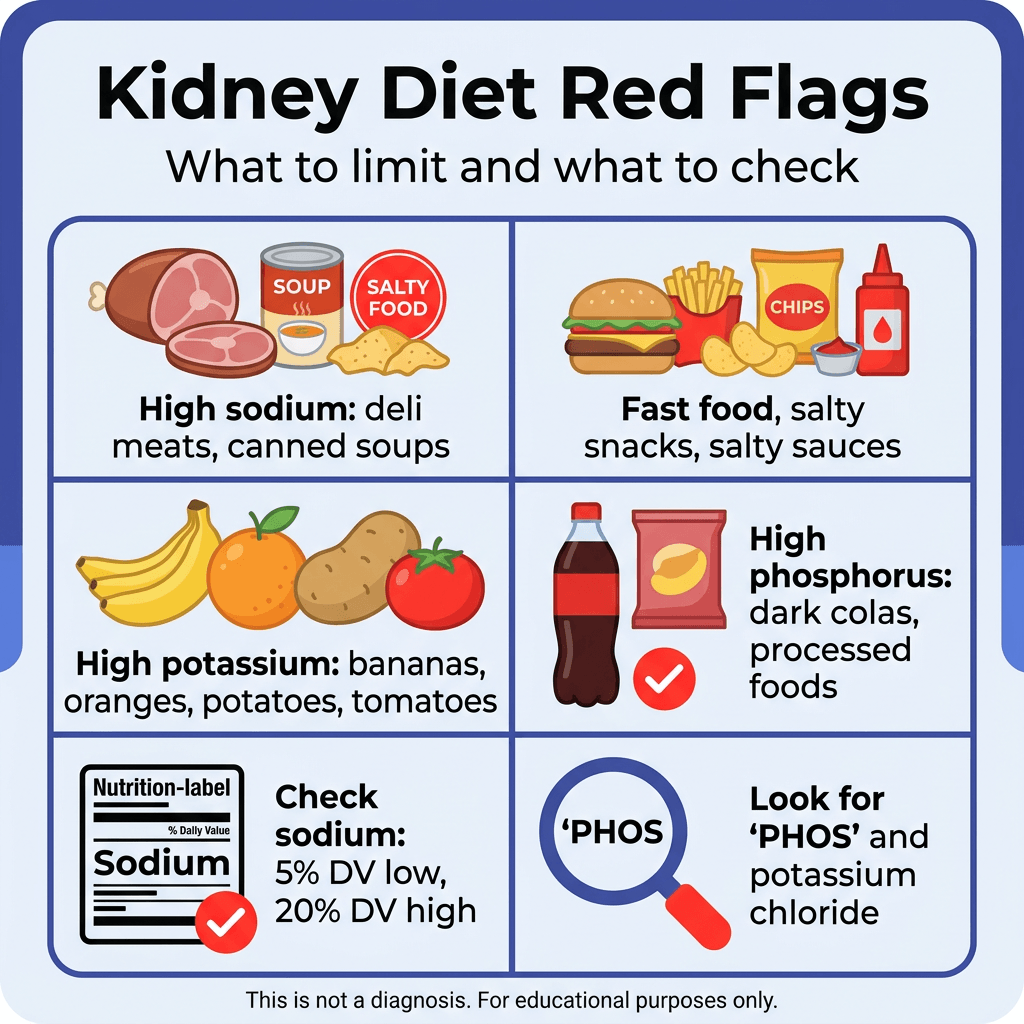
Many people with CKD are told to limit foods such as:
- deli meats
- canned soups
- frozen dinners
- salty snack foods like chips and crackers
- fast food
- salty sauces such as soy sauce, teriyaki sauce, barbecue sauce, garlic salt, and onion salt
Foods that may be high in potassium
If potassium is running high, foods that often need more caution include:
- bananas
- oranges and orange juice
- potatoes
- tomatoes and tomato sauce
- avocado
- spinach
- dried fruit and some melons
Foods and drinks that may be high in phosphorus
Phosphorus can be harder to spot because a lot of it comes from additives in processed foods. Common items that may need limits include:
- dark colas
- packaged drinks with phosphate additives
- processed meats
- deli meats
- highly processed convenience foods
- some dairy-heavy processed products and flavored packaged foods
Why portion size still matters
Even foods that are usually considered “better choices” can become less helpful in very large portions. NKF notes that a large amount of a lower-potassium food can turn it into a high-potassium load, which is why portion size still matters.
How to read food labels on a renal diet
A good kidney food list becomes much more useful when you know how to read labels.
The first thing to check is sodium. NIDDK says a Nutrition Facts label with 5% Daily Value or less for sodium is considered low, while 20% Daily Value or more is considered high. It also recommends looking for terms like low sodium, very low sodium, no salt added, unsalted, or lightly salted.
The second thing to check is the ingredient list for phosphorus additives. NIDDK and NKF both advise looking for the word “phosphorus” or ingredients containing “PHOS”, such as phosphoric acid, disodium phosphate, and monosodium phosphate.
The third thing to watch is salt substitutes. Some salt substitutes use potassium chloride, which can be a problem for people who need to limit potassium.
Finally, remember that ingredient lists matter because many foods that do not taste especially salty or “processed” can still contain a lot of sodium or phosphorus additives. That is one reason kidney diets often work better when meals are built from simpler ingredients.
Simple renal diet list by grocery category
If you want a cleaner reference list to save or screenshot, this is the most practical version:
Produce
- apples
- berries
- grapes
- pears
- pineapple
- cabbage
- carrots
- cauliflower
- cucumber
- green beans
- lettuce
- onions
- peppers
- zucchini
Protein section
- fresh chicken
- fresh turkey
- fish
- eggs
- egg whites
- unprocessed meats in moderate portions
Bread, rice, pasta, and pantry foods
- rice
- pasta
- bread
- tortillas
- lower-sodium crackers
- oats or hot cereal
- herbs and spices without added salt
Drinks and basic kitchen staples
- water
- tea
- coffee
- olive oil
- lemon juice
- garlic
- pepper
- salt-free seasoning blends that do not contain potassium chloride
When this food list may need to change
This is where kidney diet advice becomes more personal. If potassium is high, the list may need to be narrowed more. If phosphorus is high, ingredient labels and packaged foods become even more important. If fluid intake is being restricted, even drink guidance changes. And if the person is on dialysis, protein and fluid needs may be very different from earlier-stage CKD.
The same is true when diabetes or high blood pressure is also part of the picture. In real life, people are rarely managing kidney disease alone. The safest food plan often has to make room for blood sugar goals, blood pressure control, and overall nutrition at the same time.
When to ask for a personalized renal diet plan
A general food list is helpful, but it stops being enough when the situation becomes more specific. It is a good idea to ask for a personalized renal diet plan if:
- lab values are changing
- swelling is getting worse
- appetite is poor
- weight is dropping
- food choices feel confusing
- potassium or phosphorus has become a repeated issue
NIDDK specifically recommends working with a dietitian or healthcare professional to find the right balance of sodium, potassium, phosphorus, protein, and fluids. That kind of guidance can save people from over-restricting foods they may not actually need to avoid.
If food choices are starting to feel more confusing than helpful, that usually means the question is bigger than a simple list. For people in Angleton and Brazoria County, Angleton ER can help evaluate urgent symptoms such as swelling, weakness, vomiting, or dehydration, and then help point you toward the right follow-up care when kidney concerns need more than general diet guidance.
Frequently Asked Questions
What foods are good for a kidney diet?
In general, less processed foods with lower sodium are a strong starting point. Depending on potassium needs, fruits like apples, berries, grapes, and pears and vegetables like cabbage, cauliflower, cucumber, green beans, lettuce, onions, and peppers often fit better.
What foods should be avoided with kidney disease?
There is no single avoid list for every person, but common foods that often need limits include deli meats, canned soups, frozen meals, salty snacks, dark colas, and some high-potassium or high-phosphorus foods depending on labs.
Is there one printable renal diet food list for all patients?
No. Kidney diets are not one-size-fits-all. CKD stage, dialysis status, blood work, and other conditions can all change what is appropriate.
Are bananas bad for kidney disease?
Not automatically, but bananas are high in potassium and may need limits if potassium is running high.
Are tomatoes high in potassium?
They can be. Tomatoes and tomato products are commonly listed among foods that may need more caution in a potassium-restricted plan.
What drinks are better for kidney disease?
Water is usually the simplest choice. Tea and coffee may also fit in many plans, while dark colas and drinks with phosphate additives are often less helpful for people who need to watch phosphorus.
Why do people with kidney disease need to watch sodium?
Too much sodium can cause the body to hold on to fluid, which can worsen swelling and raise blood pressure.
What does “PHOS” mean on a food label?
It is a quick way to spot phosphorus additives in ingredient lists. NIDDK and NKF both recommend looking for ingredient words that contain “PHOS.”
Can someone with stage 3 CKD use this food list?
Yes, as a general educational starting point. But stage 3 CKD still varies from person to person, so the list may need adjustment based on labs, blood pressure, diabetes, and symptoms.
When should someone ask for a personalized kidney diet plan?
It makes sense when potassium or phosphorus is high, symptoms are changing, dialysis is involved, or food choices feel too confusing to manage alone.