
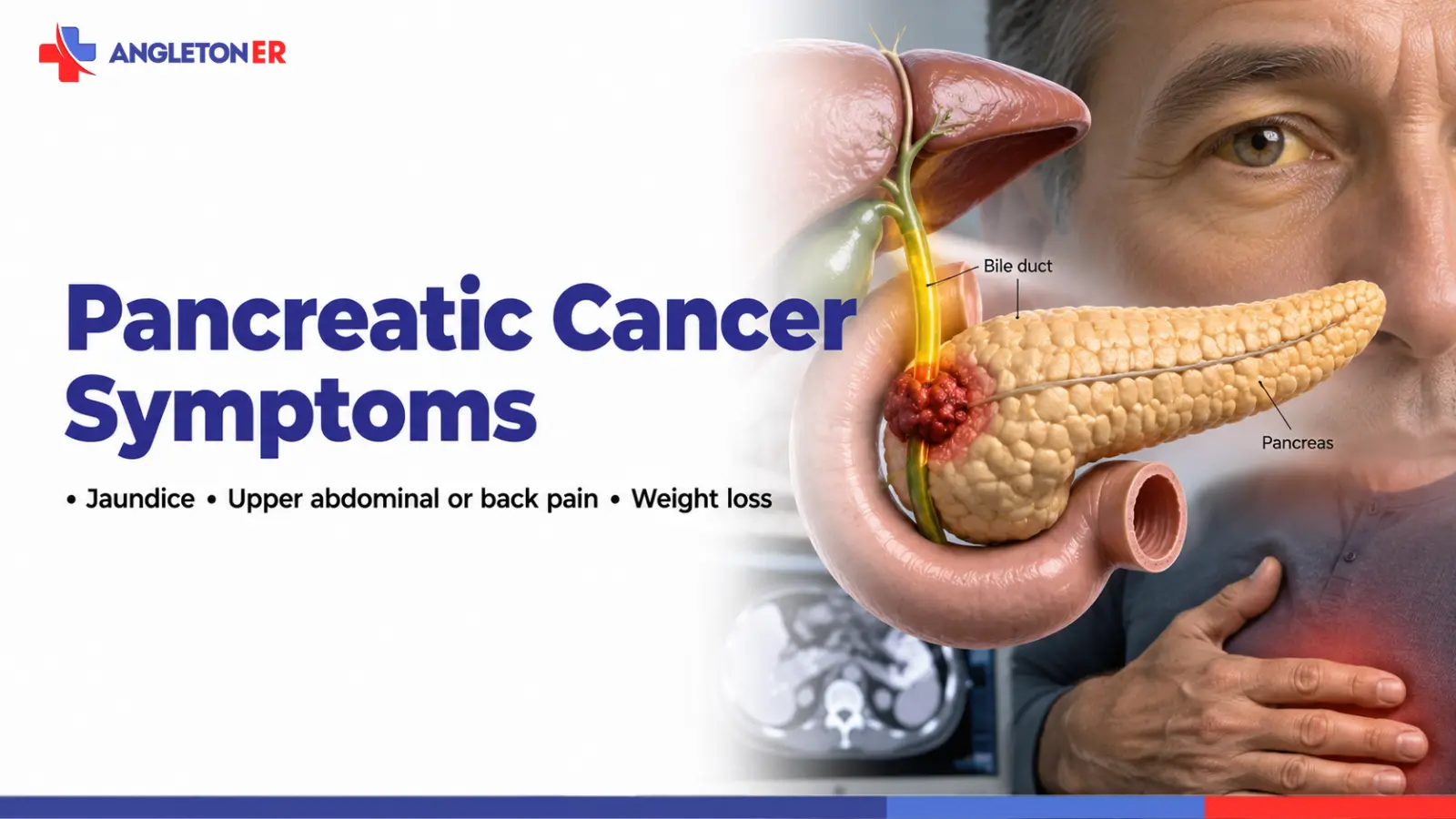
Pancreatic cancer symptoms can be difficult to recognize because they may begin gradually and overlap with common digestive, liver, gallbladder, or musculoskeletal problems. A single symptom cannot confirm pancreatic cancer. However, a developing pattern—especially jaundice with persistent upper-abdominal or back pain, appetite loss, unexplained weight loss, or vomiting—deserves medical evaluation.
The National Cancer Institute identifies jaundice, pain, and unexplained weight loss among the signs that may occur, while also noting that early pancreatic cancer may cause no noticeable symptoms. The immediate decision is not whether you can identify cancer at home; it is whether your current symptoms are stable enough for timely follow-up or severe enough to require emergency care.
Pancreatic Cancer Symptoms May Develop Gradually or Seem Unrelated
Early changes may be intermittent, mild, or easy to explain away. Upper-abdominal discomfort may be blamed on indigestion, back pain may seem muscular, and reduced appetite may be attributed to stress or a short illness. Symptoms become more concerning when they continue, progressively worsen, or begin occurring together.
The pattern may include:
• Yellowing of the skin or whites of the eyes, with dark urine or pale stool
• Persistent discomfort in the upper or central abdomen that may extend into the back
• Reduced appetite, unusual fullness after eating, or declining food intake
• Weight loss without a planned change in diet or activity
• Ongoing nausea, vomiting, or difficulty maintaining hydration
These changes are not unique to pancreatic cancer. They fit within the broader category of cancer warning signs that warrant evaluation when they persist or worsen, but this article focuses specifically on the combination of jaundice, abdominal or back pain, digestive changes, and urgent complications.
Jaundice and the Changes Patients May Notice
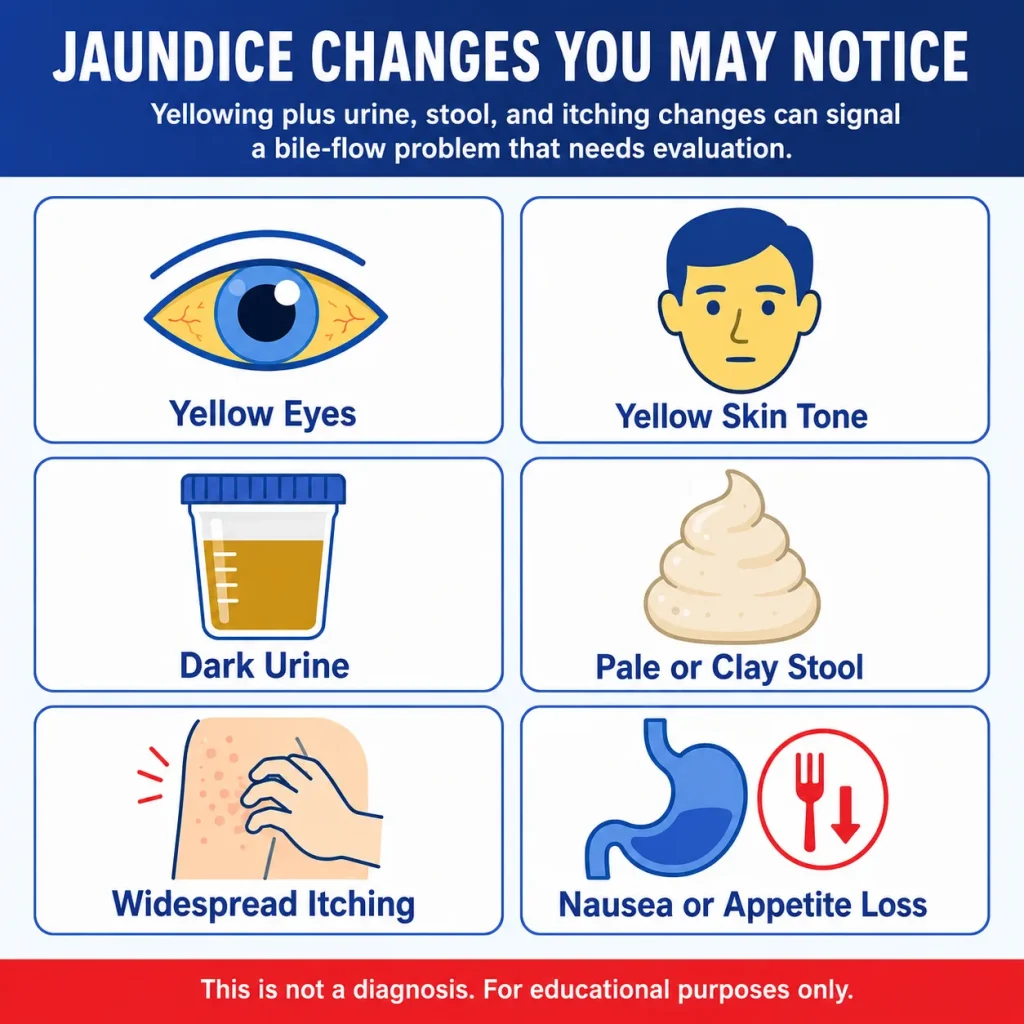
MedlinePlus defines jaundice as yellow coloring of the skin, eyes, or mucous membranes caused by bilirubin buildup. It may develop suddenly or slowly. The most visible clue is usually yellowing of the whites of the eyes, although darker urine, pale or clay-colored stool, and widespread itching may appear as well.
Other symptoms can include nausea, reduced appetite, or upper-abdominal discomfort. The American Cancer Society’s pancreatic cancer symptom guidance explains that a blocked bile duct can prevent bile from reaching the intestines, contributing to dark urine, light or greasy stool, and itching.
Pancreatic disease is only one possible cause. Liver injury, hepatitis, gallstones, bile-duct disorders, certain medicines, and blood disorders can also produce jaundice. Because the cause cannot be determined by appearance alone, new jaundice should be medically assessed rather than watched indefinitely.
Upper-Abdominal Pain That Extends Into the Back
Pancreatic cancer may cause discomfort in the upper or middle abdomen, sometimes with pain that travels into the middle or upper back. Johns Hopkins Medicine notes that patients can experience the symptom differently, so no single location, posture, or pain quality is diagnostic.
Evaluation becomes more important when the pain:
• Continues, keeps returning, or steadily becomes more intense
• Has no clear injury or short-lived digestive explanation
• Occurs with jaundice, poor appetite, or unintentional weight loss
• Interferes with eating, sleep, work, or ordinary movement
• Is accompanied by persistent nausea or vomiting
Most abdominal and back pain is not caused by pancreatic cancer. The concern rises when the pain is persistent and forms part of a broader symptom pattern rather than appearing as an isolated, improving episode.
Appetite Changes, Digestive Problems, and Unexplained Weight Loss
Some patients notice less interest in food, discomfort after meals, unusual fullness after eating a small amount, nausea, or gradual weight loss without trying. These changes may reflect reduced intake, difficulty tolerating meals, or impaired digestion, but they are not specific enough to diagnose pancreatic disease.
Stool may remain unusually pale or become persistently greasy, foul-smelling, floating, or difficult to flush when fats are not being digested normally. The American Cancer Society describes light-colored or greasy stool as a possible change when bile or pancreatic enzymes do not reach the intestines normally. Stool appearance alone is not a cancer test; the more meaningful clue is a sustained change occurring with jaundice, pain, appetite loss, or weight loss.
Vomiting, Severe Pain, and Dehydration Can Make the Situation Urgent
Vomiting can occur with many gastrointestinal illnesses and does not specifically identify pancreatic cancer. The urgent issue is whether repeated vomiting, pain, infection, or fluid loss is making the patient medically unstable.
MedlinePlus guidance on nausea and vomiting advises prompt medical care when a person cannot keep fluids down, has severe abdominal pain, or has markedly reduced urination. Severe dehydration can cause very little or no urination, dizziness, confusion, rapid heartbeat, fainting, or loss of consciousness.
Warning signs include:
• Repeated vomiting or inability to keep liquids down
• Very little urination, a dry mouth, or worsening dizziness
• Severe or rapidly increasing abdominal or back pain
• Marked weakness, confusion, fainting, or reduced alertness
• Vomiting together with jaundice or fever
• A swollen, rigid, or increasingly tender abdomen
When Pancreatic Cancer-Like Symptoms Need Emergency Care
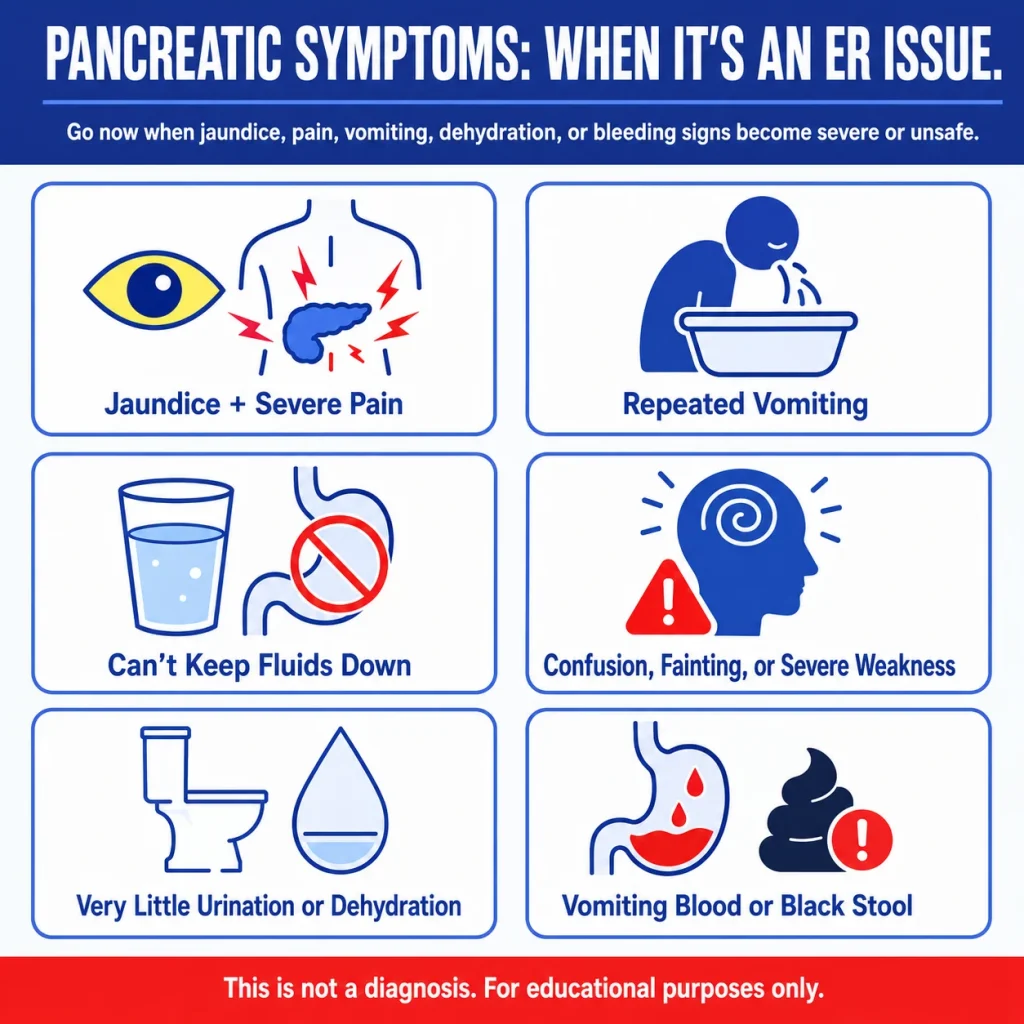
Seek emergency evaluation for:
• New jaundice with severe abdominal pain, repeated vomiting, fever, or confusion
• Severe or rapidly worsening upper-abdominal or back pain
• Persistent vomiting with inability to drink or keep fluids down
• Fainting, severe dizziness, confusion, or pronounced weakness
• Very little urination or other signs of significant dehydration
• Vomiting blood, black stools, or another sign of gastrointestinal bleeding
• Sudden breathing difficulty, chest pain, loss of consciousness, or collapse
Call 911 when the person is unconscious, has severe breathing difficulty, collapses, or cannot be transported safely.
Arrange timely medical follow-up for:
Persistent jaundice without severe symptoms, unexplained weight loss, recurring upper-abdominal or back pain, ongoing appetite loss, or digestive changes that do not resolve should be evaluated promptly through an appropriate clinician. Stable symptoms may not require emergency treatment, but progressive or unexplained changes should not be monitored at home without a plan for assessment.
What Medical Evaluation May Involve
Evaluation usually begins with a symptom history, physical examination, vital signs, and an assessment of hydration. Blood testing may examine bilirubin, liver function, blood counts, electrolytes, kidney function, infection indicators, and other abnormalities. For a more detailed explanation of the limits of routine laboratory results, see what CBC and ER blood tests can and cannot show about cancer.
Imaging is chosen according to the symptoms and urgency. Ultrasound or CT may help identify bile-duct blockage, inflammation, infection, fluid collections, a pancreatic abnormality, or another serious abdominal problem. Emergency imaging can reveal a suspicious finding without establishing what it is; the distinction is explained further in how ER CT, ultrasound, and MRI can find abnormalities without confirming cancer.
The American Cancer Society’s overview of pancreatic cancer testing describes medical history, physical examination, imaging, blood tests, and biopsy as parts of the diagnostic process. One ER visit or scan may identify an urgent blockage, dehydration, infection, or concerning mass, but a final cancer diagnosis may require additional imaging, gastroenterology or oncology follow-up, endoscopic testing, and sometimes biopsy.
Emergency Evaluation for Serious Symptoms in Angleton
For patients in Angleton and nearby Brazoria County communities, jaundice accompanied by severe abdominal or back pain, persistent vomiting, fever, confusion, fainting, or dehydration should not wait for a routine appointment. Angleton ER provides 24/7 emergency evaluation for urgent abdominal and digestive symptoms, with on-site laboratory testing, IV fluids, stabilization, and CT, X-ray, or ultrasound when the ER physician determines that testing is medically appropriate.
Frequently Asked Questions
Can pancreatic cancer cause back pain without severe stomach pain?
Yes. Pancreatic cancer can sometimes cause pain in the middle or upper back even when abdominal discomfort is mild. Back pain alone is far more often caused by non-cancer conditions, but pain that persists or occurs with jaundice, appetite loss, or weight loss should be evaluated.
Does jaundice always mean pancreatic cancer?
No. Jaundice can result from liver disease, hepatitis, gallstones, bile-duct blockage, medicines, blood disorders, and other conditions. Because some causes need prompt treatment, new jaundice should always receive medical assessment.
What urine or stool changes can occur with jaundice?
Urine may become dark brown, while stool may look pale, gray, or clay-colored. When digestion is affected, stool may also be greasy, floating, foul-smelling, or difficult to flush. These changes help signal a bile-flow or digestive problem but do not identify the cause by themselves.
Can pancreatic cancer symptoms resemble gallbladder disease or pancreatitis?
Yes. Jaundice, upper-abdominal pain, nausea, vomiting, and appetite changes can overlap with gallbladder, bile-duct, liver, or pancreatic inflammation. Medical history, examination, blood tests, and appropriate imaging are needed to separate these possibilities.
Can pancreatic cancer cause weight loss before jaundice appears?
It can. Appetite loss, early fullness, digestive changes, or unexplained weight loss may occur before jaundice, but these symptoms have many other possible causes. Weight loss that is continuing or paired with pain or appetite changes should be assessed.
Can an ER diagnose pancreatic cancer during one visit?
An ER may identify jaundice, dehydration, abnormal liver tests, bile-duct blockage, or a suspicious pancreatic finding and treat urgent complications. A definitive diagnosis often requires further imaging, specialist evaluation, endoscopic procedures, or biopsy after the immediate emergency has been addressed.