

If you have been wondering whether alcohol is harmless, mildly irritating, or actually risky for the kidneys, the honest answer is this: yes, alcohol can affect your kidneys, but the impact depends a lot on how much you drink, how often you drink, and whether you already have kidney disease, high blood pressure, diabetes, or other health concerns. For readers in Angleton and across Brazoria County, this is one of those health questions that sounds simple at first, but the details matter.
A small amount of alcohol once in a while is not the same as heavy or binge drinking. But alcohol can still affect the kidneys because the kidneys help regulate fluid balance, filter waste, and support blood pressure control. When alcohol changes hydration status, blood pressure, or overall organ stress, the kidneys can feel that effect too.
Medical disclaimer: This article is for educational purposes only. It is not medical advice, diagnosis, or treatment. If you already have kidney disease or are unsure whether alcohol is safe with your medications or health conditions, it is best to ask a qualified healthcare professional.
Yes, Alcohol Can Affect Your Kidneys
Your kidneys do much more than make urine. They help remove waste from the blood, balance fluids, and support stable internal conditions so the rest of the body can function normally.
Alcohol can interfere with that balance. The National Kidney Foundation explains that alcohol can change how the kidneys work and make them less able to filter blood effectively. Alcohol also affects the kidneys’ ability to help maintain the right amount of water in the body, which is one reason dehydration matters so much in this conversation.
This does not mean every person who drinks alcohol is damaging their kidneys every time they drink. It means alcohol is not neutral for kidney health, especially when drinking is frequent, heavy, or layered on top of problems like high blood pressure, CKD, diabetes, or dehydration.
How Alcohol Affects the Kidneys
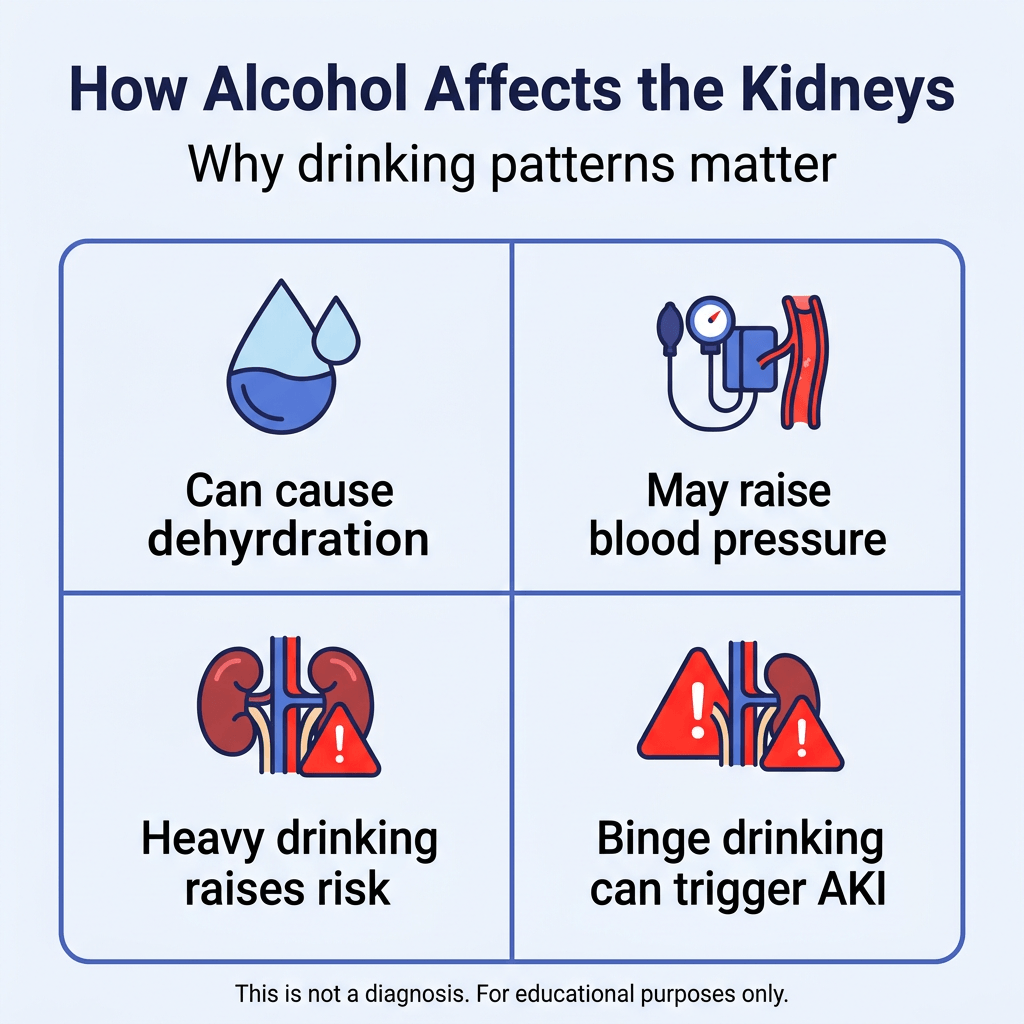
Alcohol can dehydrate the body
One of the clearest ways alcohol affects the kidneys is through dehydration. The kidneys are deeply involved in keeping the body properly hydrated. When alcohol dries the body out, that drying effect can affect normal function in cells, organs, and the kidneys themselves.
For some people, this may show up as headache, dry mouth, dizziness, weakness, or just feeling drained after drinking. For others, especially people who are already sick, older, or taking certain medicines, dehydration can become more serious.
Alcohol can raise blood pressure
Alcohol also matters because it can affect blood pressure, and high blood pressure is one of the leading causes of kidney disease. The National Kidney Foundation notes that people who drink too much are more likely to have high blood pressure, and more than two drinks a day can increase the chance of having it.
That connection is important because kidney health and blood pressure are closely tied together. When blood pressure stays high over time, it can damage blood vessels in the kidneys and make kidney disease more likely or harder to control.
Heavy drinking can raise kidney disease risk
Long-term heavy drinking is more concerning than an occasional drink. According to the National Kidney Foundation, regular heavy drinking has been associated with about double the risk of kidney disease.
That does not mean every person who drinks heavily will definitely develop kidney disease. It means the pattern matters. When alcohol use is frequent and excessive, the kidneys and the rest of the body are under more stress over time.
Binge drinking can cause sudden kidney problems
Binge drinking is not just “drinking a lot.” It has a medical meaning. NIAAA defines binge drinking as a pattern of drinking that brings blood alcohol concentration to 0.08% or higher, which typically happens after about 4 drinks for women or 5 drinks for men in about 2 hours.
That pattern is risky for many reasons, and one of them is the kidneys. The National Kidney Foundation says binge drinking can cause a sudden drop in kidney function called acute kidney injury, or AKI. In serious cases, that can require urgent treatment and sometimes temporary dialysis until kidney function improves.
Does Alcohol Affect Healthy Kidneys and Diseased Kidneys the Same Way?
Not really. A person with no known kidney disease, normal blood pressure, and no major medical issues is not in the same situation as a person with CKD, diabetes, high blood pressure, or multiple daily medications.
For people who already have chronic kidney disease, alcohol can make an already complicated situation harder to manage. It may worsen dehydration, complicate blood pressure control, interact with medications, and add another variable to kidney monitoring. The NKF specifically notes that alcohol can worsen kidney disease.
Other health problems matter too. If someone has diabetes, uncontrolled blood pressure, liver disease, or takes medicines that interact with alcohol, the conversation becomes more personal and more careful. CDC and MedlinePlus both note that some people should not drink at all, or should only drink after checking with a healthcare professional.
Signs Alcohol May Be Affecting Your Body More Than You Think
Some alcohol-related effects are easy to miss because they can feel ordinary at first. Symptoms like dizziness, weakness, headache, nausea, thirst, or dry mouth may reflect dehydration rather than just “a rough night.”
Other symptoms may overlap with kidney-related concerns, especially in people who already have kidney or blood pressure problems. These can include swelling, very low urine output, unusual fatigue, worsening nausea, or feeling much sicker than expected after drinking.
Symptoms alone do not tell the full story. They can overlap with dehydration, liver issues, blood pressure problems, medication side effects, infection, or kidney problems. That is why persistent or severe symptoms should not be self-diagnosed from an online article.
How Much Alcohol Is Considered Too Much?
A standard drink in the United States contains about 14 grams of pure alcohol. That equals about 12 ounces of regular beer, 5 ounces of wine, or 1.5 ounces of distilled spirits.
CDC defines moderate drinking as up to 2 drinks or less in a day for men and 1 drink or less in a day for women. But CDC also notes that drinking less is better for health than drinking more, and not drinking at all is an option many people should consider.
Excessive drinking includes both binge drinking and heavy drinking. CDC defines heavy drinking as 8 or more drinks per week for women and 15 or more drinks per week for men.
The kidney takeaway is simple: once drinking becomes frequent, heavy, or concentrated into short periods, the risks rise. That is where dehydration, blood pressure strain, AKI risk, and worsening overall health become more relevant.
Should People With Kidney Disease Drink Alcohol?
This is not a yes-or-no answer for everybody. The safest answer is that it depends on the person, stage of kidney disease, current labs, blood pressure, other conditions, and medication list.
Some people with kidney disease may be told that a small amount is acceptable. Others may be told to avoid alcohol because of dehydration risk, uncontrolled blood pressure, liver disease, medication interactions, or worsening kidney function. NKF specifically advises people to check with a healthcare provider to make sure alcohol is safe for them.
This matters because the question is not only “Is alcohol bad?” Sometimes the better question is, “Is alcohol a good idea for me, with my labs, my stage, and my medicines?” That is a safer and more useful way to think about it.
What To Do If You Are Trying To Be More Kidney-Conscious
A helpful first step is to pay attention to patterns, not just the word “alcohol.” Someone who has one drink occasionally is not in the same category as someone who drinks heavily every weekend, binge drinks, or drinks most days of the week.
It is also smart to avoid drinking when you are already dehydrated, sick, vomiting, having diarrhea, or recovering from intense heat exposure. In those situations, alcohol adds stress when the body is already trying to recover fluid balance.
If you already have CKD, high blood pressure, diabetes, or take regular medicines, alcohol is one of those things worth asking about directly instead of guessing. A short question during a visit can save a lot of confusion later.
When Alcohol-Related Symptoms Should Not Wait
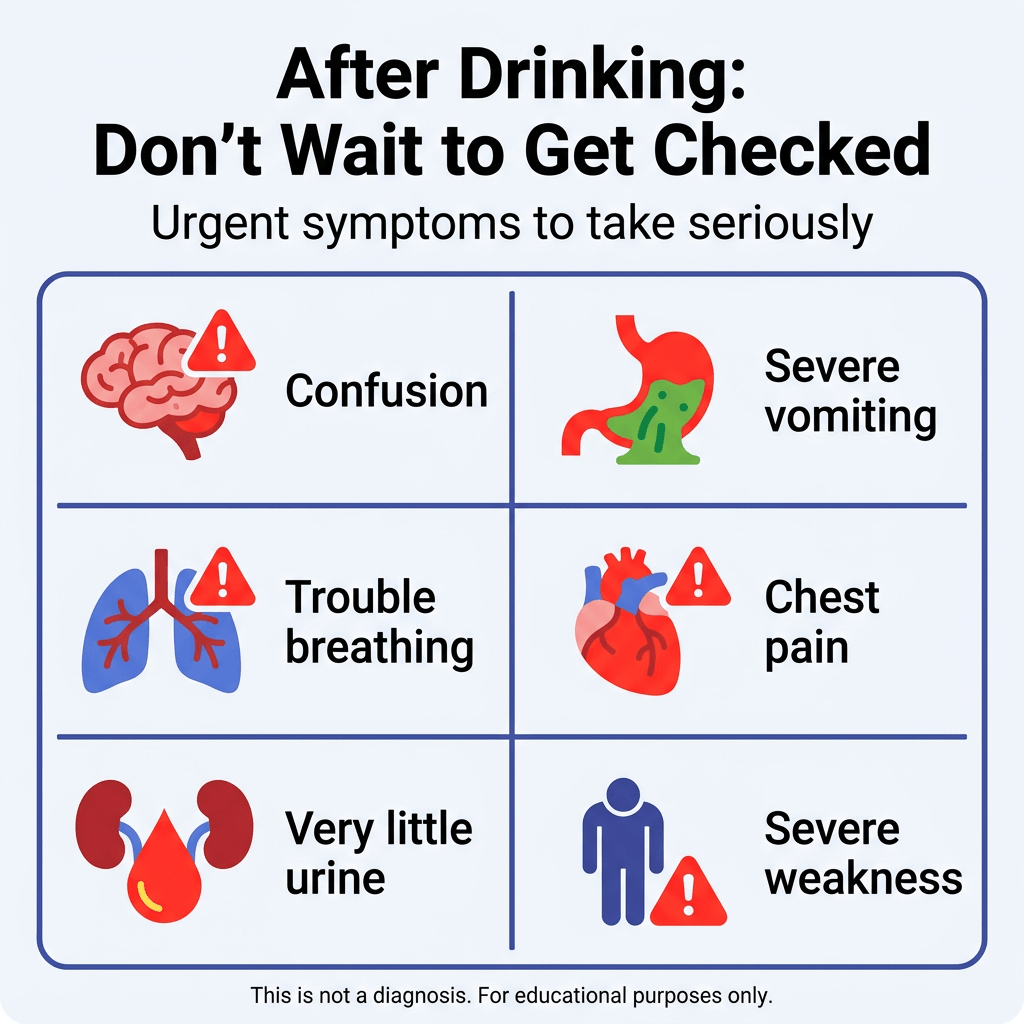
Some symptoms should not be brushed off. Urgent medical attention is important for confusion, severe vomiting, trouble breathing, chest pain, very little urine, severe weakness, or signs of alcohol poisoning. CDC notes that high blood alcohol levels can affect body functions like breathing and heart rate, and excessive drinking can cause immediate serious harm.
If someone is unable to stay awake, is acting confused, cannot keep fluids down, is breathing abnormally, or seems much sicker than expected after drinking, waiting it out is not the safest move. Those situations deserve prompt evaluation.
For people in Angleton and Brazoria County, this question often becomes urgent when dehydration, weakness, vomiting, swelling, or reduced urination starts to feel more serious than “just drinking.” If symptoms are worsening or difficult to judge, Angleton ER can evaluate urgent symptoms and help determine what needs follow-up next.
Frequently Asked Questions
Does alcohol damage the kidneys?
It can. Alcohol can affect kidney function through dehydration, blood pressure effects, and overall organ stress, especially with heavy or binge drinking.
Can alcohol cause kidney pain?
Alcohol itself does not always directly cause kidney pain, but dehydration and other alcohol-related health problems can make people notice symptoms in the back, side, or abdomen that should not be ignored. If pain is significant or persistent, it should be medically evaluated.
Can drinking alcohol worsen chronic kidney disease?
Yes. The National Kidney Foundation states that alcohol can worsen kidney disease, especially when drinking is excessive or layered on top of other medical issues.
Is wine better for the kidneys than beer or liquor?
What matters more is usually how much alcohol a person is actually consuming, not simply whether it is beer, wine, or liquor. Standard drink size and drinking pattern matter more than the label on the bottle.
Can alcohol cause dehydration that affects the kidneys?
Yes. This is one of the clearest kidney-related effects of alcohol. Alcohol can dry out the body and affect the kidneys’ ability to help regulate fluid balance.
How much alcohol is too much for kidney health?
Risk rises with excessive drinking, especially binge drinking and heavy drinking. CDC defines heavy drinking as 8 or more drinks per week for women and 15 or more drinks per week for men.
Should people with stage 3 CKD avoid alcohol?
Some may be told a small amount is acceptable, while others may need to avoid it. The safest move is to ask the clinician managing your CKD, because stage, blood pressure, medications, and lab results all matter.
Can binge drinking cause kidney problems?
Yes. NKF states that binge drinking can cause a sudden drop in kidney function called acute kidney injury.
Does alcohol raise blood pressure and affect the kidneys?
Yes. Drinking too much alcohol is linked with high blood pressure, and high blood pressure is a major cause of kidney disease.
When should someone seek medical care after drinking?
Medical care should be sought promptly for confusion, severe vomiting, chest pain, breathing problems, very low urine output, severe weakness, or suspected alcohol poisoning.