
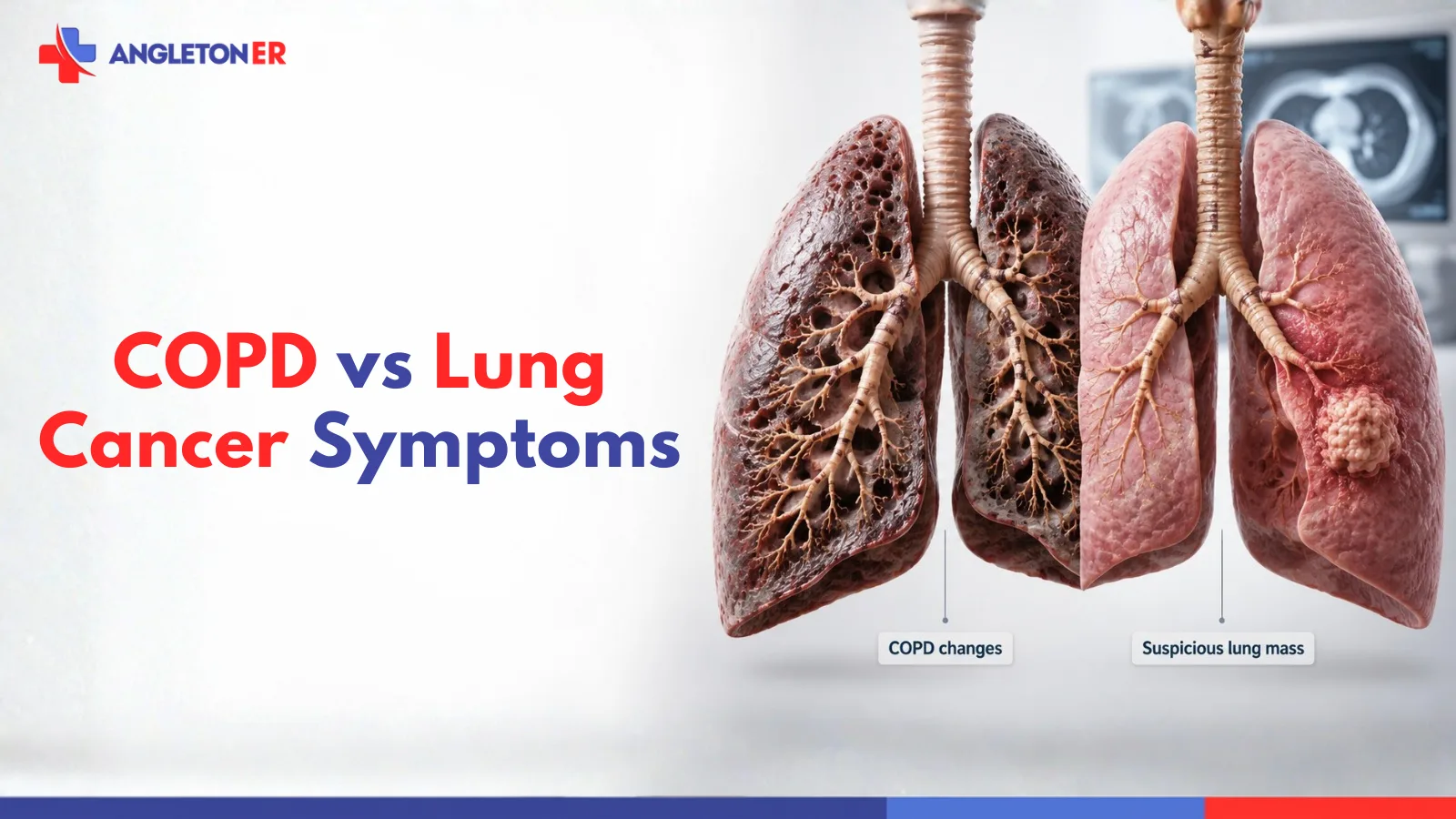
COPD and lung cancer can both cause cough, shortness of breath, wheezing, fatigue, and other breathing-related changes. That overlap can be unsettling for someone who already lives with COPD.
The safer question is not, “Which diagnosis does this symptom prove?” but, “Is this new, changing, persistent, or unlike my usual COPD?” Symptoms can signal a need for evaluation without identifying the cause.
COPD and Lung Cancer Are Different Conditions
COPD is a chronic lung disease in which airflow through the lungs is limited. The Centers for Disease Control and Prevention (CDC) describes common COPD symptoms such as frequent coughing or wheezing, shortness of breath with everyday activity, trouble taking a deep breath, and excess mucus. Lung cancer is different: it involves abnormal cell growth in lung tissue.
Because both conditions can affect the respiratory system, some symptoms may look similar from the patient’s perspective. Similarity does not make the diseases interchangeable. For a broader COPD background without expanding this comparison into a general disease guide, see Angleton ER’s overview of chronic lower respiratory disease.
Why COPD and Lung Cancer Symptoms Can Overlap
A symptom describes an experience: coughing more, becoming winded, hearing a wheeze, or feeling unusually tired. COPD and lung cancer can affect breathing through different mechanisms, and other lung or heart conditions can create similar complaints.
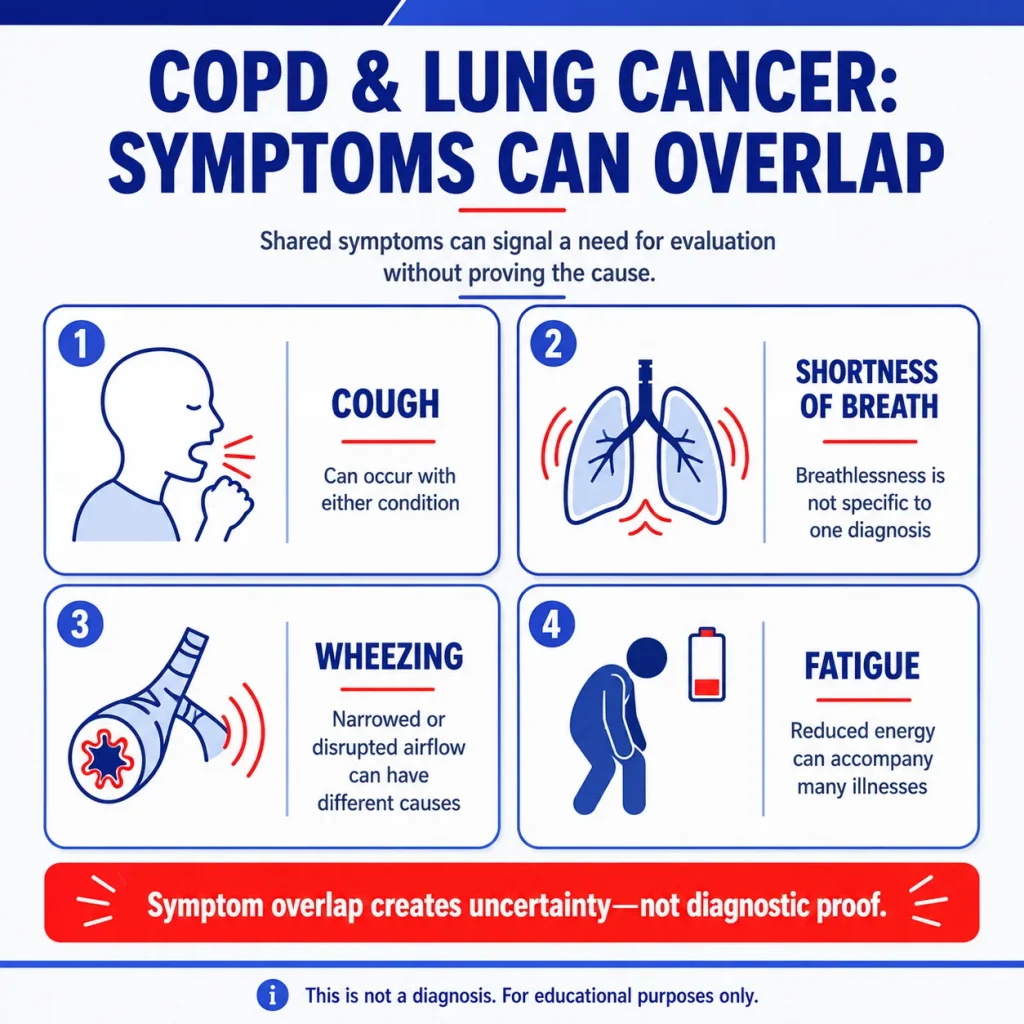
That is why symptom overlap creates diagnostic uncertainty rather than diagnostic proof. The National Cancer Institute lists cough, trouble breathing, wheezing, chest discomfort, blood in sputum, loss of appetite, unexplained weight loss, and fatigue among possible lung-cancer symptoms while also noting that these findings can be caused by other conditions.
Symptoms That May Occur With Either COPD or Lung Cancer
Persistent or Changing Cough
Cough is common in COPD and can also occur with lung cancer. If you already have a daily or frequent COPD cough, the more useful clue is whether it has changed: for example, it is becoming more frequent, more disruptive, different in character, or continuing to worsen for reasons you cannot explain. The American Cancer Society’s lung-cancer symptom guidance likewise emphasizes a cough that does not go away or that gets worse.
Shortness of Breath
Breathlessness is a classic COPD symptom, but it is not specific to COPD. New shortness of breath, an unexpected decline in how far you can walk, or a gradual increase in breathing difficulty deserves attention when it no longer fits your established pattern. Angleton ER also has a separate guide to broader causes of shortness of breath for readers who need that wider differential.
Wheezing or Other Breathing Changes
Wheezing can occur when airflow is narrowed or disrupted. It may appear with COPD, lung cancer, infection, asthma, or other conditions, so it cannot distinguish the cause by itself.
Fatigue or Reduced Activity Tolerance
Fatigue or reduced activity tolerance can accompany chronic lung disease but is nonspecific. It matters more when it is new, steadily worsening, or paired with other respiratory changes.
Why Your Usual COPD Baseline Matters
People with COPD often know their usual cough, breathlessness, wheeze, mucus, and activity tolerance. That personal pattern gives new symptoms useful context.
The practical question is: “Is this still behaving like my usual COPD?” A chronic cough that suddenly becomes different, breathlessness that progresses without an obvious reason, symptoms that begin appearing in a new pattern, or previously stable symptoms that become more disruptive should not be dismissed simply because COPD is already on the problem list. MedlinePlus guidance on COPD flare-ups similarly advises patients to know their usual symptoms so they can recognize when a pattern is becoming more intense than normal.
New Symptoms Should Not Automatically Be Blamed on COPD
A known diagnosis can create a shortcut: cough or breathlessness equals COPD. That is not always reliable. A new change may reflect COPD, a flare, infection, another lung problem, a cardiovascular condition, lung cancer, or another cause.
Patients do not need to sort through every possibility at home. The goal is to avoid letting a familiar COPD label explain away a clearly different pattern.
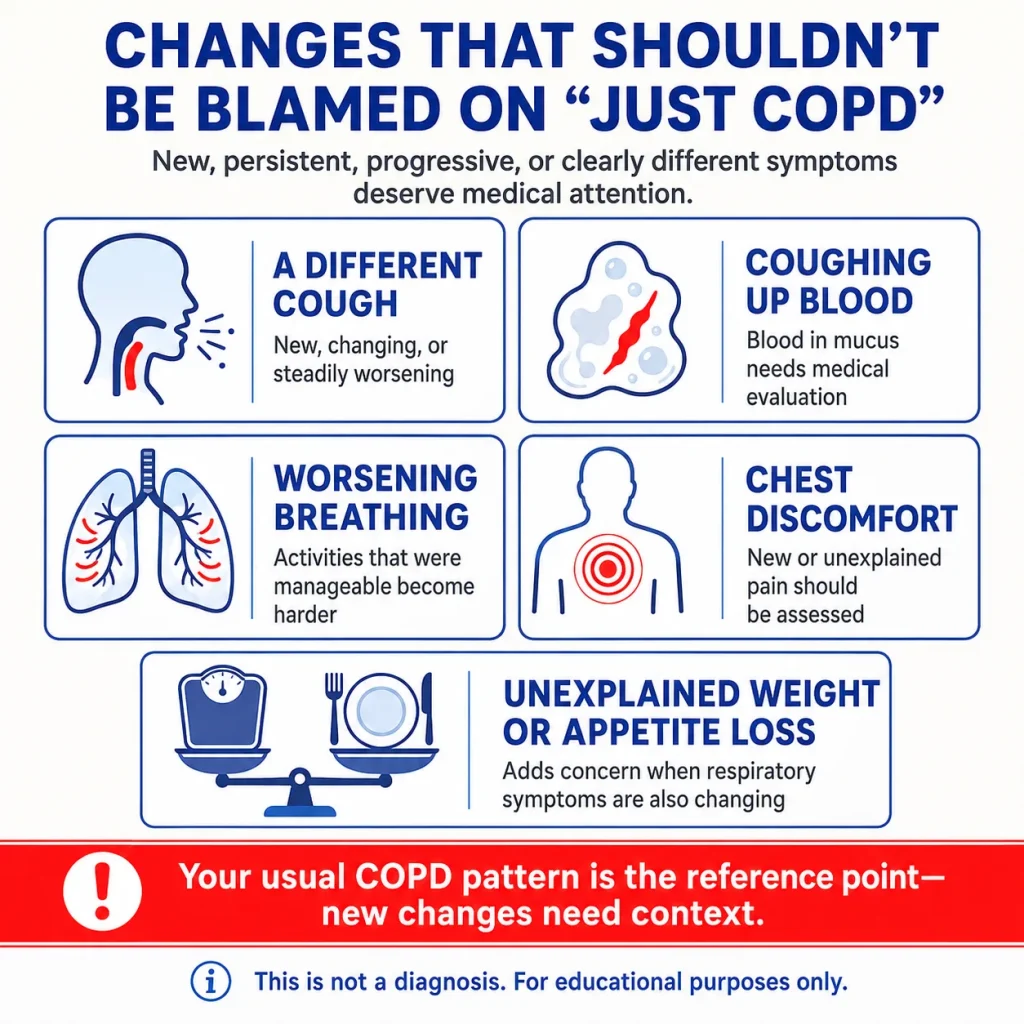
Changes That Deserve Medical Evaluation
A New or Noticeably Different Cough
Compare a cough with your normal pattern. A new cough, a meaningful shift in a long-standing cough, or continued worsening deserves medical review, especially with other breathing or health changes.
Coughing Up Blood
Blood in coughed-up mucus should not automatically be labeled “part of COPD.” It can have several causes and needs medical evaluation. Lung-cancer resources from MedlinePlus include coughing up blood among symptoms that warrant assessment, but the finding by itself does not establish cancer.
Unexplained or Progressive Breathing Changes
Breathing that keeps getting harder or starts limiting previously manageable activities matters more than breathlessness alone. The pace and degree of change help determine how quickly evaluation is needed.
Persistent Chest Discomfort or Pain
New or unexplained chest discomfort deserves assessment because lung, heart, musculoskeletal, and other conditions can cause it. Chest discomfort alone does not indicate lung cancer.
Unexplained Weight Loss or Persistent Loss of Appetite
Unplanned weight loss or sustained appetite loss can occur with many illnesses. When either accompanies a changing respiratory pattern, it adds useful context for medical evaluation.
Can Symptoms Alone Tell the Difference Between COPD and Lung Cancer?
No. Cough, shortness of breath, wheezing, fatigue, chest discomfort, and other respiratory symptoms overlap across multiple conditions. Even a symptom that raises more concern cannot independently confirm lung cancer.
Diagnosis depends on the full picture: medical history, examination, symptom timing and pattern, and testing when appropriate.
Does Having COPD Mean You Will Develop Lung Cancer?
No. COPD does not “turn into” lung cancer, and a COPD diagnosis does not mean lung cancer is inevitable. They are separate diseases. Research has found an association between COPD and a higher risk of lung cancer in populations, but an association is not the same as direct progression from one disease into the other. A recent systematic review and meta-analysis indexed in PubMed reported higher lung-cancer incidence among U.S. adults with COPD while also showing that individual risk varies across populations and risk factors.
Personal lung-cancer risk should be discussed with a healthcare professional rather than inferred from symptoms alone.
What Evaluation May Help Clarify the Cause of Changing Symptoms?
Evaluation depends on the symptom pattern, medical history, COPD status, examination findings, and severity. Clinicians may assess breathing and oxygen status and consider laboratory testing when an acute problem is suspected.
Chest imaging may also be appropriate in some situations. The National Heart, Lung, and Blood Institute’s COPD diagnosis guidance explains that chest X-rays can help identify other conditions that may interact with COPD and that CT imaging can help investigate causes of lung symptoms such as shortness of breath or chest pain. Imaging findings still have to be interpreted in context; this is not the same as diagnosing lung cancer from symptoms or from a single test.
The Important Question Is Whether Something Has Changed
Living with COPD makes some cough, wheeze, mucus, and breathlessness familiar. That familiarity helps define a baseline, but it should not explain away every future respiratory change.
Keep three points in mind: COPD and lung cancer can share symptoms; overlap does not mean cancer; and established COPD does not explain every new respiratory change. When symptoms become new, persistent, progressive, or otherwise different, evaluation is more reliable than symptom guessing.
When Breathing Changes Need Emergency Evaluation in Angleton
For patients in Angleton and nearby communities, routine or gradually changing respiratory concerns should be discussed with the appropriate healthcare professional. If breathing becomes severe or rapidly worse, chest symptoms become acutely concerning, or another serious respiratory change develops, Angleton ER provides 24/7 emergency care. When medically appropriate, the emergency team may assess breathing and oxygen status and use on-site emergency imaging or lab testing to help identify an acute problem that needs immediate treatment or further care. If symptoms appear life-threatening or it is unsafe to drive, call 911.
Frequently Asked Questions
Can COPD and lung cancer cause similar symptoms?
Yes. Both can be associated with cough, shortness of breath, wheezing, fatigue, and other respiratory changes. The overlap means symptoms need context; it does not mean a person with COPD symptoms has lung cancer.
How can you tell COPD symptoms from lung cancer symptoms?
You usually cannot tell reliably from symptoms alone. Clinicians use the symptom pattern, medical history, examination, and appropriate testing to work out the cause.
Can a changing COPD cough be a sign of another lung problem?
Yes. A cough that becomes noticeably different from your usual COPD pattern may reflect a flare, infection, another lung condition, or another medical cause. The change itself is a reason to consider evaluation rather than self-diagnose.
Does coughing up blood happen with COPD or lung cancer?
Blood-streaked mucus can occur in more than one respiratory condition, and coughing up blood is also a recognized lung-cancer symptom. It should be medically evaluated rather than assumed to be routine COPD.
Does COPD turn into lung cancer?
No. COPD and lung cancer are separate diseases. COPD is associated with higher lung-cancer risk in research populations, but it does not transform into cancer and does not mean cancer is inevitable.
Can someone have COPD and lung cancer at the same time?
Yes. Separate conditions can coexist. That is one reason a new or changing respiratory pattern should not automatically be attributed to a person’s established COPD.
When should new symptoms in someone with COPD be medically evaluated?
Evaluation is appropriate when symptoms are new, clearly different from the usual COPD pattern, progressively worsening, persistent, or accompanied by concerning changes such as coughing up blood or unexplained chest symptoms. Severe or rapidly worsening breathing difficulty requires emergency assessment.