
COPD does not always begin with a dramatic breathing crisis. Early changes can be gradual: a walk that takes more effort, a cough that lingers, new wheezing, or the need to pause during ordinary chores. The useful clue is often whether the pattern persists or differs from your previous normal.
This guide focuses on recognizing those changes and deciding when they deserve medical evaluation. Symptoms alone cannot confirm COPD or tell you its stage, and shortness of breath, cough, and wheezing can occur with other conditions. For broader background on COPD and related conditions, see Angleton ER’s chronic lower respiratory disease overview.
What Do Early COPD Symptoms Look Like?
Early COPD symptoms can be easy to explain away because they may develop slowly. The National Heart, Lung, and Blood Institute notes that early COPD may cause no symptoms or only mild symptoms, with problems becoming more noticeable as the disease progresses. COPD is a group of chronic lung conditions that limit airflow, but for symptom recognition the more useful question is whether breathing, coughing, wheezing, or physical activity feels different from how it used to feel.
Think in terms of pattern and persistence rather than a single bad day. Becoming winded once after hard exercise is different from repeatedly needing to slow down on stairs you used to climb comfortably. An occasional cough is also different from one that is present most days or changing from its usual pattern. Persistent trends that affect daily life deserve medical evaluation.
Common COPD Symptoms and Changes to Watch For
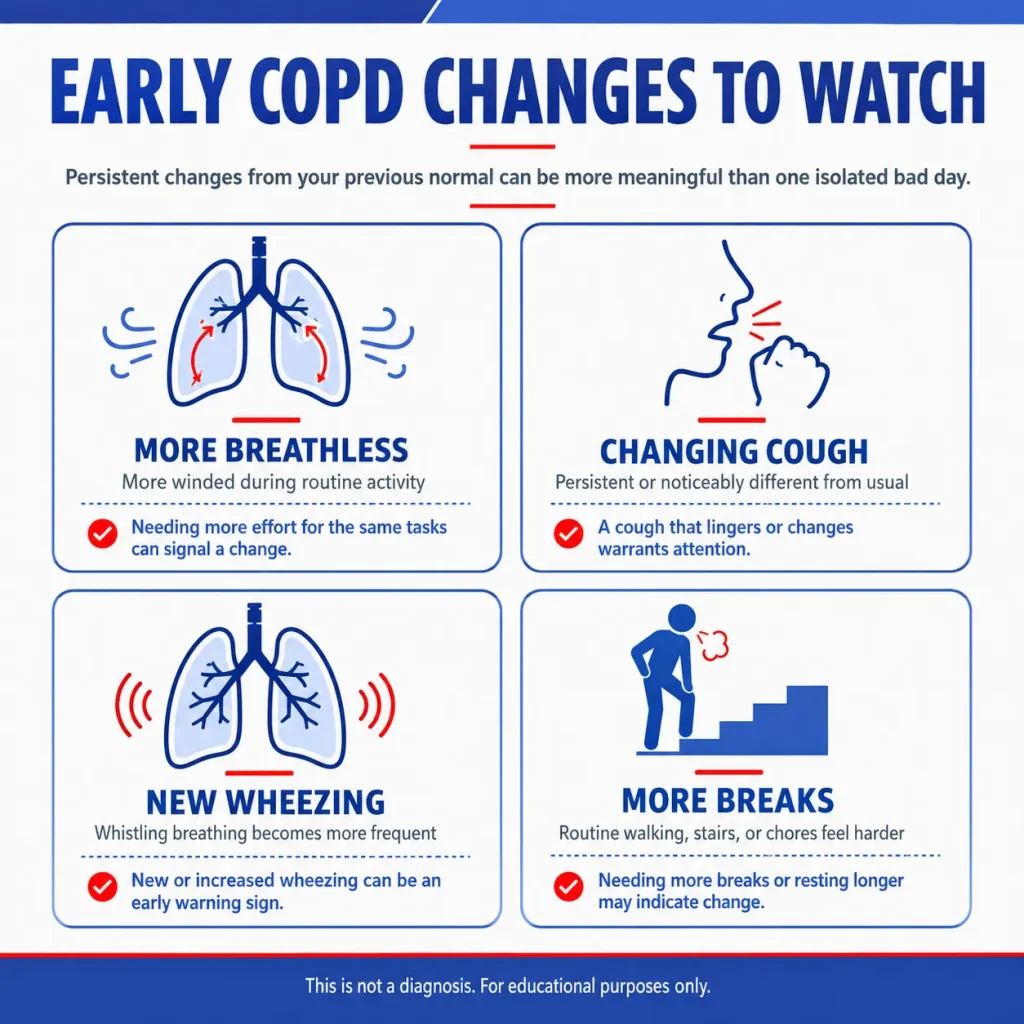
The CDC identifies frequent coughing or wheezing, shortness of breath during everyday activities, difficulty taking a deep breath, and excess phlegm or mucus as common COPD signs. What matters in real life is how those symptoms show up during your normal routine and whether their frequency or intensity is changing.
Shortness of Breath or Increasing Breathlessness
Breathlessness often becomes noticeable during activity first. You may walk more slowly, stop on stairs, rest after carrying groceries, or feel unusually winded while getting dressed. The American Lung Association’s early warning signs guidance lists shortness of breath as a common sign and recommends discussing respiratory symptoms before they interfere with everyday activities. A gradual change from “I can do this comfortably” to “I need to stop and recover” is more informative than the symptom label alone.
A Persistent or Changing Cough
An ongoing cough can be part of the COPD symptom pattern. MedlinePlus lists frequent coughing or a cough that produces a lot of mucus among common COPD symptoms. If you already cough regularly, pay attention to a clear change in how often you cough, how forceful it feels, or whether it is interfering more with sleep or normal activity. A cough by itself does not establish that COPD is the cause.
Wheezing or Changes in Breathing Sounds
Wheezing is a whistling or squeaky sound that can occur when air moves through narrowed airways. Some people notice it during exertion; others hear it while resting or lying down. New or more frequent wheezing can fit a COPD symptom pattern, but it is not specific enough to diagnose COPD and can occur with asthma and other respiratory problems.
Reduced Activity Tolerance
Reduced activity tolerance may show up as needing more breaks or taking longer to recover after routine tasks. NHLBI’s COPD overview explains that symptoms often develop slowly and can interfere with routine activities. A repeated decline in what you can comfortably do deserves attention.
How COPD Symptoms Can Change Over Time
COPD symptom recognition is not just about whether a symptom exists. Frequency, intensity, and impact matter. A mild cough may become present on more days. Breathlessness may begin with strenuous activity and later appear with ordinary walking. Wheezing may become easier to notice, or a person may need more pauses to finish the same household tasks.
This does not mean that every change represents a new COPD “stage.” Staging requires clinical assessment, and the same symptom can have different causes. The practical point is simpler: a symptom that is becoming more persistent, more limiting, or clearly different from your prior pattern deserves attention.
Your Usual COPD Symptoms vs. a Meaningful Change
If you already live with COPD, you may have a personal baseline: how breathless you usually feel when walking, how often you cough, whether you wheeze, and what activities you can complete without stopping. It is a practical reference point for noticing change, not a “safe number” or a substitute for medical advice.
The American Thoracic Society describes a COPD exacerbation as a worsening of a person’s usual COPD signs and symptoms. In day-to-day terms, a meaningful change is something new, noticeably worse, or substantially different from normal. A sudden worsening may be a COPD flare-up. The immediate question is whether the change is significant enough to contact a clinician or seek urgent evaluation.
When COPD Symptoms Should Be Medically Evaluated
Persistent breathing symptoms that have never been evaluated should not automatically be attributed to age, poor fitness, smoking history, or “just COPD.” A clinician can assess the pattern in context because shortness of breath has many possible causes, including conditions involving the lungs, heart, blood, or other body systems.
For someone with known COPD, contact a healthcare professional when breathlessness, cough, wheezing, or activity tolerance is clearly worsening from the usual baseline, especially if the change persists or is making normal activities harder. The urgency depends on the severity and speed of the change, not simply on whether COPD is already part of your medical history.
Severe deterioration is different. MedlinePlus advises emergency evaluation for a rapid increase in shortness of breath. The NHLBI COPD symptom guidance lists severe trouble catching your breath or talking, blue or gray lips or fingernails, and reduced alertness among reasons to call 911. If the situation appears life-threatening or it is not safe to drive, call 911.
Why Changes in COPD Symptoms Matter
A cough, wheeze, episode of breathlessness, or drop in activity tolerance has to be interpreted in context. The pattern becomes more meaningful when a symptom persists, appears more often, feels stronger, or begins limiting what you can normally do. Symptoms can tell you that something has changed; they cannot, on their own, identify the full cause of that change or determine your COPD stage.
Compare today’s breathing and activity with the person’s usual pattern. A slow change may deserve a medical conversation; a sharp deterioration calls for faster action.
Breathing Changes That Need Emergency Care in Angleton
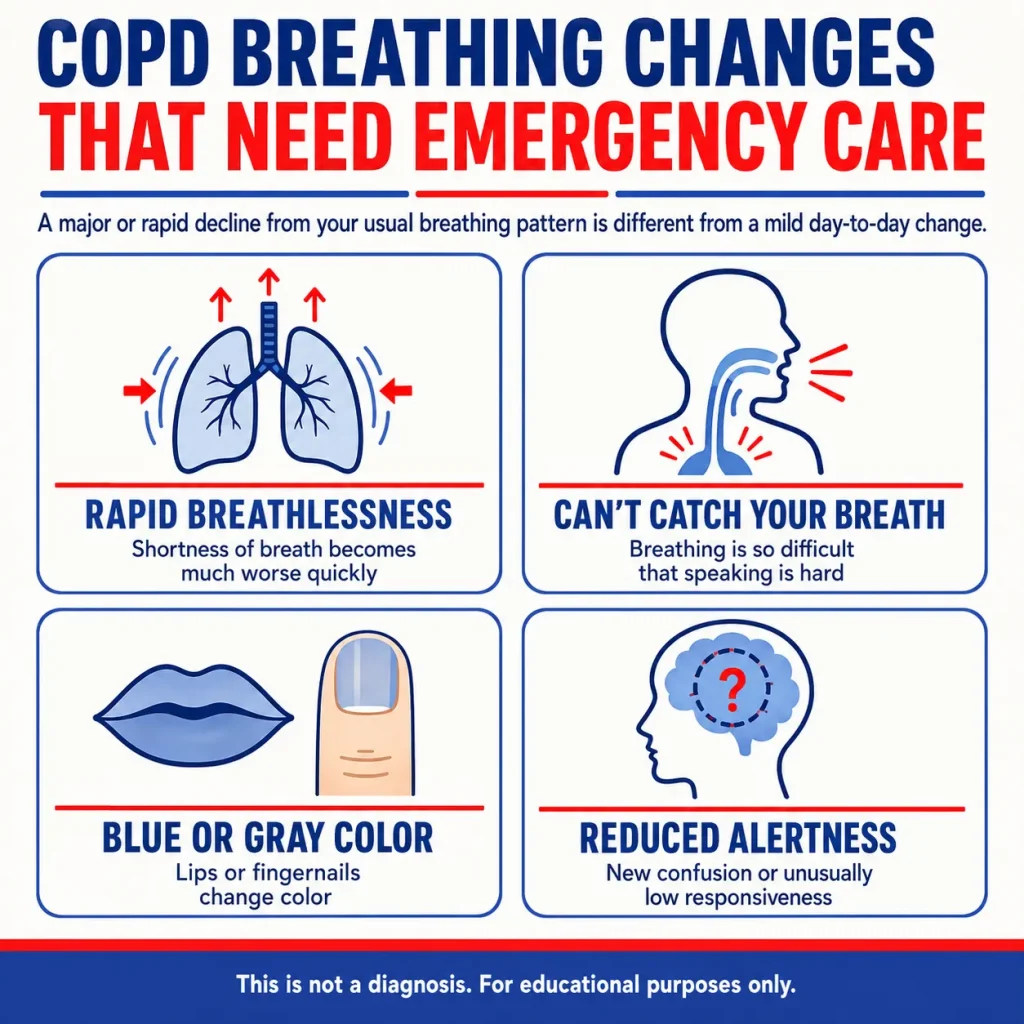
If you are in Angleton or a nearby community and breathing symptoms become significantly worse than your usual pattern, Angleton ER provides 24/7 emergency care for serious or worsening symptoms. The emergency team can evaluate concerning breathing problems and use on-site testing or imaging when medically appropriate. Not every COPD symptom requires emergency care, but severe difficulty breathing or a major, rapid change in how you are breathing warrants prompt evaluation. If symptoms are life-threatening or you cannot travel safely, call 911.
Frequently Asked Questions
What are the early warning signs of COPD?
Early warning signs can include gradually increasing breathlessness with activity, a persistent cough, wheezing, and reduced tolerance for ordinary tasks. Because early COPD can be mild, a persistent change from your previous normal is worth discussing with a healthcare professional.
What is a COPD cough?
A COPD cough is an ongoing cough associated with COPD and may occur with or without mucus. A cough alone cannot confirm COPD; a noticeable change in a person’s usual cough should be considered with the rest of the symptom pattern.
Can COPD symptoms be mild in the early stages?
Yes. Early COPD may cause mild symptoms or no obvious symptoms, so gradual changes in activity tolerance, coughing, or breathing can be overlooked. Evaluation is appropriate when those changes persist or clearly differ from your normal.
Is wheezing an early sign of COPD?
Wheezing can occur early in COPD, but it is not unique to COPD. Asthma and other airway conditions can also cause wheezing, so the sound should be considered together with the overall symptom pattern rather than used as a self-diagnosis.
Are COPD symptoms different in women?
Women can experience the same common COPD symptoms, including breathlessness, cough, wheezing, and reduced activity tolerance. However, NHLBI’s information on women and COPD notes that women can experience a greater burden of shortness of breath and other differences in how the disease affects them. These differences do not create a separate set of “female-only” COPD warning signs.
When should a change in COPD symptoms be medically evaluated?
Arrange medical evaluation when respiratory symptoms are persistent and unexplained, or when known COPD symptoms become clearly more frequent, intense, or limiting than usual. Severe breathing difficulty, trouble speaking because of breathlessness, blue or gray lips or nails, confusion, or a rapid major decline requires emergency evaluation.