
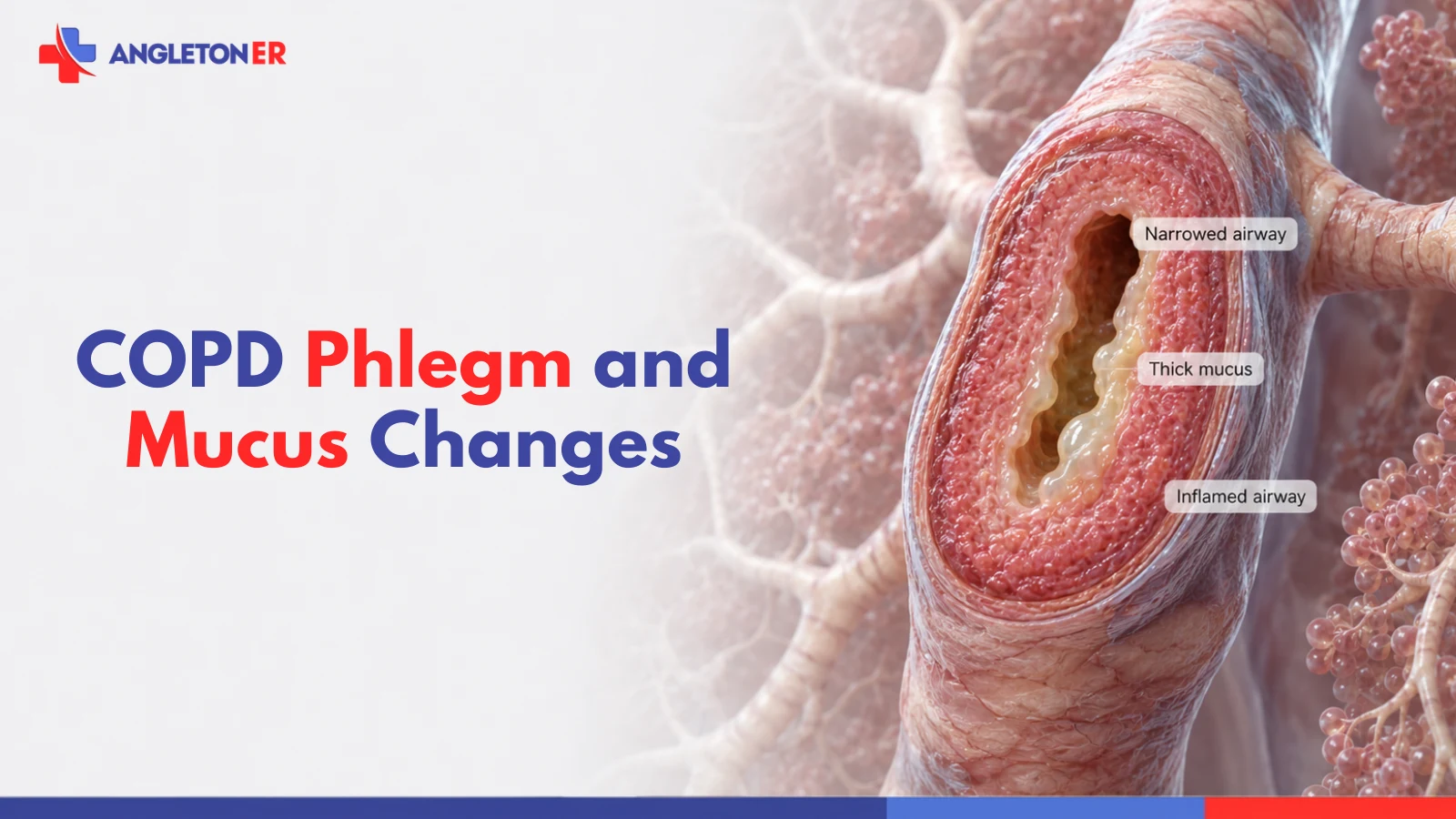
For many people with COPD, some day-to-day mucus is part of their usual pattern. The CDC lists excess phlegm or mucus among common COPD symptoms. By itself, phlegm does not prove an infection or an acute flare.
The key question is whether the mucus has changed from your normal pattern. A clear increase, thicker consistency, new color, or blood matters more when it appears with worsening cough, breathlessness, fever, reduced activity tolerance, or an overall decline in breathing.
Does COPD Cause Phlegm and Mucus?
Yes. COPD can cause excess mucus, particularly when chronic bronchitis is part of the disease. Some people therefore have a regular productive cough and know their usual amount and appearance of phlegm.
That baseline matters: a new departure from your usual pattern deserves more attention than mucus that has remained unchanged.
Mucus, Phlegm, and Sputum – Are They the Same Thing?
The terms overlap in everyday use. Mucus is a general secretion; phlegm or sputum is respiratory mucus that is coughed up. MedlinePlus uses sputum and phlegm for mucus produced in the lungs and airways.
What Mucus Changes Should Someone With COPD Pay Attention To?
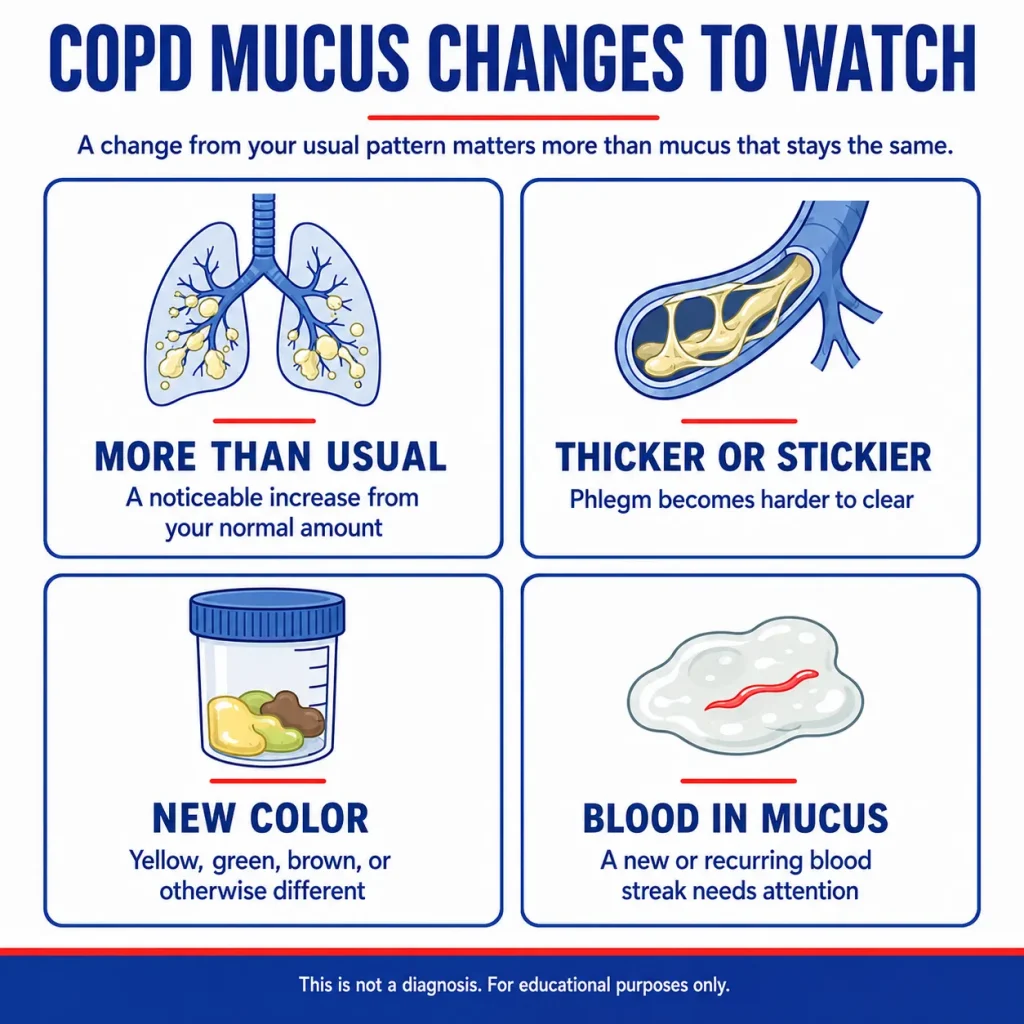
No single mucus feature tells you exactly what is happening. Compare it with your usual COPD pattern and notice whether other symptoms are changing too.
Producing More Mucus Than Usual
A noticeable increase can matter, especially if you are also coughing more, becoming more breathless, or finding normal activities harder. The change from your baseline is more useful than the absolute amount of mucus.
Mucus Becoming Thicker or Harder to Clear
A change to thicker, stickier, or harder-to-clear sputum is worth noticing. The American Lung Association notes that chronic lung disease can be associated with thicker or stickier airway mucus. In COPD, that change matters more when cough, wheeze, chest tightness, or breathing also worsens.
Changes in Mucus Color
COPD sputum may become yellow, green, brown, or otherwise different during worsening symptoms. The American Thoracic Society includes changes in sputum color or amount among signs that may occur with a COPD exacerbation.
Color is useful context, not a diagnosis. NICE emphasizes that many COPD exacerbations are not caused by bacterial infection and advises considering color with volume or thickness changes, symptom severity, history, and other clinical factors. Green or yellow phlegm alone does not prove antibiotics are needed.
Blood-Streaked or Bloody Mucus
Blood should not be assumed to be routine COPD phlegm. A new or recurring streak warrants medical advice. MedlinePlus describes coughing up blood or bloody mucus as hemoptysis and advises medical assessment. More than a small streak, especially with severe breathing difficulty, chest pain, dizziness, or weakness, needs urgent evaluation.
When Mucus Changes May Be Part of a COPD Flare-Up
A COPD flare-up is a worsening from the person’s usual stable state, and mucus may be only one part of that change. MedlinePlus notes that flare-ups may involve more phlegm, a change in mucus color, increased breathing difficulty, and trouble doing usual activities.
Pay closer attention when mucus changes occur with a stronger cough, increasing breathlessness, or less ability to do usual activities. If breathlessness is the main concern, our guide to what can cause shortness of breath covers that broader symptom.
When Mucus Changes May Occur With a Respiratory Infection
Respiratory infections can worsen COPD. The National Heart, Lung, and Blood Institute identifies colds, flu, and lung infections among triggers for COPD flare-ups. A new illness can therefore explain a mucus change, but mucus alone cannot identify the infection.
Look Beyond the Mucus Alone
Fever, feeling acutely unwell, worsening cough, and increasing breathlessness add important context. They still cannot reliably distinguish pneumonia, flu, COVID-19, RSV, or another cause at home. For a broader overview, see our respiratory infection comparison; this article stays focused on COPD baseline changes.
A Mucus Change Does Not Always Tell You the Cause
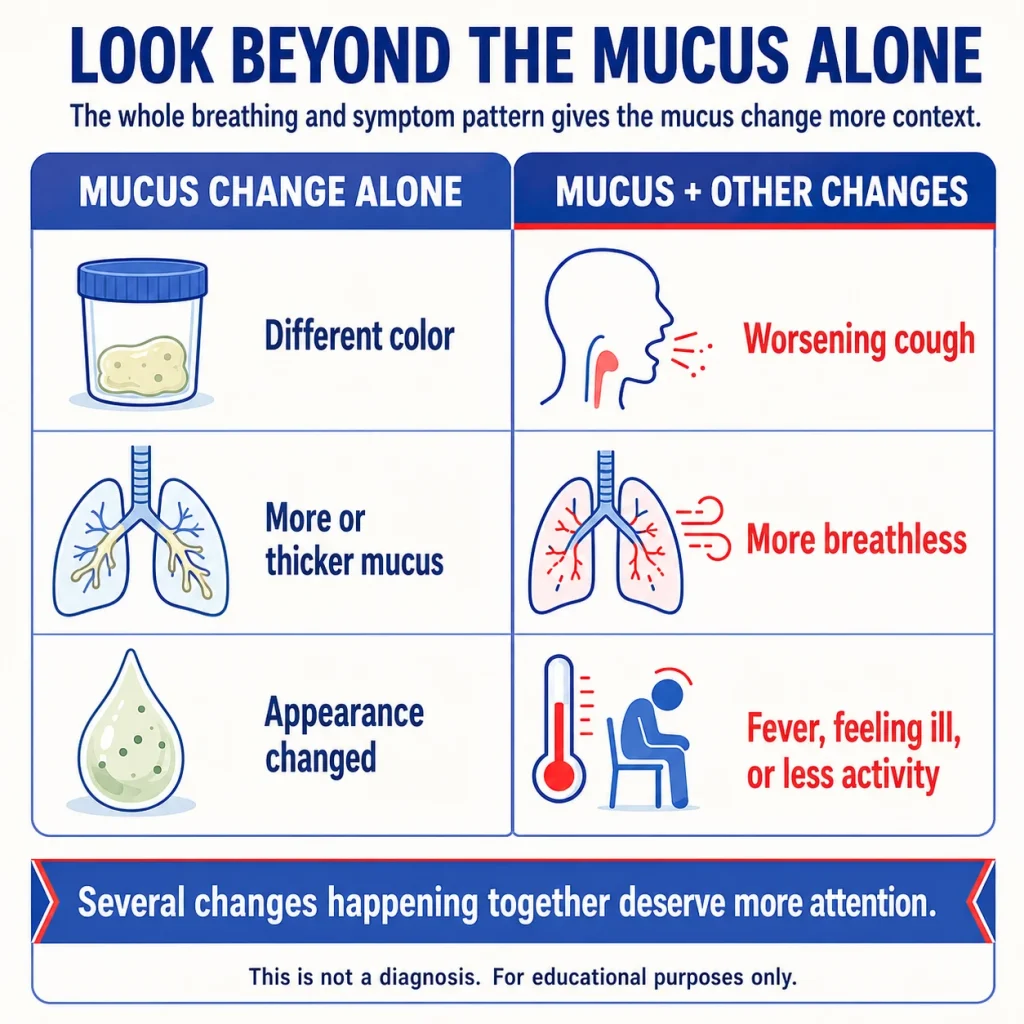
Mucus can look different during a COPD flare, respiratory infection, airway irritation, or another lung problem. Appearance is information, not a diagnosis; clinicians interpret it with the rest of the respiratory picture.
“My mucus looks different” is therefore not the same clinical pattern as “My mucus has changed and my breathing or overall health is getting worse.” The second situation carries more weight because several parts of the COPD baseline are changing at once.
When Should Changes in COPD Phlegm or Mucus Be Medically Evaluated?
Contact a healthcare professional when a mucus change is clearly outside your usual COPD pattern and persists, worsens, or occurs with increased cough, fever, feeling acutely ill, blood in the mucus, or worsening shortness of breath. Evaluation is also reasonable if normal activities become noticeably harder.
Severe or rapidly worsening breathing is different from a routine follow-up question. NHLBI advises calling 911 for serious COPD flare symptoms such as major difficulty catching your breath or talking, blue or gray lips or fingernails, or reduced mental alertness. Do not wait for another mucus change before getting emergency help.
Pay Attention to the Change From Your Normal COPD Pattern
If you regularly produce phlegm, ask two questions: Is this different from normal for me? Is anything else changing at the same time?
A new increase, thicker secretions, a color change, or blood deserves more attention when it comes with worsening breathing, cough, fever, reduced activity tolerance, or a general sense that your COPD is behaving differently than usual.
When Breathing Symptoms Need Emergency Evaluation in Angleton
If you are in Angleton or a nearby Brazoria County community and mucus changes occur with significantly worsening breathing or other concerning respiratory symptoms, Angleton ER provides 24/7 emergency care in Angleton. The emergency team can assess acute breathing problems and use on-site lab testing or imaging when medically appropriate. If symptoms are life-threatening or it is unsafe to drive, call 911.
Frequently Asked Questions
Does COPD cause mucus and phlegm?
Yes. Excess mucus or phlegm is common in COPD, especially with chronic bronchitis. Mucus alone does not mean infection or an acute flare.
Why am I producing more phlegm with COPD than usual?
A new increase can occur with worsening COPD, respiratory infection, or airway irritation. It matters more when cough, breathlessness, fever, or activity tolerance also changes.
What does a change in COPD mucus color mean?
A color change can occur with a COPD flare or respiratory illness. By itself, it cannot establish the cause or prove that an infection is bacterial.
Does green or yellow phlegm always mean an infection?
No. Green or yellow sputum does not by itself prove a bacterial infection. Clinicians consider the whole symptom pattern before deciding on treatment.
Can increased mucus be a sign of a COPD flare-up?
Yes. Increased sputum volume or a change in character can occur during a COPD exacerbation, especially when breathlessness, cough, wheeze, or activity tolerance also worsens.
When should someone with COPD seek medical care for mucus changes?
Seek evaluation when the change is clearly outside your normal pattern, keeps worsening, or occurs with increasing breathlessness, fever, significant cough, acute illness, or blood. Severe breathing difficulty, blue or gray lips, confusion, or trouble talking because of breathlessness requires emergency help.