
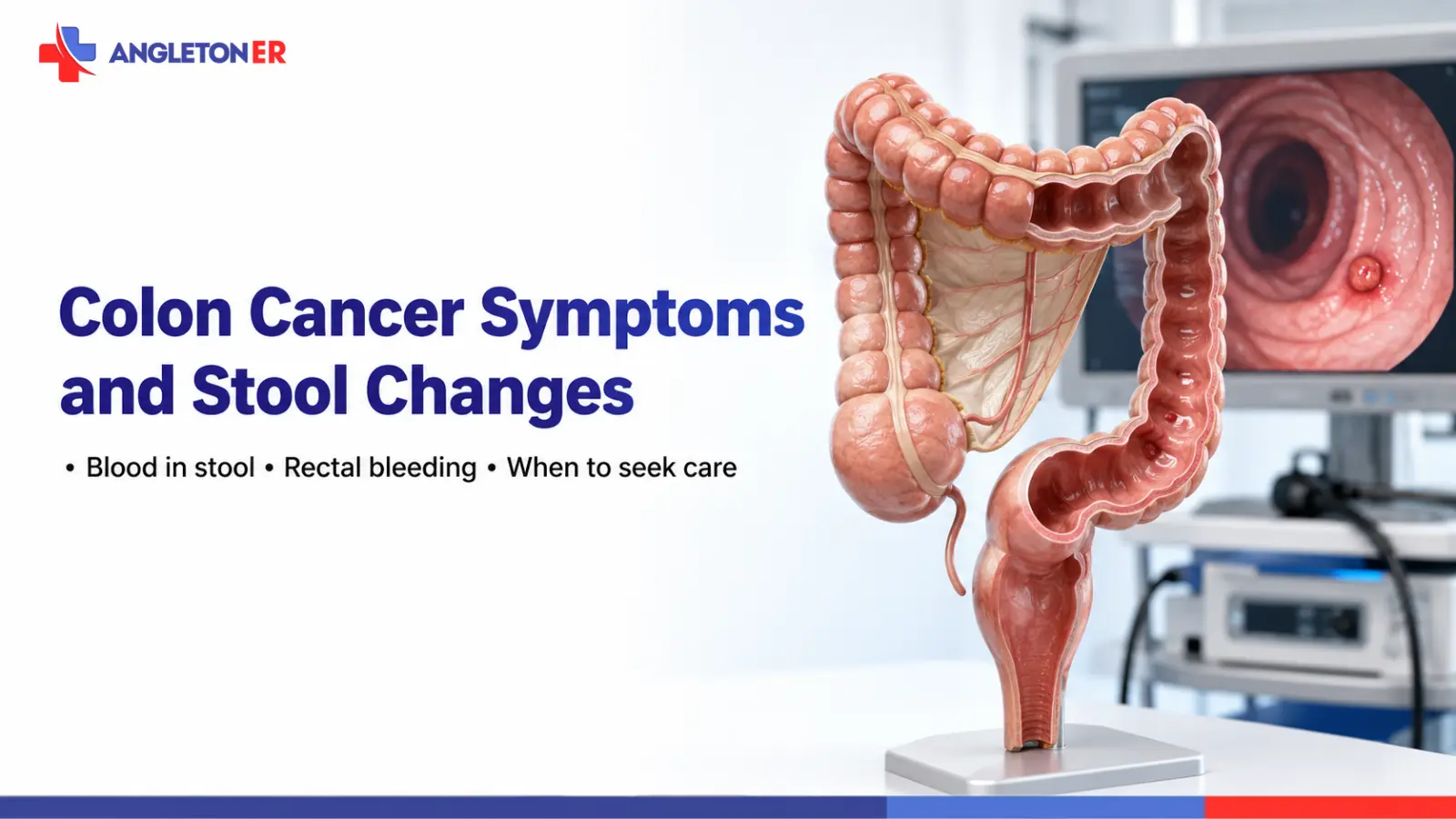
Seeing blood after a bowel movement or noticing that your stool pattern has changed can be frightening. These symptoms do not diagnose colon cancer, and many people have a noncancerous cause. Still, the National Cancer Institute identifies blood in the stool and changes in bowel habits as signs that warrant medical attention when they are persistent or unexplained.
The most useful question is not whether one bowel movement “looks like cancer.” It is whether the change continues, returns, becomes more pronounced, or occurs with bleeding, weakness, weight loss, or ongoing abdominal symptoms. Heavy bleeding or signs of significant blood loss require emergency evaluation; stable but recurring changes need timely outpatient follow-up.
Which Stool Changes Can Be Concerning When They Persist?
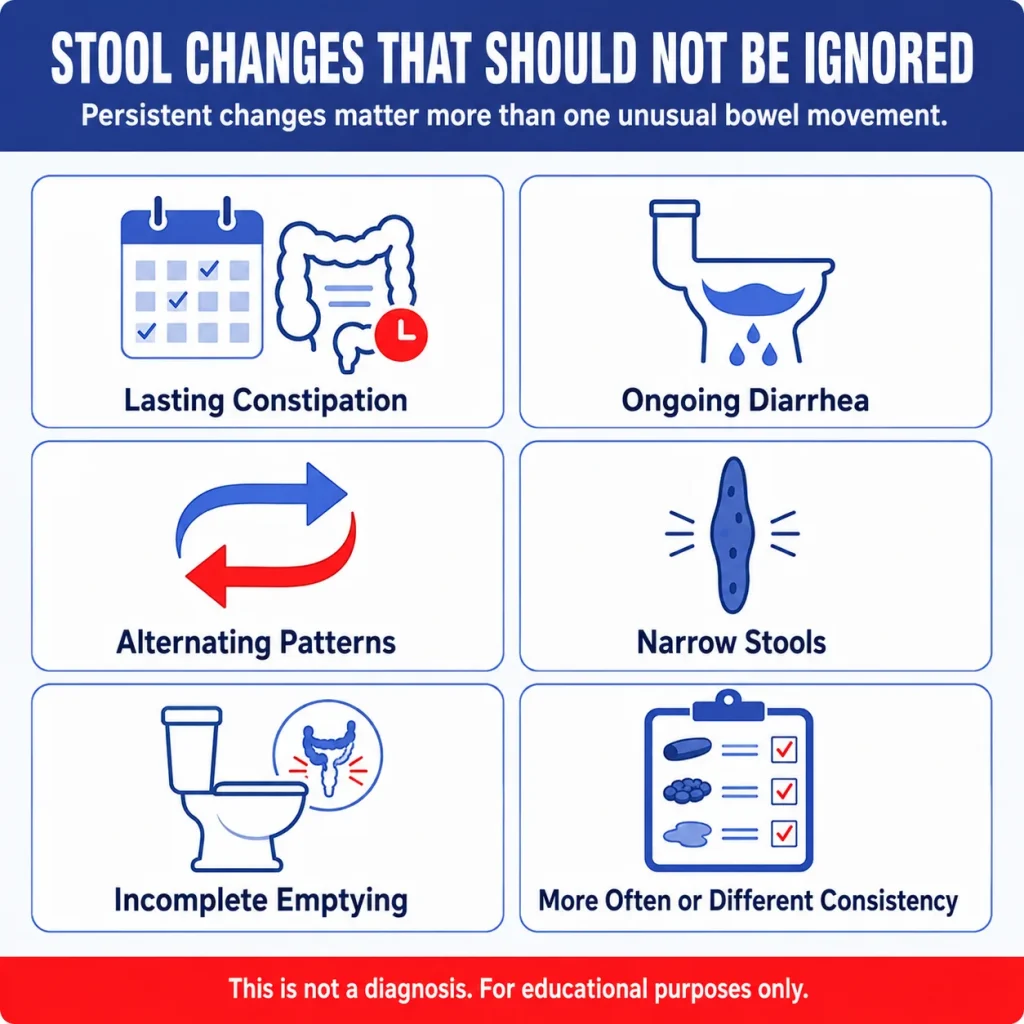
One unusual bowel movement is usually less meaningful than a clear change from your normal pattern. The American Cancer Society lists lasting diarrhea, constipation, narrowing of stool, and a feeling that the bowel has not emptied completely among possible colorectal cancer symptoms. These changes can also occur with diet changes, medications, infection, irritable bowel conditions, and other digestive problems.
Patterns worth discussing with a medical provider include:
• Constipation or diarrhea that continues beyond a brief illness or repeatedly returns.
• Alternating constipation and diarrhea without a clear explanation.
• Stools that remain noticeably narrower or differently shaped than usual.
• A persistent feeling that you still need to have a bowel movement after going.
• A sustained change in how often you go or in stool consistency.
No single stool width, shape, or color can confirm colon cancer. What matters more is a persistent departure from your baseline, particularly when it develops with bleeding or other symptoms.
Blood in the Stool and Rectal Bleeding—Patterns Worth Noticing
Blood can appear in several ways. The appearance offers clues about where bleeding may be occurring, but it cannot reliably identify the cause. According to the American Cancer Society’s guidance on blood in the stool, bleeding from hemorrhoids, fissures, infection, inflammation, polyps, ulcers, and colorectal cancer can overlap in appearance.
• Bright red blood on toilet paper, on the outside of the stool, or in the toilet bowl.
• Blood mixed through the stool rather than only on its surface.
• Dark red or maroon stool.
• Black, sticky, or tarry-looking stool.
• Small amounts that recur over days or weeks, or bleeding that becomes heavier or continuous.
Bright red blood often comes from the lower digestive tract, while darker or black stool may reflect bleeding from higher in the gastrointestinal tract. However, color alone cannot tell whether the source is a hemorrhoid, the rectum, the colon, or another digestive organ. Do not rely on appearance to rule cancer in or out.
Why Rectal Bleeding Should Not Automatically Be Blamed on Hemorrhoids
Hemorrhoids are a common cause of bright red blood, especially after straining or with blood noticed during wiping. A familiar hemorrhoid pattern may seem reassuring, but it should not become the default explanation for every new episode.
Arrange an evaluation when bleeding is new, persists, keeps returning, increases, appears mixed into the stool, or occurs with a lasting change in bowel habits. Hemorrhoids and another digestive condition can exist at the same time, so finding or suspecting hemorrhoids does not automatically explain every symptom.
When Stool Changes Become More Concerning Together
Concern rises when bleeding or bowel changes occur as part of a broader pattern. Colorectal cancers can bleed slowly, and the NIDDK explains that chronic gastrointestinal bleeding may come and go and can eventually cause anemia.
• Unexplained fatigue or noticeably reduced stamina.
• Weakness, dizziness, shortness of breath, faintness, or a pale appearance.
• Persistent abdominal discomfort, pressure, or cramping.
• Unexplained weight loss or a sustained change in appetite.
• A continuing urge to have a bowel movement even after going.
• Symptoms that gradually worsen, repeatedly return, or no longer fit a short-lived stomach illness.
Fatigue and dizziness are not specific to cancer, but they can occur when ongoing blood loss lowers the red blood cell count. The National Heart, Lung, and Blood Institute describes weakness, tiredness, shortness of breath, dizziness, and fainting as possible anemia symptoms. Angleton ER’s guide to what CBC and ER lab results can and cannot show about cancer explains why a blood count can identify anemia or blood loss without diagnosing the underlying cause by itself.
When Rectal Bleeding Needs Emergency Care
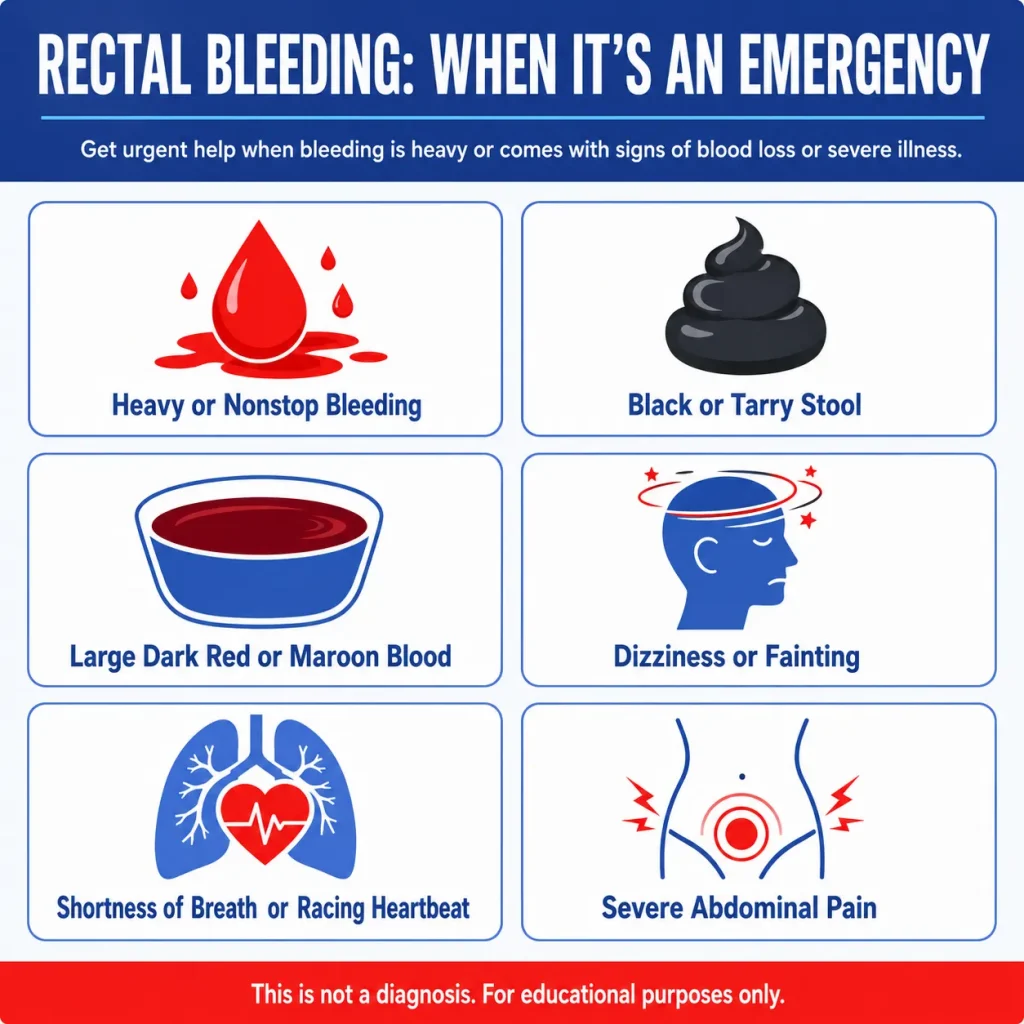
The urgency depends on the amount of bleeding, how quickly it is changing, and whether you have symptoms of blood loss or another acute abdominal problem. The American College of Gastroenterology notes that heavy lower-GI bleeding may cause dizziness, fainting, breathing difficulty, chest symptoms, or lightheadedness.
Seek emergency evaluation for:
• Heavy, continuous, or rapidly increasing rectal bleeding.
• Black, tarry stool or a large amount of dark red or maroon blood.
• Dizziness, fainting, confusion, severe weakness, or difficulty standing.
• Shortness of breath or a racing heartbeat occurring with bleeding.
• Severe, sudden, or rapidly worsening abdominal pain.
• Bleeding with repeated vomiting, dehydration, or an inability to keep fluids down.
Angleton ER’s guidance on when bleeding requires emergency care also treats heavy or continuous rectal bleeding, black stool, severe abdominal pain, and shock-like symptoms as reasons not to wait. Call 911 rather than driving if the person is fainting, confused, difficult to awaken, or appears critically ill.
Arrange timely medical follow-up for:
Persistent or recurring bleeding, an unexplained change in bowel habits, narrow stools that continue, or bleeding accompanied by fatigue, weight loss, or ongoing abdominal discomfort should be evaluated even when you otherwise feel stable. “Not an emergency” does not mean “safe to ignore.”
Blood occurring mainly with loose, frequent stools may fit a different clinical pattern. Keep that issue brief here and use the separate bloody diarrhea guidance for infection, foodborne illness, and dehydration-focused information.
What Medical Evaluation May Involve
Evaluation is guided by the bleeding pattern, symptom severity, medical history, medications, vital signs, and examination findings. The NIDDK outlines a GI-bleeding evaluation that may include a medical history, physical examination, blood tests, stool tests, endoscopy, and imaging. A blood count can help show whether bleeding has caused anemia or significant blood loss.
In an emergency setting, testing is directed toward active bleeding and immediate complications. Depending on the situation, clinicians may assess hydration and circulation, obtain laboratory studies, and use imaging when severe pain, obstruction, internal bleeding, or another urgent abdominal condition is suspected. For a clearer explanation of the limits of scans, see what ER CT, ultrasound, and MRI can and cannot show about cancer.
Confirming or ruling out colon cancer generally requires coordinated follow-up rather than an ER visit alone. Gastroenterology evaluation may involve diagnostic colonoscopy, biopsy of an abnormal area, or other testing. The ER can identify instability, treat dehydration, evaluate blood loss, and help determine whether hospital-level care is needed, but it is not a substitute for completing the recommended outpatient workup.
24/7 Evaluation for Serious Bleeding in Angleton
For patients in Angleton and nearby communities, heavy rectal bleeding, black or tarry stools, fainting, severe weakness, shortness of breath, or intense abdominal pain should not wait for a routine appointment. Angleton ER provides 24/7 emergency care for abdominal and digestive symptoms, with appropriate laboratory testing, stabilization, and imaging when medically indicated. Persistent but stable stool changes still need follow-up through primary care or a gastrointestinal specialist so the underlying cause can be properly evaluated.
Frequently Asked Questions
Does colon cancer always cause visible blood in the stool?
No. Bleeding may be visible, may darken the stool, or may be too small to see. Some people develop anemia from slow blood loss before they notice obvious blood, and others have bowel changes without bleeding.
Can a small amount of bright red blood still need medical evaluation?
Yes. A small amount is not automatically an emergency, but new, unexplained, recurrent, or increasing bleeding should be checked. Seek urgent care sooner when it is mixed with stool, occurs with pain or weakness, or becomes heavy.
Can hemorrhoids and colon cancer occur at the same time?
Yes. Hemorrhoids do not prevent another source of bleeding from being present. Bleeding that changes from your usual pattern, persists, or comes with altered bowel habits deserves evaluation even when you have a history of hemorrhoids.
Are thin or narrow stools alone a sign of colon cancer?
No. Stool shape varies for many reasons, and one narrow bowel movement is not diagnostic. The concern is a sustained change from your normal pattern, especially when it occurs with bleeding, incomplete emptying, abdominal symptoms, fatigue, or weight loss.
Can younger adults experience concerning colon cancer symptoms?
Yes. Colorectal cancer can occur in younger adults. A National Cancer Institute review of potential warning signs in adults under 50 highlighted rectal bleeding, abdominal pain, diarrhea, and iron-deficiency anemia as symptoms that warrant attention, particularly when they persist or occur together.
What details should I track before seeing a doctor about stool changes or rectal bleeding?
Note when the change began, how often it occurs, the amount and color of blood, whether blood is on or mixed into the stool, changes in frequency or consistency, abdominal pain, fatigue, dizziness, weight changes, and any medicines such as blood thinners or anti-inflammatory drugs. A short symptom timeline can help the clinician choose the right evaluation.