

It is easy to assume that a vitamin, multivitamin, or “natural” supplement must be harmless. But with chronic kidney disease, that is not always true. CKD can change how the body handles vitamins and minerals, which means some nutrients may run low while others may build up too easily. That is why a supplement that seems routine for one person may be the wrong fit for someone living with kidney disease.
For many readers in Angleton and across Brazoria County, the real question is not just “What vitamin is good for kidneys?” It is, “What is actually safe for my kidneys, my labs, and my medications?” That is the right question to ask. National Kidney Foundation guidance makes the point clearly: not everyone with CKD needs vitamins, and no one should start or stop supplements casually without checking with their healthcare team.
Medical disclaimer: This article is for educational purposes only. It is not medical advice, diagnosis, or a substitute for care from your doctor, nephrologist, pharmacist, or renal dietitian.
Why Vitamin and Supplement Choices Are Different in Chronic Kidney Disease
CKD changes vitamin decisions for a few different reasons. The kidneys help control vitamin balance in the body. If kidney function is reduced, some vitamins may build up too much, while others may be lost too easily. Kidney disease can also come with low appetite, diet restrictions, waste buildup, dialysis-related vitamin losses, and medication effects that change what the body actually needs.
That is also why “natural” does not automatically mean safe. Herbal products and over-the-counter supplements can still act like medicines. NKF warns that herbal supplements can worsen kidney disease, interact with prescription medicines, and increase the risk of CKD complications. The FDA also does not regulate herbal supplements for dose, content, or purity the same way prescription drugs are regulated.
This is where a lot of confusion starts. People may already be taking a regular multivitamin, an “immune support” product, an electrolyte powder, a greens blend, or a detox tea without realizing that some of these products can add potassium, phosphorus, or other ingredients that are not a good fit for CKD. NKF specifically flags labels like “electrolyte support,” “high in minerals,” and “superfood green powders” as warning signs that a supplement may be high in potassium.
Vitamins That May Be Recommended in CKD
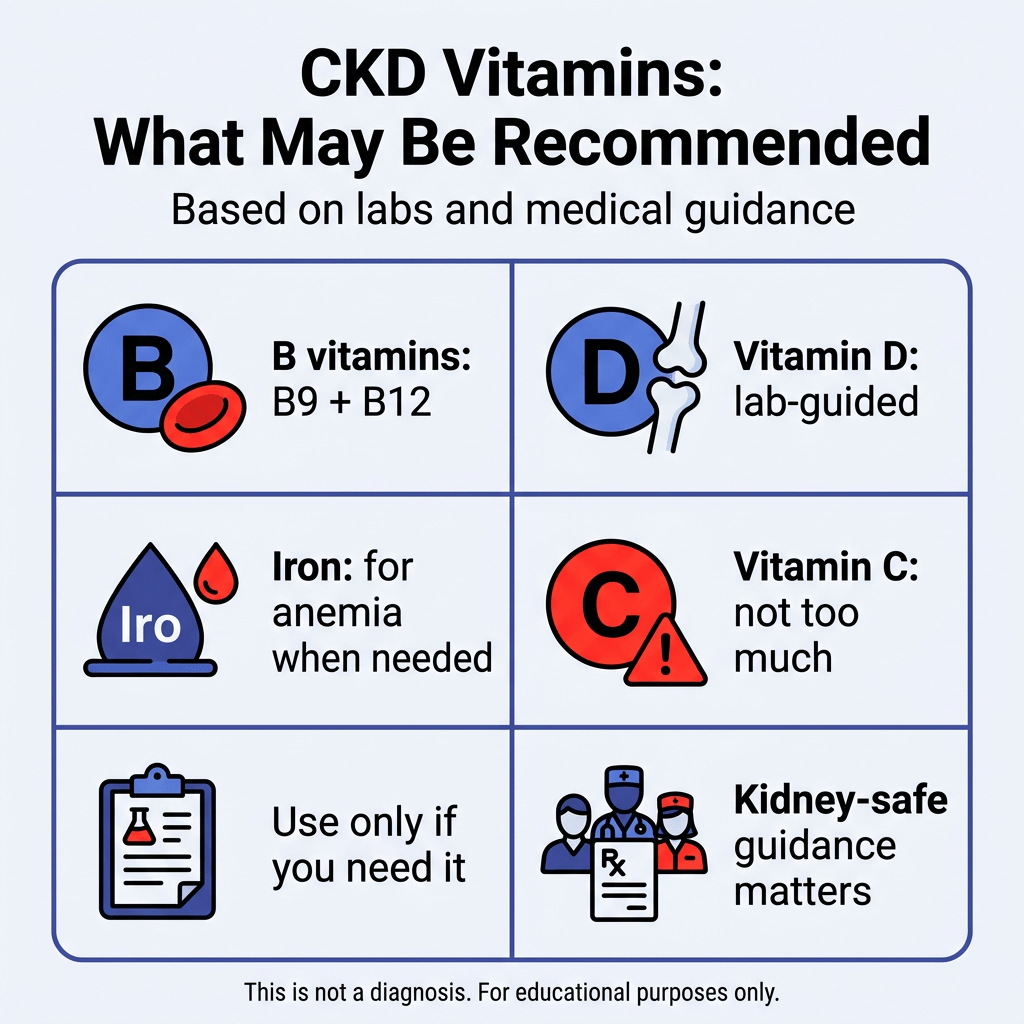
Some vitamins really can be helpful in CKD, but the key word is may. They are usually recommended because of a specific need, not because every person with kidney disease should automatically take them.
B vitamins
NKF says B-complex vitamins are among the vitamins a healthcare professional may recommend in CKD. It specifically notes that folic acid (B9) and vitamin B12 help the body make red blood cells and are often used as part of anemia care, sometimes along with iron. NIDDK also says clinicians may check for low folate and B12 and may recommend supplements if those levels are low.
Vitamin D
Vitamin D is another common example. NKF explains that vitamin D helps the body absorb calcium and keep bones strong, but the kidneys help “turn on” vitamin D. In stage 4 or stage 5 CKD, the kidneys may not do this well, and a clinician may prescribe a special form of vitamin D instead of leaving the patient to choose an over-the-counter product on their own. CKD-related bone and mineral problems become more important as disease advances, which is one reason vitamin D decisions are often tied to lab work and kidney stage.
Iron when anemia is part of the picture
Iron is not a general wellness add-on in this setting. It is usually part of anemia treatment when iron levels are low or when CKD-related anemia is present. NIDDK says that if you do not have enough iron, a healthcare professional may prescribe iron supplements by mouth or by IV. NKF also notes that iron is used to help treat or prevent anemia in CKD and that even over-the-counter iron should not be started without talking to a healthcare professional first.
The bottom line is that these “helpful” vitamins and minerals are still not automatic. In CKD, the safer question is not “Which vitamin should I buy?” It is “Do I need this based on my labs and current treatment plan?”
Vitamins and Supplements That Need Extra Caution
Some supplements are not completely off-limits, but they deserve more caution in CKD.
A good example is vitamin C. NKF includes vitamin C among the vitamins that may sometimes be recommended, but it also warns that too much vitamin C can raise the risk of kidney stones, especially calcium oxalate stones. So this is not a case where “more is better.”
Regular multivitamins also deserve a second look. NKF says a daily multivitamin is often considered safe for many people, but it can still cause harm in some situations. It may not have the right doses for CKD, and one low vitamin level does not mean every vitamin needs to be supplemented. NKF’s nutrition guidance also warns that over-the-counter vitamin and mineral products may contain too much potassium or phosphorus for people with kidney disease.
The same caution applies to mineral blends, electrolyte mixes, greens powders, and “support” supplements. These products may sound healthy, but in CKD they can introduce nutrients the body may no longer handle well. Labels that emphasize minerals, electrolytes, or detox claims deserve extra scrutiny before use.
Vitamins and Supplements Often Avoided Unless a Clinician Recommends Them
Some products fall into a firmer caution category.
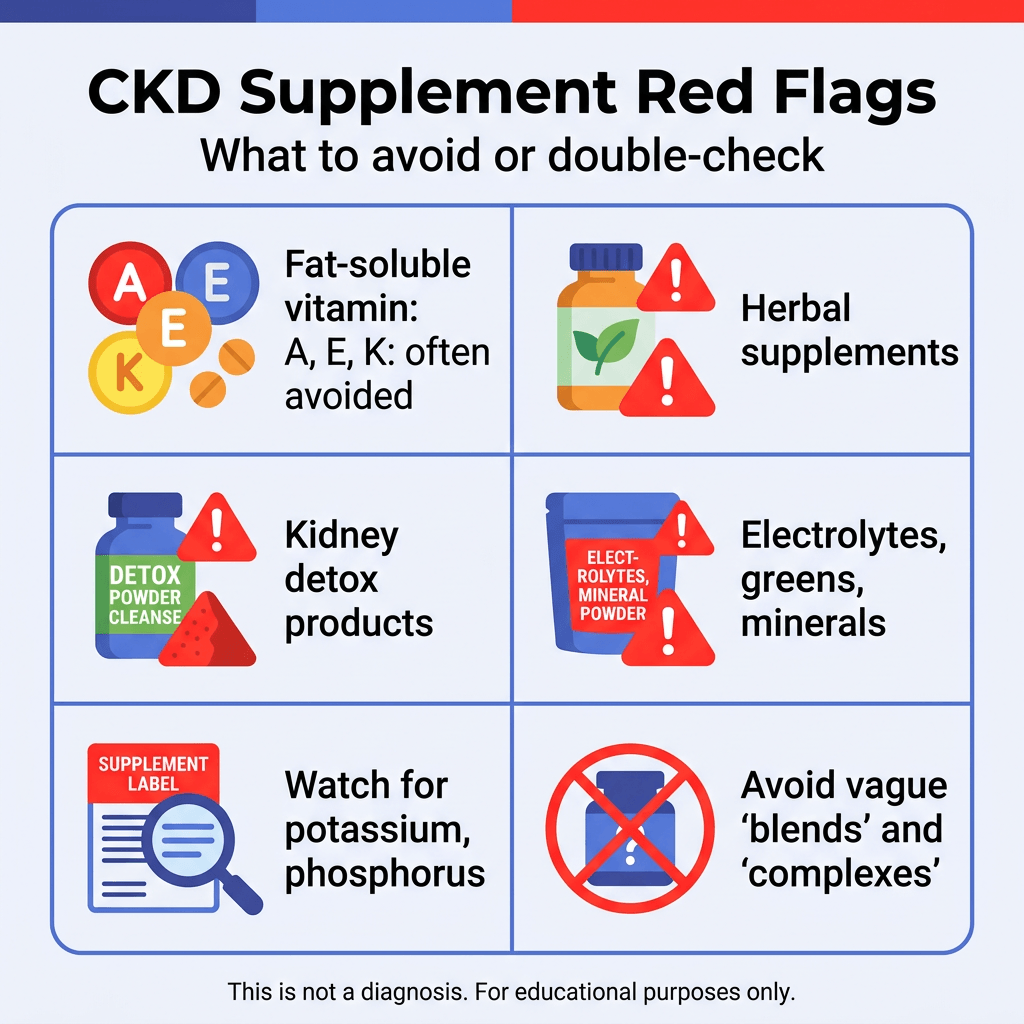
NKF says vitamins A, E, and K usually do not need to be taken as supplements if you have CKD. Most people get enough of them from food, and because the body stores these vitamins, taking too much can lead to buildup and harm.
Herbal supplements are another major concern. NKF warns that they can worsen kidney disease, interact with prescription medicines, and raise the risk of complications. That matters even more for people with advanced CKD, dialysis, or transplant-related medicines.
Products marketed as “kidney detox” or “kidney cleanse” should also be avoided. NKF says there is limited evidence to support their effectiveness, and some ingredients in these products can interact with medicines or even damage the kidneys.
A final high-caution group includes weight-loss powders, bodybuilding supplements, energy products, and proprietary blends. NKF notes that some combination supplements hide ingredient amounts behind words like “matrix,” “complex,” “proprietary formulation,” or “blend,” and some products may even contain ingredients not listed on the label.
Why Herbal Supplements Can Be Risky in Kidney Disease
Herbal supplements deserve their own section because many readers still treat them as gentler or safer than standard vitamins. In CKD, that assumption can be dangerous.
NKF lists several reasons. Herbal supplements can interact with prescription medicines, sometimes making them less effective or more toxic. They can contain contaminants such as heavy metals like lead, mercury, or arsenic. Some contain ingredients known to cause kidney damage, and some leave the body through the kidneys, which means levels can build up if kidney function is reduced.
Just as important, the label may not tell the full story. NKF notes that safety problems are harder to judge because herbal supplements are not held to the same standards as medicines, and some products may include unlisted ingredients. That is one reason “herbal” is not a reassuring safety label in CKD.
How To Check Whether a Vitamin or Supplement May Be Unsafe for CKD
A simple label check can prevent a lot of problems.
Start by looking for potassium, phosphorus, or mineral-heavy wording. If the label pushes “electrolytes,” “high in minerals,” or “greens,” that should slow you down before you buy.
Next, check the ingredient list for signs of phosphorus or “PHOS” compounds if you have been told to watch phosphorus. NKF and NIDDK both emphasize that processed products can hide kidney-relevant ingredients, and that is not limited to food. Supplements can do it too.
Then watch for proprietary blends and detox claims. If you cannot tell exactly what is in the product or how much of each ingredient it contains, that alone is a good reason to avoid it.
Most importantly, ask whether you actually need the supplement. NKF repeatedly brings the conversation back to this point: the right choice depends on your health history, kidney stage, and blood tests, not on marketing language.
What To Ask Before Taking a Vitamin or Supplement With CKD
Before starting anything new, these are the most useful questions:
- Do I actually need this based on my labs?
- Is this dose safe for my level of kidney function?
- Could this interact with any of my medicines?
- Does this product contain potassium, phosphorus, or extra minerals?
- Would a kidney-specific product be safer than a general over-the-counter one?
Those questions matter because CKD care is rarely just about one vitamin. It is usually about the bigger picture: anemia, bone health, appetite, dialysis status, medications, and lab results all at the same time.
If a supplement is causing concern, or if weakness, vomiting, dehydration, confusion, or other symptoms are becoming more serious, it is safer to get checked rather than guess. For people in Angleton and Brazoria County, Angleton ER can evaluate urgent symptoms and help point you toward the right follow-up when kidney concerns feel bigger than a simple vitamin question.
Frequently Asked Questions
What vitamins are safe for chronic kidney disease?
There is no universal list that is “safe” for everyone with CKD. B vitamins, vitamin D, vitamin C in the right amount, and iron may be used in some people, but the safest choice depends on kidney stage, lab results, and why the supplement is being considered.
Can people with CKD take a regular multivitamin?
Sometimes, but not automatically. NKF says a daily multivitamin can still cause harm in some situations, and CKD nutrition guidance warns that over-the-counter products may contain too much potassium or phosphorus.
Is vitamin D safe in kidney disease?
It can be, but vitamin D decisions in CKD often need lab guidance. In later CKD stages, the kidneys may not activate vitamin D properly, and some people need a special clinician-prescribed form instead of a routine supplement.
Is vitamin C safe for CKD?
Small amounts may be appropriate for some people, but too much vitamin C can be a problem in CKD because it can raise the risk of kidney stones.
Why are vitamins A, E, and K often avoided in CKD?
NKF says these vitamins usually do not need to be supplemented in CKD because most people get enough from food and the body stores them, so extra amounts can build up and become harmful.
Are herbal supplements safe for kidney disease?
Not automatically. Herbal supplements can interact with medicines, worsen kidney disease, contain contaminants, or include kidney-damaging ingredients.
Are “kidney detox” products safe?
NKF advises avoiding products marketed as kidney detoxes or kidney cleanses because evidence is limited and some ingredients can interact with medicines or damage the kidneys.
Can iron help if CKD causes anemia?
Yes, but iron is usually used when iron deficiency or CKD-related anemia is actually present. It should be guided by labs and clinician advice, not started casually.
What should I check on a supplement label if I have CKD?
Watch for potassium, phosphorus, electrolyte-heavy wording, detox claims, mineral blends, and proprietary blends that do not clearly list ingredient amounts.
When should someone ask a doctor before starting vitamins?
Always if you have advanced CKD, dialysis, a transplant, anemia treatment, bone/mineral issues, or a long medication list. In practice, that means most people with CKD should ask before starting a new supplement.