
Chemotherapy can make ordinary-looking symptoms more urgent. A low fever, a day of vomiting, a new bruise, or sudden breathlessness may signal infection, dehydration, a blood-count problem, or another treatment complication that needs rapid assessment. The safest response is not to decide whether the symptom is “just chemotherapy,” but to follow the emergency instructions provided by the oncology team and act when a threshold is reached.
This guide focuses on emergency decisions during chemotherapy and does not replace regimen-specific instructions. Radiation, immunotherapy, targeted therapy, and stem-cell treatments can create different risk patterns, so follow the guidance issued by the patient’s own cancer-care team.
Why Chemotherapy Changes the Urgency of Common Symptoms
Chemotherapy can reduce infection-fighting white blood cells and may also lower platelets or red blood cells. The CDC explains that chemotherapy can weaken immune defenses by reducing white blood cells, making it harder for the body to control infection. Low platelets can increase bleeding risk, while anemia can contribute to marked weakness, dizziness, or shortness of breath. Vomiting and diarrhea can add fluid, electrolyte, and kidney stress.
Risks vary by medication, dose, timing, and recent blood counts, so oncology instructions take priority. Keep the after-hours number, temperature threshold, medication list, and most recent treatment date easy to find.
Fever During Chemotherapy Should Never Be Watched Until Morning
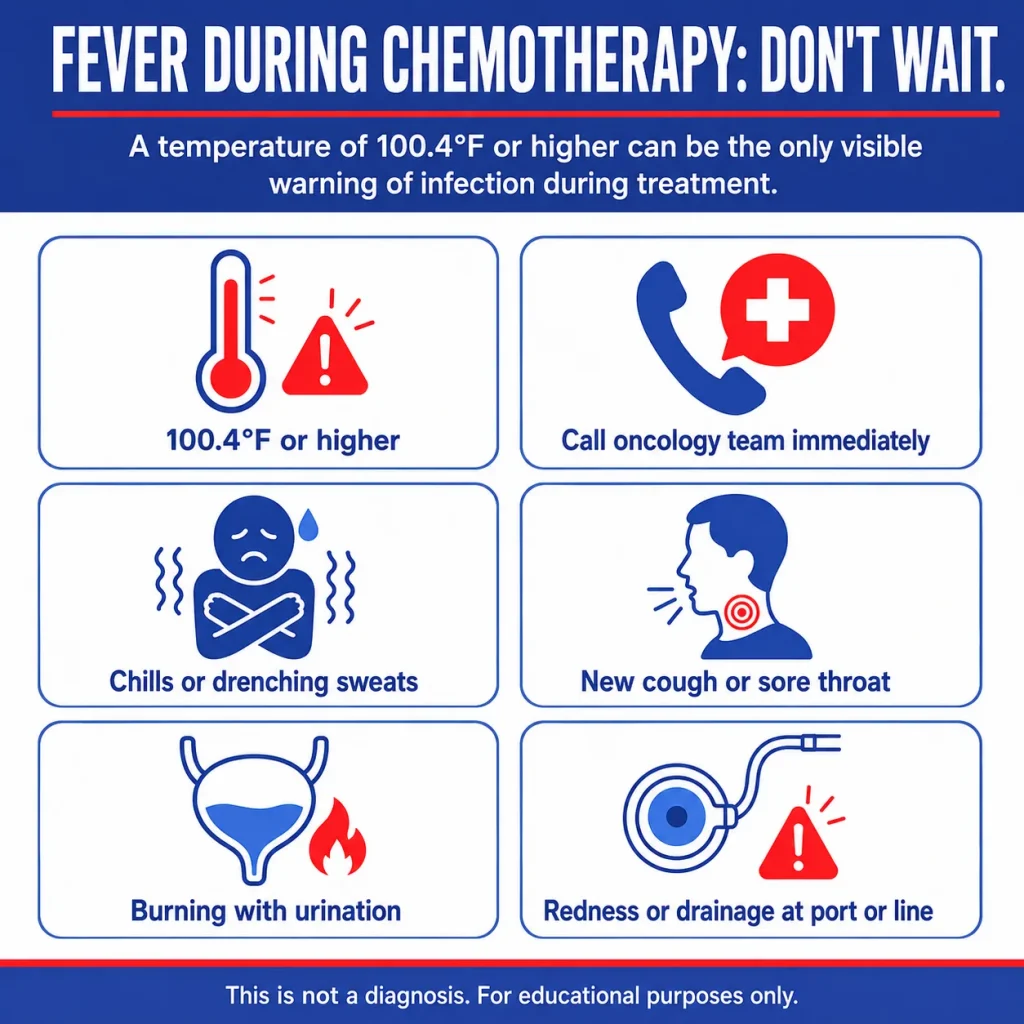
Fever may be the only visible warning of a serious infection when immune defenses are low. The CDC advises patients receiving chemotherapy to call immediately for a temperature of 100.4°F (38°C) or higher. Do not wait for the temperature to rise further, improve on its own, or remain elevated for several hours unless the oncology team has given a different treatment-specific threshold.
Call the oncology team immediately, including after hours, for fever at the instructed threshold. Go promptly if directed to an emergency department. Call 911 for severe illness, confusion, breathing trouble, fainting, or rapid decline.
Other infection warning signs include the symptoms listed in the CDC’s chemotherapy infection guidance:
• Chills, shaking, or drenching sweats
• A new or changing cough, sore throat, or shortness of breath
• Burning or pain with urination
• Redness, pain, swelling, or drainage around a port, line, wound, or surgical area
• New diarrhea, vomiting, abdominal or rectal pain, or another unexplained pain
Ask the oncology team before taking acetaminophen, ibuprofen, or another fever-reducing medicine. Lowering the temperature before guidance may hide a fever pattern that helps the medical team judge infection risk.
Vomiting or Diarrhea Becomes Urgent When Hydration Is Failing
The key question is whether the patient can replace what is being lost. Dehydration can develop quickly when vomiting and diarrhea occur together or intake was already limited.
The National Cancer Institute notes that severe treatment-related diarrhea can cause dangerous dehydration. Seek immediate oncology direction or emergency evaluation when fluids will not stay down or when the patient is becoming weaker instead of recovering between episodes.
• Inability to keep liquids down
• Very little urine or urine that is unusually dark
• Increasing dizziness, faintness, or inability to stand safely
• Dry mouth with worsening weakness
• Rapid heartbeat, confusion, or unusual sleepiness
• Severe or persistent diarrhea
• Blood in vomit or stool
According to MedlinePlus guidance on severe dehydration, confusion, fainting, lack of urination, and a rapid heartbeat are reasons to get medical help right away. Ongoing fluid loss can also disturb sodium or potassium levels and reduce kidney function. For a focused overview of emergency dehydration warning signs, see when dehydration needs ER care.
Bleeding and Bruising That Should Not Be Monitored at Home
Some cancer treatments lower platelets, which help blood clot. The National Cancer Institute’s guidance on treatment-related bleeding and bruising explains that thrombocytopenia can make bleeding easier to start and harder to stop.
Urgent patterns include:
• Bleeding that does not stop with firm, continuous pressure
• Vomiting blood or material that resembles coffee grounds
• Black, tar-like, or visibly bloody stool
• Red or pink urine
• Heavy or unexpected vaginal bleeding
• Frequent or difficult-to-control nosebleeds
• Widespread unexplained bruising or new pinpoint red-purple spots
A severe headache, vision change, confusion, unusual drowsiness, seizure, or new weakness occurring with bleeding or known low platelets is especially concerning because internal bleeding must be considered. Call 911 for major or uncontrolled bleeding, loss of consciousness, a seizure, or sudden stroke-like symptoms.
Breathing Trouble, Chest Pain, or Sudden Swelling Needs Immediate Assessment
Do not assume new respiratory or chest symptoms are routine fatigue. Infection, anemia, a blood clot, an infusion reaction, or a heart or lung complication can overlap; the patient does not need to identify the cause before getting help.
• New or rapidly worsening shortness of breath
• Difficulty breathing at rest or with minimal activity
• Severe chest pain, pressure, or tightness
• Blue or gray lips or face
• Coughing up blood
• Fainting or confusion with breathing difficulty
• Sudden swelling of the face, tongue, or throat
• Breathing trouble that begins during or shortly after treatment
Chemotherapy and radiation can also contribute to anemia; the National Cancer Institute identifies fatigue, dizziness, and shortness of breath as anemia symptoms during cancer treatment. Those symptoms still require urgent assessment when they are sudden, severe, or paired with chest pain, fainting, fever, or rapid decline.
Confusion, Fainting, Severe Weakness, or Rapid Decline Are Not Routine Fatigue
Treatment fatigue is common, but a sudden change in alertness, strength, balance, or the ability to function is different. A caregiver should focus on what changed: Can the patient answer normally, stay awake, stand safely, drink fluids, and breathe comfortably?
• New confusion or disorientation
• Fainting or inability to remain standing
• Extreme weakness that develops suddenly
• Difficulty waking or staying awake
• A seizure
• New one-sided weakness, facial droop, or speech difficulty
• Severe weakness with fever, bleeding, chest pain, or breathlessness
The National Cancer Institute describes delirium as a confused mental state that may be related to medicines, dehydration, or other serious problems. New confusion is not a symptom to manage by simply letting the patient sleep. Call 911 for loss of consciousness, seizure, stroke-like signs, severe breathing difficulty, or a rapidly worsening condition.
Call the Oncology Team, Go to the ER, or Call 911?
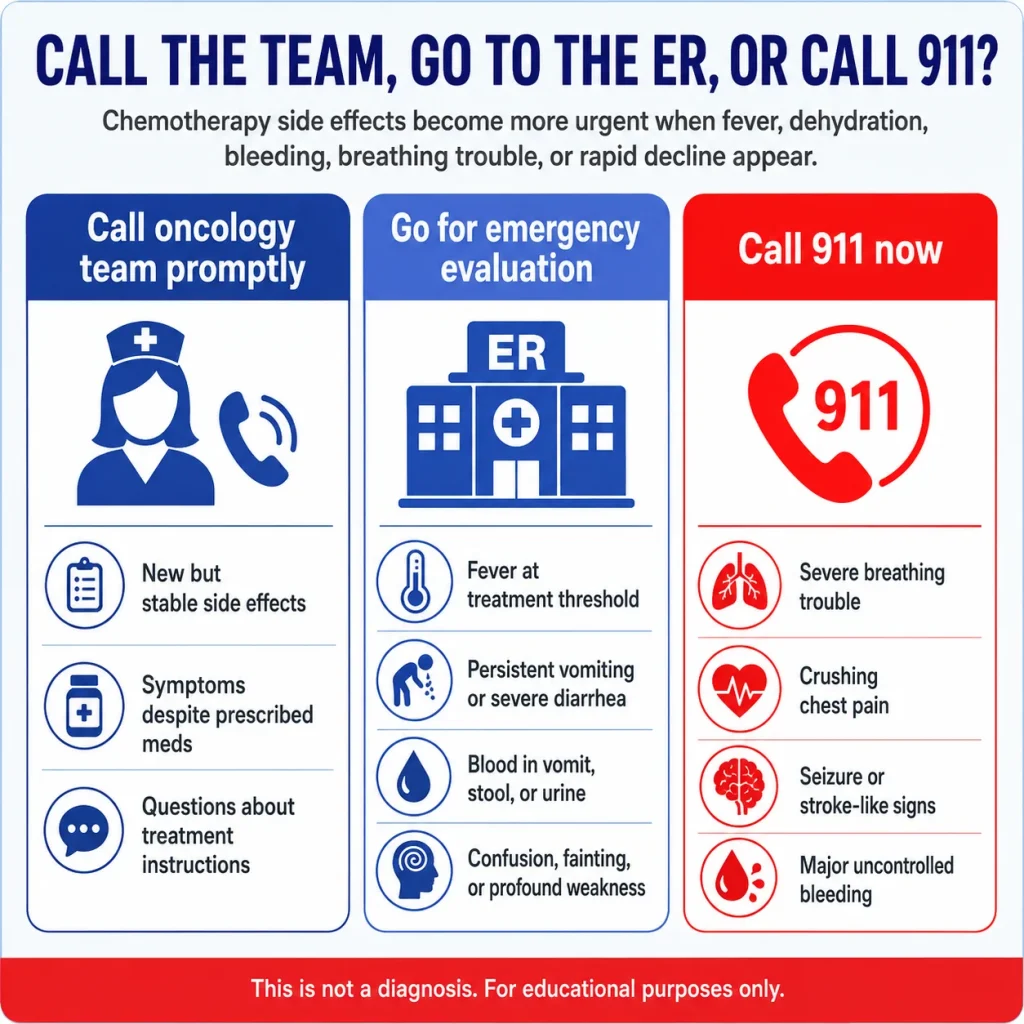
Call 911 for:
• Severe breathing difficulty or blue-gray lips or face
• Crushing, intense, or rapidly worsening chest pain
• Loss of consciousness or inability to wake the patient
• A seizure or sudden stroke-like symptoms
• Major or uncontrolled bleeding
• A rapidly worsening allergic reaction with facial, tongue, or throat swelling
Seek immediate oncology direction or emergency evaluation for:
• Fever at or above the patient’s treatment threshold, commonly 100.4°F (38°C)
• Persistent vomiting or severe diarrhea with dehydration signs
• Blood in vomit, stool, or urine
• New breathing difficulty, chest symptoms, or sudden swelling
• Confusion, fainting, or profound weakness
• Any symptom that is escalating quickly
Contact the oncology team promptly for:
New but stable side effects, symptoms persisting despite prescribed management, or uncertainty about a treatment instruction. If the patient is too ill to wait safely, use emergency services rather than delaying care to reach the clinic.
At ER triage, state immediately that the patient is receiving chemotherapy. Give the most recent treatment date, regimen name, oncology contact number, measured temperature, and recent blood-count information. Make the chemotherapy status clear before the symptom is treated as routine.
What an Emergency Evaluation May Involve
The emergency team may assess temperature, blood pressure, heart rate, oxygen level, hydration, mental status, breathing, and signs of infection or bleeding. Testing may include a blood count, electrolytes, kidney or liver measurements, urinalysis, infection testing, cultures, an EKG, or imaging.
Blood tests can identify urgent abnormalities without providing a complete cancer diagnosis; Angleton ER’s guide to what CBC and ER lab results can and cannot show explains that distinction. When imaging is medically indicated, it may help evaluate chest symptoms, abdominal pain, bleeding, obstruction, or another urgent concern, but emergency imaging does not by itself confirm cancer.
Treatment may include IV fluids, oxygen, medication, antibiotics, bleeding management, monitoring, or hospital transfer. Emergency care addresses immediate risk and works alongside, not in place of, the oncology team.
24/7 Emergency Evaluation at Angleton ER
For patients receiving chemotherapy in Angleton or nearby Brazoria County communities, fever, uncontrolled vomiting, significant bleeding, new breathing difficulty, chest pain, confusion, fainting, or rapidly worsening weakness should not wait for a routine appointment. Angleton ER is open 24/7 for emergency evaluation and can provide stabilization, hydration support, infection assessment, appropriate emergency imaging, and on-site laboratory testing when medically indicated. If symptoms are life-threatening or the patient is unsafe to transport by car, call 911.
Frequently Asked Questions
Is a temperature of 100.4°F an emergency during chemotherapy even if I otherwise feel well?
Yes. A temperature of 100.4°F (38°C) or higher is a commonly used emergency threshold during chemotherapy because fever may be the only sign of infection. Call the oncology team immediately and follow its instructions; do not wait for other symptoms to appear.
Should I take acetaminophen or another fever reducer before calling my oncology team?
Ask the oncology team first unless your written instructions say otherwise. A fever reducer may lower the measured temperature and hide a pattern the team needs to know about. Record the temperature, the time it was taken, and any other symptoms.
How can I tell when chemotherapy vomiting or diarrhea has caused serious dehydration?
Warning signs include inability to keep liquids down, very little or dark urine, worsening dizziness, fainting, rapid heartbeat, confusion, unusual sleepiness, and severe weakness. Blood in vomit or stool is also urgent and should not be treated as simple dehydration.
Are unexplained bruises or small red-purple spots dangerous during chemotherapy?
They can be, particularly when they are new, widespread, increasing, or accompanied by bleeding. Chemotherapy may lower platelets, so contact the oncology team promptly. Seek emergency care for uncontrolled bleeding, severe headache, confusion, vision changes, or marked drowsiness.
Should I call my oncologist before going to the emergency room?
Call the oncology team immediately for fever or another urgent treatment threshold when the patient is stable enough to do so. Do not delay 911 or emergency care for severe breathing trouble, major bleeding, loss of consciousness, seizure, stroke-like symptoms, intense chest pain, or rapid deterioration.
What chemotherapy information should I give the ER triage team?
State that the patient is receiving chemotherapy before describing the rest of the complaint. Provide the most recent treatment date, medication or regimen name if available, oncology contact information, temperature readings, current medicines, allergies, port or line information, and any recent blood-count results or written emergency instructions.