

Yes — chronic kidney disease can cause anemia, and it is one of the more common complications of CKD. It tends to be less common in early kidney disease and more common as kidney function gets worse. NIDDK notes that anemia often becomes more likely as CKD progresses, and most people with kidney failure also have anemia.
For many people in Angleton and across Brazoria County, this question comes up after feeling unusually tired, weak, short of breath, or mentally drained. Those symptoms can have many causes, but anemia is one of the important ones doctors look for in people with kidney disease because it can affect energy, heart strain, daily function, and overall quality of life.
Medical disclaimer: This article is for educational purposes only. It is not medical advice, diagnosis, or a substitute for care from a licensed healthcare professional.
Yes, chronic kidney disease can cause anemia
Anemia means your blood has a lower-than-normal amount of red blood cells or hemoglobin. Hemoglobin is the part of red blood cells that carries oxygen through the body. When hemoglobin is low, your tissues and organs may not get enough oxygen to work as well as they should.
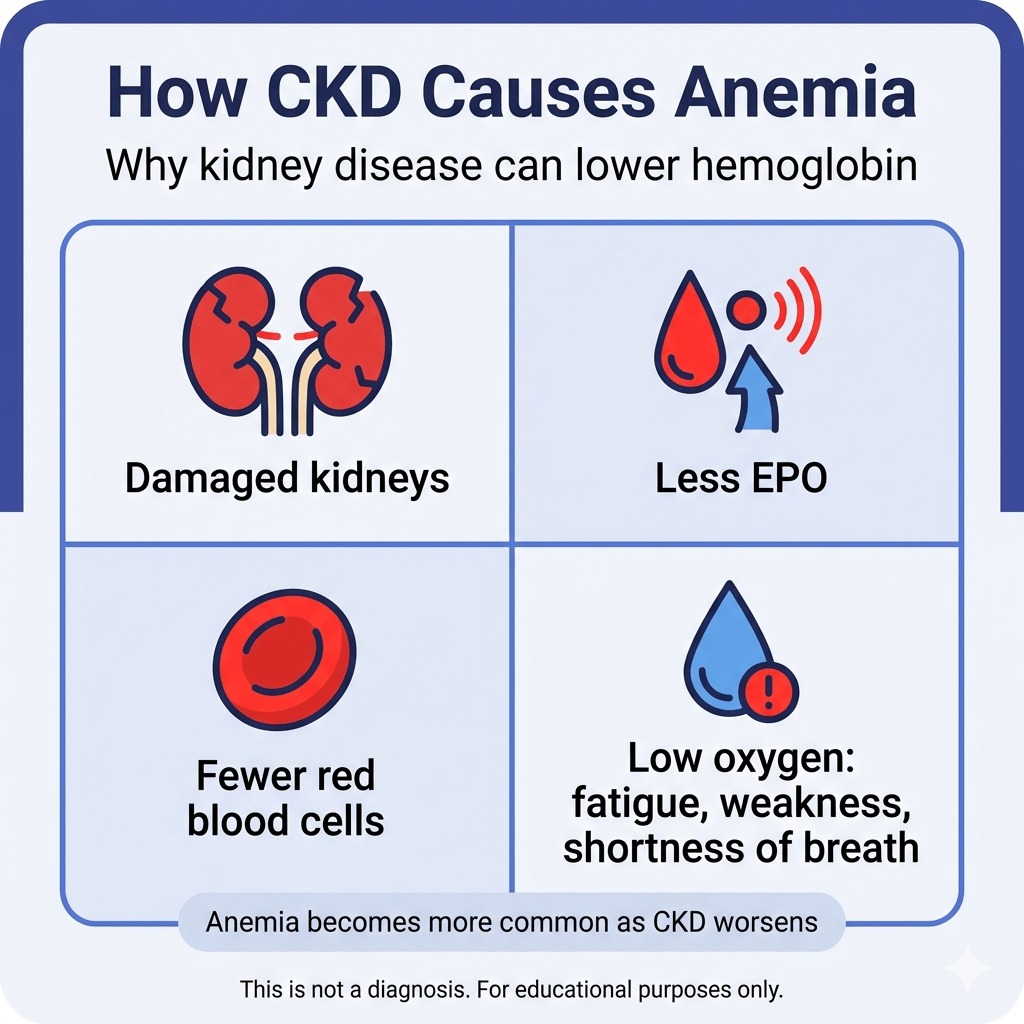
CKD and anemia are connected because damaged kidneys do more than just filter waste. Healthy kidneys also help signal the body to make red blood cells. When kidney function drops, that signaling system can weaken, and anemia can develop over time. NIDDK specifically states that anemia is a common complication of CKD and that it often worsens as more kidney function is lost.
Why CKD causes anemia
The main reason is that damaged kidneys make less erythropoietin, often called EPO. EPO is a hormone that tells the bone marrow to make red blood cells. With less EPO, the body makes fewer red blood cells, so less oxygen is delivered where it is needed.
That is not always the whole story, though. NIDDK explains that anemia in CKD often has more than one cause. Red blood cells may not last as long as usual, and some people with CKD also have low levels of iron, vitamin B12, or folate, all of which are needed to make healthy blood cells. Infection, inflammation, malnutrition, and blood loss can make the problem worse too.
So the safest way to think about it is this: CKD can directly cause anemia, but anemia in someone with CKD may still be getting worse because of several overlapping reasons at the same time.
How common is anemia in people with CKD?
Anemia is common in CKD, especially in later stages. NIDDK says more than 1 out of every 7 people with kidney disease have anemia, and National Kidney Foundation states that anemia becomes much more common as CKD advances, including very high rates by stage 5.
That is why tiredness in someone with advanced CKD should not always be brushed off as “just stress” or “just getting older.” Anemia is one of the real medical reasons doctors keep checking bloodwork over time in kidney disease.
Symptoms of anemia in chronic kidney disease
The most common symptoms are often easy to overlook at first. NIDDK and NKF list symptoms such as:
- fatigue or very low energy
- weakness
- shortness of breath
- dizziness or lightheadedness
- headaches
- pale skin
- trouble concentrating
- fast or irregular heartbeat
- fainting in more serious cases
What makes this tricky is that some of these symptoms overlap with CKD itself. A person may think the kidney disease alone is causing the problem, when anemia is also contributing. That is one reason symptoms alone are not enough — testing matters.
Why anemia matters in CKD
Anemia is not just about feeling tired. NIDDK says anemia can reduce oxygen delivery to important organs such as the heart and brain. NKF adds that untreated anemia can worsen fatigue and weakness, lower quality of life, make CKD symptoms harder to manage, and increase strain on the heart.
In other words, anemia can make kidney disease feel heavier than it already does. A person may feel weaker, more breathless, less focused, and less able to handle daily life. That is why anemia is treated as a real CKD complication, not a minor side issue.
How doctors check for anemia in CKD
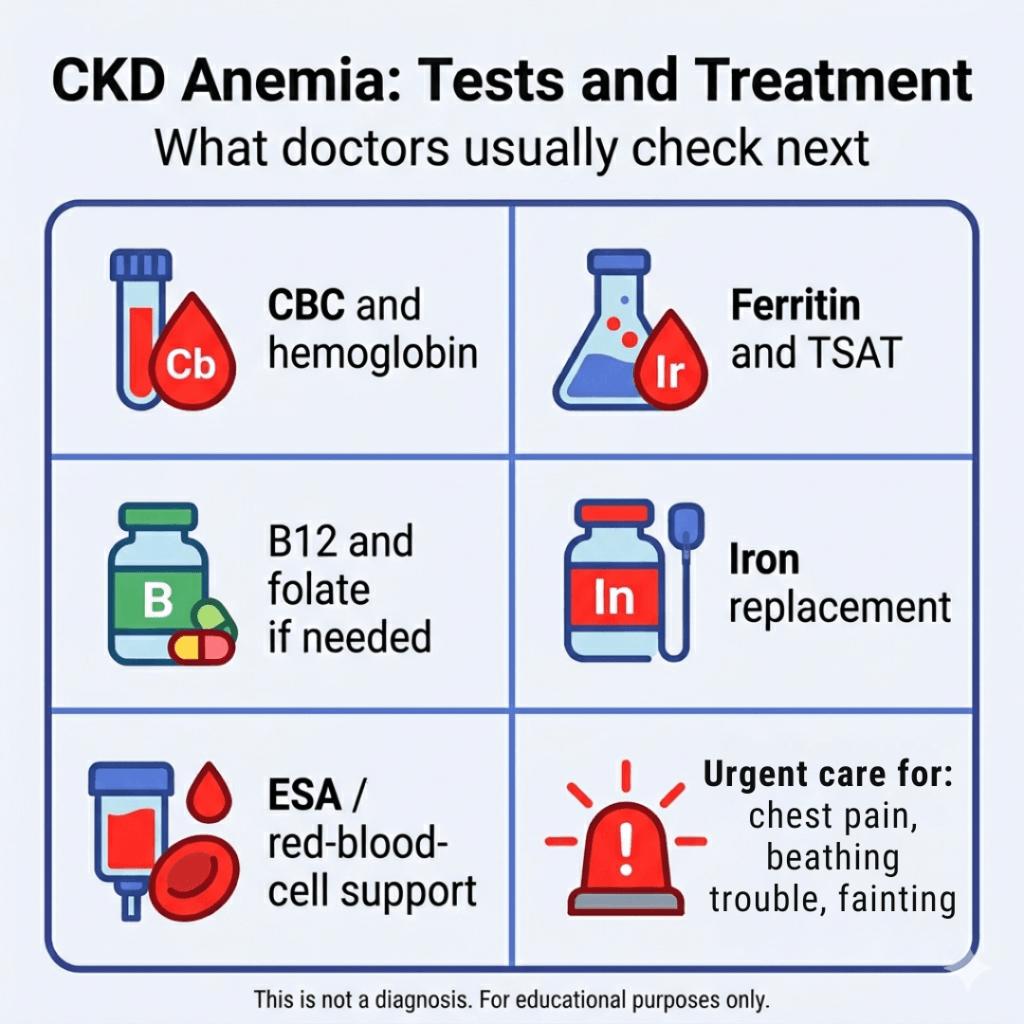
Doctors usually diagnose anemia in CKD with blood tests, not by symptoms alone. NIDDK says blood count testing may include the number of red blood cells, hemoglobin, average red blood cell size, reticulocytes, and a complete blood count (CBC).
Doctors may also order iron studies, including ferritin and transferrin or transferrin saturation, because low iron is common and can affect treatment decisions. NIDDK also says doctors may sometimes check vitamin B12 and folate if those deficiencies are suspected. NKF also uses hemoglobin, ferritin, and TSAT as key markers when evaluating anemia in CKD.
This is important because guessing from symptoms is not enough. A person can feel exhausted for reasons other than anemia, and a person can also have anemia before the symptoms become obvious.
Can anemia in CKD have causes other than the kidneys?
Yes. NIDDK is very clear that anemia in CKD often has more than one cause. Along with low EPO, other causes can include iron deficiency, blood loss, inflammation, poor nutrition, infection, and vitamin deficiencies. NKF also notes that anemia in CKD can overlap with autoimmune disease, stomach or bowel problems, cancer, and inherited blood disorders.
That means low iron does not automatically prove CKD is the entire cause. It also means that proper treatment depends on figuring out why the anemia is happening, not just confirming that anemia exists.
How anemia in CKD is usually treated
Treatment usually starts with the underlying cause. NIDDK says that if iron, vitamin B12, or folate is low, those problems are treated first. If iron is low, doctors may use iron supplements by mouth or IV. If vitamin levels are low, they may recommend vitamin replacement.
If anemia is more directly tied to low EPO from CKD, doctors may prescribe erythropoiesis-stimulating agents (ESAs), which help signal the bone marrow to make more red blood cells. NIDDK notes that ESAs are not right for everyone, but they are an important option in many CKD patients with anemia.
In more serious cases, blood transfusions may be used, especially when anemia is severe or symptoms are urgent. NIDDK also explains that transfusions are used carefully because they can bring other risks, including iron overload and effects on future transplant planning.
When should someone with CKD ask about anemia?
It is worth asking about anemia if:
- tiredness is getting worse
- shortness of breath feels unusual
- weakness or dizziness keeps happening
- concentration is poor
- pale skin is noticeable
- CKD is getting more advanced
- labs have not been checked recently
This becomes even more important in later-stage CKD, because anemia is more likely as kidney function falls.
When anemia symptoms should not wait
NIDDK says to seek emergency care for chest pain that won’t go away and to seek immediate medical care for difficulty breathing or shortness of breath. Fainting, severe dizziness, or fast-worsening weakness should also be taken seriously.
For people in Angleton and Brazoria County, symptoms like worsening weakness, chest discomfort, breathing trouble, fainting, or a major drop in day-to-day function should not be treated like a routine fatigue problem. Angleton ER can evaluate urgent symptoms and help determine whether anemia, CKD complications, or something else is causing the decline.
Frequently Asked Questions
Can chronic kidney disease cause anemia?
Yes. CKD is a common cause of anemia because damaged kidneys make less EPO, and anemia becomes more common as kidney disease advances.
Why does CKD cause anemia?
The main reason is reduced EPO production, but CKD-related anemia may also involve iron deficiency, vitamin deficiency, inflammation, blood loss, and shorter red blood cell survival.
Is anemia more common in stage 4 or stage 5 CKD?
Yes. NIDDK and NKF both indicate anemia becomes more common as CKD gets worse and is very common in kidney failure.
What are the symptoms of anemia in kidney disease?
Common symptoms include fatigue, weakness, shortness of breath, dizziness, headaches, pale skin, trouble concentrating, and fast or irregular heartbeat.
Can CKD anemia make you feel short of breath?
Yes. Shortness of breath is one of the listed symptoms of anemia in CKD.
How do doctors test for anemia in CKD?
They usually use blood tests such as hemoglobin, CBC, ferritin, transferrin or TSAT, and sometimes vitamin B12 and folate levels.
Can anemia in CKD be treated?
Yes. Treatment may include iron, vitamin replacement, ESAs, and in some cases blood transfusions, depending on the cause and severity.
Does low iron always mean CKD is the cause?
No. Low iron can happen for many reasons, and anemia in CKD often has more than one cause.
When should someone with CKD get checked for anemia?
When symptoms like tiredness, weakness, shortness of breath, dizziness, or poor concentration are showing up, or when CKD is becoming more advanced.
When should anemia symptoms be treated urgently?
When there is chest pain, breathing difficulty, fainting, or fast worsening weakness or dizziness.