
When someone tells me, “Doc, they said I’m borderline sugar diabetic,” what they usually mean is prediabetes — blood sugar that’s higher than normal, but not high enough to be diagnosed as type 2 diabetes.
In Angleton (2024 population estimate 20,979), I see a lot of people brush it off because they “don’t feel sick.” But prediabetes often doesn’t come with obvious symptoms — and waiting is how it quietly turns into bigger problems.
One more reality check: 115.2 million Americans have prediabetes, and 8 in 10 don’t know it.
what “borderline sugar diabetes” really means
Borderline diabetes = prediabetes (in most everyday conversations). It means your body is starting to struggle with insulin resistance, so your blood sugar is trending up — but you’re still in a window where you can prevent or delay type 2 diabetes.
That directly answers:
- “What is borderline diabetic?”
- “What does pre diabetic mean?”
- “What does it mean to be pre diabetic?”
Borderline diabetes numbers
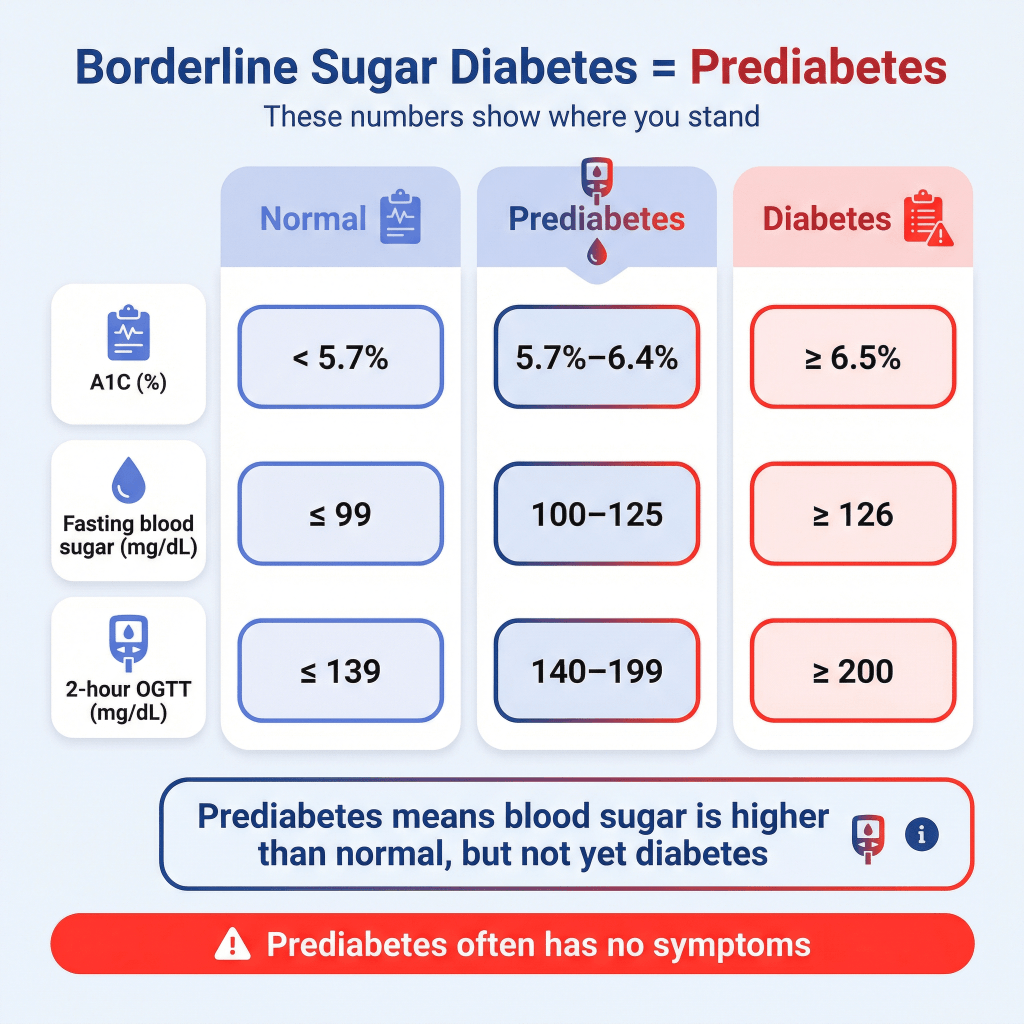
Prediabetes (“borderline”) ranges — simple chart
| Test | Normal | Prediabetes (Borderline) | Diabetes |
|---|---|---|---|
| A1C (%) | < 5.7% | 5.7%–6.4% | ≥ 6.5% |
| Fasting blood sugar (mg/dL) | ≤ 99 | 100–125 | ≥ 126 |
| 2-hour OGTT (mg/dL) | ≤ 139 | 140–199 | ≥ 200 |
These cutoffs are summarized clearly in MedlinePlus and in the NIDDK test comparison table.
What is pre diabetic A1C?
Most labs use:
- 5.7%–6.4% = prediabetes
What is a pre diabetic blood sugar level?
Most commonly, people mean fasting glucose:
- 100–125 mg/dL = prediabetes
What is borderline diabetic numbers?
That phrase isn’t one official “single number.” It usually refers to being in the prediabetes band above — especially A1C 5.7–6.4% or fasting 100–125.
Symptoms: do you feel anything with prediabetes?
Most people don’t. Mayo Clinic notes prediabetes doesn’t usually have signs or symptoms.
CDC also emphasizes you can have prediabetes for years without symptoms.
One sign that can show up
A possible sign is darkened, velvety skin in areas like the neck, armpits, or groin (often linked with insulin resistance).
If you’re having classic diabetes symptoms
If you’ve moved beyond “borderline” into true diabetes, you may notice:
- increased thirst
- frequent urination
- blurry vision
- fatigue
Mayo Clinic lists these as classic symptoms when blood sugar has moved into diabetes territory.
Who is most at risk
If I’m being blunt in the ER: risk often comes down to a mix of genetics + metabolism + lifestyle + age.
CDC lists major risk factors for prediabetes and type 2 diabetes such as:
- overweight/obesity
- age 45 or older
- parent or sibling with type 2 diabetes
- physical inactivity
- history of gestational diabetes or baby > 9 lbs
What to do if you are pre diabetic
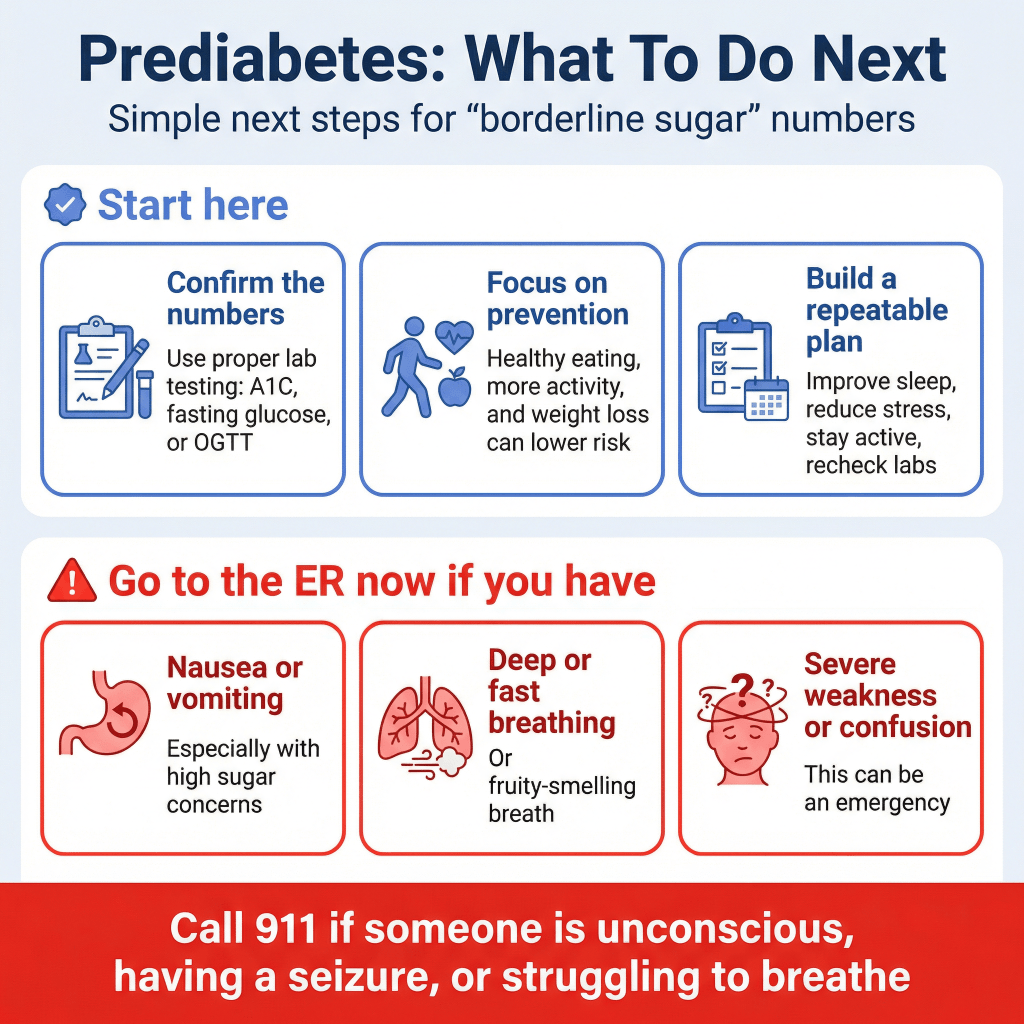
If you’re prediabetic,You can follow these steps.
Step 1: Confirm the numbers
Don’t label yourself off one random home reading. Get the right lab test(s) and confirm the range with your clinician. NIDDK lays out the standard testing options (A1C, fasting glucose, OGTT).
Step 2: Focus on proven prevention
CDC’s message is straightforward: prediabetes is your chance to prevent type 2 diabetes, and the CDC-led National Diabetes Prevention Program (National DPP) lifestyle change program is designed specifically for that.
CDC also states that weight loss through healthy eating and more activity can cut the risk of type 2 diabetes significantly (their prediabetes stats page summarizes this in plain language).
Step 3: Build a “repeatable” plan
If you’re asking “how to reverse pre diabetic”, here’s how I frame it clinically:
- reduce insulin resistance
- improve activity consistency
- tighten up sleep and stress
- recheck labs on schedule
That’s not hype — that’s the real goal of structured programs like National DPP.
When to go to the ER / call 911
Prediabetes itself is not usually an ER diagnosis. But people who think they’re “borderline” sometimes are actually in dangerously high blood sugar or a hyperglycemic emergency and don’t realize it.
Go to the ER now if
You have “borderline diabetes” plus signs that suggest you may be much worse than borderline:
- nausea/vomiting
- stomach pain
- very deep/fast breathing
- fruity-smelling breath
- severe weakness
- confusion
These are warning signs of diabetic ketoacidosis (DKA) — a medical emergency.
Call 911 immediately if
- someone is unconscious
- having a seizure
- severely confused or struggling to breathe
If you’ve been told you’re borderline sugar diabetic, don’t panic — but don’t minimize it either. Prediabetes is a warning light, and it’s also an opportunity.
Visit Angleton ER — open 24/7.
Frequently Asked Questions
What is considered pre diabetic?
Usually: A1C 5.7–6.4% or fasting blood sugar 100–125 mg/dL.
What levels are pre diabetic?
Same answer — it depends on which test you’re talking about (A1C, fasting, or OGTT).
What does it mean to be pre diabetic?
It means your blood sugar is elevated and you’re at higher risk for type 2 diabetes (and related heart/stroke risk), but you’re still in a window where prevention strategies can help.