
When someone is living with advanced or metastatic cancer, a sudden change can be frightening for both the patient and the caregiver. New symptoms do not automatically mean the cancer has spread further. They may come from infection, bleeding, a blood clot, medication effects, dehydration, anemia, organ stress, or another condition that needs prompt treatment.
The caregiver’s job is not to identify the cause at home. The safer question is whether the symptom is new, severe, rapidly worsening, or disrupting breathing, movement, alertness, hydration, or basic function. Those changes can be unsafe to monitor until the next routine appointment.
Why New Symptoms in Advanced Cancer Need Careful Attention
Advanced cancer can affect several body systems, and treatment or supportive medicines can add other risks. A symptom that seems minor in another setting may become more serious when the patient has low blood counts, reduced immune defenses, organ impairment, limited mobility, or difficulty eating and drinking.
Look for a change from the patient’s usual baseline. A person who is normally tired but becomes difficult to wake, or who has chronic pain that suddenly changes location or intensity, needs a different response than someone whose symptoms are stable and controlled. For broader guidance about symptoms before or outside an advanced-cancer diagnosis, Angleton ER’s overview of cancer warning signs and when to seek care explains the distinction between persistent concerns and immediate red flags.
Breathing Trouble and Chest Symptoms Should Not Be Watched at Home
Breathing changes can deteriorate quickly. The National Cancer Institute’s cardiopulmonary guidance notes that shortness of breath in people with cancer may have several causes, including infection, anemia, airway obstruction, fluid around the lungs or heart, and blood clots in the lungs. A caregiver does not need to distinguish among them before seeking help.
Urgent respiratory or chest warning signs include:
• New or rapidly worsening shortness of breath
• Difficulty breathing while resting or lying still
• Inability to speak comfortably because of breathlessness
• Chest pain, pressure, or tightness
• Coughing up blood
• Blue or gray lips, face, or fingertips
• Sudden breathlessness with swelling or pain in one leg
Call 911 when breathing is severe, the patient is turning blue or gray, has collapsed, is difficult to wake, or cannot speak because of breathlessness. Do not drive a patient whose breathing or consciousness is rapidly worsening.
Confusion, Seizures, Weakness, and Other Neurologic Changes Are Red Flags
Family members often notice neurologic deterioration before the patient recognizes it. A new change in behavior, speech, strength, balance, vision, or alertness may result from stroke, seizure activity, infection, medication toxicity, abnormal electrolytes, bleeding, or pressure affecting the brain. Emergency assessment is needed whether or not brain involvement has previously been diagnosed.
Act urgently for:
• New confusion, agitation, or behavior that is clearly unusual
• Difficulty waking the patient or keeping the patient alert
• A first seizure, a seizure lasting several minutes, or repeated seizures
• New facial drooping or weakness or numbness on one side
• Slurred speech, difficulty finding words, or inability to communicate normally
• Sudden vision loss, double vision, or another abrupt visual change
• Loss of balance, collapse, or inability to walk normally
The CDC lists sudden one-sided weakness, confusion, speech difficulty, vision changes, and loss of balance as stroke warning signs. Call 911 for these symptoms. For a first seizure, seek emergency evaluation; call 911 if it continues, repeats, causes injury, or the patient does not recover normally afterward.
New Back Pain With Leg or Bladder Changes May Signal Spinal Cord Compression
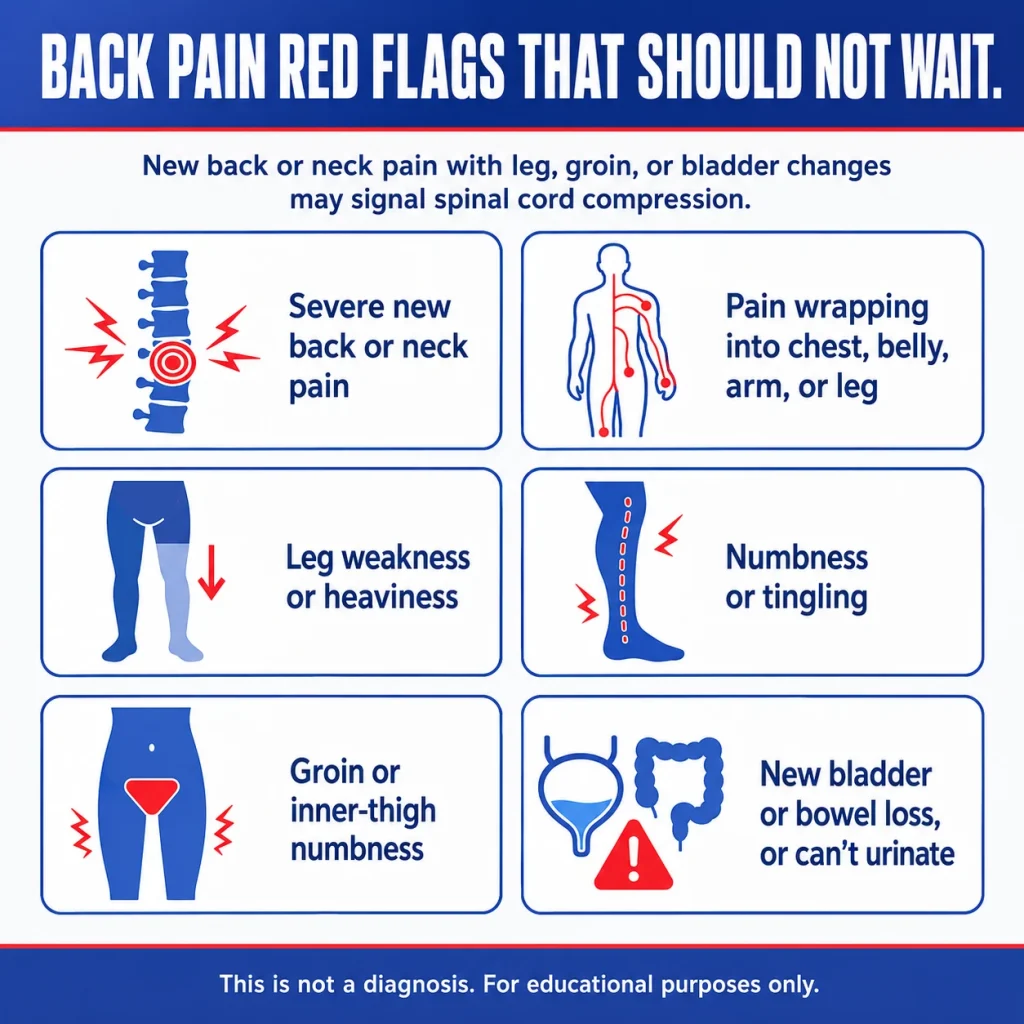
Spinal cord compression is a time-sensitive complication because delayed treatment can lead to permanent weakness, loss of sensation, paralysis, or loss of bladder and bowel control. The National Cancer Institute describes spinal cord compression as pressure that may cause pain, weakness, loss of feeling, paralysis, or incontinence.
Warning Signs That Should Not Wait
• New severe or rapidly worsening back or neck pain
• Pain that wraps around the chest or abdomen or travels into an arm or leg
• New leg weakness, heaviness, numbness, or tingling
• Increasing difficulty standing, transferring, or walking
• Numbness around the inner thighs, buttocks, or groin
• New loss of bladder or bowel control
• Inability to urinate together with weakness, numbness, or other neurologic symptoms
Do not wait for an oncology office visit when these symptoms are new or progressing. Keep the patient from walking without assistance if the legs are weak or unsteady, and arrange immediate emergency evaluation.
Fever, Infection Signs, or Rapid Physical Decline Need Prompt Assessment
Cancer and some treatments can reduce the body’s ability to contain infection. The National Cancer Institute lists fever, chills, cough, painful urination, and redness or swelling at a catheter site as possible infection signs. Patients receiving active treatment should follow the oncology team’s specific fever threshold and written emergency plan rather than waiting for the temperature to rise further.
Concerning changes include:
• Fever or shaking chills
• A new cough, painful urination, diarrhea, or a draining wound
• Redness, swelling, pain, warmth, or drainage around a port or catheter
• New confusion or profound weakness
• Rapid heartbeat or rapid breathing
• An abrupt decline in which the patient suddenly looks significantly more ill
A patient with serious infection may not always have a dramatic fever. The CDC identifies confusion, fever or shivering, a high heart rate, shortness of breath, and extreme discomfort as possible sepsis signs. Fever with confusion, breathing changes, collapse, or rapid decline requires emergency evaluation.
Bleeding, Dehydration, and Uncontrolled Pain Can Become Emergencies
Home symptom plans are valuable, but they have limits. Some cancer treatments can lower platelets and increase bleeding risk; the National Cancer Institute explains how low platelets can lead to easy or excessive bleeding. Internal bleeding may be less obvious at first, so the amount of blood and the patient’s overall condition both matter.
Seek urgent help for:
• Vomiting blood, black or tar-like stools, coughing blood, or heavy bleeding
• Bleeding that does not stop with direct pressure
• Repeated vomiting or inability to keep fluids or essential medicines down
• Very little urine, severe dizziness, fainting, or confusion
• Severe pain that is new, rapidly worsening, or not controlled by the prescribed plan
• A swollen, tight, or increasingly painful abdomen
• Weakness so severe that the patient cannot stand, transfer, or perform basic self-care
MedlinePlus lists very little urine, confusion, dizziness, rapid heartbeat, and rapid breathing among signs of severe dehydration. Dehydration can also prevent a patient from taking pain medicines or other essential treatment safely.
Worsening pain does not automatically prove cancer progression. According to the National Cancer Institute’s cancer pain guidance, pain can come from the cancer, treatment, procedures, nerve injury, or other causes. It becomes an emergency concern when it is sudden, severe, uncontrolled, or accompanied by neurologic changes, breathing trouble, bleeding, fever, vomiting, or abdominal swelling.
Call 911, Go to the ER, or Contact the Cancer Care Team?
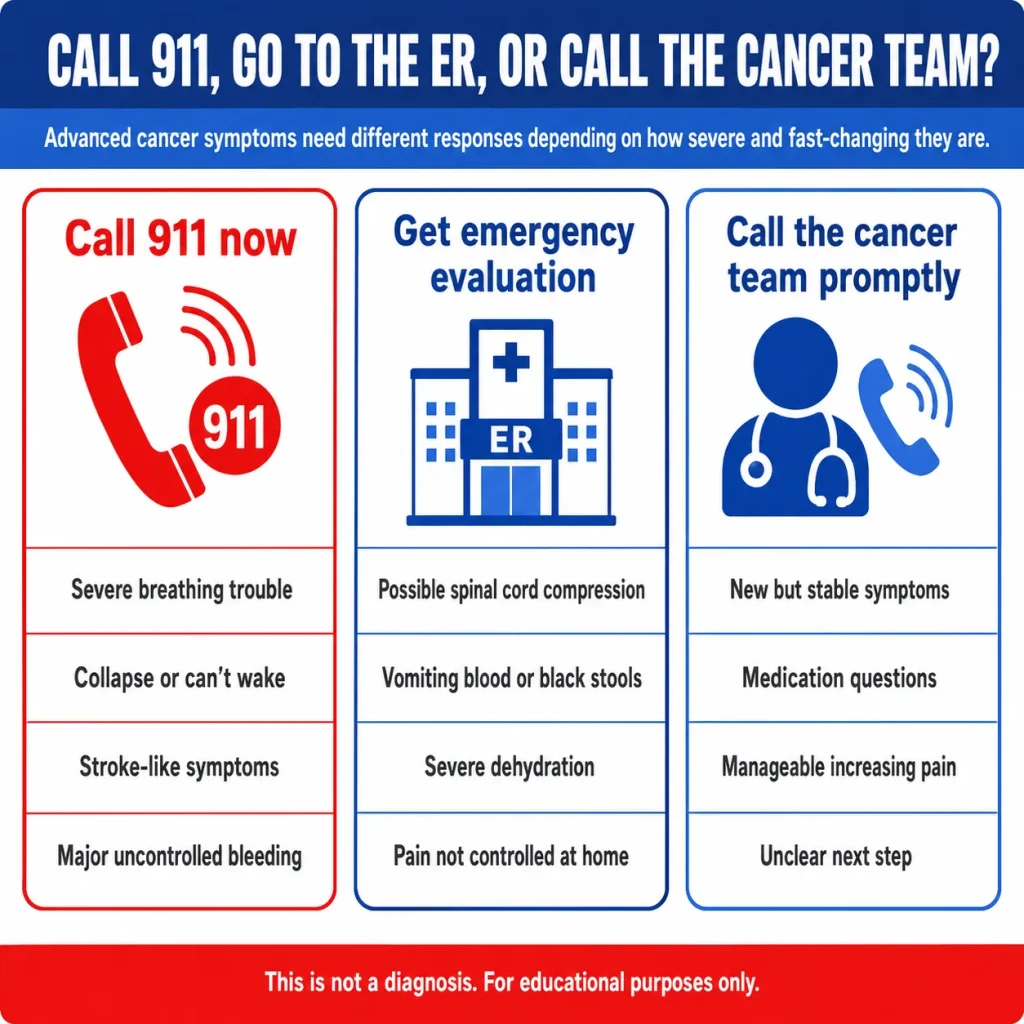
Call 911 For
• Severe breathing difficulty, blue or gray coloring, or inability to speak because of breathlessness
• Loss of consciousness, collapse, or inability to wake the patient normally
• A seizure lasting several minutes or repeated seizures without recovery
• Sudden stroke-like symptoms such as facial drooping, one-sided weakness, or speech difficulty
• Major uncontrolled bleeding
• Rapidly worsening confusion or a patient who appears critically ill
Seek Immediate Emergency Evaluation For
• Possible spinal cord compression
• New or worsening breathlessness or chest symptoms
• Vomiting blood, black stools, or significant bleeding
• Severe dehydration or inability to keep fluids and medicines down
• Fever with marked weakness, confusion, rapid breathing, or rapid decline
• Severe pain that cannot be controlled safely at home
Contact the Oncology or Supportive-Care Team Promptly For
Call the cancer care team for new but currently stable symptoms, medication questions, increasing pain that remains manageable, or uncertainty about the patient’s individualized emergency plan. Follow any instructions from oncology, palliative care, or hospice that were created for this patient. When symptoms are life-threatening and the plan is unclear, call 911.
Bring the medication list, cancer diagnosis, recent treatment dates, allergies, oncology contact information, advance directives when available, and any written pain or symptom-management plan. Emergency clinicians may use blood work to evaluate anemia, infection, dehydration, or organ stress; Angleton ER’s guide to what CBC and ER lab results can and cannot show explains those limits. Imaging may be used to look for bleeding, obstruction, fluid, infection, or other urgent findings, although ER CT, ultrasound, or MRI cannot confirm cancer by themselves.
Urgent treatment and comfort-focused care are not opposites. NCI explains that palliative care can be provided alongside cancer treatment and can address pain, nausea, breathlessness, practical needs, and goals of care. Emergency stabilization can be aligned with the patient’s established wishes and followed by continued oncology or supportive-care involvement.
Urgent Cancer-Related Symptoms in Angleton
For patients and caregivers in Angleton and nearby Brazoria County communities, severe breathing trouble, new neurologic changes, possible spinal cord compression, significant bleeding, dehydration, confusion, fever with rapid decline, or uncontrolled pain should not wait for a routine appointment. Angleton ER provides 24/7 emergency care in Angleton and can evaluate and stabilize urgent complications, use appropriate emergency testing based on the patient’s condition, and help determine the next level of care while respecting the patient’s documented treatment goals.
Frequently Asked Questions
Does every new symptom mean advanced cancer has worsened or spread?
No. New symptoms may come from infection, medication effects, dehydration, anemia, a blood clot, bleeding, or another medical problem. The need for urgent care is based on severity and speed of change, not on assuming the cause.
When does back pain in someone with cancer become an emergency?
Back or neck pain becomes an emergency concern when it is new or rapidly worsening and occurs with leg weakness, numbness, difficulty walking, numbness around the groin, loss of bladder or bowel control, or inability to urinate. Those combinations may indicate spinal cord compression.
Can fluid around the lungs cause sudden breathing difficulty?
Yes. Fluid around a lung can cause breathlessness, but infection, anemia, a blood clot, airway blockage, or heart problems can cause similar symptoms. New or rapidly worsening breathing difficulty needs emergency assessment rather than diagnosis at home.
Should a caregiver call the oncologist before going to the ER?
Call the oncology team first when the symptom is stable and the patient’s plan instructs you to do so. For severe breathing trouble, collapse, stroke-like symptoms, ongoing seizures, major bleeding, or rapidly worsening confusion, call 911 without delaying for a return call.
When is cancer pain severe enough to require emergency care?
Emergency evaluation is appropriate when pain is sudden, extreme, rapidly worsening, or cannot be controlled with the prescribed plan. Pain accompanied by weakness, numbness, breathing trouble, fever, bleeding, repeated vomiting, or abdominal swelling is especially concerning.
What medical information should caregivers bring to the emergency room?
Bring a current medication and allergy list, the cancer diagnosis, recent treatment information, oncology and supportive-care contacts, recent test results when readily available, and any written symptom plan or advance directive. Do not delay emergency transport to gather paperwork if the patient is unstable.