
A heart attack in a woman does not have to look like the dramatic scene many people expect. Chest pain or discomfort is still the most common heart-attack symptom in women, but it may occur alongside shortness of breath, nausea, unusual fatigue, weakness, lightheadedness, or discomfort elsewhere in the upper body. The American Heart Association’s guidance on heart attack symptoms in women emphasizes that the signs may be less obvious than people expect and should not be dismissed simply because they do not match a stereotype.
The safest goal is not to identify a heart attack from a symptom checklist at home. It is to recognize when a new or concerning pattern deserves emergency attention. Symptoms can overlap with reflux, stress, viral illness, muscle pain, and other conditions, but that overlap is exactly why uncertainty should not become a reason to delay care.
Why Heart Attack Symptoms in Women Can Be Easy to Dismiss
Recognition becomes harder when someone is waiting for one unmistakable sign. A woman may feel pressure rather than sharp pain, become unusually winded, feel nauseated or sweaty, or notice a sudden drop in strength. Each symptom can seem explainable on its own. The concern is the overall change—especially when the symptoms are new, unexplained, or occurring together.
The AHA/ACC chest pain guideline notes that chest discomfort is the dominant symptom in both women and men with acute coronary syndrome, while women more commonly have accompanying symptoms such as nausea and shortness of breath. The same guidance also warns that women who present with chest pain are at risk for underdiagnosis. That is an important reason not to use the absence of “classic” crushing pain as reassurance.
Stress can complicate the picture because anxiety and stress responses can also cause chest tightness, sweating, nausea, or a racing heartbeat. Angleton ER’s guide to stress and heart symptoms covers that overlap separately. For a new or meaningfully different symptom pattern, however, “this is probably stress” is not a reliable way to exclude a heart problem.
Chest Symptoms May Not Look Like the Stereotypical Heart Attack
Chest discomfort still matters. According to the CDC’s heart attack guidance, the sensation may be pressure, squeezing, fullness, or pain in the center or left side of the chest. A heart attack does not have to produce one exact type or intensity of pain.
When Chest Discomfort Feels Less Dramatic
A concerning sensation may feel like pressure, tightness, heaviness, squeezing, burning, or simply an unfamiliar discomfort. Some people describe something that feels closer to indigestion than to the image of severe chest pain they had in mind. The important question is not whether the sensation is dramatic enough; it is whether it is new, unusual, or occurring with other warning signs.
When Chest Symptoms Come With Other Changes
Chest discomfort becomes more concerning when it appears with a change in breathing, cold sweating, nausea, marked weakness, dizziness, or another sudden change in how you feel. The American Heart Association’s general heart attack warning signs reinforce that symptoms can occur in combinations and that shortness of breath may occur with or without chest discomfort.
Other Warning Signs Women Should Not Brush Off
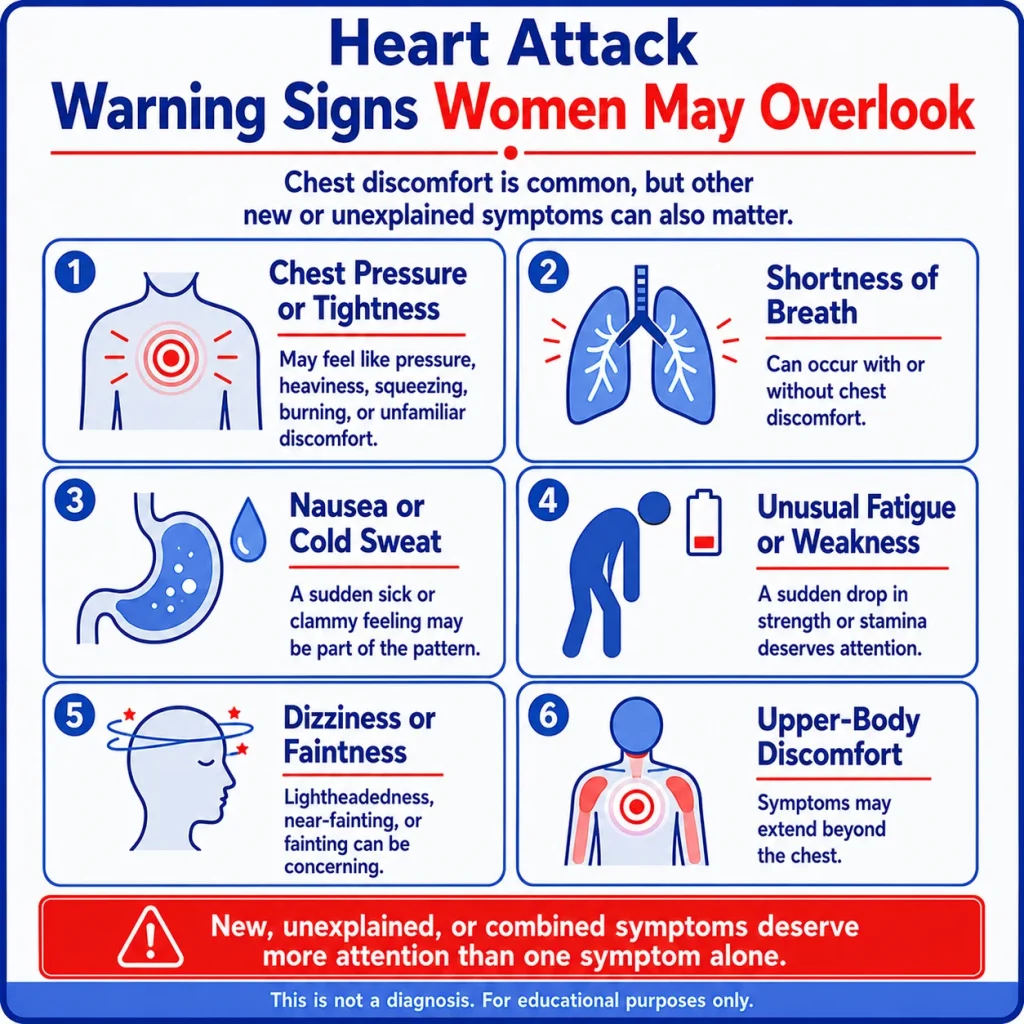
Women do not all experience the same symptom pattern. The NHLBI’s information on heart attacks in women highlights several accompanying symptoms that women may experience with or without chest pain. The most useful approach is to notice a change from your normal baseline rather than searching for one “female heart attack symptom.”
• Unexplained shortness of breath, especially when it is new or out of proportion to what you are doing.
• Nausea, vomiting, a cold sweat, or a sudden sense of feeling physically unwell.
• Unusual weakness or fatigue that is markedly different from your usual tiredness.
• Dizziness, lightheadedness, fainting, or feeling close to fainting.
• Discomfort beyond the chest, including the upper body. The location alone cannot tell you whether the cause is cardiac.
The CDC’s women and heart disease resource also lists nausea, vomiting, excessive tiredness, dizziness, shortness of breath, and upper-body discomfort among symptoms women may experience. These signs are not specific enough to diagnose a heart attack by themselves, but they are important when they are new, unexplained, or part of a broader concerning pattern.
The Combination and Context of Symptoms Matter
One vague symptom can be hard to interpret. Several unexplained changes occurring in the same period deserve more attention—particularly when chest discomfort, breathlessness, faintness, sweating, nausea, or sudden weakness are part of the picture. This is not a home diagnostic rule; it is a practical reason to stop looking for a single perfect symptom.
• Is this new for me, or clearly different from what I normally experience?
• Are several symptoms happening together rather than one isolated sensation?
• Does the episode feel meaningfully different from my usual stress, reflux, fatigue, or muscle discomfort?
• Is the pattern worsening, returning, or making normal activity or breathing noticeably harder?
Medical history changes context, but it should not become a gatekeeper for care. Many heart attacks are related to coronary artery disease; Angleton ER’s guide to coronary heart disease explains that broader condition separately. A woman does not need a prior heart diagnosis, however, before new concerning symptoms deserve urgent assessment.
When Possible Heart Attack Symptoms Should Not Wait
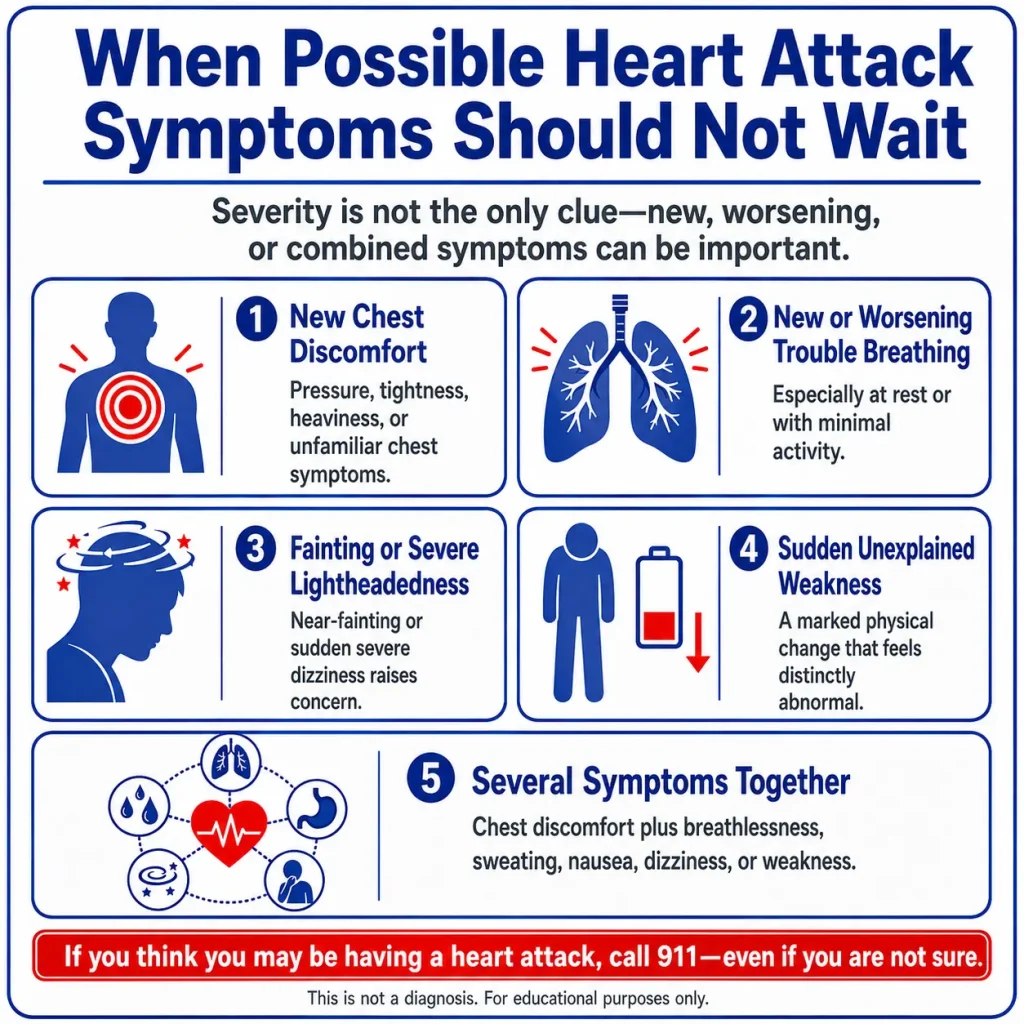
Do not delay emergency help because the symptoms seem milder than expected or because you are not sure they are heart-related. The NHLBI’s heart attack symptom guidance advises calling 911 when you think you may be having a heart attack, even if you are uncertain. Emergency medical services can assess you on the way and begin care if needed.
Especially concerning patterns include:
• New chest pressure, tightness, heaviness, or other chest discomfort.
• New or worsening trouble breathing, particularly at rest or with minimal activity.
• Fainting, near-fainting, or sudden severe lightheadedness.
• Significant unexplained weakness or a sudden physical change that feels distinctly abnormal for you.
• Several concerning symptoms occurring together, such as chest discomfort with breathlessness, sweating, nausea, dizziness, or weakness.
A heart attack cannot be safely confirmed or excluded from symptoms alone. In the emergency setting, evaluation commonly includes an electrocardiogram (EKG/ECG) and blood testing for signs of heart muscle injury, interpreted together with the history, examination, timing, and overall risk. MedlinePlus’s heart attack overview explains that diagnosis is based on symptoms, blood tests, and heart-related testing rather than on one symptom in isolation.
Emergency Heart-Symptom Evaluation in Angleton
For women in Angleton and nearby Brazoria County communities who develop new or concerning symptoms that could represent a heart attack, Angleton ER provides 24/7 cardiac emergency evaluation for chest pain and heart-related symptoms. Depending on the ER physician’s evaluation and plan of care, testing may include an EKG and cardiac lab testing, with monitoring and stabilization when medically appropriate. If you think you may be having a heart attack or your symptoms feel severe or life-threatening, call 911 rather than driving yourself.
Frequently Asked Questions
Do women always have chest pain during a heart attack?
No. Chest pain or discomfort is still the most common heart-attack symptom in women, but it is not present in every case. Some women may notice shortness of breath, nausea, unusual fatigue, weakness, or other symptoms with little or no chest discomfort.
What heart attack symptoms are easiest for women to overlook?
Symptoms such as unusual fatigue, shortness of breath, nausea, lightheadedness, cold sweating, or less dramatic chest pressure may be easier to attribute to something else. The key is whether the change is new, unusual, unexplained, or occurring with other concerning symptoms.
Can nausea or shortness of breath occur with a heart attack in women?
Yes. Both can occur with a heart attack, and shortness of breath may occur with or without chest discomfort. They are not specific to heart attacks, so the surrounding symptom pattern and medical evaluation matter.
Why can heart attack symptoms in women be mistaken for something less serious?
Some warning signs overlap with common problems such as reflux, stress, respiratory illness, poor sleep, or muscle discomfort. When symptoms do not match the expected picture of severe chest pain, it can be tempting to explain them away rather than consider a cardiac cause.
Should a woman seek emergency evaluation if her symptoms do not feel severe?
Yes, when the symptoms are new, concerning, or could represent a heart attack. The CDC advises calling 911 for heart attack symptoms because faster evaluation can reduce delays in treatment; severity alone is not a safe rule-out test.
How are possible heart attack symptoms evaluated in the emergency room?
Evaluation usually begins with the symptom history, vital signs, and a physical examination, followed by an EKG and appropriate blood testing such as cardiac troponin. The ACC summary of the AHA/ACC chest pain guideline identifies ECG and serial cardiac troponin testing as central parts of evaluating acute chest pain and possible myocardial injury. Additional testing depends on the individual findings.