
Heart palpitations can feel dramatic even when the underlying rhythm is harmless. They may feel like racing, pounding, fluttering, skipped beats, or a heartbeat that suddenly feels unusually forceful. As the MedlinePlus overview of heart palpitations explains, the sensation can occur when the rhythm is normal or abnormal. The feeling by itself does not tell you which one is happening.
A more useful decision point is what happens at the same time. Palpitations paired with dizziness, faintness, nausea, marked weakness, breathing trouble, or exertional symptoms deserve more attention because the rest of the body is also reacting.
When Are Heart Palpitations More Than Just an Uncomfortable Sensation?
A palpitation is a symptom description, not a rhythm diagnosis. The National Heart, Lung, and Blood Institute (NHLBI) notes that arrhythmias may be felt as skipping, fluttering, pounding, or beating too hard or too fast, but some abnormal rhythms cause few or no noticeable symptoms.
People commonly describe palpitations as:
• a racing heartbeat
• pounding or thumping
• fluttering
• skipped or extra beats
• a heartbeat that feels unusually hard or irregular
The key question is not simply “Can I feel my heart?” It is “What else is happening at the same time?” The American Heart Association’s arrhythmia symptom guidance specifically pairs more significant rhythm symptoms with fatigue or weakness, dizziness, fainting or near-fainting, shortness of breath, chest discomfort, and sweating.
Why Palpitations With Dizziness or Faintness Need More Attention
Dizziness changes the decision because it raises a circulation question. If a rapid or irregular rhythm is interfering with how effectively the heart is moving blood, you may feel lightheaded, weak, close to fainting, or you may actually lose consciousness. That does not prove the heartbeat is the cause, but it makes the combination more important than palpitations alone.
Fainting, medically called syncope, occurs when blood flow to the brain temporarily drops. MedlinePlus guidance on fainting also lists abnormal heart rhythms among the possible causes. New palpitations with severe dizziness, near-fainting, or fainting should be evaluated rather than explained away from the sensation alone.
If someone becomes unresponsive, has severe breathing difficulty, has chest pain or pressure, or does not recover normally after fainting, call 911.
What If Palpitations Come With Nausea or Feeling Suddenly Unwell?
Nausea is nonspecific. It can occur with dehydration, illness, stress, pain, medications, and many other problems. It should not be treated as proof that palpitations are cardiac—or as proof that they are harmless.
What matters is the cluster. The American Heart Association’s tachycardia guidance includes nausea among symptoms that can accompany some rapid heart rhythms, along with weakness, shortness of breath, dizziness, sweating, fainting, or near-fainting. If a new racing or irregular heartbeat comes with nausea plus chest discomfort, significant breathing difficulty, cold sweat, marked weakness, or lightheadedness, the combination warrants urgent assessment.
What Does Extreme Tiredness With Palpitations Mean?
Ordinary tiredness after a poor night of sleep is different from a sudden drop in function. With palpitations, pay closer attention to fatigue that is new, unusually heavy, or out of proportion to what you are doing—such as becoming exhausted during routine walking, needing to stop an activity you normally tolerate, or feeling weak at the same time your heart is racing.
The NHLBI lists tiredness or weakness among possible arrhythmia symptoms, especially alongside dizziness, fainting, chest discomfort, or difficulty breathing. The practical issue is the change from your baseline. Palpitations plus a clear loss of stamina, especially when paired with dizziness or shortness of breath, deserve more attention than “I had a long day and noticed my heartbeat.”
Why Palpitations During Exercise Deserve Special Attention
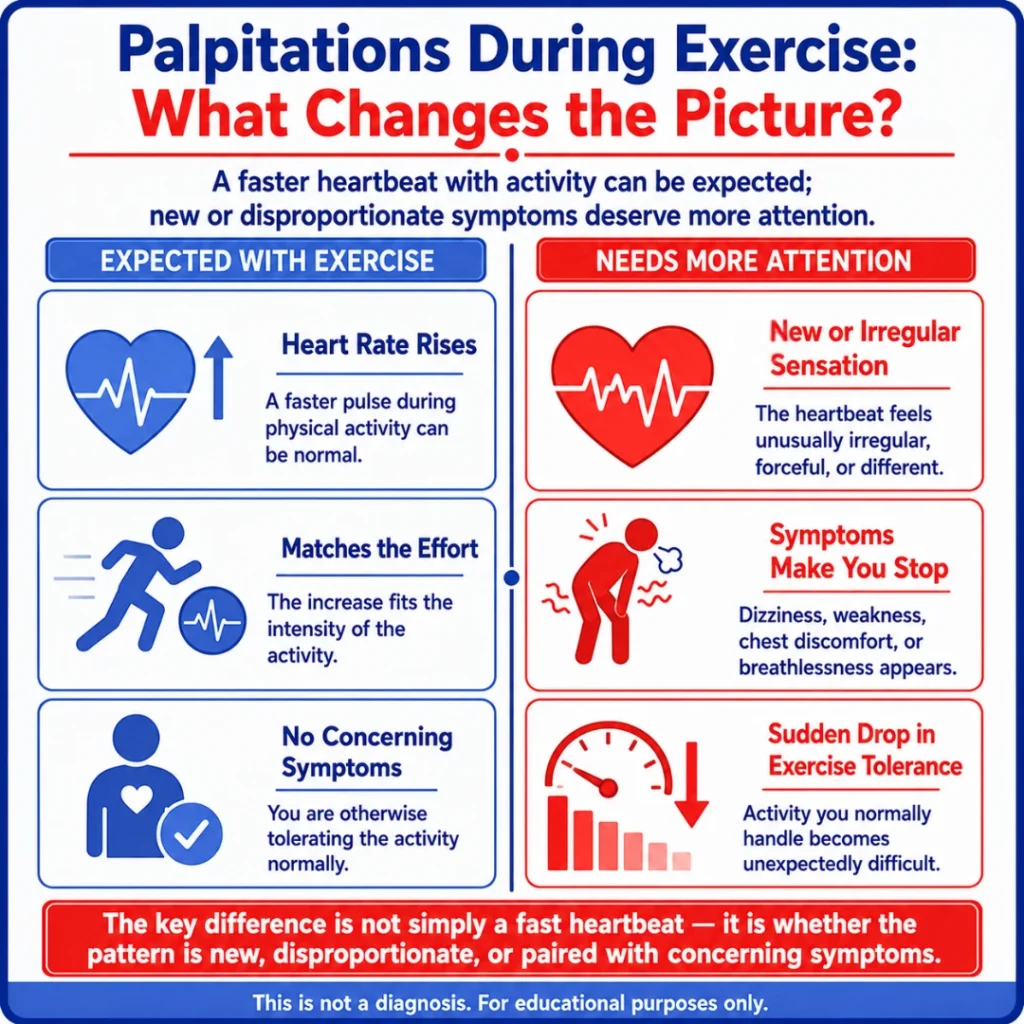
Exercise normally makes the heart beat faster. The NHLBI overview of arrhythmias notes that heart rate is expected to rise during physical activity. So noticing a faster pulse while exercising is not, by itself, the concern.
What changes the picture is a heartbeat sensation that is new, unusually irregular, disproportionately fast or forceful for the effort, or associated with symptoms that make you stop unexpectedly. Pay particular attention when exertional palpitations occur with dizziness or near-fainting, chest discomfort, unusual shortness of breath, weakness, or a sudden reduction in exercise tolerance.
Clinicians may use an ECG and, depending on the pattern, longer rhythm monitoring or testing that evaluates the heart during exertion. The NHLBI arrhythmia diagnosis guide describes ECGs, ambulatory monitors, and exercise stress testing among tools used to investigate rhythm symptoms. The right test depends on the clinical picture.
What If Palpitations Occur With Cough or Breathing Symptoms?
A cough does not identify the cause of palpitations. The more important question is whether the cough is accompanied by new or worsening shortness of breath, chest symptoms, weakness, or a significant change from your usual condition. Those added symptoms shift the focus from the cough itself to how well you are breathing and functioning during the episode.
If your main concern is whether a persistent cough could be related to fluid buildup or heart failure, Angleton ER already covers that separate question in its guide to cough and congestive heart failure. This article stays focused on what the cough means when it appears as part of a palpitations symptom cluster.
Could Stress, Caffeine, or Other Common Triggers Cause Palpitations?
Yes. Stress, caffeine and other stimulants, dehydration, poor sleep, and exertion can all be associated with a noticeable or faster heartbeat. MedlinePlus also lists exercise, caffeine, stress or anxiety, nicotine, alcohol, fever, and some medicines among potential palpitation triggers.
But a plausible trigger is not a safety test. “I drank too much coffee” does not adequately explain away fainting, severe dizziness, chest pressure, major breathing difficulty, or a marked change in function. If stress is the main question, Angleton ER’s article on stress and heart symptoms discusses that overlap in more depth without assuming that every racing heartbeat is anxiety.
When Palpitations With Other Symptoms Should Not Wait
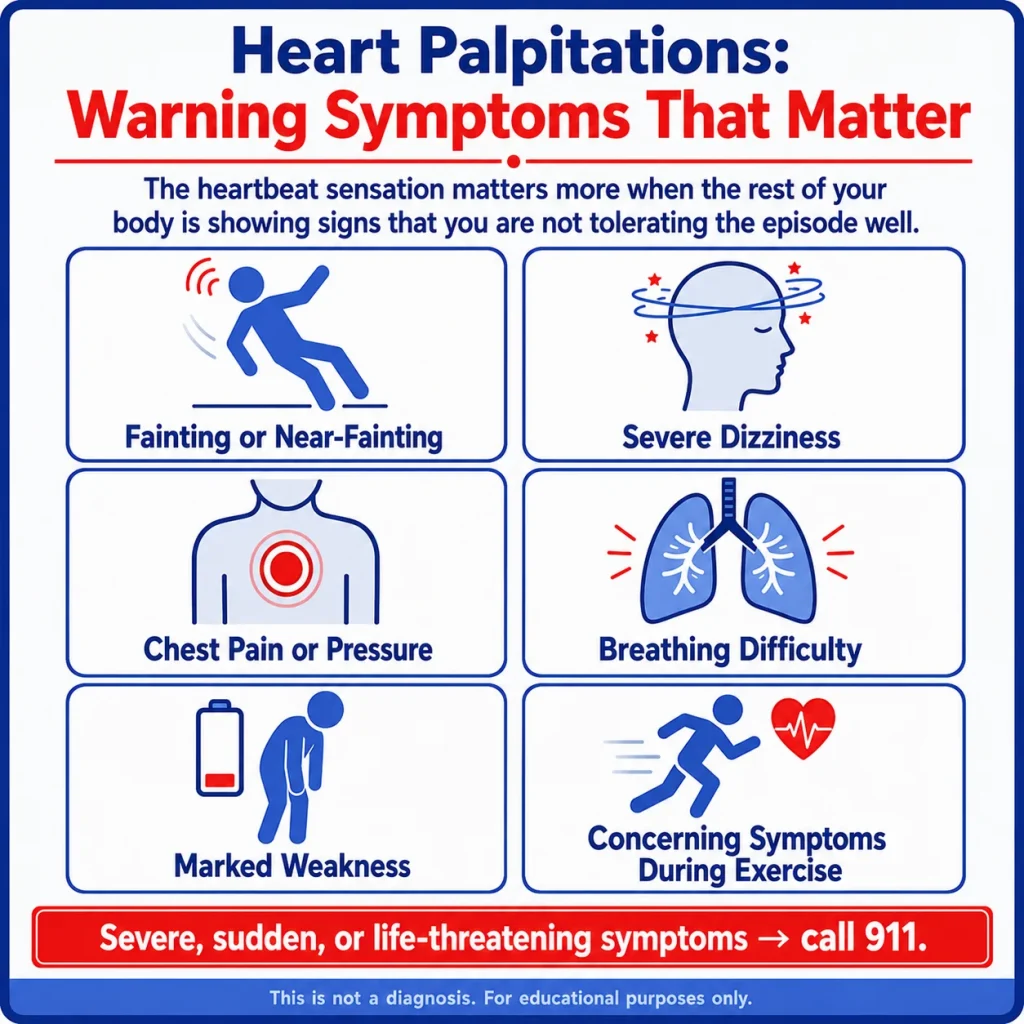
The decision becomes more urgent when palpitations are part of a broader pattern showing that you are not tolerating the episode well. The NHS heart-palpitations guidance advises emergency assessment when ongoing palpitations occur with chest pain, shortness of breath, feeling faint, or fainting.
Urgent evaluation is appropriate when palpitations occur with:
• fainting or near-fainting
• severe, sudden, or new dizziness
• chest pain, pressure, or tightness
• significant or worsening breathing difficulty
• marked weakness or a sudden drop in function
• confusion or a feeling of being seriously unwell
• concerning symptoms during exertion
• a rapidly worsening or clearly abnormal overall pattern
If symptoms are severe, sudden, life-threatening, or you think you may be having a heart attack or losing consciousness, call 911. Do not delay care while trying to identify the exact rhythm at home.
Emergency Evaluation for Concerning Palpitations in Angleton
For people in Angleton and nearby Brazoria County communities, Angleton ER is open 24/7 for emergency evaluation of heart-related symptoms. Depending on the ER physician’s assessment and medical need, evaluation may include an EKG, cardiac lab testing, imaging, monitoring, and stabilization. You can review Angleton ER’s cardiac emergency care information for verified details about available emergency cardiac evaluation. The goal is to assess the complete symptom pattern—not to ask you to determine the rhythm or cause on your own.
Frequently Asked Questions
When should heart palpitations be considered concerning?
They are more concerning when they are new or different from your usual pattern, or when they occur with fainting, significant dizziness, chest discomfort, breathing difficulty, marked weakness, or symptoms during exertion. The accompanying symptoms often matter more than how dramatic the heartbeat feels.
What does a racing heart with dizziness mean?
It can happen for many reasons, but the combination raises concern that the episode may be affecting circulation or blood pressure. If dizziness is severe, you nearly faint, or the racing heartbeat is accompanied by chest pain or breathing difficulty, seek urgent evaluation.
Can heart palpitations cause nausea or make you feel sick?
Nausea can occur during some episodes of rapid heartbeat, but it is not specific enough to identify the cause. It matters more when nausea appears with a new racing or irregular heartbeat plus sweating, weakness, chest discomfort, shortness of breath, or lightheadedness.
Why do I feel extremely tired when my heart is racing?
A fast or irregular rhythm can sometimes occur with weakness or fatigue, but tiredness has many other causes. A sudden loss of stamina or fatigue that is far outside your normal—especially with dizziness or shortness of breath—deserves evaluation.
Should I worry about heart palpitations during exercise?
A faster heart rate during exercise is normal. A new irregular or disproportionate heartbeat during exertion is more concerning when it comes with dizziness, near-fainting, chest discomfort, unusual breathlessness, weakness, or a sudden need to stop.
When do palpitations with other symptoms need emergency evaluation?
Do not wait when palpitations occur with fainting or near-fainting, severe dizziness, chest pain or pressure, significant breathing difficulty, confusion, marked weakness, or a rapidly worsening pattern. Call 911 for severe or life-threatening symptoms.