
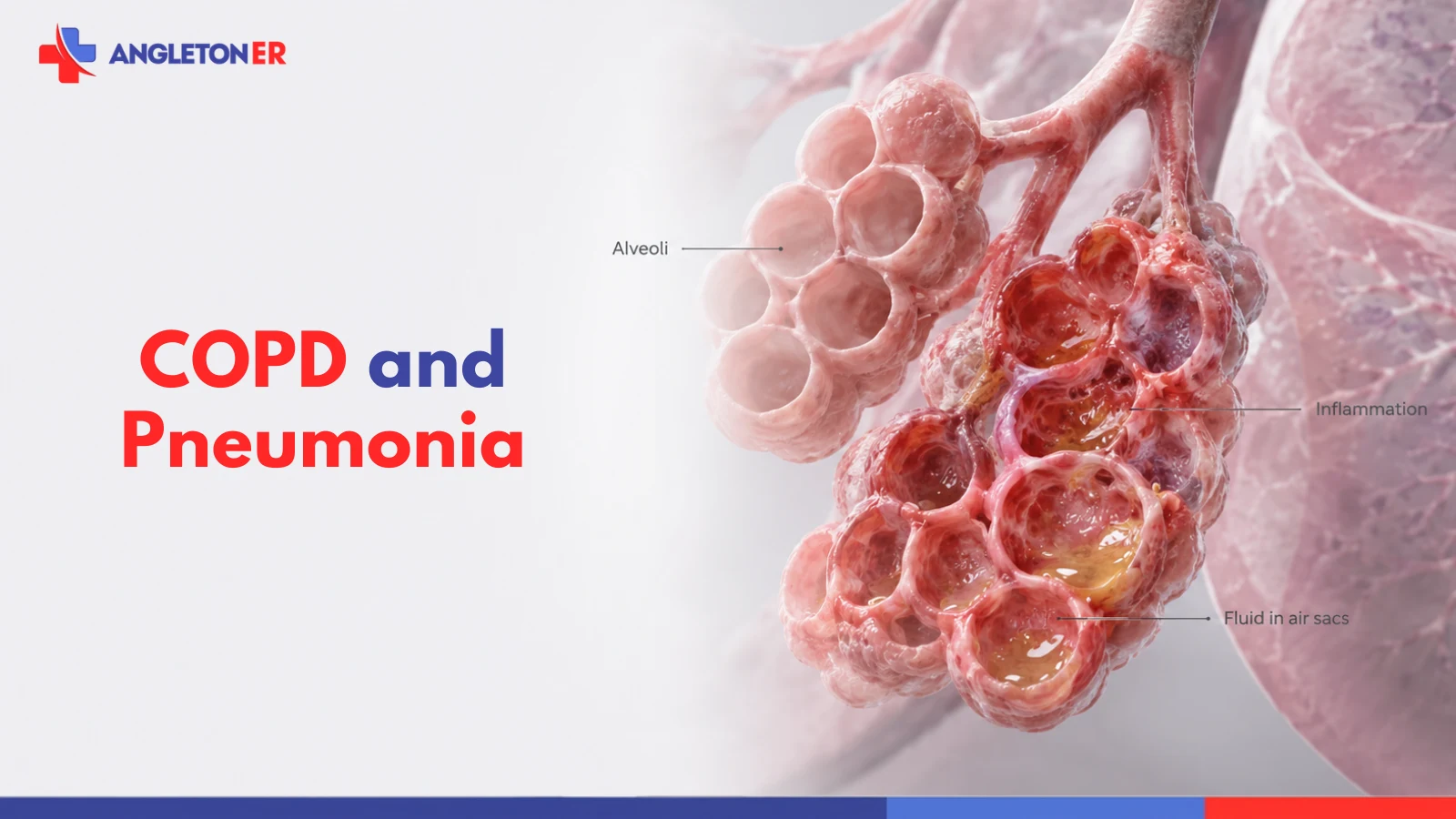
For someone living with COPD, the most useful question during a respiratory infection is not only, “What infection is this?” It is also, “How far has my breathing moved from what is normal for me?” COPD already limits airflow and can make routine breathing require more effort. The National Heart, Lung, and Blood Institute explains that COPD damages the airways or other parts of the lungs and blocks airflow. When pneumonia or another respiratory infection adds inflammation, mucus, fever, or problems with oxygen exchange, the person may have less breathing reserve available to handle the added stress.
That does not mean every cold or cough in a person with COPD is an emergency. The key is deterioration: breathing becoming harder, normal activities becoming less manageable, or the person becoming much more ill than their usual COPD baseline. For broader background on the condition itself, Angleton ER also has an overview of chronic lower respiratory disease and COPD.
Why Pneumonia Can Be More Serious When You Have COPD
Pneumonia is an infection in the lungs. It can inflame lung tissue and affect the air sacs where oxygen moves into the blood. In a person whose lungs are already working around COPD-related airflow limitation, that added problem can make breathing noticeably more difficult. The CDC lists chronic lung disease as a factor that increases the risk of pneumonia, which is one reason a new lower respiratory illness deserves careful attention in someone with COPD.
How a Respiratory Infection Can Worsen COPD
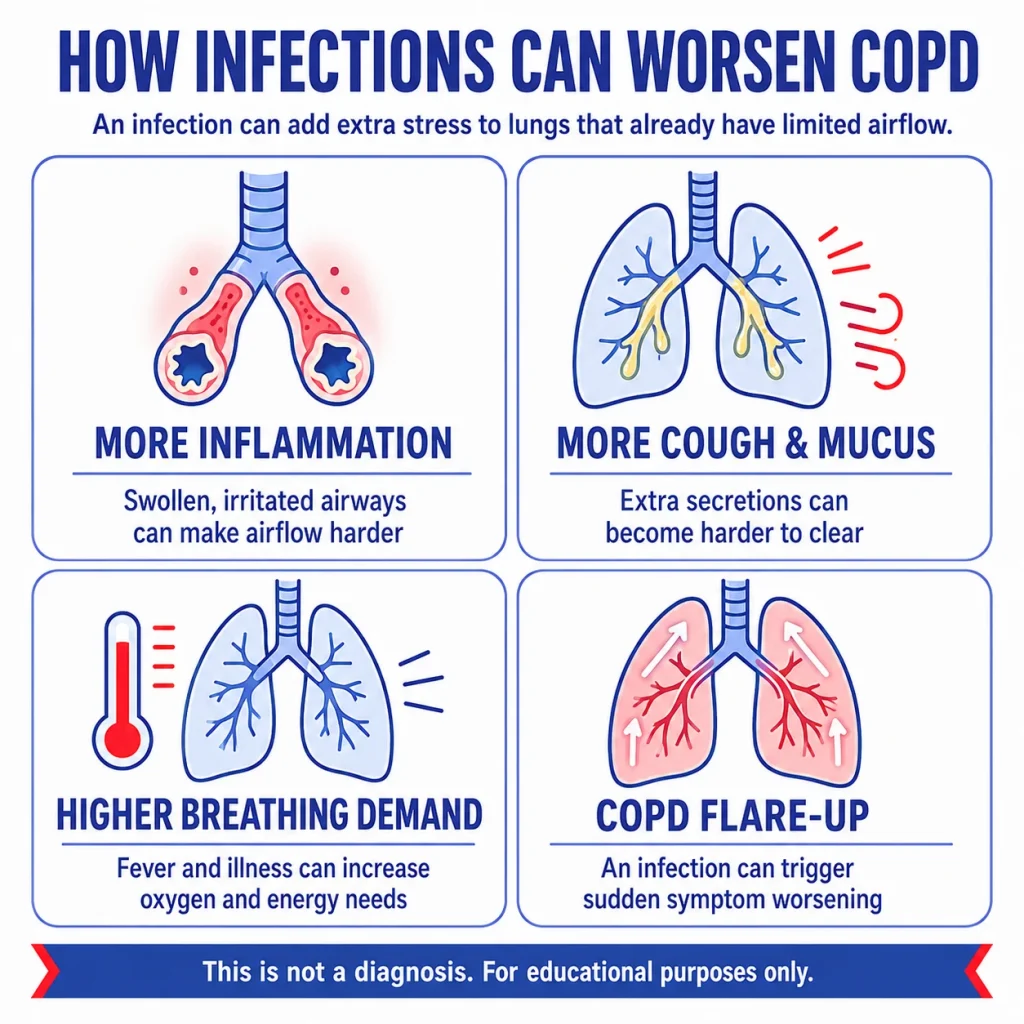
Increased Airway Inflammation
Respiratory infections activate inflammation in the lungs and airways. In COPD, where airflow is already limited, additional swelling and irritation can make the airways harder to breathe through. The American Thoracic Society notes that lung or airway infections can trigger COPD exacerbations through inflammation, airway narrowing, swelling, and mucus. The result may be a sudden increase in breathlessness or wheezing compared with the person’s usual pattern.
More Coughing and Mucus
An infection can increase coughing and mucus, adding more work to breathing and making secretions harder to clear. Mucus color or volume alone cannot diagnose pneumonia; it matters more when the change occurs with worsening breathlessness, fever, weakness, or reduced function.
Increased Breathing Demand
Fever, frequent coughing, poor sleep, reduced intake, and the effort of breathing can raise the body’s demand for oxygen and energy. With less respiratory reserve, a person with COPD may feel a routine illness much more strongly.
Triggering a COPD Exacerbation
A respiratory infection can also trigger an acute COPD exacerbation, or flare-up. The NHLBI identifies colds, flu, and lung infections as common triggers for sudden worsening of COPD symptoms. Pneumonia and a COPD flare are related, but they are not the same diagnosis. An infection may trigger a flare, and a flare may occur for other reasons as well.
How to Recognize a Meaningful Change From Your Usual COPD Symptoms
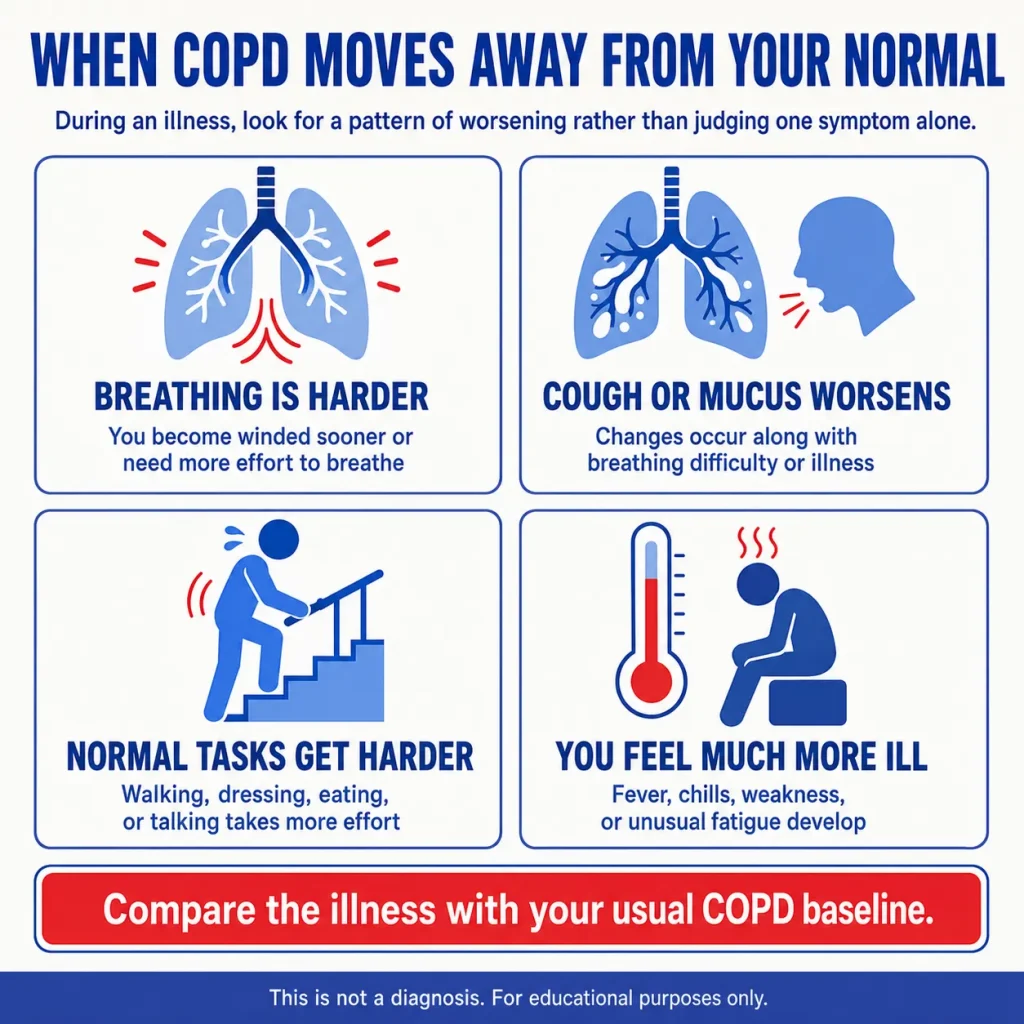
Many people with COPD live with some degree of cough, mucus, wheezing, or shortness of breath every day. That makes the personal baseline especially important. MedlinePlus advises people with COPD to know their usual symptoms so they can recognize when a flare is more intense than normal. During a respiratory illness, look for a pattern of change rather than judging one symptom in isolation.
Breathing Becomes Harder Than Usual
Breathlessness that is clearly worse than normal is a key warning sign. The person may feel winded sooner, need more effort to breathe, or become short of breath during activities that are usually manageable.
Cough or Mucus Changes Along With the Illness
A stronger cough or more mucus can accompany infection-related worsening. These changes are more concerning when they occur with increased breathlessness, fever, chest discomfort, weakness, or a clear decline in activity.
Normal Activities Become More Difficult
Notice whether walking, dressing, eating, talking, sleeping, or moving around the home now takes much more effort because of breathing. A sudden need for repeated pauses during ordinary activity is a meaningful change from baseline.
The Person Feels Significantly More Ill
Fever, chills, unusual fatigue, weakness, poor appetite, or a general sense of becoming acutely unwell can add important context. NHLBI lists fever, chills, cough, shortness of breath, low oxygen levels, and extreme tiredness among possible pneumonia symptoms. In someone with COPD, the combination of systemic illness and worsening breathing deserves more attention than either symptom pattern alone.
When a “Cold” May Be More Than a Routine Illness for Someone With COPD
The label attached to the infection is less important than what it is doing to the person’s respiratory baseline. A cold, flu, COVID-19, RSV, or another respiratory infection can begin with familiar symptoms, yet the situation changes when breathlessness increases, coughing becomes much harder to manage, or normal function declines. Angleton ER’s guide to the differences among cold, flu, COVID-19, and RSV covers those infections more broadly; this article stays focused on what they can do to someone who already has COPD.
Give the illness more attention when breathlessness is worsening, cough or mucus changes occur with breathing difficulty, normal activity becomes harder, fever or marked weakness develops, or symptoms keep intensifying. A clear departure from baseline deserves medical guidance rather than guesswork at home.
COPD, Pneumonia, and a COPD Flare Are Connected – But Not Identical
Pneumonia is a lung infection. The CDC describes pneumonia as a lung infection that can cause cough, fever or chills, fatigue, confusion, and shortness of breath. Other respiratory infections may involve the upper or lower respiratory tract without being pneumonia.
A COPD exacerbation is an acute worsening of COPD symptoms beyond the person’s usual day-to-day pattern. Infection is one important trigger, but it is not the only trigger.
Why Symptoms Alone Cannot Tell You Whether It Is Pneumonia
Worsening cough, mucus, fever, shortness of breath, fatigue, and reduced activity tolerance can occur with pneumonia, other respiratory infections, or a COPD exacerbation. They can also overlap with other causes of breathing difficulty. If you are trying to understand the broader possibilities, Angleton ER has a separate guide to other causes of shortness of breath.
Because the symptoms overlap, a person may know that something is wrong without being able to identify the exact cause at home. The NHLBI explains that pneumonia can be difficult to distinguish from cold or flu symptoms and may require examination plus tests such as chest X-ray, blood tests, and pulse oximetry. The practical takeaway is that a meaningful deterioration can deserve evaluation even when the patient cannot tell whether the cause is pneumonia, another infection, or a COPD flare.
When COPD and a Respiratory Infection Need Prompt Medical Evaluation
Consider prompt evaluation when a respiratory illness causes a clear or continuing departure from the person’s usual COPD baseline, especially when several changes occur together: increasing shortness of breath, worsening cough, fever or marked weakness, significant mucus changes with harder breathing, or a major decline in normal activity.
When Worsening Breathing Becomes an Emergency
Severe or rapidly worsening breathing difficulty is an emergency, particularly when the person is struggling to breathe at rest, cannot speak normally because of breathlessness, becomes newly confused or unusually drowsy, or has blue or gray discoloration around the lips or fingernails. MedlinePlus lists trouble speaking in full sentences, confusion or sleepiness, blue lips or fingertips, and increasingly difficult breathing among warning signs during a COPD flare.
Call 911 for life-threatening or rapidly progressing symptoms, or when the person is not safe to transport. Do not wait for certainty about whether the cause is pneumonia, a COPD exacerbation, low oxygen, or another acute problem.
Do Not Judge the Infection Only by What It Is Called
A respiratory illness that starts like a familiar cold can become more important when COPD moves away from baseline. Watch the pace of change, extra breathing effort, and effect on normal function; those clues are more useful for judging urgency than the label given to the infection.
24/7 Emergency Evaluation in Angleton When Breathing Worsens
If you have COPD and develop a respiratory illness that is causing significant or rapidly worsening breathing problems, Angleton ER provides 24/7 emergency care in Angleton for adults and children with urgent and emergency concerns. Emergency evaluation can assess breathing and oxygen levels, and when medically appropriate may include chest imaging, lab testing, treatment, monitoring, or transfer coordination if hospital-level care is needed. The purpose is not to treat every respiratory infection as an emergency, but to recognize when COPD has changed enough that the illness should not be managed as a routine cold at home.
Frequently Asked Questions
Why is pneumonia more dangerous for someone with COPD?
COPD already limits airflow and breathing reserve. Pneumonia can add inflammation, fluid in the air sacs, fever, and greater breathing demand, making symptoms and normal activity harder to manage.
Can pneumonia trigger a COPD exacerbation?
Yes. Lung infections are a common trigger for acute COPD worsening, but pneumonia and a COPD exacerbation are not the same diagnosis.
How can you tell if a respiratory infection is making COPD worse?
Compare the illness with the person’s usual baseline. Worsening breathlessness, greater breathing effort, reduced activity, cough or mucus changes, fever, or increasing weakness can signal meaningful deterioration.
Can a common cold cause COPD symptoms to worsen?
Yes. Common colds and other viral respiratory illnesses can trigger a COPD flare. Judge the situation by changes in breathing and function, not by assuming the word “cold” means it will remain mild.
Does increased mucus with COPD always mean pneumonia?
No. Mucus may increase with a COPD flare or several respiratory infections. It cannot confirm pneumonia by itself, so worsening breathing, fever, weakness, and overall decline matter more than mucus color or amount alone.
When should someone with COPD seek emergency care for a respiratory infection?
Seek emergency care for severe or rapidly worsening trouble breathing, breathlessness at rest, inability to speak normally, new confusion or extreme drowsiness, blue or gray lips or fingernails, or other signs of serious respiratory decline. Call 911 if symptoms are life-threatening or transport is unsafe.