
Cancer warning signs are not always obvious. Many symptoms that can be linked to cancer can also come from common, non-cancerous conditions such as infection, inflammation, hormone changes, digestive problems, stress, injury, or aging. That is why it is easy for patients to feel unsure about what needs medical attention and what can be watched for a while.
The goal is not to panic over every ache, lump, or change in your body. The goal is to notice patterns that are persistent, unexplained, getting worse, or paired with other concerning symptoms. When something does not feel normal for you, it deserves attention.
Why Cancer Warning Signs Can Be Easy to Miss
Possible cancer warning signs often look like everyday health issues at first. Fatigue, appetite changes, weight loss, pain, bleeding, cough, skin changes, or a new lump can all have many possible causes. In many cases, the cause is not cancer. But symptoms that continue without a clear reason should not be ignored.
One symptom by itself does not automatically mean cancer. For example, fatigue may come from poor sleep, anemia, thyroid issues, infection, medication side effects, or stress. A swollen lymph node may appear after a cold or dental infection. Blood in the stool may come from hemorrhoids, but it can also signal a more serious digestive problem.
The safest approach is to pay attention to how long the symptom has been present, whether it is changing, and whether it is happening with other symptoms.
The key pattern: persistent, unexplained, or worsening symptoms
A symptom becomes more concerning when it:
- Lasts longer than expected
- Keeps coming back
- Gets worse over time
- Appears without a clear cause
- Interferes with daily activities
- Happens along with weight loss, fever, bleeding, weakness, pain, or appetite changes
Your body often gives signals when something needs evaluation. Those signals may not point to cancer, but they may point to the need for a medical exam, lab testing, imaging, or follow-up care.
Cancer is not usually diagnosed from symptoms alone
Symptoms can help a doctor decide what needs to be checked, but cancer is usually not diagnosed from symptoms alone. A diagnosis often requires the right combination of medical history, physical exam, lab work, imaging, follow-up testing, biopsy, pathology, or specialist evaluation.
This is important because two people can have similar symptoms for very different reasons. For example, abdominal pain may be related to digestion, infection, gallbladder disease, inflammation, or other causes. A lump may be a cyst, infection, swollen lymph node, fatty growth, or something more concerning.
Medical evaluation helps separate urgent problems from routine follow-up needs and helps guide the next step.
Common Cancer Warning Signs Patients Should Pay Attention To
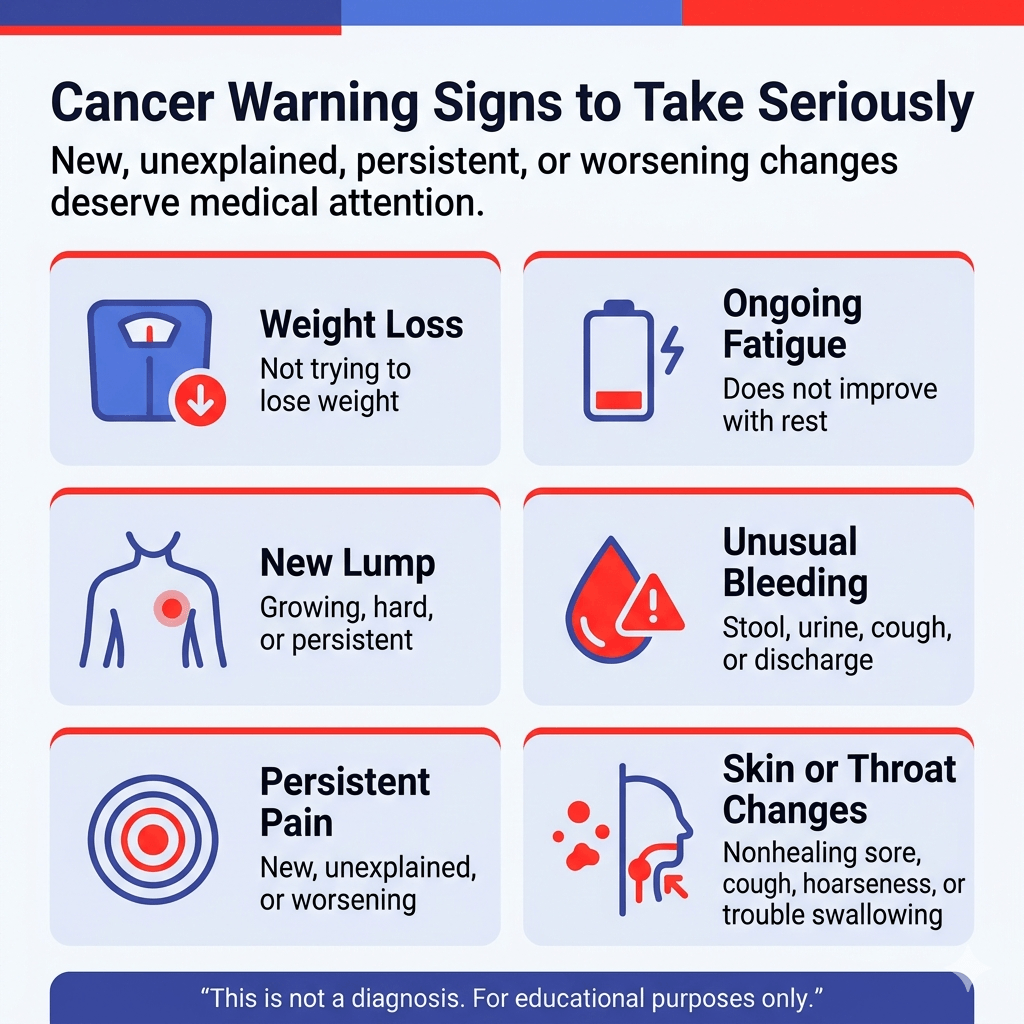
The symptoms below do not automatically mean cancer. They are warning signs that should be taken seriously when they are new, persistent, unexplained, or worsening.
Unexplained weight loss or appetite changes
Losing weight without trying can be a sign that your body is under stress. It may happen because of thyroid disease, digestive conditions, infection, depression, medication effects, or other medical problems. It can also be associated with some cancers.
Weight loss deserves medical attention when it is noticeable, ongoing, or not connected to a change in diet, activity, or lifestyle. Appetite changes can also matter, especially if you feel full quickly, lose interest in food, have nausea, or notice weight loss at the same time.
A short period of low appetite during a minor illness may not be unusual. But ongoing appetite loss or unexplained weight loss should be discussed with a healthcare provider.
Ongoing fatigue that does not improve with rest
Everyone feels tired sometimes. Fatigue becomes more concerning when it is unusual for you, does not improve with rest, or affects your ability to function.
Persistent fatigue may be caused by anemia, infection, sleep problems, heart or lung conditions, hormone problems, vitamin deficiencies, medication effects, or other medical issues. It may also appear with some cancers or blood-related conditions.
Fatigue should be checked sooner if it comes with:
- Shortness of breath
- Dizziness or fainting
- Fever or night sweats
- Unexplained weight loss
- Pale skin
- Unusual bruising or bleeding
- Chest pain
- Severe weakness
The concern is not just “being tired.” The concern is fatigue that feels different, severe, persistent, or connected to other body changes.
A new lump, swelling, or enlarged lymph node
A new lump or swelling should not be ignored, especially if it is hard, growing, fixed in place, painful, or does not go away. Lumps can have many causes, including cysts, infections, swollen glands, inflammation, injury, or benign growths. Still, a medical exam is important when the lump is new or changing.
Swollen lymph nodes are common with infections, but they usually improve as the infection clears. A lymph node that remains enlarged, continues to grow, feels hard, or appears with fever, night sweats, weight loss, or fatigue should be evaluated.
Not every lump is an emergency. But a lump that is rapidly growing, very painful, red, warm, infected-looking, or affecting breathing, swallowing, movement, or urination may need urgent care.
Unexplained bleeding or unusual discharge
Bleeding that cannot be easily explained should be taken seriously. This may include:
- Blood in the stool
- Black or tar-like stools
- Blood in the urine
- Vomiting blood
- Coughing up blood
- Unusual vaginal bleeding
- Bleeding after menopause
- Nipple discharge, especially if bloody
- Bleeding that does not stop as expected
There are many possible causes of bleeding, and some are not cancer-related. But bleeding can also signal a serious condition that needs prompt evaluation.
Heavy bleeding, vomiting blood, black stools, significant rectal bleeding, coughing blood, or blood in the urine with severe pain, fever, weakness, or difficulty urinating should be treated as urgent.
Persistent pain without a clear cause
Pain is one of the most common reasons people seek medical care. Most pain is not caused by cancer. It may come from injury, inflammation, infection, muscle strain, arthritis, digestive problems, or nerve irritation.
However, persistent or worsening pain should be evaluated when it is new, unexplained, does not improve, or is associated with other symptoms. Pain that wakes you from sleep, keeps getting worse, or appears with weight loss, fever, bleeding, swelling, or severe fatigue deserves medical attention.
Severe pain should not be ignored, even if you are unsure of the cause. Sudden, intense, or worsening pain may point to an urgent medical problem that needs immediate evaluation.
Skin changes or sores that do not heal
Skin changes are common, but certain changes should be checked. These include a mole that changes in size, shape, or color; a new or unusual skin growth; a sore that does not heal; or a spot that bleeds, crusts, or keeps returning.
Skin changes are often best evaluated by a primary care doctor or dermatologist when they are stable and not severe. But if a skin lesion appears infected, is rapidly worsening, causes severe pain, or is associated with fever or spreading redness, urgent evaluation may be needed.
Ongoing cough, hoarseness, or trouble swallowing
A cough or hoarse voice often comes from allergies, viral illness, reflux, sinus drainage, or irritation. Trouble swallowing may be related to reflux, throat inflammation, esophageal problems, or other causes.
These symptoms deserve medical attention when they last, worsen, or appear with other concerning signs such as unexplained weight loss, coughing blood, chest pain, breathing difficulty, persistent vomiting, or inability to swallow fluids.
Breathing trouble, choking, severe chest pain, or coughing up significant blood should be treated as urgent.
Symptoms That May Need Urgent or Emergency Medical Care
Some symptoms should not wait for a routine appointment. Even when cancer is only one possible concern, severe or rapidly worsening symptoms may point to an emergency condition that needs immediate evaluation.
Severe pain, chest pain, or trouble breathing
Severe pain, chest pain, trouble breathing, fainting, sudden weakness, or confusion should be treated as urgent. These symptoms may be related to heart problems, lung problems, infection, blood clots, severe anemia, internal bleeding, or other serious conditions.
You do not need to know whether cancer is involved before seeking emergency care. The immediate concern is whether the symptom could be dangerous right now.
Heavy bleeding or blood with concerning symptoms
Bleeding may need emergency evaluation when it is heavy, persistent, or associated with weakness, dizziness, fainting, severe pain, fever, or dehydration.
Urgent bleeding symptoms may include:
- Vomiting blood
- Black or tar-like stools
- Significant rectal bleeding
- Coughing blood
- Blood in urine with severe pain, fever, weakness, or inability to urinate
- Heavy vaginal bleeding
- Bleeding that does not stop
These symptoms require prompt medical attention because they may involve blood loss, infection, organ problems, or other urgent conditions.
Fever, confusion, severe weakness, or dehydration
Fever, confusion, severe weakness, or dehydration can signal a serious infection or another urgent medical problem. These symptoms are especially concerning in patients with known cancer, immune system problems, recent chemotherapy, chronic illness, or abnormal blood counts.
Dehydration may show up as dizziness, dry mouth, very little urination, rapid heartbeat, weakness, or inability to keep fluids down. When these symptoms are severe or worsening, emergency evaluation may be appropriate.
A rapidly growing lump or severe swelling
A lump that grows quickly, becomes very painful, or appears with redness, warmth, fever, or drainage may be related to infection or inflammation and should be evaluated promptly.
Swelling can also become urgent if it affects breathing, swallowing, movement, urination, or circulation. A mass or swelling that suddenly interferes with normal function should not wait for a routine visit.
When Symptoms Can Usually Be Scheduled With a Doctor
Not every cancer concern requires an emergency room visit. Some symptoms are important but may be better handled through a primary care doctor, OB-GYN, dermatologist, gastroenterologist, oncologist, or another specialist when they are stable and not severe.
Examples may include:
- A painless lump that has been present but is not rapidly changing
- A mole change without bleeding, infection, or severe pain
- Ongoing fatigue without chest pain, fainting, severe weakness, or breathing trouble
- Gradual weight loss without dehydration or severe weakness
- Non-emergency cancer screening questions
- Family history concerns
- Follow-up for abnormal routine lab results
“Not an ER emergency” does not mean “ignore it.” It means the right next step may be a scheduled medical appointment rather than emergency evaluation.
A scheduled visit can allow time for a fuller review of your history, risk factors, prior test results, screening needs, and specialist referrals if needed.
What an Emergency Room Can and Cannot Do for Possible Cancer-Related Symptoms
It is important to understand what an ER visit can realistically provide. Emergency rooms are designed to evaluate and treat urgent medical problems. They can help identify serious findings, stabilize patients, and guide next steps, but they usually do not complete the full cancer diagnosis process in one visit.
What ER evaluation may include
Depending on your symptoms, an emergency evaluation may include:
- Medical history and physical exam
- Vital signs
- Blood work or urine testing
- Imaging when appropriate
- Pain control
- IV fluids
- Treatment for infection, dehydration, bleeding, or other urgent issues
- Stabilization of severe symptoms
- Guidance on follow-up care
For example, a patient with severe abdominal pain, blood in the stool, dehydration, or breathing difficulty may need urgent testing to look for serious causes. The ER can help determine whether the problem requires immediate treatment, hospital transfer, specialist follow-up, or outpatient evaluation.
What the ER usually cannot confirm in one visit
Many cancer diagnoses require testing that happens outside the ER. This may include biopsy, pathology review, advanced imaging, endoscopy, specialist evaluation, or ongoing follow-up.
An ER may find an abnormal imaging result, abnormal blood test, concerning mass, or serious symptom pattern. But that does not always mean a final diagnosis can be made during the emergency visit.
This distinction matters because patients may leave the ER with instructions to follow up, even if they are feeling better. Follow-up is often where the deeper diagnostic process continues.
Why follow-up matters after an ER visit
If ER testing shows an abnormal result or if symptoms remain unexplained, follow-up is important. A patient may need repeat labs, imaging, a biopsy, a specialist appointment, or monitoring over time.
Feeling better after fluids, pain medicine, or initial treatment does not always mean the underlying issue has been fully resolved. If your discharge instructions recommend follow-up, it is important to take that step seriously.
How to Decide Whether to Seek Care Now or Schedule an Appointment
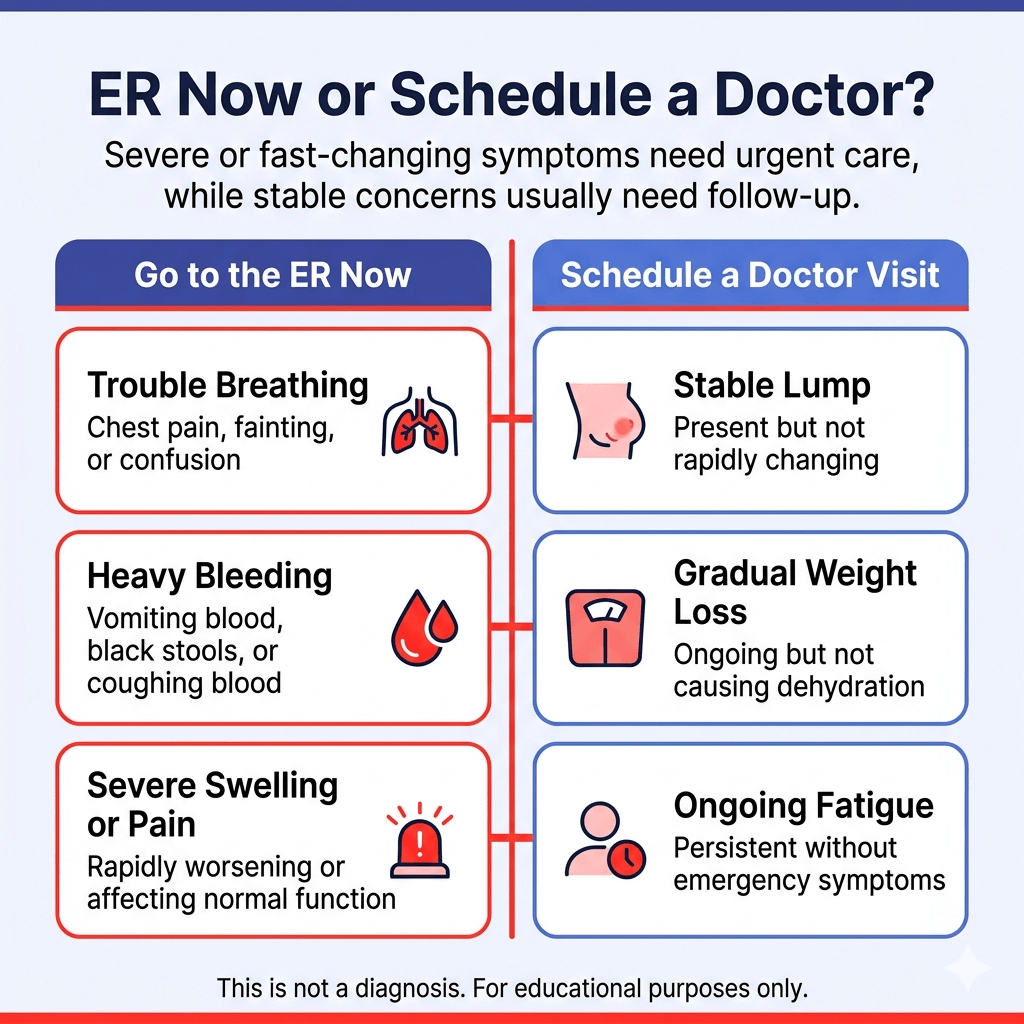
When you are unsure what to do, focus on the pattern and severity of the symptom.
Ask yourself:
- How long has this been going on?
- Is it getting worse?
- Is this symptom unusual for me?
- Are multiple symptoms happening together?
- Is it affecting my ability to eat, breathe, walk, sleep, work, or care for myself?
- Is there bleeding, fever, chest pain, trouble breathing, fainting, severe weakness, or severe pain?
- Do I have known cancer, immune system problems, abnormal blood counts, or another serious medical condition?
If the symptom is severe, sudden, rapidly worsening, or affecting basic function, urgent evaluation may be appropriate. If the symptom is stable but persistent or unexplained, scheduling a medical appointment is usually the right next step.
The most important point is not to dismiss symptoms simply because they seem small at first. Persistent body changes deserve attention.
How to Prepare for a Medical Evaluation
Preparing a few details can make your visit more useful and less stressful. Whether you go to an ER, primary care doctor, or specialist, try to bring or write down:
- When the symptom started
- Whether it is getting better, worse, or staying the same
- Any weight changes
- Fever, night sweats, bleeding, pain, fatigue, or appetite changes
- Any new lumps or swelling
- Current medications and supplements
- Recent test results, if available
- Personal history of cancer, if relevant
- Family history of cancer, if relevant
- Photos of visible changes, such as skin changes, swelling, or a lump, if helpful
You do not need to have perfect notes. Even a simple timeline can help the medical team understand what changed and why you are concerned.
If you are in Angleton or a nearby community and you are dealing with severe pain, trouble breathing, heavy bleeding, sudden weakness, dehydration, or symptoms that are rapidly worsening, Angleton ER provides 24/7 emergency care for urgent medical concerns. Our emergency team can evaluate serious symptoms, perform appropriate lab testing or imaging when needed, and help determine whether your condition requires stabilization, further testing, or follow-up care with the right provider.
Frequently Asked Questions
What are the most common warning signs of cancer?
Common warning signs can include unexplained weight loss, ongoing fatigue, a new lump or swelling, persistent pain, unusual bleeding, skin changes, appetite changes, ongoing cough, hoarseness, or trouble swallowing. These symptoms do not always mean cancer, but they should be evaluated when they are persistent, unexplained, or worsening.
Does having one cancer warning sign mean I have cancer?
No. Many cancer warning signs can also be caused by non-cancerous conditions such as infection, inflammation, digestive issues, hormone changes, injury, or stress. The purpose of recognizing warning signs is not to self-diagnose. It is to know when a symptom deserves medical attention.
When should I go to the ER for possible cancer symptoms?
You should seek emergency care if symptoms are severe, sudden, or rapidly worsening. Examples include chest pain, trouble breathing, fainting, confusion, severe weakness, heavy bleeding, vomiting blood, black stools, coughing blood, severe pain, dehydration, or swelling that affects breathing, swallowing, movement, or urination.
Can the ER diagnose cancer?
The ER can evaluate serious symptoms, perform emergency testing, identify urgent findings, and help guide next steps. However, many cancer diagnoses require follow-up testing, biopsy, pathology, imaging, and specialist care outside the ER. An ER visit may start the evaluation process, but it usually does not complete the full diagnosis.
Can blood tests show signs of cancer?
Blood tests can sometimes show abnormal findings, such as anemia, infection markers, abnormal blood counts, liver changes, kidney problems, or other concerns. However, blood tests alone usually cannot confirm most cancers. Abnormal results may need follow-up testing or specialist evaluation.
Should unexplained weight loss always be checked?
Yes, unexplained weight loss should be discussed with a healthcare provider, especially if it is ongoing, noticeable, or paired with fatigue, appetite loss, pain, fever, night sweats, or bleeding. Weight loss can happen for many reasons, but it should not be ignored when there is no clear explanation.
When should a new lump be evaluated?
A new lump should be evaluated if it is growing, hard, painful, fixed in place, persistent, or associated with fever, night sweats, weight loss, fatigue, redness, or swelling. A rapidly growing lump or swelling that affects breathing, swallowing, movement, or urination may need urgent evaluation.
What symptoms should not wait for a regular doctor’s appointment?
Symptoms that should not wait include chest pain, trouble breathing, fainting, confusion, sudden weakness, severe pain, heavy bleeding, vomiting blood, black stools, coughing blood, severe dehydration, or rapidly worsening swelling. These symptoms may signal an urgent medical problem and should be evaluated promptly.