

Yes — high blood sugar can absolutely make you feel sleepy, weak, and unusually tired. Mayo Clinic lists “feeling weak or unusually tired” as an early sign of hyperglycemia (high blood sugar).
And practically speaking in Angleton, that matters because the mean commute time is 28.7 minutes — if you’re getting drowsy or foggy behind the wheel, that’s not something to “push through.”
Quick answer
High blood sugar can make you sleepy because it can:
- dehydrate you (you pee more, get thirstier),
- leave your cells feeling like they’re “running out of fuel,” and
- trigger a stress response in the body.
Cleveland Clinic lists fatigue among symptoms of long-term hyperglycemia.
Why high blood sugar can make you feel sleepy
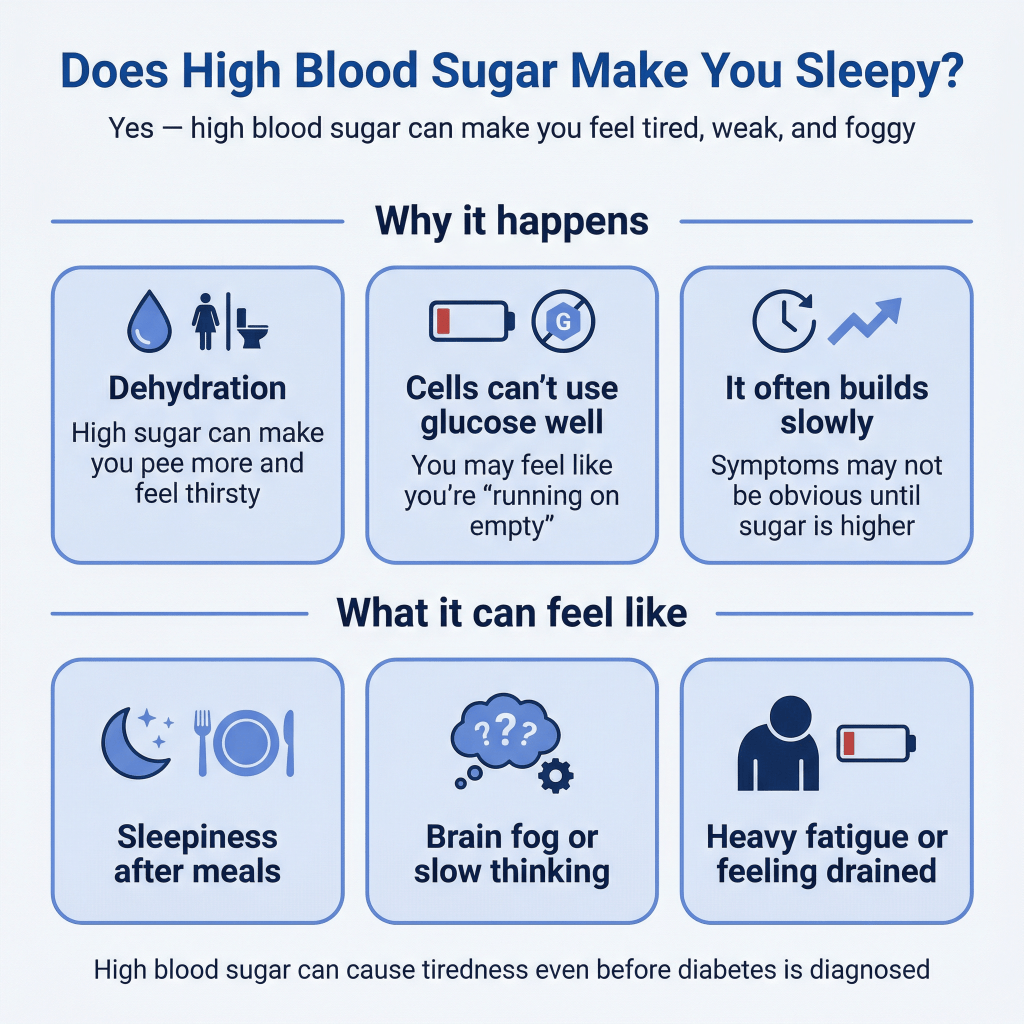
Dehydration (the most common reason)
When glucose is high, your body tries to dump it through urine. That can lead to frequent urination and thirst early on, and over time can contribute to fatigue.
Your body can’t use glucose efficiently
Even though there’s sugar in the bloodstream, it doesn’t always get into the cells properly (insulin issues/insulin resistance). That mismatch can feel like heavy fatigue — like you’re “running on empty.”
It often builds slowly
Hyperglycemia symptoms can develop gradually, and Mayo Clinic notes many people don’t notice symptoms until levels are higher (often above ~180–200 mg/dL).
So people may only realize something is wrong when they’re already tired, foggy, and run down.
What does diabetic fatigue feel like?
When patients tell me “I’m just exhausted,” diabetic fatigue often sounds like:
- sleepiness after meals
- brain fog / slow thinking
- feeling heavy or “drained”
- needing naps you didn’t used to need
It’s not always dramatic. It’s often a steady, persistent “I’m not myself” fatigue that tracks with high sugars.
Can being diabetic make you tired?
Yes. High blood sugar can cause fatigue, and Mayo Clinic includes feeling weak or unusually tired among early hyperglycemia symptoms.
Does type 2 diabetes make you tired?
Yes — and one reason it’s tricky is that Mayo Clinic notes some people with long-standing type 2 diabetes may not show obvious symptoms even with high sugars.
So fatigue may be one of the few clues that something’s off.
Can high blood sugar happen without diabetes?
Yes. Two common real-world scenarios:
- Illness or stress can raise blood sugar.
- Certain medications (Cleveland Clinic specifically lists corticosteroids among meds that can contribute to insulin resistance and high blood sugar).
This is why someone can feel “hyperglycemia symptoms” even before a diabetes diagnosis.
How to treat non diabetic hyperglycemia
If you’re not diagnosed with diabetes but suspect your sugar is running high:
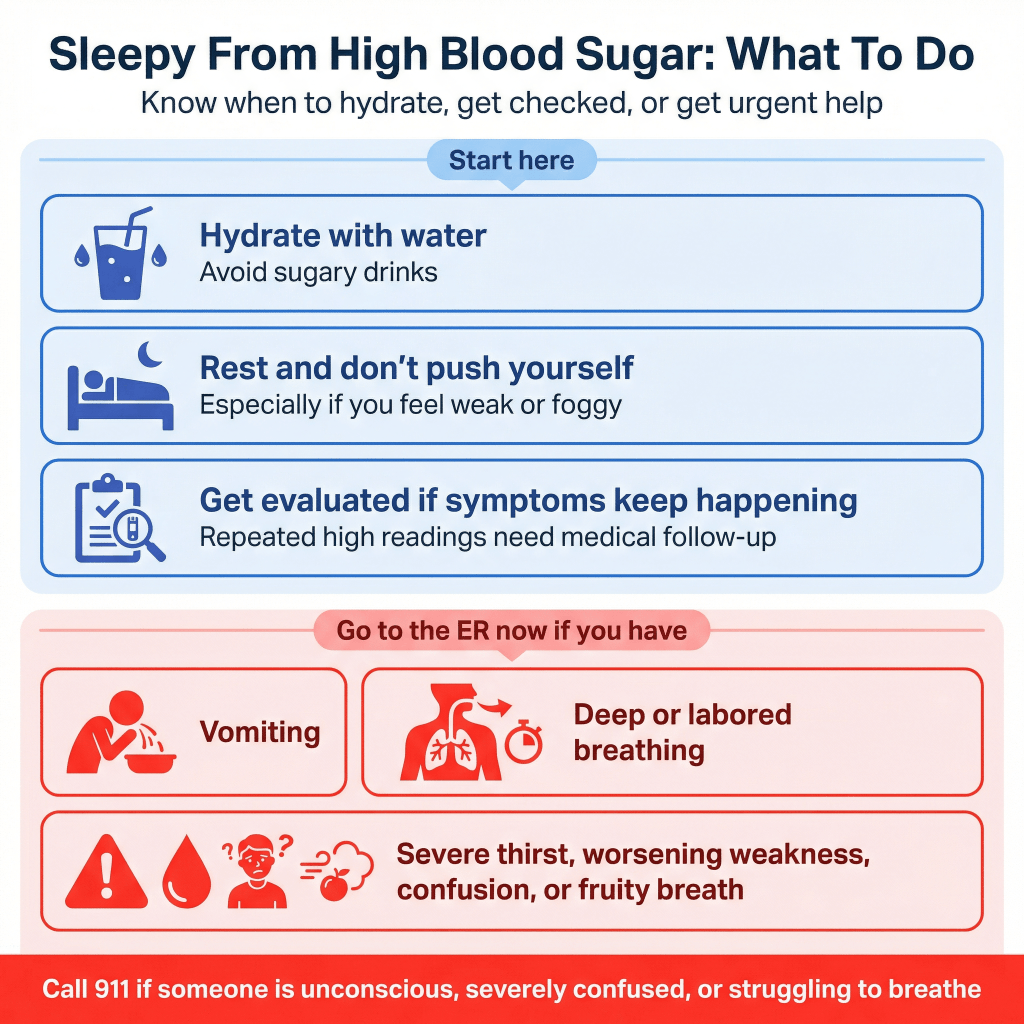
- Hydrate with water (not sugary drinks).
- Rest and avoid pushing intense workouts if you feel unwell.
- If you’re getting repeated high readings or symptoms are persistent, get evaluated (hyperglycemia can be related to illness, stress, medication effects, or undiagnosed diabetes).
If you do have diabetes and your glucose is high, the ADA advises that if blood glucose is above 240 mg/dL, check urine ketones before exercising (and don’t exercise if ketones are present).
When to go to the ER / call 911
This is the part people miss: sleepiness from high sugar can be mild — or it can be a warning sign you’re heading into an emergency.
Go to the ER now if
You have high blood sugar plus any of these:
- vomiting
- labored / deep breathing
- severe thirst with worsening weakness
Cleveland Clinic says to seek immediate help if you have hyperglycemia symptoms with vomiting and/or labored breathing, and lists DKA symptoms like vomiting, dehydration, abdominal pain, fruity breath, deep labored breathing, confusion, and loss of consciousness.
Call 911 immediately if
- someone is unconscious, severely confused, or struggling to breathe.
DKA warning signs (don’t wait)
CDC lists severe DKA symptoms such as fast deep breathing, dry skin/mouth, fruity-smelling breath, being very tired, nausea/vomiting, and stomach pain.
Mayo Clinic also lists ketoacidosis-related symptoms like fruity breath, abdominal pain, nausea/vomiting, shortness of breath, confusion, and loss of consciousness.
Mayo Clinic advises seeking immediate help (including calling 911) if you have ongoing vomiting/diarrhea and can’t keep fluids down, or if blood glucose stays high (example: above 240 mg/dL) with ketones/symptoms.
If you’re sleepy and your symptoms include thirst, frequent urination, weakness, or brain fog, don’t dismiss it. And if you add vomiting, deep breathing, confusion, or fruity breath, treat it as urgent.
Visit Angleton ER — open 24/7.
Frequently Asked Questions
Is type 2 diabetes hyperglycemia or hypoglycemia?
Type 2 diabetes is primarily associated with hyperglycemia (high blood sugar), though treatment or missed meals can lead to low sugar in some people.
How high does blood sugar have to be to cause symptoms?
Mayo Clinic notes symptoms often don’t appear until glucose is above ~180–200 mg/dL, and can worsen the longer levels stay high.
If I’m sleepy after eating, is it always blood sugar?
Not always. But if it’s persistent, paired with thirst/peeing more, blurry vision, or unexplained fatigue — hyperglycemia moves up the list.