

Trying to figure out what to eat after hearing you have kidney disease can feel more stressful than it should. Many people in Angleton and across Brazoria County start by cutting random foods, skipping meals, or searching for strict “renal diet” rules that may not even fit their stage or lab results. A better approach is to use a simple weekly structure: meals that are lower in sodium, built around reasonable portions, and flexible enough to adjust if your doctor or dietitian tells you to watch potassium, phosphorus, protein, or fluids more closely. Official kidney nutrition guidance is clear that there is no single meal plan for everyone with CKD, and food advice often needs to be adjusted over time.
Medical disclaimer: This article is for educational purposes only. It is not medical advice, diagnosis, or a substitute for care from your healthcare professional or renal dietitian. CKD meal plans should be adjusted based on your stage of disease, lab results, medications, and other health conditions.
What a kidney-friendly meal plan is
A kidney-friendly meal plan is not one special menu that works for everybody. In general, it means choosing foods and drinks that help the body maintain a healthier balance of sodium, potassium, phosphorus, fluids, calories, and protein, while also supporting blood pressure, blood sugar, and heart health. As CKD gets worse, food needs can change, which is why the safest long-term approach is usually a plan that can be personalized instead of copied word for word.
This sample plan is meant for adults who want a general starting point. It is not a dialysis meal plan, and it is not meant to replace personal nutrition counseling. That distinction matters because people on dialysis often need different protein and fluid guidance than people with earlier-stage CKD.
How to use this 7-day meal plan
Think of this article as a framework for the week, not a strict rulebook. You can swap breakfasts, rotate lunches, repeat dinners you like, and simplify meals if that makes the plan easier to follow. The main goal is to move away from heavily processed, salty foods and toward more home-style meals with simpler ingredients.
Each day below includes:
- breakfast
- lunch
- dinner
- one snack
- a short note on why that day works
The meals are intentionally practical. They are not built around exact personal calories, exact potassium numbers, or a one-size-fits-all protein target, because those details can vary from one CKD patient to another. Official guidance recommends that people with CKD work with a healthcare professional or dietitian to individualize nutrition goals when needed.
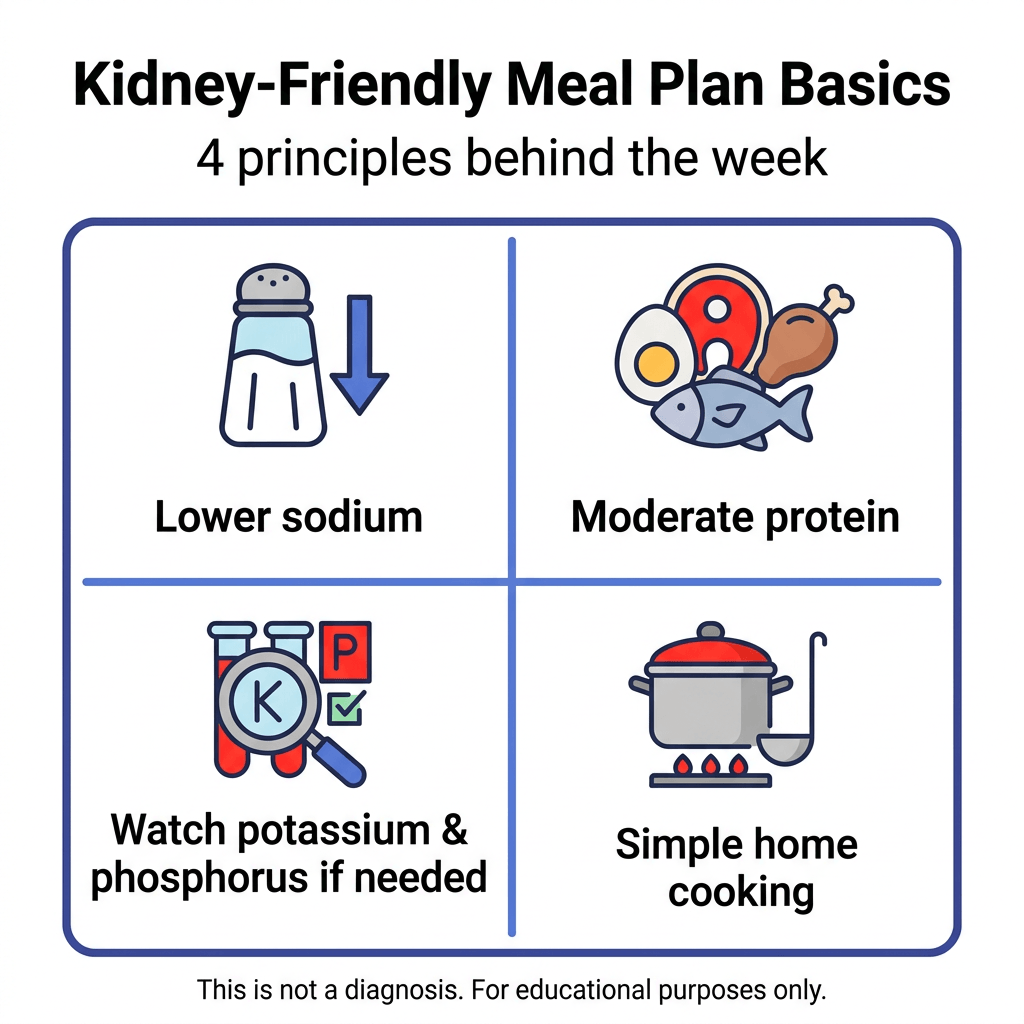
Key food principles behind this meal plan
The first principle is lower sodium. Too much sodium can make the body hold on to fluid, raise blood pressure, and put more stress on the kidneys and heart. A lot of sodium comes from packaged foods, frozen meals, restaurant food, deli meats, canned soups, and sauces rather than just the salt shaker.
The second principle is thoughtful protein, not extreme protein. People with CKD usually still need protein, but too much protein can increase waste products the kidneys must handle. The amount that makes sense depends on your stage, body size, nutrition status, and whether you are on dialysis.
The third principle is watching potassium and phosphorus when needed. Not every person with kidney disease has to restrict them the same way, but they become more important if blood levels start running high or if CKD is advancing. That is why a plan that looks “healthy” in general can still need adjustments for kidney disease.
The fourth principle is simpler cooking. Fresh or lightly prepared meals are often easier to manage than ultra-processed foods because they tend to have fewer hidden sodium and phosphorus additives.
7-day meal plan for kidney disease
This sample week is designed to stay practical, balanced, and realistic. It uses ordinary meals that are easier to repeat, prep, and adjust. It should be read as a general educational sample, not a personal prescription.
Day 1
Breakfast: Oatmeal made with water, topped with blueberries and a sprinkle of cinnamon
Lunch: Grilled chicken salad with lettuce, cucumber, red bell pepper, olive oil, and lemon
Dinner: Baked fish with white rice and steamed green beans
Snack: Apple slices
This day works because it stays simple, avoids heavy sauces, and leans on lower-sodium meal building instead of processed convenience foods.
Day 2
Breakfast: Toast with scrambled egg whites and a side of strawberries
Lunch: Turkey sandwich on lower-sodium bread with lettuce and cucumber, plus a side of grapes
Dinner: Stir-fried chicken with cabbage, carrots, and rice
Snack: Unsalted popcorn
This day keeps portions reasonable and uses fresh ingredients that are easier to control than takeout or packaged meals.
Day 3
Breakfast: Greek yogurt in a modest portion with raspberries and a slice of toast
Lunch: Tuna salad made with light mayo, served in lettuce wraps with crackers on the side
Dinner: Lean ground turkey with pasta, olive oil, garlic, and sautéed zucchini
Snack: Pear slices
This day gives variety without making the meals too complicated. It also avoids the habit of building every meal around salty processed foods.
Day 4
Breakfast: Cream of rice cereal with sliced apples and nutmeg
Lunch: Chicken rice bowl with lettuce, cucumber, and a simple homemade dressing
Dinner: Baked pork loin, mashed cauliflower, and roasted carrots
Snack: Rice cakes with a thin layer of cream cheese
This day works well for people who want familiar comfort foods in a lighter, more kidney-conscious format.
Day 5
Breakfast: Two small pancakes topped with fresh berries instead of syrup-heavy extras
Lunch: Egg salad sandwich on toasted bread with a side salad
Dinner: Herb-roasted chicken, couscous, and sautéed cabbage
Snack: Fresh pineapple in a small bowl
This day helps show that a kidney-friendly meal plan does not have to feel bland or overly restrictive when seasoning and texture are handled well.
Day 6
Breakfast: Toast with peanut butter in a modest portion and sliced strawberries
Lunch: Homemade chicken soup with rice and low-sodium broth, plus a side of crackers
Dinner: Broiled tilapia with pasta and steamed broccoli in a moderate portion
Snack: Grapes
This day focuses on warm, familiar foods while still keeping sodium and ingredient control in view.
Day 7
Breakfast: Oatmeal with diced apples and a drizzle of honey
Lunch: Chicken wrap with lettuce, cucumber, and a simple yogurt-based spread
Dinner: Turkey meatballs with white rice and roasted summer squash
Snack: Apple or berries
This final day keeps the week realistic. The meals are ordinary enough that they can be repeated again rather than treated like a one-time “diet challenge.”
Simple food swaps that can make this plan more kidney-friendly
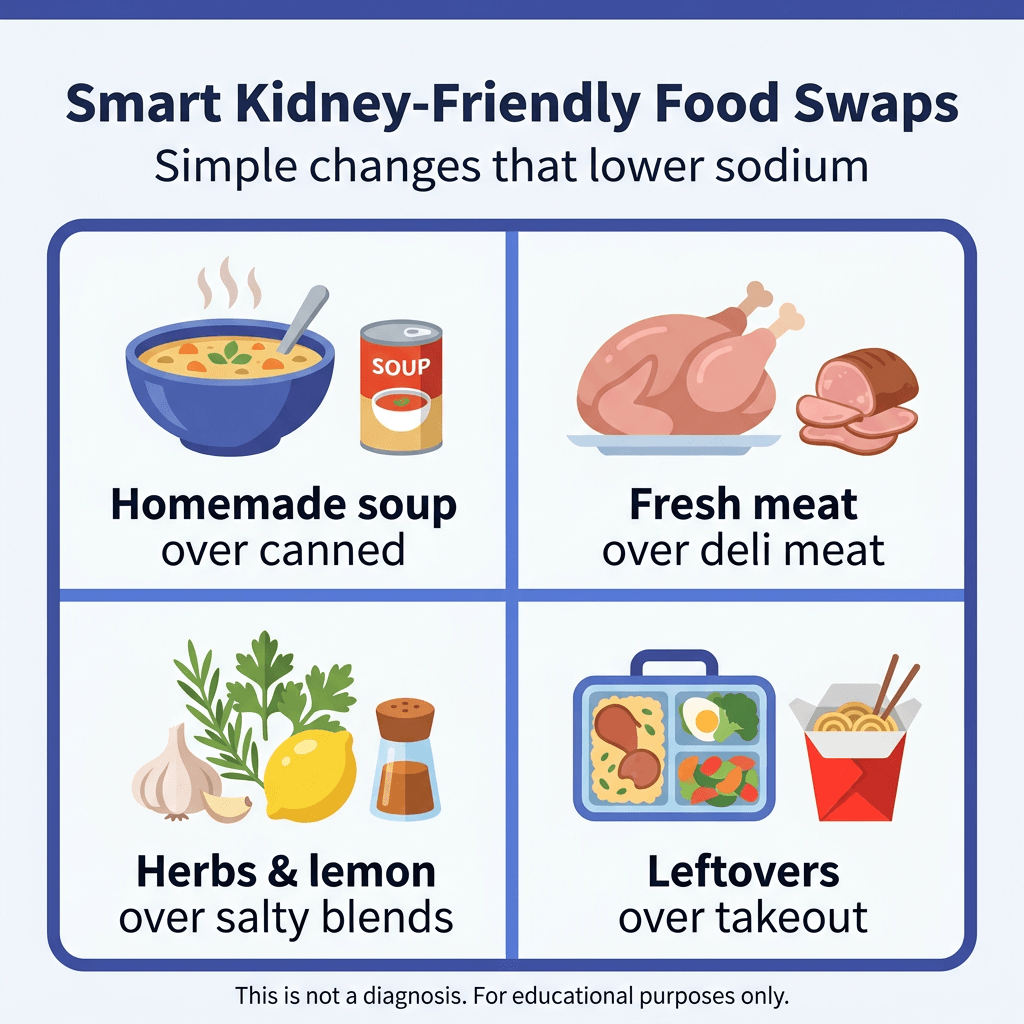
You do not always need an entirely different menu. In many cases, the better move is to make smarter swaps.
Instead of canned soup, try homemade soup with lower-sodium broth. Instead of deli meats, try fresh cooked chicken or turkey. Instead of salty seasoning blends, use herbs, garlic, lemon juice, onion, pepper, or salt-free seasoning mixes. Instead of restaurant-heavy lunches, use leftovers from dinner to build the next meal. These kinds of changes help reduce sodium without making the plan harder to follow.
For protein, the goal is usually not “eat as much as possible.” A more balanced approach is to use moderate portions of eggs, chicken, turkey, or fish, then fill out the meal with grains and vegetables that fit your lab goals. People on dialysis often need a different protein strategy, which is one reason not every kidney diet article should be followed the same way by every reader.
For drinks, water is often the simplest option unless your clinician has told you to track fluid intake more carefully. Fluid limits are not automatic for every person with CKD, but they may become more important as disease gets worse or in dialysis care.
Grocery planning tips for the week
A weekly meal plan becomes much easier when the grocery list is basic and repeatable. Buy a few dependable proteins, a few fruits, a few vegetables, and a couple of starches you know you will actually use. This reduces waste and makes it easier to cook at home more often.
Helpful staples may include:
- oats or cream of rice
- bread or rice
- chicken, turkey, fish, or eggs
- lettuce, cabbage, cucumber, carrots, green beans, zucchini, or cauliflower
- apples, berries, grapes, pears, or pineapple
- olive oil, lemon, garlic, pepper, and no-salt seasonings
It is also worth reading labels more carefully. Official kidney nutrition guidance encourages people with CKD to check sodium and watch for phosphorus additives on packaged foods. If the ingredient list is long and the product is heavily processed, it often becomes harder to fit into a kidney-conscious plan.
When a kidney meal plan may need to change
A general meal plan can be helpful, but there are times when it needs to be adjusted.
If potassium is running high, your healthcare professional may tell you to change portions or limit certain fruits, vegetables, juices, or salt substitutes. If phosphorus is running high, you may need to pay closer attention to processed foods, additives, dairy choices, or packaged meats. If protein needs change, the plan may also need to change. And if someone is on dialysis, nutrition goals often shift in ways that make a generic CKD meal plan less useful.
This is one of the biggest reasons not to panic when reading kidney diet advice online. A meal plan may be “kidney-friendly” in a broad sense but still need personal adjustment based on labs and stage.
When to ask for medical nutrition help
It is a good idea to ask for more personalized guidance if you are losing weight without trying, eating very little because food no longer tastes good, noticing more swelling, feeling unsure about protein, or getting mixed messages about potassium and phosphorus. Official guidance recommends working with a registered dietitian or another healthcare professional to make CKD nutrition safer and more useful over time.
A renal dietitian can help translate “watch your kidneys” into real daily decisions, including what to buy, what to cook, what to portion, and what to change when lab values shift.
For people in Angleton and Brazoria County, food advice can start to feel overwhelming fast when every source online seems to say something different. If symptoms are worsening, if swelling or weakness feels more serious, or if you are trying to understand what your kidney-related concerns may mean in the bigger picture, Angleton ER can evaluate urgent symptoms and help point you toward the follow-up care you may need next.
Frequently Asked Questions
What is the best breakfast for kidney disease?
A good breakfast is usually one that is simple, moderate in portion, and not loaded with sodium. Oatmeal, toast with egg whites, or a light cereal-based breakfast can fit many general CKD meal plans, though personal restrictions still matter.
Can people with kidney disease eat eggs?
Yes, many people with kidney disease can eat eggs, but portion size and total protein intake still matter. Individual needs vary by stage and treatment plan.
Is oatmeal okay for kidney disease?
Oatmeal can fit many CKD meal plans as part of a balanced breakfast. The exact fit depends on the person’s overall plan, portions, and lab goals.
What foods are often limited in a kidney-friendly meal plan?
Foods that are often limited include heavily processed foods, salty restaurant meals, deli meats, canned soups, high-sodium snacks, and foods with phosphorus additives. Some people may also need to limit certain potassium-rich foods.
Do all people with kidney disease need to avoid potassium?
No. Potassium restriction is not the same for everyone. It usually depends on blood test results and the stage of kidney disease.
Is this 7-day meal plan okay for stage 3 CKD?
It can work as a general educational starting point for some people with stage 3 CKD, but it still may need adjustment based on blood pressure, diabetes, potassium, phosphorus, protein needs, and other lab results.
How much protein should someone with kidney disease eat?
There is no single amount that fits every patient. Official guidance recommends individualizing protein intake with a healthcare professional or dietitian, especially because protein needs change over time and can differ sharply for dialysis patients.
Can a kidney disease meal plan still be filling?
Yes. Meals can still feel satisfying when they include balanced portions, fiber-containing foods that fit the plan, and enough calories from appropriate sources. CKD nutrition does not have to mean eating tiny, joyless meals.
What drinks are usually better for kidney disease?
Water is often the simplest option, but fluid advice depends on kidney function and overall treatment. Some people need closer fluid guidance than others.
When should someone ask for a personalized renal diet plan?
It makes sense to ask for one when lab values are changing, food choices feel confusing, appetite is poor, weight is changing, or your clinician says potassium, phosphorus, sodium, protein, or fluids need closer control.