

You wake up with an ache on the left side of your neck. Turning your head makes it sharper, and you wonder whether the side of the pain means something is wrong. A neck ache on one side is common, but left versus right rarely identifies the cause. How the pain started, what happens when you move, and whether you have other symptoms are usually more useful clues.
What Can Pain on One Side of the Neck Tell You?
One-sided, or unilateral, neck pain describes where you feel discomfort; it is not a diagnosis. Muscles, joints, nerves, and nearby throat structures can all produce pain that seems concentrated in one area. Sometimes pain is felt away from its original source, so the tender spot does not necessarily identify the affected structure.
Does Left-Sided Neck Pain Mean Something Different From Right-Sided Pain?
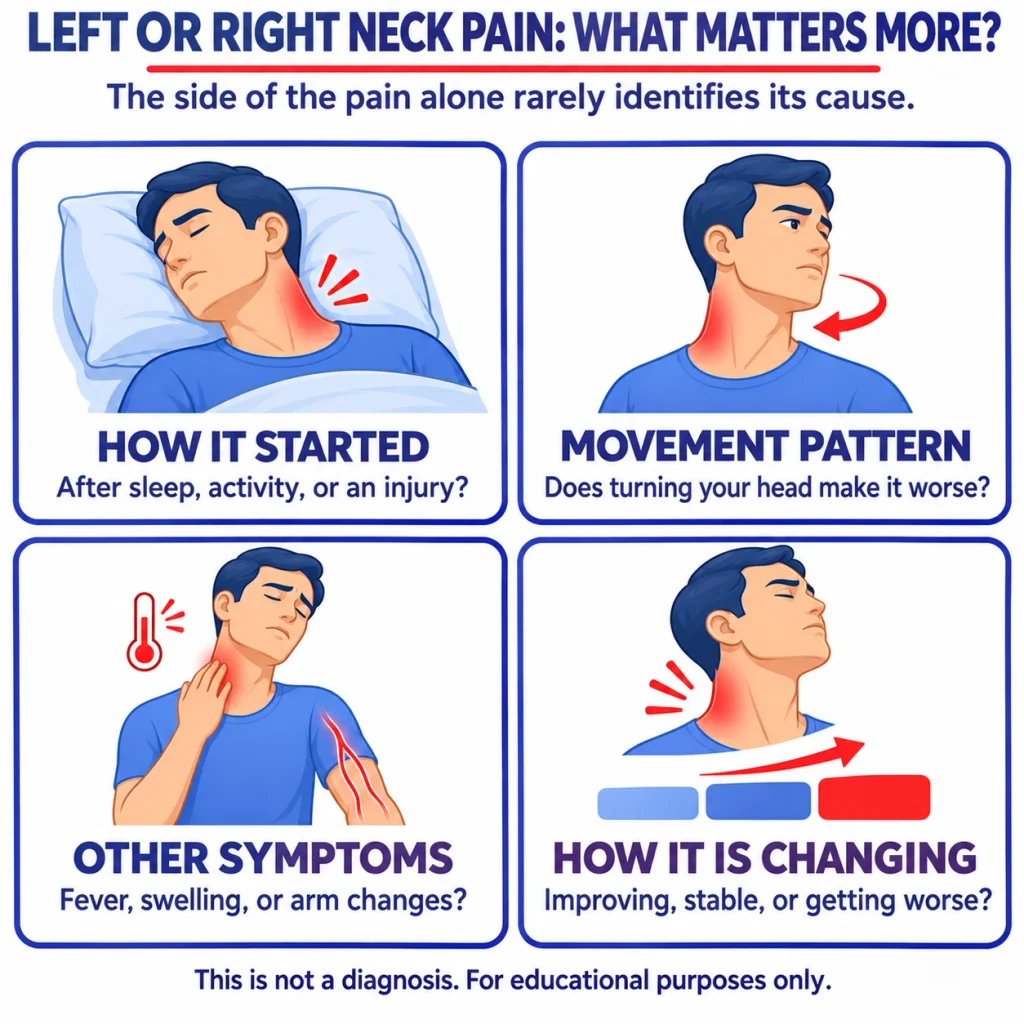
Generally, no. Side neck pain on the left side and similar pain on the right can arise in many of the same circumstances. Neither location automatically points to a particular disease. A clinician learns more from the timing, severity, associated symptoms, and examination than from laterality alone. The MedlinePlus overview of neck pain describes several possible neck structures and symptoms without treating either side as a diagnosis.
When One-Sided Neck Pain May Be Muscle-Related
Soreness after sleeping with the head turned, working for hours at a desk, or making an awkward movement may suggest muscle tension or strain. Pain can be more noticeable when looking over one shoulder, bending forward, or turning during daily tasks. Those details help describe the pattern, but they do not prove the problem is muscular.
A familiar movement-related ache without injury or other concerning changes is different from pain that is rapidly intensifying or interfering with normal function. Watch the pattern rather than assuming that pain triggered by movement must be harmless.
Which Accompanying Symptoms Change the Meaning of One-Sided Neck Pain?
Symptoms occurring alongside the pain often matter more than which side hurts. Three combinations deserve particular attention.
Fever, Severe Headache, or Feeling Unwell
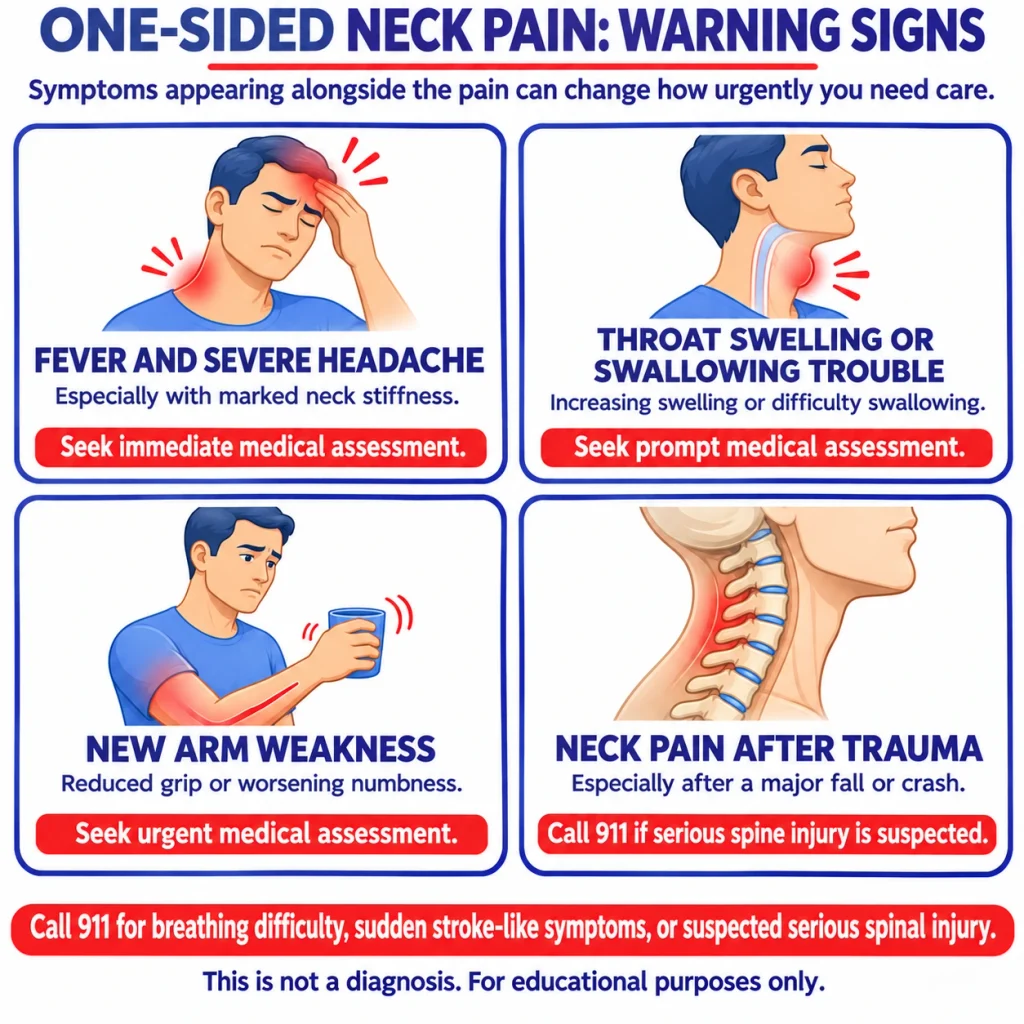
A fever together with marked neck stiffness, a severe headache, confusion, or unusual drowsiness calls for immediate medical assessment. The CDC describes fever, headache, and a stiff neck as common meningitis symptoms, although those symptoms do not by themselves establish meningitis. Pain confined to one side does not rule an infection in or out.
Neck Swelling or Difficulty Swallowing
A newly tender lump, increasing swelling near the jaw or throat, painful swallowing, or a change in voice shifts attention to the surrounding tissues. Enlarged lymph nodes are one possibility, as the National Library of Medicine explains, but a lump has several possible explanations. The NHS guidance on swallowing problems advises assessment when swallowing becomes difficult.
Progressive swelling or worsening swallowing trouble requires prompt assessment. If breathing is difficult, you cannot swallow saliva, or throat symptoms are rapidly worsening, call 911. These are potential airway warning signs, not routine muscle symptoms; the NHS emergency guidance for severe throat symptoms reflects that distinction.
Numbness, Weakness, or Other Neurological Changes
Tingling in a hand, altered arm sensation, or new weakness can occur with a neck-related nerve problem, but pain location cannot tell which structure is involved. New or worsening loss of strength, difficulty using a hand, or problems walking need urgent assessment. Sudden facial drooping, one-sided body weakness, speech difficulty, or loss of balance may be signs of stroke; the CDC advises calling 911 immediately for stroke warning signs.
Does It Matter How the One-Sided Neck Pain Started?
Gradual discomfort after an ordinary activity provides a different history from pain that begins abruptly during a collision. If the ache is stable and you otherwise feel well, a routine appointment may be reasonable if it continues or affects sleep or daily tasks.
A fall, vehicle crash, sports impact, or hard blow changes the assessment. Even when pain stays on one side, injury-related symptoms should not be presumed to be a strain. With major trauma, severe pain, or possible spinal injury, call 911 and avoid unnecessary movement of the neck. MedlinePlus first-aid guidance for suspected spinal injury advises keeping the person still until help arrives.
Sudden, unusually severe neck pain also deserves urgent evaluation, particularly with a severe headache, dizziness, vision changes, or neurological symptoms. The side of the neck is not enough to identify a cause or decide that a sudden change is safe.
When Should You Seek Medical Care for One-Sided Neck Pain?
Routine Evaluation
Mild, stable discomfort after an everyday activity, without injury, fever, swallowing symptoms, swelling, or neurological changes, may be discussed at a regular medical visit. Arrange follow-up if it persists, returns, worsens, or disrupts normal activities; there is no single waiting period appropriate for everyone.
Prompt or Emergency Assessment
Get prompt medical assessment for new swelling, increasing difficulty swallowing, fever with significant stiffness, worsening arm numbness or weakness, or pain after an injury. Escalate to emergency care for rapidly deteriorating symptoms, severe new neurological deficits, or a combination of fever, severe headache, and profound stiffness. For a broader triage guide, see Angleton ER’s neck pain emergency-warning overview.
Call 911 rather than driving if there is breathing difficulty, sudden stroke-like symptoms, or a suspected serious spinal injury. Those emergencies require professional transport and immediate attention.
How Do Doctors Determine What Is Causing One-Sided Neck Pain?
A clinician asks when the pain began, whether it followed an injury, where it is felt, whether movement changes it, and what other symptoms have developed. Examination may involve the neck, throat, nearby swelling, strength, sensation, and coordination. A focused history and physical examination guide next steps, as described in the American Academy of Family Physicians review of neck-pain evaluation.
Not everyone needs a scan or blood tests. The decision depends on examination findings and concern for injury, infection, or neurological involvement. Emergency imaging at Angleton ER is available when ordered as part of an appropriate emergency evaluation, not simply because pain is on one side.
What Should You Tell a Doctor About One-Sided Neck Pain?
Describe the side and precise area, when symptoms began, any recent activity or injury, how movement affects the pain, and whether the pattern is improving or worsening. Mention fever, swelling, painful swallowing, numbness, or weakness even if they seem unrelated.
“The left side of my neck hurts” offers a location. “My left neck has hurt since yesterday, and now I have swelling and difficulty swallowing” gives a timeline and two changes that may affect how quickly you need evaluation.
One-Sided Neck Pain and Emergency Care in Angleton
For adults and families in Angleton and surrounding Brazoria County communities, the deciding issue is often a new symptom alongside the pain, not the side itself. Angleton ER provides 24/7 emergency evaluation and can assess concerning neck symptoms, examine neurological function, and arrange medically appropriate testing or next steps. Severe breathing problems or sudden stroke-like symptoms require calling 911 immediately.
Frequently Asked Questions
What causes neck pain on only one side?
Muscle tension, joints, nerves, and nearby tissues can all produce localized pain. The onset and accompanying symptoms are needed to narrow the possibilities.
Is pain on the left side of the neck different from pain on the right side?
Not reliably. The side alone rarely identifies a diagnosis or tells you how serious the pain is.
Can sleeping in an awkward position cause one-sided neck pain?
Yes. An uncomfortable sleeping position can contribute to localized muscle soreness, but it is not the only explanation.
When should I worry about neck pain on one side?
Pay attention to fever with pronounced stiffness, new weakness, major injury, rapidly increasing pain, or significant changes in swallowing or breathing.
What does one-sided neck pain with swelling or difficulty swallowing mean?
It may involve the throat, lymph nodes, or other nearby tissues. New or worsening symptoms need assessment, especially when swallowing becomes difficult.
Can one-sided neck pain be associated with arm numbness or weakness?
Yes. Nerve involvement is one possibility. New or progressive weakness is more concerning than pain location and needs timely evaluation.
When should I go to the ER for one-sided neck pain?
Go for serious or rapidly worsening symptoms, significant injury, or concerning neurological changes. Call 911 for breathing difficulty, stroke-like symptoms, or suspected major spinal injury.