
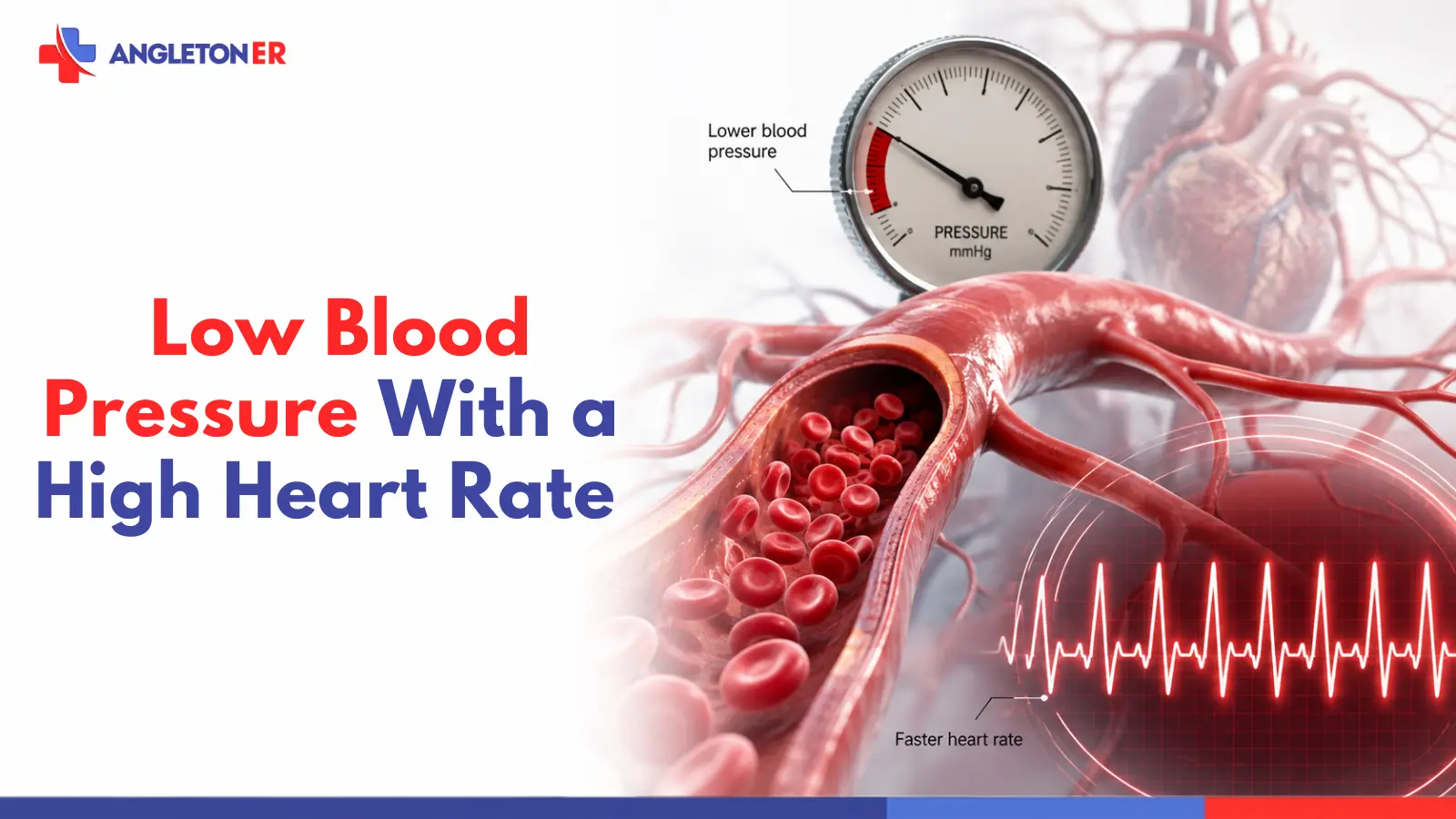
Seeing a lower-than-usual blood pressure reading and a faster-than-usual pulse at the same time can be unsettling. The readings describe a pattern; they do not identify the cause by themselves. The American Heart Association notes that low blood pressure is often not harmful unless it is accompanied by concerning symptoms. That is why the most useful questions are not simply “What are my numbers?” but “How do I feel, is this different from my normal, and is the change continuing?”
Some people naturally run on the lower side without symptoms; a new drop is a different situation. The National Heart, Lung, and Blood Institute explains that a sudden or symptomatic fall in blood pressure can reduce blood flow to vital organs. A fast heart rate at the same time may be part of the body’s response, but the overall clinical picture determines how concerning that response is.
Why Can Low Blood Pressure and a Fast Heart Rate Happen Together?
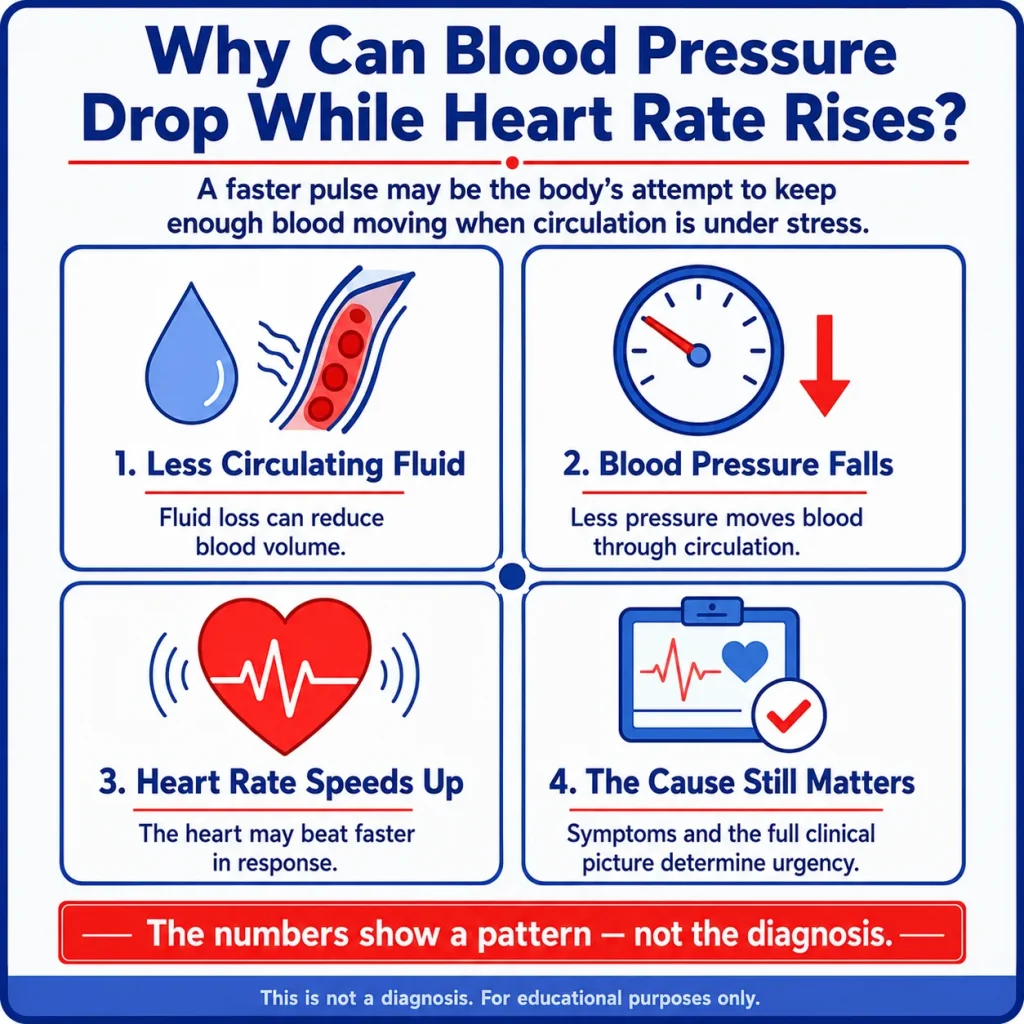
Blood pressure reflects the force moving blood through the circulation. If that pressure falls because the body has less circulating fluid, blood vessels lose tone, the heart is not pumping effectively, or another process is stressing circulation, the body may try to compensate by increasing the heart rate. That faster rate is an attempt to keep enough blood moving to the brain and other organs.
The American Heart Association describes sinus tachycardia as a response that can occur with severe bleeding or very low blood pressure, among other triggers. That does not mean every fast pulse with a low reading represents shock or another emergency. It means the two numbers have to be interpreted together with symptoms, timing, medical history, and what is normal for that person.
What Can Cause This Combination?
Several very different clinical situations can produce a similar low-pressure, fast-pulse pattern. Fluid loss from vomiting, diarrhea, heavy sweating, or other causes can reduce circulating volume. Significant bleeding can do the same. Infection can place major stress on circulation; the CDC lists increased heart rate and low blood pressure among findings clinicians may see with sepsis. Heart-rhythm problems can also change how effectively the heart fills and pumps. Other acute illnesses can affect circulation in ways that create a similar pattern.
These are categories, not a checklist for self-diagnosis. Two people can see comparable numbers at home and have very different explanations. The key question is not “Which cause can I prove from my monitor?” but “Does my condition suggest that I need in-person evaluation?”
Why Symptoms Matter More Than the Numbers Alone
A blood pressure reading that is low for one person may be typical for another. The same is true of pulse. Symptoms help show whether the body may be struggling with the change. Dizziness, lightheadedness, unusual weakness, feeling faint, or actually fainting deserve more attention when they occur with a new low-blood-pressure/high-heart-rate pattern.
Fainting is especially important because it can occur when the brain is not receiving enough blood flow. If dizziness or near-fainting is part of the picture, Angleton ER’s guide to when dizziness needs emergency care explains additional warning signs that make the situation more urgent. The practical point is simple: do not let one home number reassure you when your symptoms are becoming more significant.
What If the Readings Came From a Home Blood Pressure Monitor or Smartwatch?
Home devices can capture useful information, but they are not a diagnosis. The American Heart Association describes a single home blood pressure measurement as a snapshot and recommends looking at readings in context over time. A repeat reading can help show whether an unexpected result is consistent, but symptoms should not be ignored while trying to obtain a “better” number.
Technique and device type also matter. Wrong cuff size, movement, or a poorly validated device can mislead. Smartwatches can provide useful pulse or rhythm information, but the FDA notes that consumer cardiovascular wearable notifications are not intended to provide a diagnosis. And for devices that estimate blood pressure without a traditional cuff, a 2025 American Heart Association scientific statement cautioned that many cuffless wearables are not yet accurate enough for diagnosis or treatment decisions.
Treat the device as one piece of evidence. Ask whether the reading makes sense, whether the same pattern appears again, whether it differs from your usual values, and—most importantly—whether you feel unwell at the same time.
Why a New or Persistent Change Is More Concerning
Trajectory matters. A person who routinely has lower blood pressure and feels normal is a different situation from someone whose pressure has suddenly fallen while the pulse has become much faster. Persistence also matters because a repeated change is harder to dismiss as a one-off measurement problem.
• Is this unusual for you?
• Did the blood pressure and pulse change at roughly the same time?
• Is the pattern continuing rather than appearing once?
• Are dizziness, lightheadedness, weakness, or faintness appearing or getting worse?
• Does your overall condition feel noticeably different from your normal baseline?
These questions help organize the situation; they do not provide a diagnosis. A meaningful change from baseline can matter even when the numbers do not look dramatic in isolation.
When Low Blood Pressure With a High Heart Rate Should Not Wait
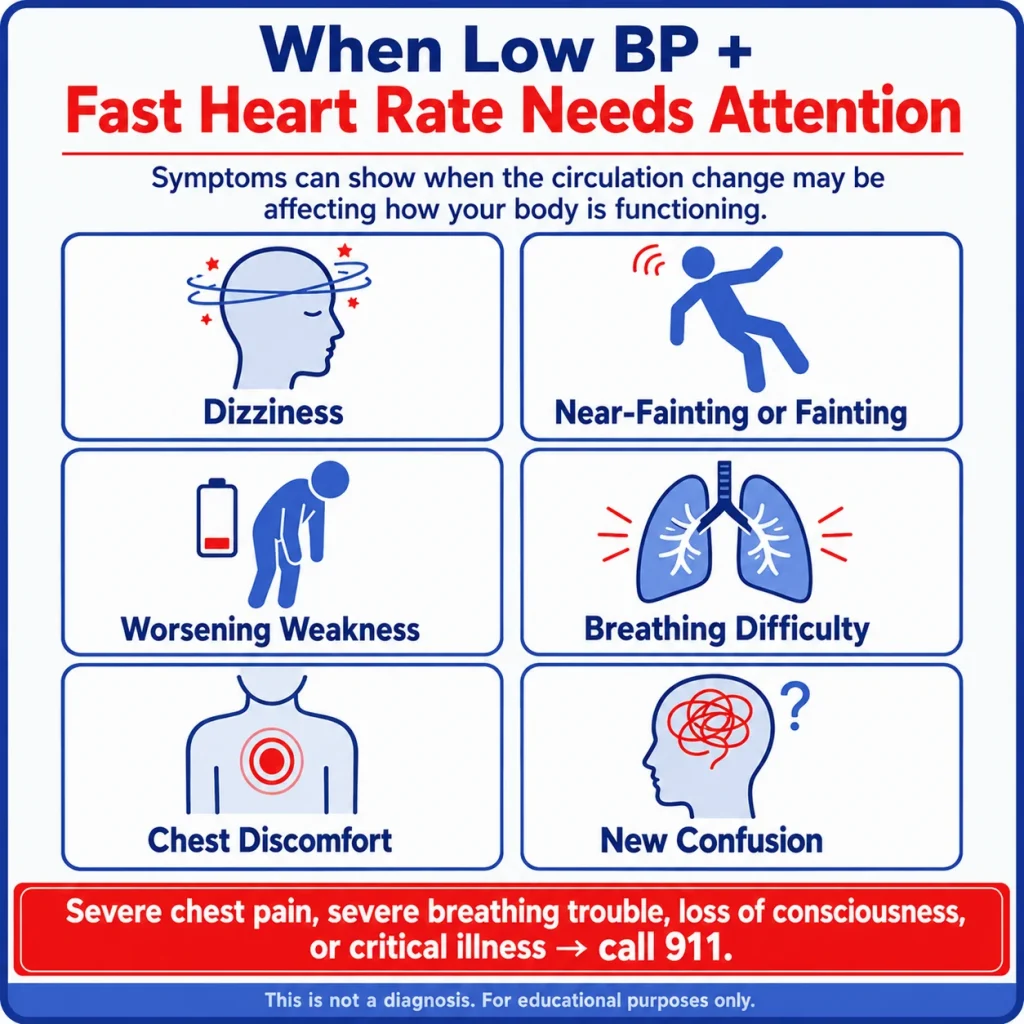
The combination becomes more concerning when it is a substantial new change, keeps recurring or persists, or is accompanied by significant dizziness, lightheadedness, near-fainting, fainting, confusion, worsening weakness, breathing difficulty, chest discomfort, clammy skin, or a general sense that the person is deteriorating.
MedlinePlus describes shock as a life-threatening state in which organs are not receiving enough blood and oxygen, with warning features that can include a rapid heartbeat, weak pulse, confusion, sweating, cool skin, or loss of consciousness. Those findings require emergency help. You do not need to determine whether the underlying problem is dehydration, bleeding, infection, a rhythm disturbance, or another circulatory issue before seeking evaluation.
If someone loses consciousness, has severe trouble breathing, severe chest pain, new confusion, or appears critically ill, call 911 rather than relying on continued home monitoring. Otherwise, when the pattern is new, persistent, and paired with concerning symptoms, in-person emergency evaluation can clarify what the numbers cannot.
Home numbers can alert you that something may be wrong, but the numbers do not explain why it is happening.
Emergency Evaluation in Angleton When the Pattern Feels Wrong
For people in Angleton and nearby Brazoria County communities, Angleton ER provides 24/7 emergency evaluation for sudden or worsening symptoms. Depending on the clinical picture, the ER doctor may use repeat vital signs, an EKG, lab testing, imaging, monitoring, IV treatment, or stabilization when medically appropriate. For heart-related symptoms such as a fast or irregular heartbeat with dizziness, fainting, breathing difficulty, or chest discomfort, the facility’s cardiac emergency care information explains the types of testing and monitoring that may be used during an ER visit. The goal is to evaluate the complete picture rather than diagnose the cause from home readings alone.
Frequently Asked Questions
What does low blood pressure with a high heart rate mean?
It means the circulation is showing two findings at the same time: lower pressure and a faster pulse. The pattern can occur for several reasons, so symptoms, baseline, persistence, and medical evaluation are more informative than the numbers alone.
Why can heart rate increase when blood pressure drops?
A faster heart rate can be one way the body tries to maintain blood flow when pressure falls. That response does not reveal the cause, and some rhythm problems can also produce a fast pulse.
Can dehydration cause low blood pressure with a fast heart rate?
Yes. Significant fluid loss can reduce circulating blood volume and may be accompanied by a faster pulse. But dehydration is only one possible explanation, so a concerning pattern should not be assumed to be “just dehydration.”
Should I worry if my blood pressure is low and my pulse is high but I feel okay?
A single unusual reading without symptoms may be less concerning than the same pattern with dizziness or fainting, especially if you normally run low. Pay attention to whether it is a meaningful change for you and whether it continues or symptoms develop.
Can a home blood pressure monitor reliably identify this pattern?
A validated upper-arm monitor can provide useful blood pressure information, and a pulse reading can add context. Home devices still cannot determine the cause or severity of the pattern, and wearable estimates may have additional limitations.
When should low blood pressure with a high heart rate be evaluated urgently?
Urgent evaluation is appropriate when the change is new and substantial, persists, or comes with significant dizziness, near-fainting, fainting, worsening weakness, confusion, breathing difficulty, chest discomfort, or a rapidly worsening overall condition. If symptoms appear life-threatening, call 911.