
Finding a Hard Lump Under the Skin Can Feel Alarming
Finding a new lump under your skin can be unsettling. It may happen suddenly while showering, getting dressed, rubbing a sore area, or noticing a bump that was not there before. If the lump feels hard, painful, deep, or unfamiliar, it is natural to wonder whether it could be something serious.
The reassuring truth is that not every lump is cancer. Many lumps under the skin are caused by common issues such as cysts, fatty tissue growths, infection, swelling after an injury, or inflammation. Still, a new lump should not be ignored just because it is small or painless.
A lump is more important to have checked when it is new, hard, growing, painful, infected-looking, fixed in place, or not going away. Medical evaluation can help determine whether the lump looks like something minor, needs treatment, or should be followed up with additional testing.
Why the feel of a lump matters, but does not give a diagnosis
The way a lump feels can give useful clues, but it cannot give a final diagnosis by touch alone. A provider may consider whether the lump is firm or soft, tender or painless, movable or fixed, shallow or deep, and whether the skin over it looks normal or irritated.
For example, a soft, movable lump may suggest one type of cause, while a hard, fixed, or rapidly growing lump may need closer evaluation. But these features overlap. A lump that feels harmless can still need attention if it is changing, and a painful lump may be caused by infection rather than something more serious.
That is why a medical exam matters. When needed, testing such as imaging or lab work can help clarify what is happening beneath the skin.
Common Reasons a Lump May Form Under the Skin
There are many possible reasons a lump can form under the skin. Some are minor and slow-moving, while others may need prompt care. The goal is not to diagnose the lump yourself, but to understand what patterns deserve attention.
Cysts
Cysts are common lumps that may feel round, firm, or movable under the skin. They can contain fluid or thicker material and may develop slowly. Some cysts stay small and painless, while others become irritated, swollen, tender, or inflamed.
A cyst may need evaluation if it becomes painful, red, warm, draining, or continues to grow. It is especially important not to squeeze or cut into a cyst at home because that can worsen irritation or introduce infection.
Lipomas
Lipomas are fatty lumps that are usually soft or rubbery and often grow slowly. Many are non-cancerous and may not cause symptoms. They are commonly movable under the skin and may be found on areas such as the arms, shoulders, back, or trunk.
Even though lipomas are often not dangerous, any new lump that is changing, painful, unusually firm, or concerning to you should be properly evaluated rather than assumed to be harmless.
Infection or abscess
An infected lump or abscess may feel painful, swollen, hot, or tender. The skin over it may look red or tight, and it may drain pus or fluid. Fever, chills, or feeling generally ill can also occur when infection is spreading or becoming more serious.
This is one of the situations where medical care should not be delayed. Skin infections can worsen quickly, and some may require medication, drainage by a medical professional, or further evaluation.
Injury-related swelling
A lump can also form after an injury, bruise, bite, fall, injection, or repeated irritation to the skin or soft tissue. Sometimes swelling improves on its own as the area heals.
However, swelling that gets larger, becomes harder, grows more painful, limits movement, or does not improve should be checked. A provider can help determine whether the lump is part of normal healing or whether there may be deeper swelling, infection, bleeding, or another issue.
Less common but more serious causes
Less commonly, a lump under the skin can be related to a tumor or another serious medical condition. This does not mean that every hard lump is dangerous, but it does mean certain changes should be taken seriously.
A lump that is growing, persistent, unusually firm, fixed in place, deep, or paired with other symptoms deserves medical attention. Early evaluation helps identify urgent findings when present and guides the right next step.
Lump Features That Should Be Checked by a Medical Provider
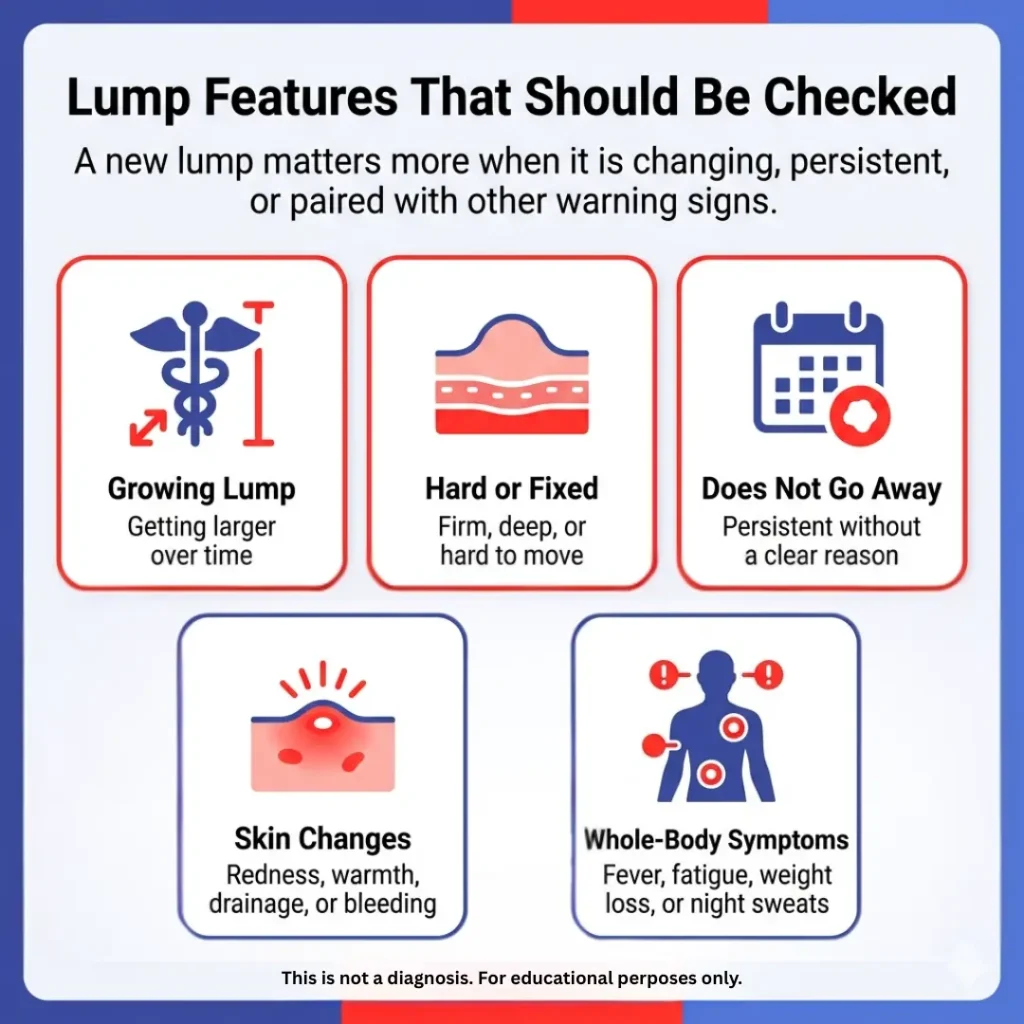
Some lumps can be watched briefly if they are clearly related to a minor injury and improving. But certain features are stronger reasons to schedule medical evaluation or seek urgent care.
A lump that is growing
Growth is one of the most important changes to pay attention to. A lump that becomes larger over days, weeks, or months should be evaluated, especially if it also becomes harder, more painful, deeper, or starts affecting movement.
Rapid growth may suggest infection, bleeding, inflammation, or another condition that needs prompt attention. Slower growth can still matter, especially if the lump does not go away or continues changing.
A lump that feels hard, fixed, or deep
A lump that feels very hard, does not move easily, or seems attached to deeper tissue should be checked. Some harmless lumps can feel firm, but a fixed or deep lump can be harder to evaluate without a medical exam.
If the lump feels different from anything you have had before, is difficult to move under the skin, or seems to be pressing into surrounding tissue, it is safer to have it assessed.
A lump that does not go away
A lump that persists should not be ignored, even if it does not hurt. Pain is not the only sign that something needs attention.
If a lump remains present, feels unchanged but unexplained, or continues to bother you, a medical provider can examine it and decide whether monitoring, imaging, treatment, or referral is appropriate.
A lump with skin changes
Skin changes over a lump can be important. Watch for redness, warmth, darkening, swelling, drainage, bleeding, ulceration, or skin breakdown.
These signs may suggest infection, inflammation, irritation, or another condition that needs evaluation. Skin that is opening, draining, or becoming increasingly painful should be checked promptly.
A lump with fever, fatigue, weight loss, or night sweats
A lump paired with whole-body symptoms deserves prompt medical attention. Fever or chills may point toward infection. Ongoing fatigue, unexplained weight loss, or night sweats can sometimes signal that something more than a simple skin bump is happening.
These symptoms do not automatically mean a serious diagnosis, but they are reasons not to dismiss the lump or wait too long for evaluation.
Painful vs Painless Lumps: Which Is More Concerning?
Pain can be helpful information, but it does not tell the whole story. A painful lump is not always dangerous, and a painless lump is not always harmless.
Painful lumps are often related to infection, inflammation, injury, pressure, or swelling around nearby tissue. Painless lumps may be slow-growing and non-urgent, but they can still need evaluation if they are hard, growing, persistent, fixed, or unexplained.
The safest approach is to look at the full picture: how long the lump has been there, whether it is changing, how it feels, what the skin looks like, and whether you have other symptoms.
When pain may suggest infection or inflammation
Pain with redness, warmth, swelling, drainage, fever, or chills may suggest infection or inflammation. A lump that becomes increasingly tender, hot, or swollen should be checked, especially if symptoms are spreading or worsening.
Do not try to drain an infected lump at home. Pressing, cutting, or squeezing it can push infection deeper, worsen swelling, or cause more skin damage.
Why a painless lump should still be taken seriously
Some lumps do not hurt at first. That can make them easy to ignore. But a painless lump still needs attention if it is new, hard, growing, fixed in place, deep, or persistent.
If you notice a lump that stays the same for a while but does not go away, it is still reasonable to have it examined. Evaluation can provide clarity and help determine whether follow-up is needed.
When a Lump Needs Urgent or Emergency Care
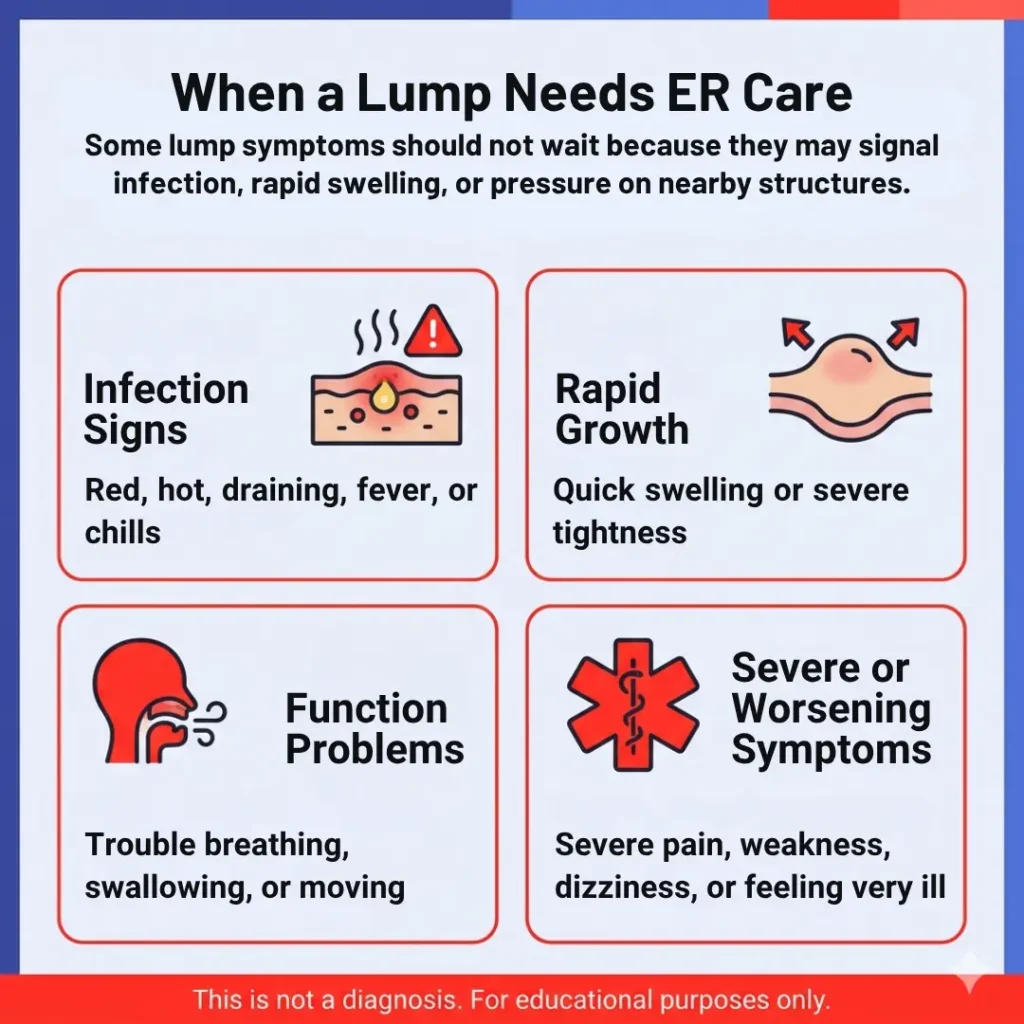
Not every lump requires emergency care. However, some symptoms should be evaluated quickly because they may suggest infection, rapid swelling, pressure on nearby structures, or a more urgent problem.
Signs of infection
Seek prompt care if a lump is red, hot, very painful, draining pus, spreading, or paired with fever or chills. These signs may indicate an infection that needs medical treatment.
Infections can sometimes worsen quickly, especially if redness spreads, pain increases, or you begin feeling ill.
Rapid growth or severe swelling
A lump or swelling that grows quickly should be checked promptly. This is especially important if it causes severe pain, tightness, limited movement, numbness, or pressure in the affected area.
Rapid swelling may occur with infection, injury, bleeding, inflammation, or other urgent concerns.
Trouble breathing, swallowing, moving, or using the affected area
A lump that interferes with breathing, swallowing, walking, gripping, bending, or using the affected area should not wait for routine follow-up.
Functional problems can mean the lump or swelling is affecting nearby structures. Prompt evaluation can help determine whether urgent treatment is needed.
Severe pain or symptoms that are worsening quickly
Severe pain, worsening swelling, weakness, dizziness, fever, chills, or feeling seriously ill are reasons to seek urgent care. Even if the lump itself seems small, worsening symptoms may point to a problem that needs immediate attention.
What to Expect During a Medical Evaluation for a Lump
A medical evaluation usually starts with questions and a physical exam. The goal is to understand what changed, how the lump behaves, and whether there are signs that require treatment or follow-up.
Physical exam and symptom history
A provider may ask when you first noticed the lump, whether it has grown, whether it hurts, and whether the skin has changed. They may also ask about recent injuries, bites, infections, fever, drainage, weight changes, night sweats, or other symptoms.
During the exam, the provider may check the lump’s size, texture, tenderness, movement, depth, and the condition of the skin around it.
Possible imaging or lab testing
Depending on the lump and your symptoms, imaging or lab tests may be recommended. Imaging can sometimes help show whether a lump appears fluid-filled, solid, inflamed, or connected to deeper tissue.
Lab testing may be considered if there are signs of infection or other concerning symptoms. Not every lump needs testing right away, but testing can help guide the next step when the exam raises concern.
Follow-up or referral
Some lumps may need monitoring. Others may need medication, drainage, specialist evaluation, biopsy, or additional testing outside the ER setting depending on the findings.
Emergency care focuses on identifying urgent concerns, treating serious symptoms, and helping guide appropriate next steps. If the lump is not an emergency but still needs follow-up, the provider may recommend seeing a primary care doctor, dermatologist, surgeon, or another specialist.
What Not to Do When You Find a New Lump
When you find a new lump, it is understandable to want answers quickly. Still, some actions can make the problem worse.
Do not squeeze, cut, or try to drain a lump at home. This can increase irritation, worsen infection, or cause skin injury.
Do not ignore a lump that is growing, persistent, hard, fixed, or unexplained. Even if it is painless, it may still need evaluation.
Do not assume a painless lump is harmless. Pain is only one clue, not a diagnosis.
Do not delay care if the lump is red, hot, draining, severely painful, or paired with fever or chills.
Do not rely only on internet photos or comparisons. Many lumps can look or feel similar but have different causes. A medical exam is the safest way to understand what may be happening.
How to Track Changes Before Your Appointment
If your symptoms are stable and you are not having urgent warning signs, tracking changes can help your provider understand the lump better.
Write down when you first noticed the lump. Pay attention to whether it is growing, shrinking, becoming harder, or changing shape. Track pain, redness, warmth, drainage, fever, or any new symptoms.
Try not to repeatedly press, squeeze, or irritate the area. Frequent checking can make the skin sore and may make it harder to tell whether the lump itself is changing.
If the lump is visible, taking a photo can help you compare changes over time. It may also help to write down anything that happened before the lump appeared, such as an injury, insect bite, skin infection, recent illness, injection, or irritation from clothing or activity.
If you are in Angleton or a nearby area and a new lump is painful, rapidly growing, infected-looking, or paired with fever, severe swelling, weakness, or worsening symptoms, Angleton ER provides 24/7 emergency care for urgent concerns. Our emergency team can evaluate severe symptoms, perform appropriate lab testing or imaging when needed, and help determine whether your condition needs immediate treatment, stabilization, or follow-up with the right provider.
Frequently Asked Questions
Is a hard lump under the skin always cancer?
No. A hard lump under the skin is not always cancer. Many lumps are caused by cysts, lipomas, infection, inflammation, or injury-related swelling. However, a new hard lump should be checked if it is growing, fixed, painful, persistent, deep, or unexplained.
When should I worry about a lump under my skin?
You should be more concerned if the lump is growing, very hard, fixed in place, painful, infected-looking, or does not go away. You should also seek medical attention if the lump is paired with fever, chills, unexplained weight loss, night sweats, weakness, or worsening symptoms.
Can a painless lump still be serious?
Yes. A painless lump can still need evaluation, especially if it is hard, growing, fixed, deep, or persistent. Some concerning lumps may not hurt at first, so pain should not be the only factor you use to decide whether to seek care.
What does it mean if a lump is hard and does not move?
A hard lump that does not move easily may be attached to deeper tissue or located beneath layers of skin and soft tissue. This does not automatically mean it is dangerous, but it is a reason to have the lump evaluated by a medical provider.
Should I go to the ER for a lump under the skin?
You may need emergency evaluation if the lump is very painful, rapidly growing, red, hot, draining pus, causing severe swelling, or paired with fever, chills, weakness, dizziness, trouble breathing, trouble swallowing, or difficulty using the affected area. If the lump is stable but persistent or unexplained, a medical appointment is still important.
Can an infected lump become dangerous?
Yes. An infected lump can worsen if the infection spreads or becomes deeper. Warning signs include increasing redness, warmth, swelling, severe pain, pus drainage, fever, chills, or feeling very ill. These symptoms should be checked promptly.
Can imaging tell what a lump is?
Imaging can often provide helpful information about a lump, such as whether it appears fluid-filled, solid, inflamed, or connected to deeper tissue. However, imaging is only one part of evaluation. A provider may also consider your symptoms, exam findings, medical history, and whether follow-up testing is needed.
What should I avoid doing if I find a new lump?
Avoid squeezing, cutting, poking, or trying to drain the lump at home. Do not repeatedly press on it or irritate the skin. Do not ignore it if it is growing, painful, infected-looking, persistent, or paired with other symptoms. A medical evaluation is the safest way to understand what may be causing it.