
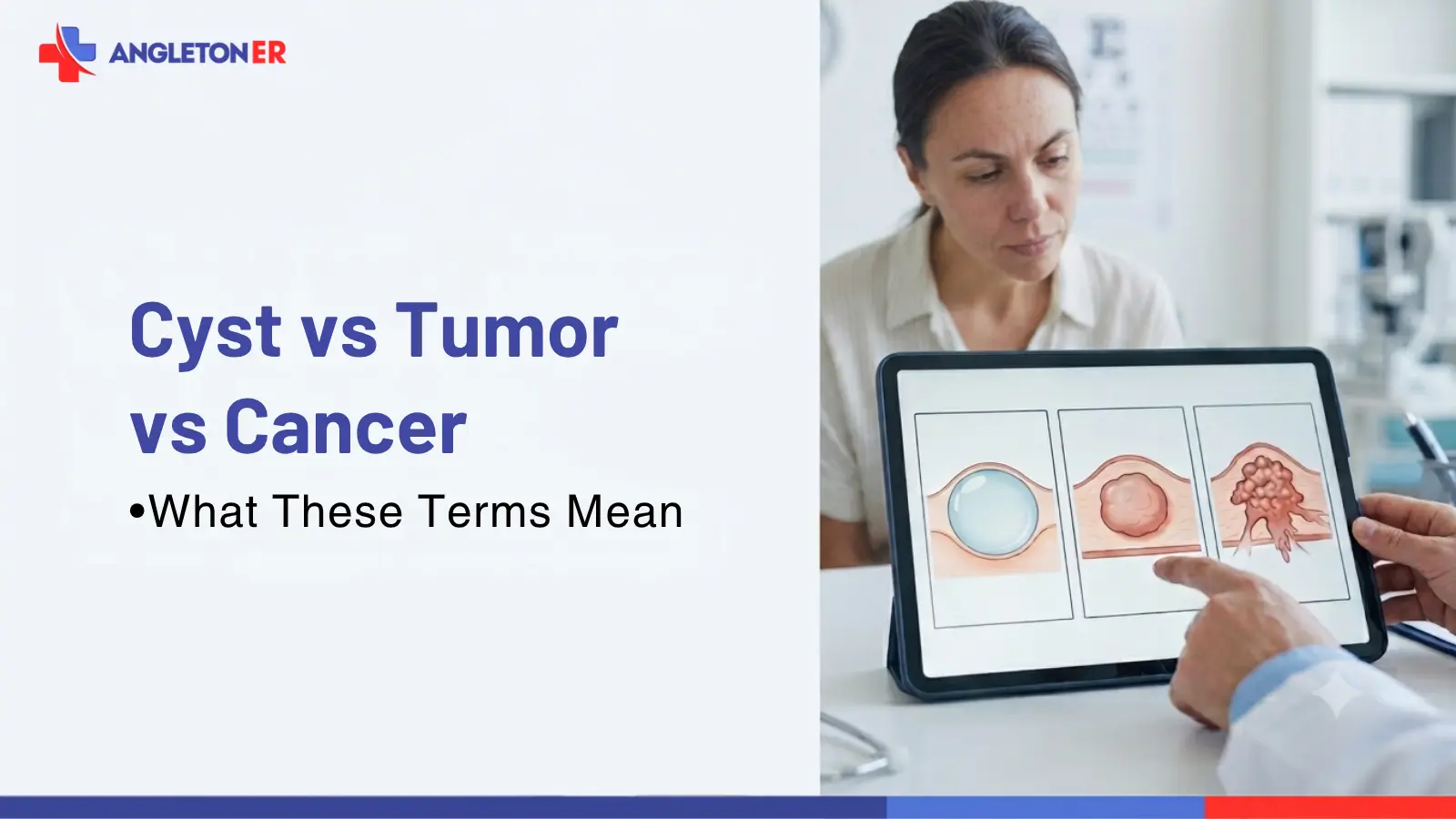
Finding a lump or hearing words like “cyst,” “tumor,” “mass,” “lesion,” or “neoplasm” can be unsettling. Many patients immediately worry that these terms mean cancer, but that is not always true. Some lumps are caused by fluid-filled cysts, infections, inflammation, fatty growths, scar tissue, or other non-cancerous conditions. Others may need more testing before a provider can explain what they are.
The important point is this: a medical term is not always a final diagnosis. A lump or abnormal finding should be evaluated based on where it is, how it feels, whether it is changing, what symptoms come with it, and what testing shows.
Why Medical Terms for Lumps Can Sound Scary
Medical language can sound more alarming than it actually is. Words like “tumor” or “mass” may feel frightening because people often connect them with cancer. In medicine, however, some of these words are broad descriptions. They may simply mean that a provider sees or feels something abnormal and needs more information.
A new lump, swelling, or abnormal imaging finding should not be ignored, but it also should not automatically be assumed to be cancer. Many lumps are benign, treatable, or related to infection or inflammation.
A Word on Medical Uncertainty
Doctors sometimes use broad terms until they know more. For example, a provider may describe an area as a “mass” before they know whether it is a cyst, an infection, a benign growth, or something more concerning. More information may come from a physical exam, imaging, lab work, drainage, biopsy, or follow-up with a specialist.
What Is a Cyst?
A cyst is usually a sac-like area that may contain fluid, air, or thicker material. Many cysts are non-cancerous. Some stay small and cause no symptoms. Others can become painful, inflamed, infected, or large enough to need treatment.
Cysts can develop in many parts of the body, including the skin, breast, ovaries, kidneys, joints, or deeper tissues. The meaning of a cyst depends on its location, size, symptoms, and appearance.
Can a Cyst Feel Like a Lump?
Yes. A cyst can feel like a lump under the skin. It may feel round, firm, smooth, movable, tender, or painless. Some cysts feel soft, while others feel harder depending on what they contain and how inflamed they are.
But touch alone cannot confirm that a lump is a cyst. A lump that feels like a cyst may still need evaluation, especially if it is new, changing, painful, infected-looking, or uncertain.
When a Cyst Should Be Checked
A cyst should be checked by a medical provider if it is growing, painful, red, warm, draining fluid or pus, or associated with fever. It should also be evaluated if it keeps coming back, becomes swollen again after improving, or you are not sure it is truly a cyst.
You should not try to cut, squeeze, or drain a cyst at home. This can worsen infection, cause bleeding, or make the area more inflamed.
What Is a Tumor?
A tumor generally means an abnormal growth of tissue. The word “tumor” does not automatically mean cancer. Tumors can be benign or malignant.
A provider may use the word tumor when referring to a growth that needs more evaluation. The next step depends on the location, symptoms, imaging findings, and whether the growth appears concerning.
Benign Tumor
A benign tumor is not cancer. It does not behave like cancer, but it may still need medical attention. Some benign tumors grow, press on nearby tissue, cause pain, affect movement, or create uncertainty because of their location or appearance.
Even when a tumor is believed to be benign, a provider may recommend monitoring, imaging, referral, or further testing depending on the situation.
Malignant Tumor
A malignant tumor means cancerous. Malignant tumors can invade nearby tissue and may have the ability to spread. This is different from a benign tumor, which does not behave that way.
If a malignant tumor is suspected, additional evaluation is needed through appropriate medical channels. An emergency room can help evaluate urgent symptoms, identify concerning findings, and guide next steps, but cancer diagnosis and treatment planning usually require specialist follow-up.
What Is a Mass, Lesion, or Neoplasm?
Patients often see these words on imaging reports or hear them during a medical visit. They can sound serious, but they are not all the same as cancer.
Mass
A “mass” is a general word for an abnormal area, lump, or growth. It does not tell you exactly what the lump is. A mass may turn out to be a cyst, infection, benign tumor, swollen lymph node, inflammatory area, or something more concerning.
The word “mass” usually means more context is needed before anyone can say what it represents.
Lesion
A “lesion” means an abnormal area of tissue. It can refer to many things, including inflammation, injury, infection, a skin change, or a growth. A lesion does not automatically mean cancer.
The meaning depends on where it is found, how it looks, and whether symptoms or testing suggest something urgent.
Neoplasm
A “neoplasm” means new or abnormal growth. Like “tumor,” it can be benign or malignant. The term itself does not tell the whole story. More evaluation may be needed to determine what kind of growth it is.
Cyst vs Tumor vs Cancer: The Main Difference
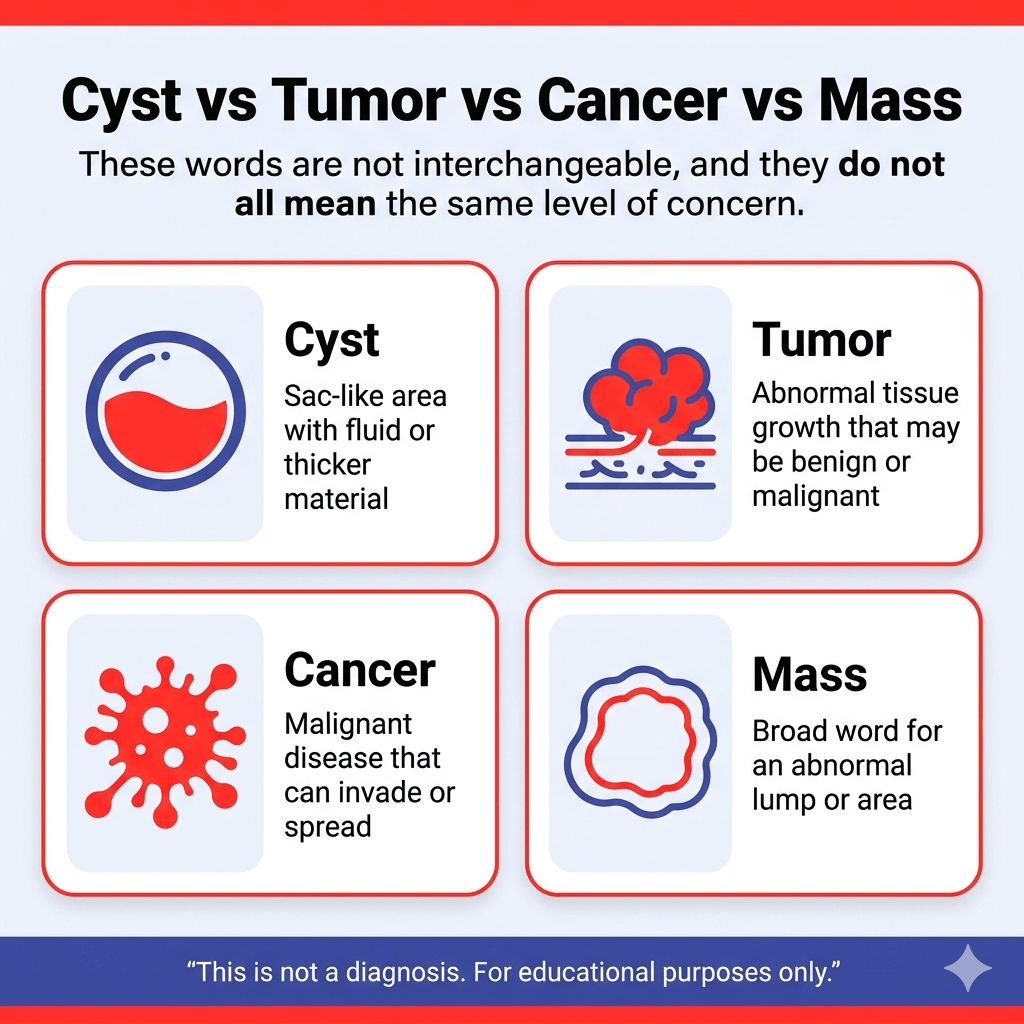
Here is the simplest way to understand the difference:
A cyst is often a sac-like structure that may contain fluid or other material. Many cysts are non-cancerous, though they can still become painful, infected, or require treatment.
A tumor is an abnormal tissue growth. It may be benign or malignant, so the word tumor by itself does not confirm cancer.
Cancer means malignant disease with concerning behavior, such as invading nearby tissue or spreading.
A mass is a broad descriptive term. It means there is an abnormal area, but it is not a final diagnosis.
Medical testing may be needed when the lump’s appearance, symptoms, growth pattern, location, or imaging findings are unclear.
Can You Tell by Touch Whether a Lump Is a Cyst, Tumor, or Cancer?
Many people try to judge a lump by touch. They may wonder whether it is hard or soft, painful or painless, movable or fixed. These details can be helpful, but they do not provide a reliable diagnosis by themselves.
Some harmless lumps can feel firm. Some painful lumps are caused by infection. Some concerning lumps may not hurt at all. That is why a medical evaluation is important when a lump is new, changing, persistent, or paired with other symptoms.
Clues That May Help, but Do Not Diagnose
A cyst may feel round or movable. A lipoma, which is a fatty growth, may feel soft or rubbery. An infected area may feel warm, swollen, tender, or painful. A more concerning lump may feel hard, fixed, deep, or persistent.
These features can guide evaluation, but none of them prove the diagnosis alone.
Why Medical Evaluation Matters
A clinician can examine the lump, ask about symptoms, and decide whether more evaluation is needed. Depending on the situation, that may include imaging, lab testing, drainage, monitoring, referral, or biopsy. Not every lump needs every test, but the right next step depends on the full picture.
When a Lump Should Be Checked by a Medical Provider
A lump should be checked if it is new and unexplained, growing, changing shape, hard, fixed, deep, painful, or infected-looking. It should also be evaluated if the skin over it changes, becomes red, warm, dimpled, darkened, or starts draining.
A lump that remains after the expected healing period should not be ignored. For example, swelling after a minor injury may improve gradually, but a lump that persists, enlarges, or feels unusual should be assessed.
You should also seek medical evaluation if a lump is paired with fever, night sweats, unexplained weight loss, severe fatigue, or other symptoms that feel concerning or unusual for you.
When to Seek Urgent or Emergency Care
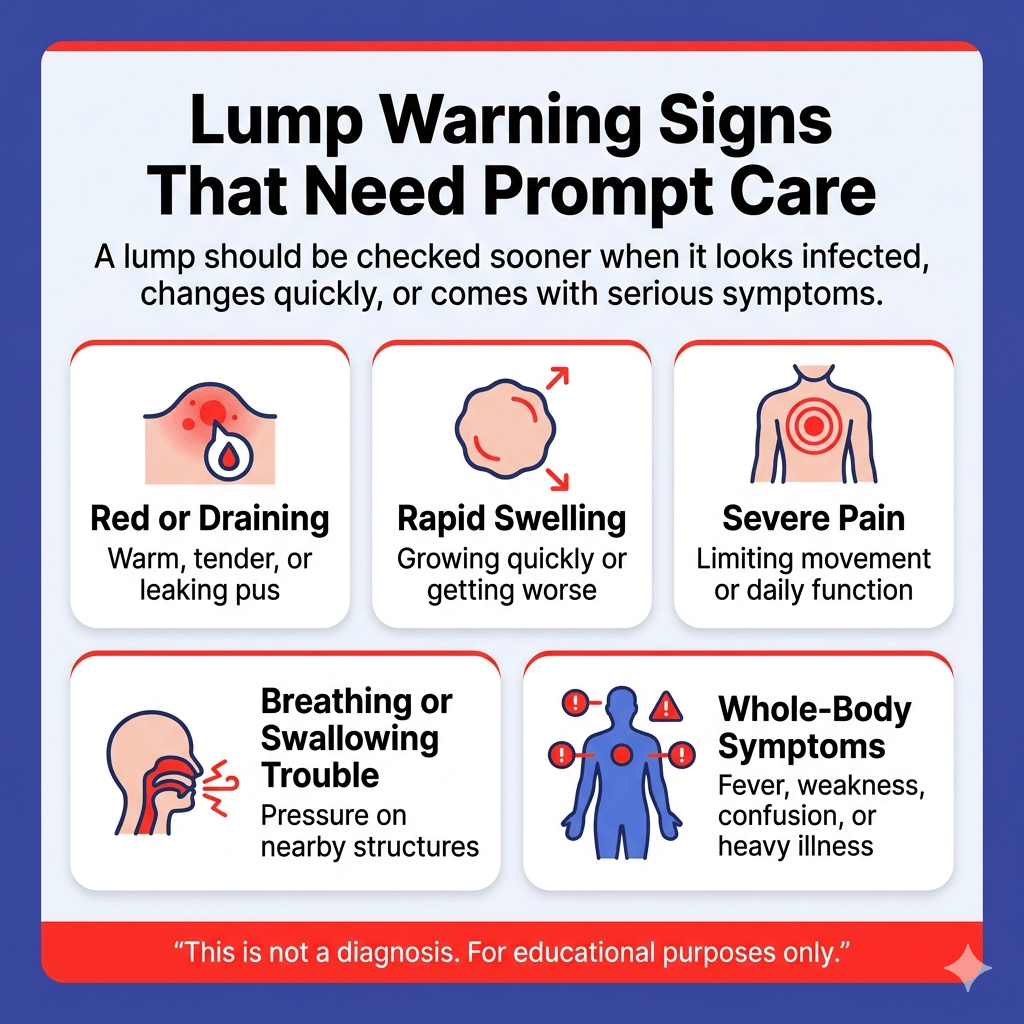
Some lumps can be evaluated through a scheduled medical visit. Others need urgent or emergency attention, especially when symptoms suggest infection, rapid swelling, severe pain, or effects on breathing, swallowing, movement, or overall health.
Signs of Infection
Seek prompt care if a lump or swollen area is red, warm, severely tender, draining pus, spreading, or associated with fever, chills, or feeling very ill. Infections can sometimes worsen quickly and may require medical treatment.
Rapid Swelling or Severe Pain
A lump or swelling that grows quickly, causes severe pain, limits movement, or affects nearby structures should be checked promptly. Rapid changes may point to infection, bleeding, inflammation, injury, or another urgent issue.
Serious Symptoms With a Lump or Abnormal Finding
Emergency evaluation may be appropriate if a lump or abnormal finding occurs with trouble breathing, trouble swallowing, chest pain, fainting, severe weakness, confusion, dehydration, or heavy bleeding. These symptoms should not be watched at home.
What to Expect During Evaluation
When you seek care for a lump, cyst concern, tumor concern, or abnormal mass finding, the provider’s goal is to understand what is happening and whether anything urgent needs attention.
Physical Exam and Symptom History
The provider may ask when the lump appeared, whether it has changed, whether it hurts, whether there was an injury, whether there are signs of infection, and whether you have fever or whole-body symptoms. They may examine the area for size, tenderness, warmth, movement, skin changes, drainage, or nearby swelling.
Imaging or Lab Testing
Depending on the location and symptoms, imaging may be recommended. Ultrasound, CT, or other imaging may help show whether an area appears fluid-filled, solid, inflamed, deep, or affecting nearby structures. Lab testing may be used when infection, inflammation, or systemic illness is suspected.
Imaging can provide important clues, but it does not always provide a final answer. Some findings require follow-up or additional testing.
Follow-Up, Referral, Drainage, or Biopsy
Some findings can be monitored. Others may need outpatient follow-up, specialist review, drainage if infected, or biopsy when the diagnosis remains uncertain. A biopsy may be recommended when a provider needs tissue information, but not every lump or cyst concern requires one.
What Not to Assume When You Hear These Terms
Do not assume every cyst is harmless if it is painful, infected, growing, or changing. Do not assume the word “tumor” always means cancer. Do not assume the word “mass” is a final diagnosis. These terms often need more context.
Also, do not ignore a lump simply because it does not hurt. Some important findings are painless. At the same time, do not rely on online photos to decide what a lump is, and do not try to drain or cut a lump at home.
If you are in Angleton or a nearby community and a lump is rapidly growing, severely painful, infected-looking, or paired with fever, weakness, trouble breathing, trouble swallowing, or other serious symptoms, Angleton ER provides 24/7 emergency care. Our emergency team can evaluate urgent symptoms, perform appropriate lab testing or imaging when needed, and help determine whether your condition requires immediate treatment, stabilization, or follow-up with another provider.
Frequently Asked Questions
Does a Tumor Always Mean Cancer?
No. A tumor means an abnormal growth of tissue, but tumors can be benign or malignant. A benign tumor is not cancer. A malignant tumor is cancerous. More evaluation may be needed to understand what type of tumor it is.
Are Cysts Cancerous?
Many cysts are non-cancerous, especially common skin cysts. However, a lump should be checked if it is painful, infected-looking, growing, changing, recurring, or uncertain. A provider can help determine whether it appears consistent with a cyst or needs further evaluation.
What Is the Difference Between a Cyst and a Tumor?
A cyst is usually a sac-like area that may contain fluid, air, or thicker material. A tumor is an abnormal tissue growth. A cyst is commonly non-cancerous, while a tumor may be benign or malignant depending on what it is.
What Does It Mean if an Imaging Report Says “Mass”?
“Mass” is a broad descriptive word. It means an abnormal area or lump was seen or suspected, but it does not automatically mean cancer. The meaning depends on the location, appearance, symptoms, and whether follow-up testing is needed.
Can You Tell if a Lump Is Cancer by Touching It?
No. Touch alone cannot confirm whether a lump is a cyst, benign growth, infection, or cancer. Features like hardness, pain, movement, and size can offer clues, but a medical evaluation is needed when a lump is new, changing, persistent, or concerning.
When Should I Get a Lump Checked?
You should get a lump checked if it is new, unexplained, growing, changing, hard, fixed, deep, painful, infected-looking, or associated with skin changes. You should also seek care if it comes with fever, night sweats, unexplained weight loss, severe fatigue, or other concerning symptoms.
Should I Go to the ER for a Painful or Infected Cyst?
Emergency care may be appropriate if the area is severely painful, red, warm, draining pus, spreading, or associated with fever, chills, weakness, or feeling very ill. You should also seek urgent care if swelling grows quickly or affects movement, breathing, swallowing, or nearby structures.
What Does Benign vs Malignant Mean?
Benign means non-cancerous. Malignant means cancerous or capable of invading nearby tissue or spreading. These terms are usually determined through medical evaluation, imaging, pathology, or specialist follow-up depending on the situation.