
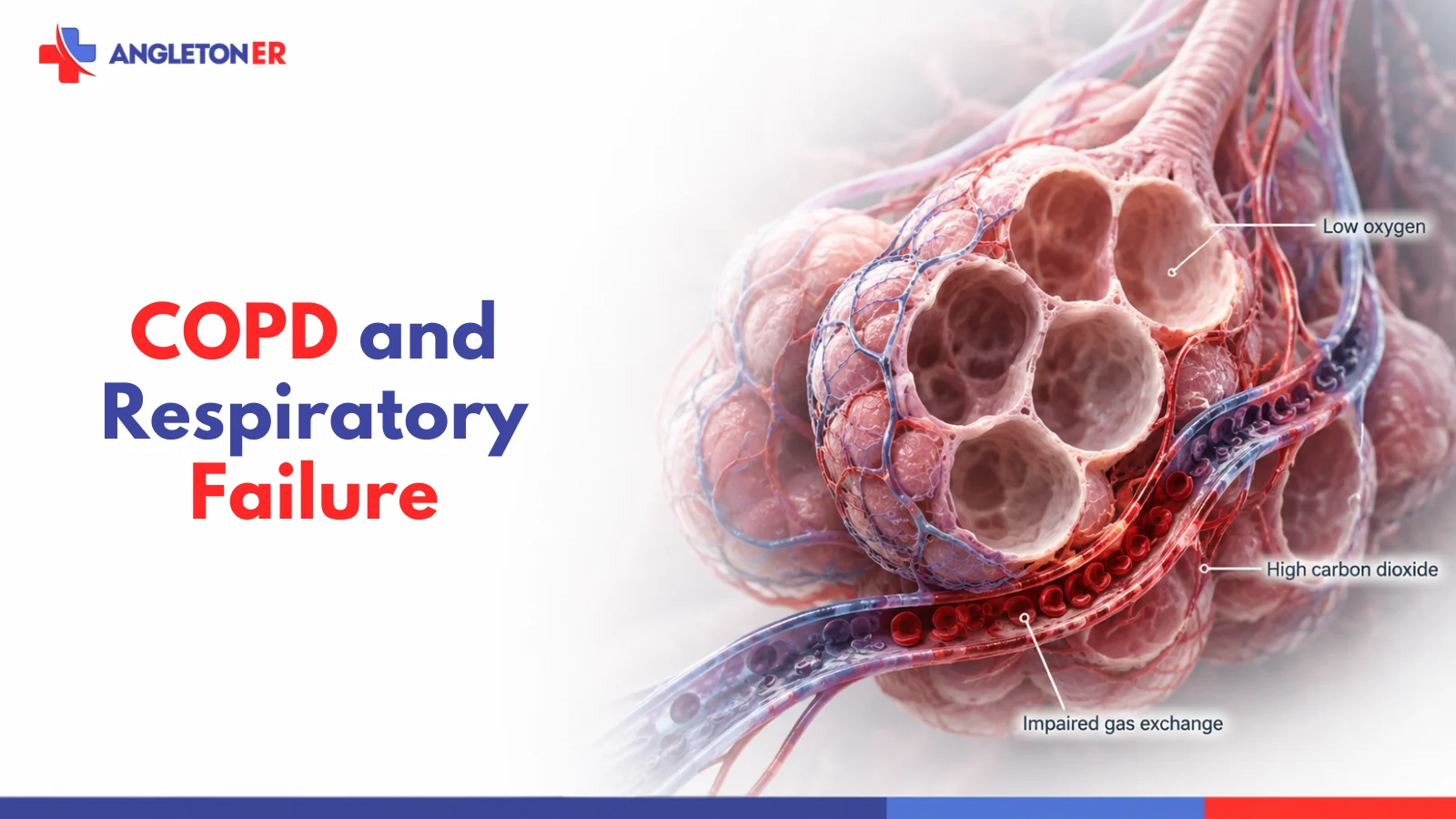
People with COPD often live with breathlessness, so a severe episode can be mistaken for routine worsening. Respiratory failure is different: the lungs are no longer maintaining gas exchange well enough for the body’s needs. A major change in breathing, ability to speak, alertness, or responsiveness can signal acute deterioration that requires emergency care.
What Does Respiratory Failure Mean in COPD?
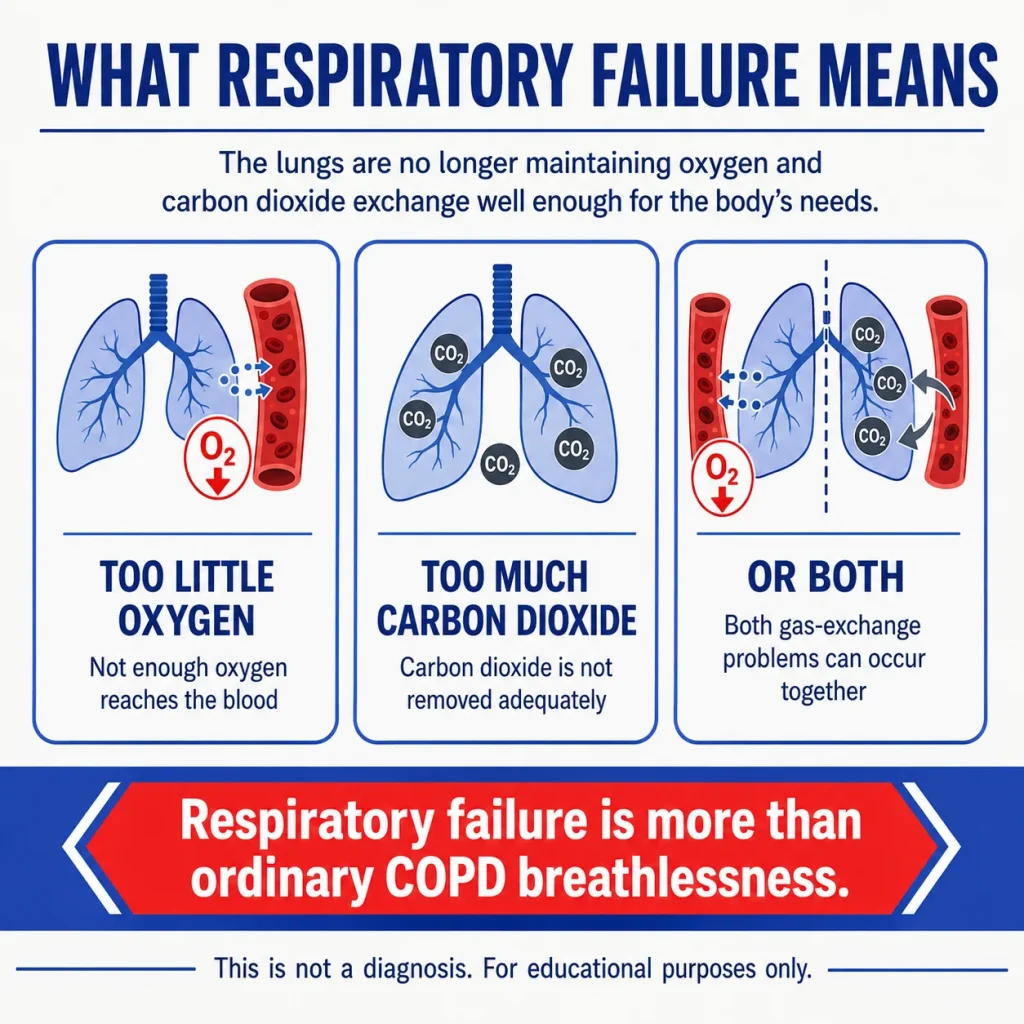
Breathing has two essential gas-exchange jobs: moving oxygen from the lungs into the bloodstream and removing carbon dioxide through the lungs. MedlinePlus describes respiratory failure as too little oxygen in the blood, too much carbon dioxide, or both.
Respiratory failure is not simply another term for shortness of breath. A person can have chronic COPD breathlessness without being in respiratory failure; the distinction becomes critical when the respiratory system can no longer adequately support the body. For general COPD background, see Angleton ER’s overview of chronic lower respiratory disease.
Why COPD Can Lead to Respiratory Failure
COPD can make it harder to move air effectively through the lungs. The National Heart, Lung, and Blood Institute (NHLBI) explains that COPD can narrow the airways and make it difficult to breathe out, interfering with oxygen and carbon dioxide exchange.
When respiratory reserve is limited, a severe COPD exacerbation, pneumonia or another infection, worsening airflow obstruction, or another acute illness can add enough stress to cause serious decompensation. These situations do not always cause respiratory failure, but they can create the setting for it.
Acute vs. Chronic Respiratory Failure
Chronic Respiratory Failure
Chronic respiratory failure develops gradually and may occur with advanced or longstanding lung disease. It describes persistent respiratory impairment over time, not simply a difficult day of breathing.
Acute Respiratory Failure
Acute respiratory failure develops quickly and can become life-threatening because oxygen delivery, carbon dioxide removal, or both may suddenly become inadequate. NHLBI guidance on respiratory failure identifies acute respiratory failure as an emergency requiring prompt treatment.
What Does “Acute-on-Chronic Respiratory Failure” Mean?
It means a sudden deterioration has occurred in someone who already has chronic respiratory impairment. The practical issue is the change from baseline: a person with an established breathing limitation has become significantly worse.
Respiratory Failure Is More Than a Low Oxygen Reading
Low blood oxygen can be part of respiratory failure, but the condition is not defined by one pulse-oximeter number. It may involve inadequate oxygen, excessive carbon dioxide, or both.
A home pulse oximeter estimates oxygen saturation; it does not directly show whether carbon dioxide is accumulating or explain why someone is deteriorating. The FDA advises people not to rely only on a pulse oximeter and to consider symptoms and how the person feels.
How Acute Respiratory Failure Can Look Different From Usual COPD Breathlessness
The key question is whether something has changed substantially from the person’s usual COPD pattern and whether the body may no longer be compensating as it normally does.
Breathing Becomes Severe or Rapidly Worse
A marked increase in breathing difficulty, inability to catch the breath, or breathlessness that escalates quickly is more concerning than familiar baseline symptoms. The speed and magnitude of the change matter.
Talking or Simple Activity Becomes Difficult
Struggling to speak normally because of breathlessness or being unable to tolerate basic activity can indicate substantial deterioration. NHLBI’s COPD emergency guidance includes difficulty catching the breath or talking among warning signs for emergency action.
New Confusion or Reduced Alertness
New confusion, unusual drowsiness, marked sleepiness, or reduced responsiveness is especially concerning when breathing is also worsening. Oxygen or carbon dioxide abnormalities can affect brain function.
Blue or Gray Lips, Skin, or Fingernails
Bluish or gray discoloration can accompany inadequate oxygenation and should be treated as a serious warning sign, particularly with severe breathing difficulty or altered alertness.
Why Changes in Alertness Matter as Much as Breathing Symptoms
Respiratory deterioration does not always present only as “I cannot breathe.” NHLBI respiratory-failure symptom guidance notes that low oxygen can cause drowsiness and high carbon dioxide can cause confusion; severe abnormalities can lead to extreme sleepiness or loss of consciousness.
For caregivers, a major mental-status change can be as important as visible breathing effort. Worsening breathing plus unusual sleepiness, confusion, difficulty staying awake, or reduced responsiveness should not be dismissed as fatigue from COPD.
How an Exacerbation or Infection Can Progress Into a More Serious Problem
An exacerbation or respiratory infection can increase respiratory stress when lung reserve is already limited. NHLBI notes that infections can trigger COPD flare-ups, but a flare is not the same as respiratory failure and most flares do not automatically progress to it.
The pattern to recognize is COPD baseline, then acute respiratory stress, then substantial deterioration that the body may no longer compensate for. Angleton ER’s respiratory infection guide covers cold, flu, COVID-19, and RSV differences in more detail.
CDC respiratory-illness guidance also identifies difficulty breathing, confusion, and inability to arouse as emergency warning signs in adults with respiratory virus complications.
When Acute Worsening Should Be Treated as an Emergency
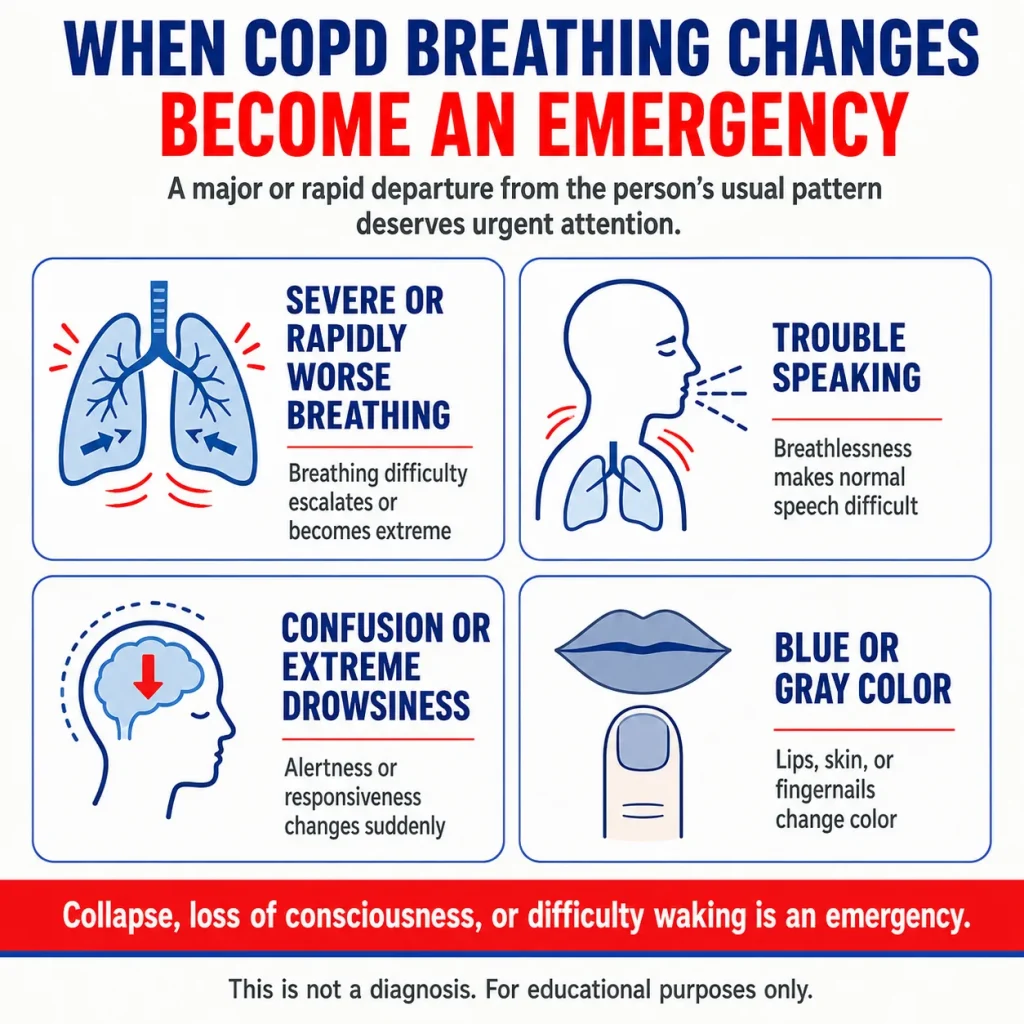
Seek emergency help for a major or rapid departure from the person’s usual respiratory status, particularly severe or rapidly worsening breathing difficulty; inability to catch the breath or speak normally; new confusion; extreme drowsiness or difficulty waking; blue or gray lips, skin, or fingernails; collapse; or loss of consciousness.
Acute respiratory failure can be life-threatening. NHLBI specifically advises calling 911 for sudden trouble breathing, confusion, or bluish skin or lips. Call 911 if the person is collapsing, losing consciousness, difficult to wake, or unsafe to transport.
What Doctors May Evaluate When Respiratory Failure Is Suspected
Emergency evaluation focuses on how effectively the patient is breathing, whether oxygen is adequate, whether carbon dioxide is accumulating, what may have triggered the change, and how severe the problem is.
Oxygen Assessment
Pulse oximetry is one tool used to estimate blood oxygen saturation. Clinicians interpret it with breathing effort, vital signs, examination findings, and the overall clinical picture rather than as a complete measure of respiratory function.
Blood Gas Testing
An arterial blood gas may be used to measure oxygen and carbon dioxide directly in arterial blood. MedlinePlus explains arterial blood gas testing as a way to assess how well the lungs move oxygen into the blood and remove carbon dioxide.
Evaluation for the Underlying Cause
Clinicians may also evaluate for an exacerbation, pneumonia or another infection, worsening airflow obstruction, or another acute problem contributing to the decline. Testing is selected according to the patient’s presentation.
Why Waiting for Severe COPD Symptoms to “Pass” Can Be Dangerous
People who live with COPD can become accustomed to difficult breathing and may normalize a dangerous change as “just my COPD acting up.” A major change in breathing effort, ability to talk, usual function, alertness, responsiveness, or overall respiratory status can be much more serious than ordinary chronic breathlessness.
When gas exchange becomes inadequate, respiratory failure can affect the brain and other organs. A pronounced or rapidly worsening change needs prompt evaluation rather than a wait-and-see approach at home.
Emergency Evaluation for Severe Breathing Changes in Angleton
If you or a family member with COPD develops severe or rapidly worsening breathing difficulty, new confusion, unusual drowsiness, trouble speaking because of breathlessness, or another major respiratory change, seek emergency care. Angleton ER provides 24/7 emergency care in Angleton for adults and children, including patients from nearby Brazoria County communities. When medically appropriate, evaluation may include on-site lab testing, oxygen assessment, monitoring, treatment for breathing problems, and on-site diagnostic imaging. If hospital-level or specialty care is required, the facility can coordinate transfer.
Frequently Asked Questions
What does respiratory failure mean in someone with COPD?
It means the lungs are no longer maintaining gas exchange adequately for the body’s needs. The blood may have too little oxygen, too much carbon dioxide, or both.
What is the difference between COPD and respiratory failure?
COPD is a chronic lung disease that limits airflow and may cause ongoing breathlessness. Respiratory failure is a serious complication in which oxygen and/or carbon dioxide exchange becomes inadequate.
What is acute-on-chronic respiratory failure?
It is a sudden respiratory deterioration in someone who already has chronic respiratory impairment. The person becomes significantly worse than their established baseline and needs urgent medical assessment.
Can a COPD exacerbation cause respiratory failure?
Yes. A severe exacerbation can contribute to respiratory failure, especially when lung reserve is limited. Infection or another acute illness may add further respiratory stress.
Can someone have respiratory failure even if they are still breathing on their own?
Yes. Respiratory failure describes inadequate gas exchange, not whether a person has stopped breathing or is using a breathing machine. A person can still be breathing spontaneously while oxygen or carbon dioxide is dangerously abnormal.
What symptoms may indicate respiratory failure in a person with COPD?
Concerning signs include severe or rapidly worsening breathing difficulty, trouble speaking, new confusion, unusual drowsiness, reduced responsiveness, or blue or gray discoloration. A major change from the person’s usual COPD pattern is important.
Why can confusion or extreme sleepiness occur during respiratory failure?
Inadequate oxygen delivery or excessive carbon dioxide can affect brain function. New confusion, marked drowsiness, difficulty staying awake, or loss of consciousness during worsening breathing is an emergency warning sign.
When should someone with COPD go to the emergency room for worsening breathing?
Go when breathing becomes severe, rapidly worse, or clearly different from the usual pattern, especially with difficulty talking, confusion, unusual sleepiness, blue or gray discoloration, collapse, or reduced responsiveness. Call 911 for life-threatening symptoms or unsafe transport.