
Neck pain traveling into an arm may be familiar. But what if a cup slips from your hand, keys are hard to hold, or gripping the steering wheel no longer feels secure? That change in function can matter more than the pain rating.
Cervical radiculopathy, sometimes called a pinched nerve in the neck, can affect strength as well as sensation. Radiating pain is not automatically an emergency. New weakness deserves prompt evaluation; sudden or rapidly worsening neurological symptoms may require emergency care.
What Is Cervical Radiculopathy?
Cervical radiculopathy develops when a nerve root leaving the neck is irritated or compressed. As the American Academy of Orthopaedic Surgeons explains, symptoms may extend into the shoulder, arm, or hand and can include pain, numbness, or muscle weakness. Symptoms vary.
Why Symptoms Can Travel From the Neck Into the Arm
Nerves that branch from the neck help carry signals for movement and sensation in the upper limbs. Its irritation may produce symptoms far from the neck. Disc or age-related changes can contribute, but symptoms alone cannot establish the cause.
Common Symptoms of a Pinched Nerve in the Neck
People may notice burning or shooting pain along the arm, pins-and-needles, a numb patch, or weakness in specific movements. Arm symptoms may occur without much neck pain. The American Academy of Physical Medicine and Rehabilitation describes how pain, sensation, and strength changes can appear in different combinations.
This article focuses on arm function. For a wider look at neck symptoms and emergency decisions, see Angleton ER’s neck pain emergency guide.
How Cervical Radiculopathy Can Affect Everyday Activities
A useful question is not simply “Does my arm hurt?” but “What have I stopped being able to do normally?” Describe the functional change to a clinician.
Trouble Gripping or Holding Objects
A person who could comfortably lift a mug yesterday may need two hands today. Turning a key, holding utensils, or keeping a steady grip on the steering wheel may become difficult. Pain can loosen grip, while nerve-related weakness can impair it. Either way, a new change warrants assessment.
Dropping Objects or Losing Hand Strength
Everyone drops something occasionally. A more meaningful pattern is repeated slipping of objects, especially when it happens alongside tingling, numbness, or an obvious decline in control. A phone may slip repeatedly, or tasks shift to the unaffected hand.
Do not force painful movements or perform home strength tests. Describe changes in ordinary activities.
Difficulty Using the Arm Normally
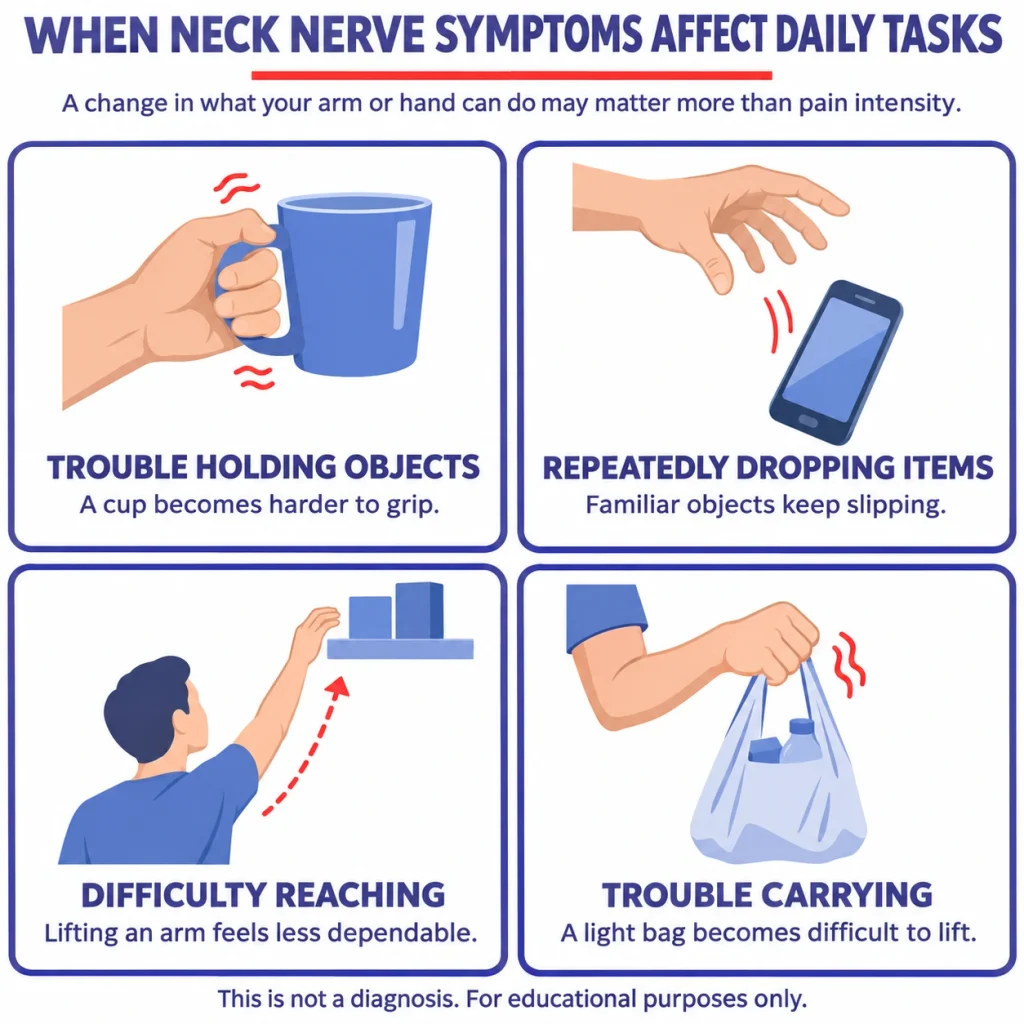
The change may involve the entire arm rather than the fingers: reaching to a shelf, lifting a grocery bag, or carrying a light item may no longer feel dependable. Pain-limited movement differs from a true loss of force, but distinguishing them at home is difficult. Avoid driving if you cannot control the wheel safely.
When Are Neck-to-Arm Symptoms Becoming More Concerning?
Symptoms That Are Present but Not Getting Worse
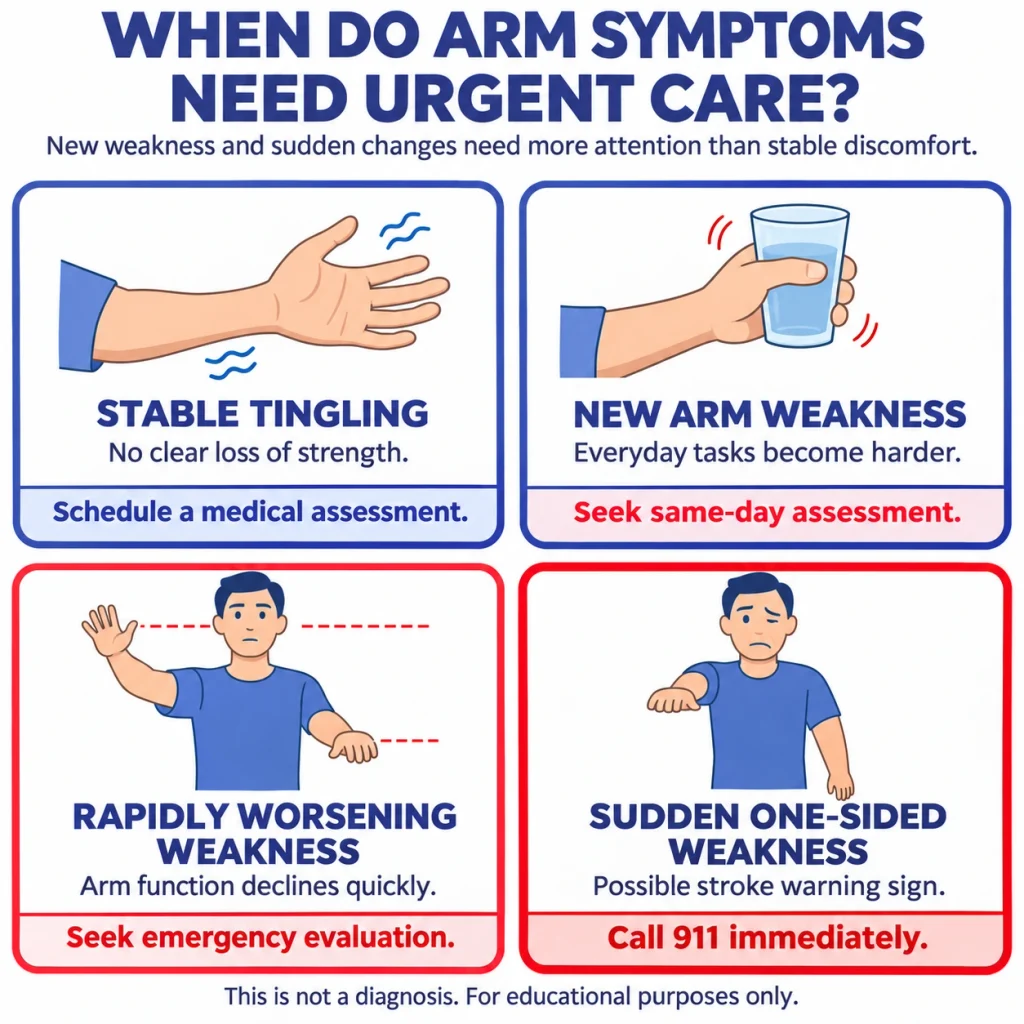
Intermittent tingling or radiating discomfort that remains stable, without a clear decline in strength, may be suitable for a scheduled clinical assessment rather than an ER visit. Persistent symptoms still merit an appointment, especially when they disrupt ordinary life.
New or Progressive Arm Weakness
If you could open a jar, lift a familiar object, or hold a cup last week but now struggle, arrange urgent medical assessment, preferably the same day. A decline over days differs from stable discomfort. The American Academy of Family Physicians notes that progression of an objective neurological deficit changes how cervical radiculopathy is evaluated and may lead to additional imaging or referral.
Do not wait through several weeks of self-care while definite weakness is advancing. Significant or rapidly increasing loss of strength belongs in an emergency evaluation.
Changes That a Family Member May Notice First
A spouse may notice a person repeatedly asks for help carrying items or leaves one arm unused while doing familiar tasks. These observations are useful. Say what changed, which side is affected, and approximately when it started; those details tell the clinician more than “the arm seems off.”
When Does Cervical Radiculopathy Require Emergency Care?
Sudden Arm Weakness or Other Stroke-Like Symptoms
Sudden weakness or numbness on one side is a 911 concern, even when neck pain is present. Facial drooping, trouble speaking, confusion, abrupt vision changes, or new loss of balance add to the concern. The CDC’s stroke warning-sign guidance advises calling 911 immediately for sudden neurological symptoms and not driving yourself. Symptoms that disappear after a few minutes still need emergency attention.
Rapidly Worsening Weakness or Loss of Arm Function
An arm that rapidly becomes harder to lift or a hand that loses the ability to hold ordinary objects needs immediate emergency assessment. New difficulty walking or loss of bladder or bowel control also warrants emergency attention; these findings should not be assumed to come from an isolated pinched nerve. The NHS identifies new coordination and walking problems among signs that may indicate a serious neurological emergency.
Neck-to-Arm Symptoms After an Injury
Pain, tingling, or weakness following a fall, collision, or hard blow needs greater caution. For a suspected serious neck or spinal injury, especially with loss of feeling or inability to move, call 911 and avoid unnecessary movement while awaiting trained responders. MedlinePlus emergency guidance identifies neck or spine injuries with loss of sensation or movement as reasons to request emergency help.
What Happens During a Medical Evaluation?
Understanding the Symptom History
A clinician will ask when symptoms began, whether they affect one or both arms, where pain or numbness travels, and whether there was an injury. Be ready to identify a task that recently became difficult and say whether the change was sudden, gradual, stable, or worsening. They help distinguish nerve-root symptoms from urgent alternatives.
Checking Arm Strength, Sensation, and Reflexes
The examination may compare movement and muscle strength on both sides, check areas of altered feeling, and test reflexes. Findings help determine whether the pattern fits a nerve root or requires urgent investigation.
When Imaging or Additional Testing May Be Considered
Not everyone with suspected cervical radiculopathy needs an immediate scan. The American College of Radiology’s imaging guidance distinguishes imaging choices by symptoms and clinical situation; MRI may be appropriate in selected cases, particularly when nerve involvement is suspected. The history and examination guide the decision.
If emergency imaging is indicated, the test depends on what the team needs to rule out. Angleton ER describes its on-site emergency imaging services as CT, X-ray, and ultrasound ordered when clinically appropriate; this does not mean an MRI is available there or that every person with arm symptoms will be scanned.
How to Describe Changes in Arm or Hand Function to a Clinician
Specific examples are more helpful than “my arm feels strange.” Explain the activity affected, the time you first noticed it, how often it happens, and whether it is improving or deteriorating. Mention any preceding crash, fall, or sudden onset. If symptoms change through the day, share what was different at your worst point.
For example: “Since yesterday afternoon, I have dropped my keys three times with my right hand; before that I had tingling for a week, but I could grip normally.” That describes timing, side, and lost function without presuming a diagnosis.
For persistent neck symptoms accompanied by hand tingling or weakness, MedlinePlus advises contacting a healthcare professional. If the weakness began suddenly, is severe, or is rapidly worsening, follow the emergency guidance above instead of arranging a routine visit.
Emergency Evaluation for Angleton and Brazoria County
For patients in Angleton and nearby Brazoria County communities, a new loss of arm or hand function may require urgent evaluation. Angleton ER provides 24/7 emergency care and can assess concerning neurological symptoms, examine strength and sensation, and determine which emergency tests or next steps are appropriate. Assessment does not guarantee any particular scan or specialist treatment. For sudden stroke-like symptoms, call 911 instead of driving to the facility.
Frequently Asked Questions
Is cervical radiculopathy the same as a pinched nerve in the neck?
Often, yes. “Pinched nerve in the neck” is a common description of cervical radiculopathy, which involves an irritated or compressed cervical nerve root.
Can cervical radiculopathy cause weakness in the hand or arm?
Yes. Some affected nerves contribute to muscle function, so weakness can accompany pain or numbness. The pattern requires a clinical examination.
Why do I keep dropping objects when I have neck and arm pain?
Altered sensation, pain, or reduced muscle strength can interfere with your grip. Repeated dropping that represents a new change deserves assessment, especially if your hand feels weaker.
Can cervical radiculopathy occur without severe neck pain?
Yes. Arm tingling, pain, or weakness may be more noticeable than the discomfort in the neck. Neck-pain intensity does not reliably describe how well the arm is functioning.
Does arm numbness without weakness require emergency care?
Stable numbness without other warning signs does not always require the ER, but should be discussed with a healthcare professional. Sudden one-sided numbness or numbness with stroke-like symptoms requires calling 911.
When should I seek emergency care for new or worsening arm weakness?
Go for emergency evaluation when weakness is severe, rapidly progressing, or causes a major loss of function. If it starts suddenly, particularly on one side, call 911 because stroke is a possibility.
Does cervical radiculopathy always require an MRI?
No. A clinician may first evaluate the history, strength, reflexes, and sensation. Imaging is selected when the findings and clinical concerns justify it, not automatically for every radiating arm symptom.