
The first sign may be a shirt button that suddenly seems difficult to fasten. A signature looks less familiar. Or someone who used to walk confidently through the house begins catching a foot on the rug. These changes may appear slowly and seem unrelated to the neck.
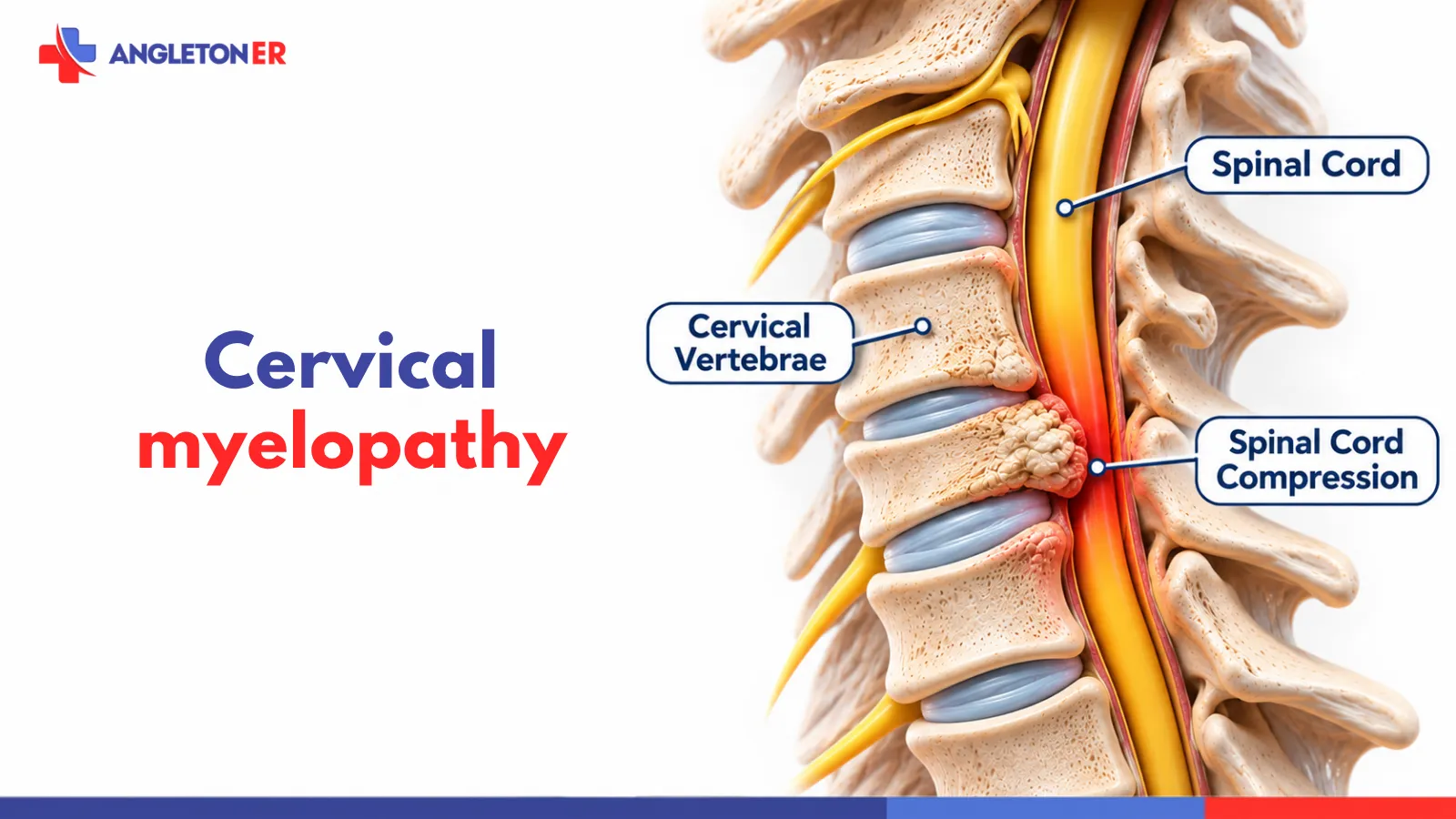
Cervical myelopathy is a problem affecting the spinal cord in the neck. It can change how the hands work and how the legs move, sometimes without much neck pain. The question is not simply whether something hurts, but whether everyday abilities are changing—and how quickly.
What Is Cervical Myelopathy?
The spinal cord carries movement and sensation signals between the brain and the body. When the cord is compressed in the cervical spine, those signals may be disrupted, affecting hand dexterity, strength, balance, or walking. Age-related narrowing is one common cause, but a clinician must determine what is behind the symptoms.
Unlike irritation of a single nerve root, which may produce symptoms along one arm, spinal cord dysfunction can affect the hands and legs together. Johns Hopkins Medicine explains that cervical myelopathy can occur even without neck pain. Symptoms alone do not establish the diagnosis.
Hand Changes That May Be Early Signs of Cervical Myelopathy
Difficulty Fastening Buttons or Handling Small Objects
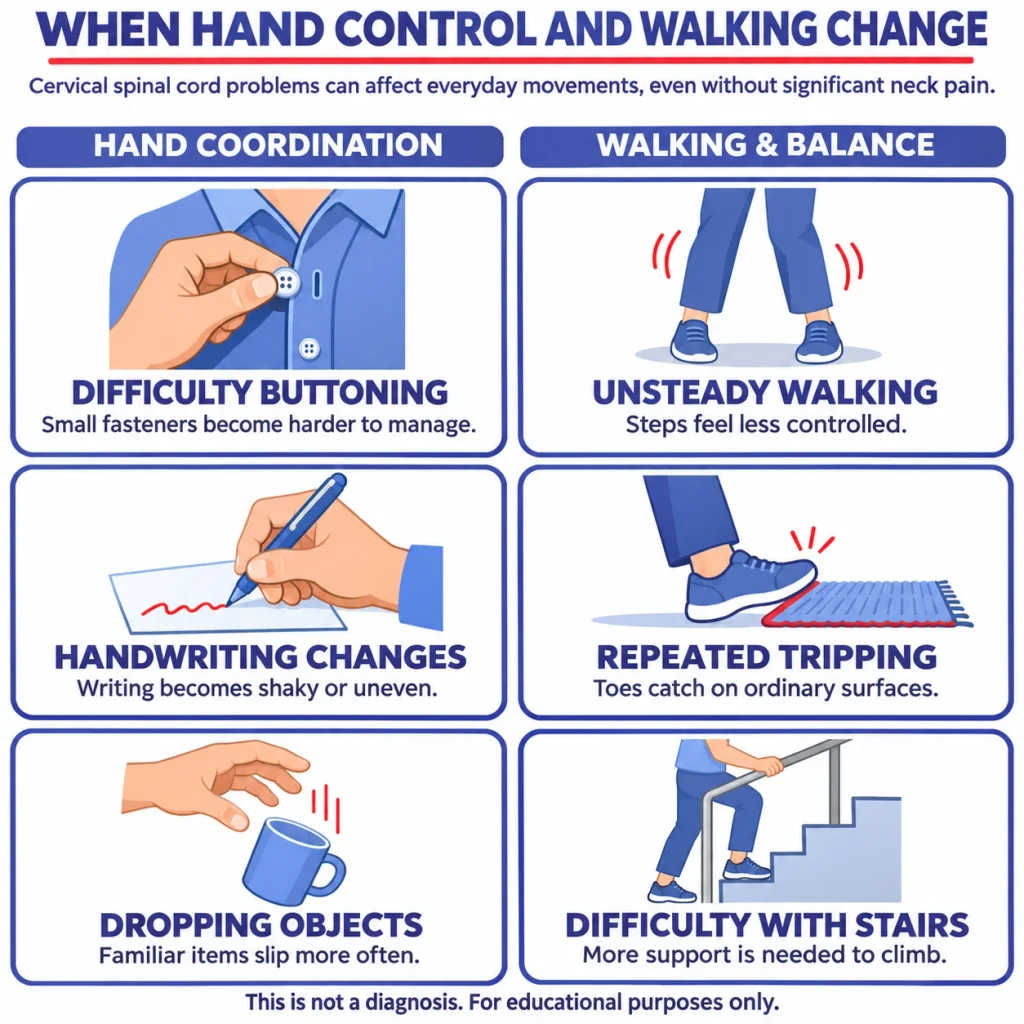
A person may need several attempts to close a button, pull a zipper, pick up coins, or sort medication into a pill organizer. The task is familiar; the fingers no longer seem to follow the intended movement as smoothly. Changes in fine motor control can be meaningful even without severe discomfort.
Changes in Handwriting or Finger Coordination
Handwriting may become smaller, shaky, uneven, or harder to control. Holding a pen or tapping a phone screen may require unusual concentration. These are changes worth describing to a clinician, especially if they persist or appear alongside other difficulties. The American Academy of Orthopaedic Surgeons identifies impaired handwriting and buttoning as characteristic dexterity problems.
Dropping Objects or Losing Hand Control
A mug slipping from the hand once is not proof of a spinal cord disorder. Repeatedly fumbling objects, struggling with a familiar grip, or noticing declining hand strength deserves closer attention. The useful details are what changed, whether one or both hands are involved, and whether coordination continues to decline.
How Cervical Myelopathy Can Affect Walking and Balance
Feeling Unsteady While Walking
The legs may feel stiff, awkward, or difficult to coordinate. A person may widen their stance, reach for furniture, or become less confident on an ordinary walk. The problem can be more noticeable when turning or navigating a crowded room, even when the neck feels relatively comfortable.
Stumbling, Tripping, or Experiencing Repeated Falls
A new pattern of catching the toes, veering off course, or falling is more concerning than a single misstep. Falls can have many causes, so the pattern matters: Has walking changed at the same time as hand control, weakness, or sensation? A review of degenerative cervical myelopathy in American Family Physician describes gait disturbance, falls, and reduced hand dexterity among its recognized clinical features.
Difficulty With Stairs or Everyday Movement
Someone may begin taking stairs one at a time, gripping the railing more tightly, or avoiding outings because they are afraid of losing balance. These functional changes give a clinician more information than a general statement that the legs feel strange. Do not attempt balance drills or difficult stairs to “test” symptoms; prevent falls and arrange assessment.
Why Changes in Both Hand Coordination and Walking Matter
When Several Everyday Activities Become Difficult
Imagine a person who struggles to sign a receipt, needs help with shirt buttons, and has started stumbling in the hallway. Each issue might have several explanations on its own. Together, they raise the possibility of a problem affecting the spinal cord rather than only a hand joint or an individual arm nerve. They warrant a focused neurological assessment.
Changes Family Members May Notice First
Relatives may notice that someone walks more stiffly, uses the wall for support, asks for help getting dressed, or writes noticeably differently than they did a few months ago. Their observations can help establish a timeline, particularly when the person has adjusted to the changes and no longer recognizes how much function has declined. Observations are clues, not a diagnosis.
When Do Cervical Myelopathy Symptoms Require Urgent Medical Attention?
Gradually Developing Hand or Walking Problems
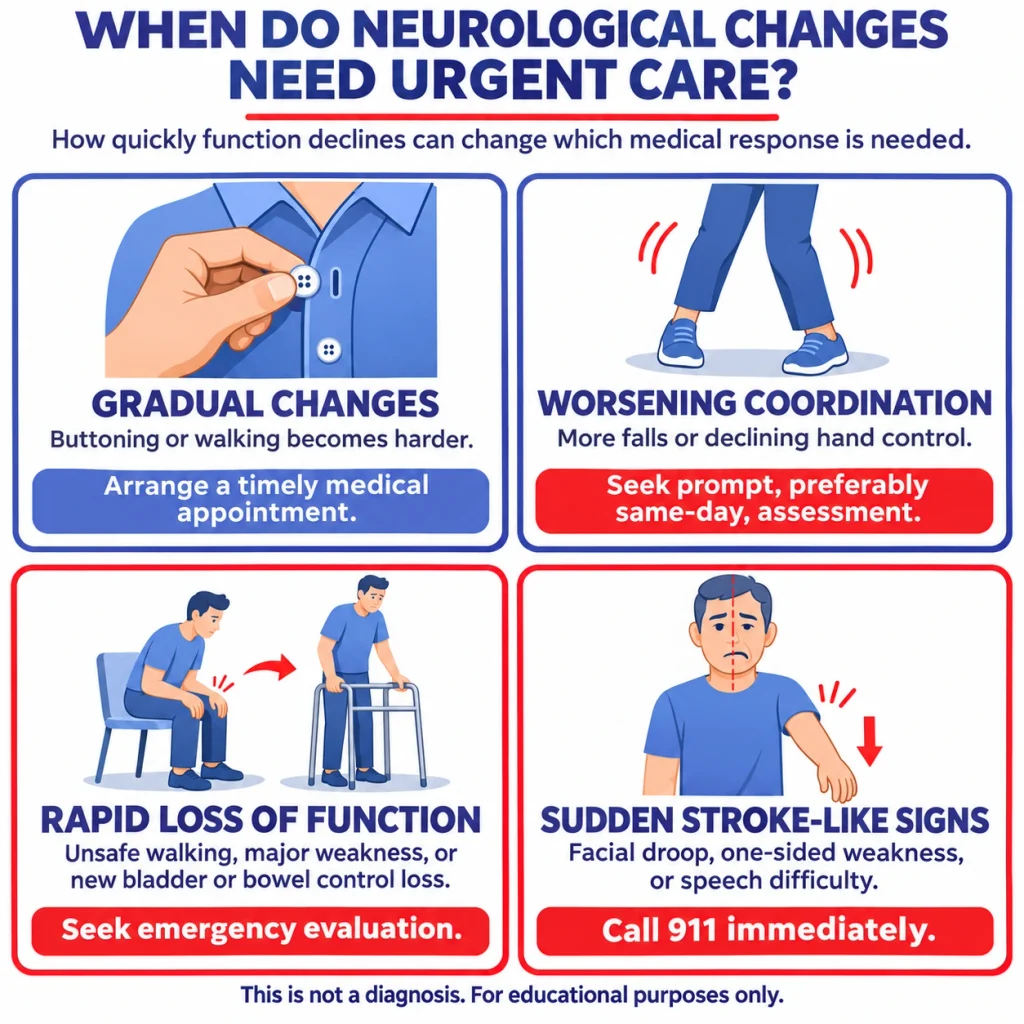
A gradual change still calls for a timely medical appointment, particularly when buttoning clothes, writing, walking, or maintaining balance has become harder. Do not postpone assessment for months solely because the changes began slowly. Primary-care guidance on degenerative cervical myelopathy emphasizes prompt recognition and evaluation because delayed diagnosis can affect outcomes.
New or Progressively Worsening Weakness and Coordination Problems
Arrange prompt, preferably same-day, clinical assessment when weakness is worsening, falls are becoming frequent, or hand use is noticeably deteriorating. If walking is unsafe or neurological function is declining quickly, go to an emergency department. Tell the evaluating team whether the change happened over hours, days, or weeks. The NHS lists new walking difficulty and sudden loss of coordination among medical emergency signs.
Rapid Deterioration or Sudden Loss of Function
Major new weakness, suddenly being unable to stand or walk safely, or new loss of bladder or bowel control needs emergency evaluation. Do not drive if you cannot move safely. Sudden facial drooping, one-sided weakness, speech difficulty, or abrupt severe balance problems may signal a stroke—not cervical myelopathy. CDC stroke guidance says to call 911 immediately for these symptoms, even if they improve.
How Doctors Evaluate Possible Cervical Myelopathy
Reviewing Changes in Hand Function and Walking
A clinician will ask which task became difficult first, when it began, how often problems occur, and whether symptoms are progressing. Details about falls, changes in daily independence, numbness, and any prior neck condition help build the clinical picture.
Checking Strength, Reflexes, Coordination, and Balance
The neurological examination may assess muscle strength, sensation, reflexes, and the way a person moves. Findings can help distinguish possible spinal cord involvement from other explanations for clumsiness or unsteadiness. No at-home hand or balance test reliably replaces this evaluation.
When Imaging May Be Needed
If the history and examination suggest myelopathy, clinicians commonly consider cervical spine MRI to evaluate the cord and surrounding structures. American College of Radiology imaging guidance describes MRI as an appropriate initial examination for suspected myelopathy. Whether imaging is needed immediately, where it is performed, and what further care follows depend on the findings; no particular scan is guaranteed at an emergency visit.
What to Tell a Doctor About Changes in Hand or Walking Function
Start with the first specific activity that changed. State when it started; whether one or both hands are affected; whether balance, stairs, or walking have changed; and whether symptoms have progressed over days, weeks, or months. Mention falls and observations from family members. If possible, describe what you could do before that you cannot do reliably now.
For example: “Over the past three weeks, fastening buttons has become difficult with both hands. This week I started stumbling on the way to the kitchen.” That gives a clearer picture of function and timing than saying only, “My neck feels stiff.” For broader neck-pain emergency decisions, see Angleton ER’s neck pain guidance.
Emergency Evaluation for Neurological Changes in Angleton
For families in Angleton and surrounding Brazoria County communities, new or worsening difficulty walking, using the hands, or maintaining muscle strength may require prompt evaluation. Angleton ER provides 24/7 emergency care and can assess concerning neurological symptoms and determine appropriate next steps based on the patient’s condition. If symptoms suggest stroke or another immediate threat, call 911 rather than arranging your own transport. Angleton ER’s stroke warning-sign guidance explains additional signs that require emergency action.
Frequently Asked Questions
What are the early symptoms of cervical myelopathy?
Early changes may include clumsy hands, difficulty with small objects, altered handwriting, unsteady walking, or increased stumbling. Symptoms vary, and a clinician must assess their cause.
Can cervical myelopathy affect handwriting or the ability to button clothes?
Yes. Compression affecting the cervical spinal cord can interfere with fine finger coordination. A persistent or worsening change in either activity merits medical review.
Why does cervical myelopathy cause walking and balance problems?
The cervical spinal cord carries signals needed for coordinated movement below the neck. Dysfunction there can affect leg control and walking stability.
Can cervical myelopathy develop without significant neck pain?
Yes. Some people primarily notice hand clumsiness, weakness, or gait changes rather than neck discomfort. Lack of pain does not rule out neurological dysfunction.
Do cervical myelopathy symptoms always get worse over time?
The course varies. Symptoms may progress slowly or in steps, and some people remain relatively stable for a period. New deterioration still requires reassessment.
When should someone seek emergency care for cervical myelopathy symptoms?
Emergency evaluation is appropriate for rapid neurological decline, inability to walk safely, major new weakness, or new loss of bladder or bowel control. Call 911 for sudden stroke-like signs such as facial droop or speech trouble.
How do doctors determine whether hand and walking problems are related to cervical myelopathy?
They consider the symptom history and neurological examination together, then select imaging—often cervical MRI—when indicated. Other conditions can produce similar symptoms, so the diagnosis is not made from hand or walking changes alone.