
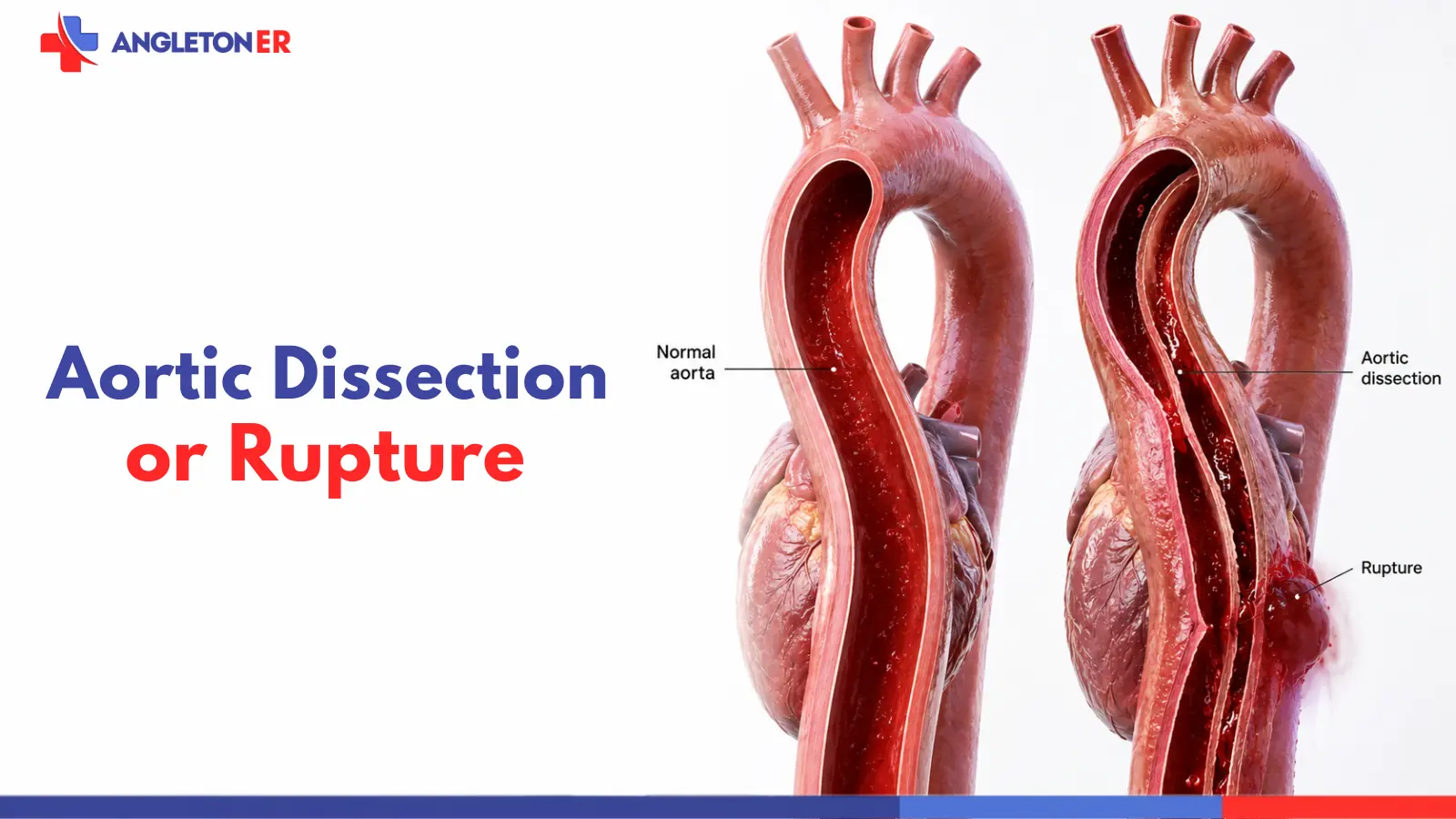
A sudden, severe, unexplained pain in the chest, upper or middle back, or abdomen can have many causes. One of the most dangerous possibilities is an acute injury to the aorta—the body’s main artery. The American Heart Association describes aortic dissection and rupture as life-threatening aortic emergencies. When the symptom pattern is abrupt, severe, and dramatically different from what is normal for you, the priority is emergency evaluation—not waiting for the pain to become “classic” or trying to prove the diagnosis at home.
What Do Aortic Dissection and Aortic Rupture Mean?
MedlinePlus explains that an aortic dissection begins with a tear or injury in the wall of the aorta. Blood can track between layers of the vessel wall, creating a separation that may interfere with blood flow to organs or extend along the aorta.
An aortic rupture means the wall has lost its integrity and blood is escaping outside the vessel, causing severe internal bleeding. A dissection can also progress to rupture. The anatomy is different, but the patient-level message is the same: both can become rapidly life-threatening and require immediate medical assessment.
What Sudden Symptoms Can Signal an Aortic Emergency?
The most important clue is not one magic pain word. It is the overall pattern: sudden onset, unusual severity, and a symptom that feels markedly different from your normal aches or discomfort. The National Heart, Lung, and Blood Institute notes that aortic dissection can produce chest pain, back pain, pain between the shoulder blades, abdominal discomfort, or symptoms that resemble a heart attack or stroke.
Chest or upper-back pain. Pain may begin abruptly and be severe from the start. It may stay in one area or change location as the aorta or its branches become involved.
Abdominal pain. An acute aortic problem can also present with sudden severe abdominal pain, particularly when the affected portion of the aorta extends lower through the chest or abdomen.
Symptoms beyond pain. Because the aorta supplies major organs and limbs, reduced blood flow can produce neurologic symptoms, weakness, breathing difficulty, or other signs that the circulation is being affected.
If the main symptom is sudden or severe chest discomfort and you are unsure what is causing it, Angleton ER’s information on emergency evaluation for chest pain and cardiac symptoms reinforces the same practical point: a dangerous cause cannot be sorted out safely from symptoms alone.
What Warning Signs Suggest the Person May Be Becoming Unstable?
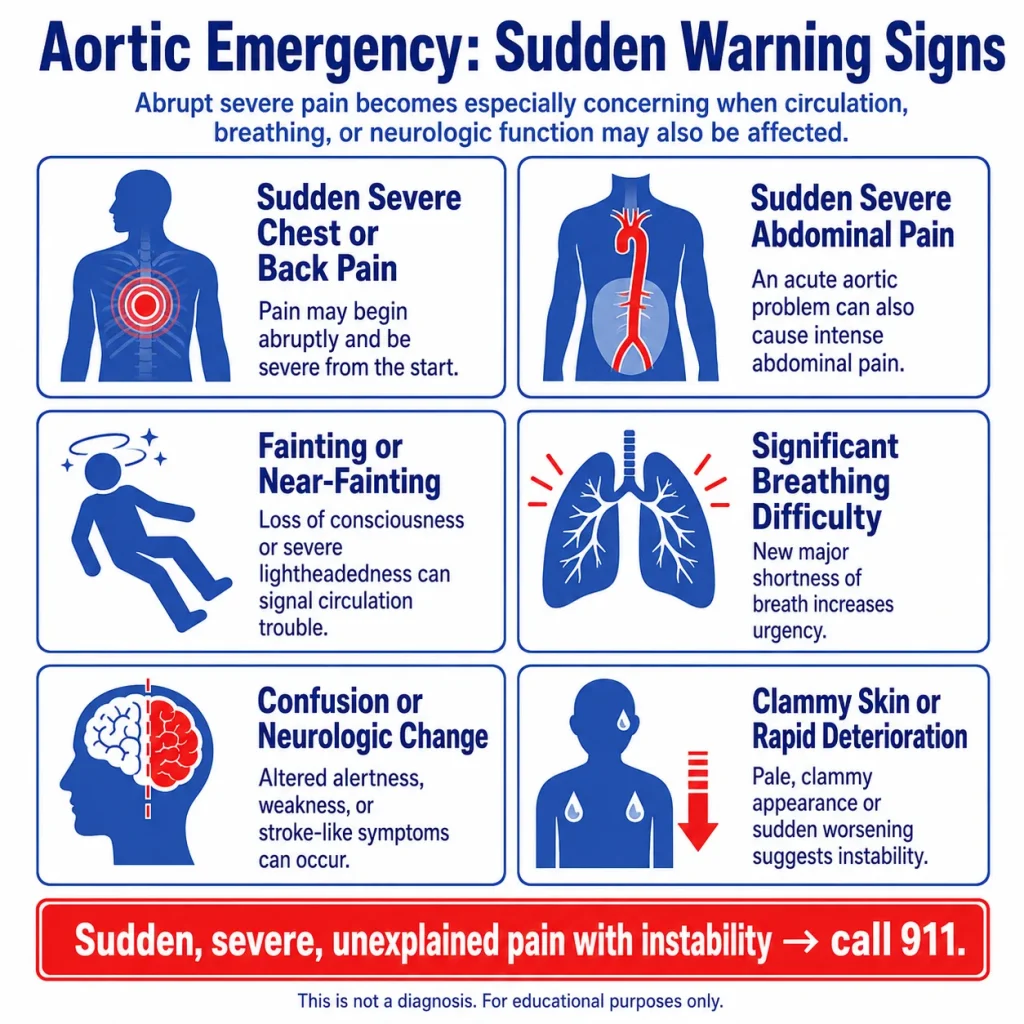
Pain becomes especially concerning when it is followed by signs that the brain, lungs, or other organs may not be receiving adequate circulation. The Society for Vascular Surgery lists fainting, breathlessness, stroke-like symptoms, limb weakness, and pulse changes among possible presentations of aortic dissection.
Fainting or near-fainting. A sudden loss of consciousness, severe lightheadedness, or a feeling that you may pass out can signal a major circulatory problem.
Severe weakness, confusion, or altered alertness. These changes can occur when blood flow to the brain or other organs is compromised and should not be watched at home.
Significant shortness of breath or a very ill appearance. Breathing difficulty, pale or clammy skin, profound weakness, or rapid deterioration after symptoms begin increases the urgency.
Do not use a home pulse or blood-pressure number to decide whether rupture or shock is present. A person can be critically ill without a particular home threshold. A history of hypertension is relevant risk context, and Angleton ER separately explains when high blood pressure with serious symptoms needs emergency evaluation, but the decision in a suspected aortic emergency should be driven by the acute clinical picture rather than a self-set cutoff.
How Is This Different From an Abdominal Aortic Aneurysm?
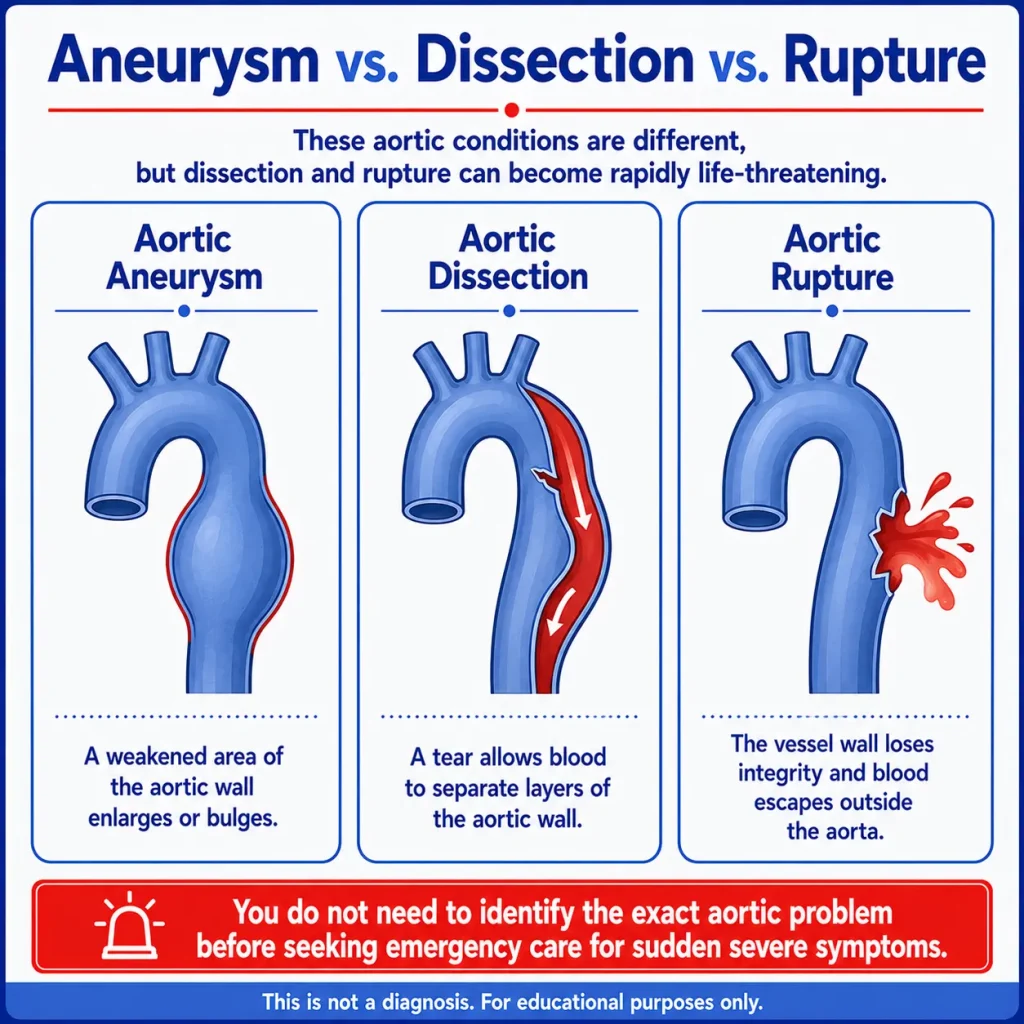
An aortic aneurysm is an abnormal enlargement or weakened, bulging area of the aortic wall. It may exist before any acute emergency occurs. By contrast, this article is about the sudden event—a possible dissection, rupture, or other acute aortic injury happening now. Johns Hopkins Medicine describes aneurysm as a condition that can remain without symptoms but may become dangerous if it dissects or ruptures.
That distinction matters because aneurysm surveillance, aneurysm size, long-term monitoring, and elective repair decisions are different questions. A known aneurysm can raise concern when new severe symptoms occur, but you do not need a prior aneurysm diagnosis for a dissection or rupture to be possible.
Why You Should Not Wait for the Pain to Become “Classic”
Many people search for words such as “tearing” or “ripping” because those descriptions are commonly associated with aortic dissection. They can occur, but they are not a requirement. Mayo Clinic also lists sudden severe chest, upper-back, or stomach pain, loss of consciousness, shortness of breath, and stroke-like symptoms—showing why a broader emergency pattern matters more than one adjective.
Aortic symptoms can overlap with heart attack, pulmonary embolism, stroke, and other serious conditions. That overlap is exactly why self-diagnosis can be dangerous. You do not need to correctly identify a dissection before seeking help. If symptoms are sudden, severe, unexplained, or accompanied by instability, uncertainty should accelerate emergency evaluation rather than delay it.
How Is a Suspected Aortic Dissection or Rupture Evaluated?
Emergency clinicians first build the timeline: when the symptoms began, where they started, whether they moved or changed, and whether fainting, neurologic changes, breathing difficulty, or signs of poor circulation appeared. They also assess vital signs and circulation and consider relevant history such as known aortic disease or significant cardiovascular risk.
When an acute aortic syndrome is suspected, hospital-level imaging is central to confirming or excluding the diagnosis. The American College of Radiology Appropriateness Criteria identifies CT, CT angiography, MR angiography, and transesophageal echocardiography among imaging approaches that may be appropriate depending on the clinical situation. The ACC/AHA aortic disease guideline summary likewise emphasizes standardized aortic imaging and rapid management of acute aortic disease.
The point is not for patients to choose an imaging test. The point is that a suspected acute injury to the aorta requires a setting where the clinical team can rapidly assess the whole picture, obtain appropriate imaging, stabilize dangerous changes, and arrange higher-level treatment or transfer when needed.
When Possible Aortic Dissection or Rupture Symptoms Should Not Wait
Treat sudden, severe, unexplained chest, back, or abdominal symptoms as an emergency when they are accompanied by fainting, near-fainting, severe weakness, confusion, significant breathing difficulty, pale or clammy skin, new neurologic changes, or rapid deterioration. Do not wait for several warning signs to appear, and do not wait for pain to reach a personal threshold.
If symptoms may be life-threatening, call 911 rather than driving yourself. For people in Angleton and nearby Brazoria County communities, the immediate goal is rapid evaluation of the acute event—not deciding on your own whether the problem is an aneurysm, dissection, rupture, heart attack, or another serious condition.
Emergency Evaluation at Angleton ER
Angleton ER is open 24/7 for emergency evaluation and has board-certified emergency physicians with on-site diagnostic support. Its emergency imaging services include CT, digital X-ray, and ultrasound when ordered by the ER physician as part of the patient’s plan of care. For sudden severe chest, back, or abdominal symptoms, the ER team can assess vital signs and circulation, perform appropriate emergency testing, begin stabilization when needed, and coordinate transfer for hospital-level or specialist care if the condition requires it.
Frequently Asked Questions
What are the warning signs of an aortic dissection?
Warning signs can include sudden severe chest, upper-back, or abdominal pain, sometimes with fainting, shortness of breath, weakness, neurologic symptoms, or signs of poor circulation. No single symptom confirms the diagnosis, so a sudden severe pattern should be evaluated urgently.
What can an aortic rupture feel like?
A rupture may cause abrupt, severe chest, back, or abdominal pain and can be followed by fainting, profound weakness, clammy skin, confusion, breathing difficulty, or rapid collapse. Because internal bleeding may progress quickly, suspected rupture is an emergency.
Does aortic dissection pain always feel tearing or ripping?
No. “Tearing” or “ripping” are recognized descriptions, but people may describe the pain differently. Sudden onset, unusual severity, associated symptoms, and the overall clinical picture matter more than a particular word.
Can an aortic dissection or rupture cause fainting or severe weakness?
Yes. Fainting, near-fainting, severe weakness, confusion, or neurologic changes can occur when circulation is compromised. These findings make a sudden severe pain pattern especially concerning.
What is the difference between an aortic aneurysm and an aortic dissection?
An aneurysm is an abnormal enlargement or weakened bulge in the aortic wall. A dissection is an acute tear or injury that allows blood to separate layers of the wall; an aneurysm can increase the risk of dissection or rupture, but the conditions are not the same.
When should possible aortic dissection or rupture symptoms be treated as an emergency?
Immediately when symptoms are sudden, severe, unexplained, or accompanied by fainting, severe weakness, breathing difficulty, confusion, neurologic changes, clammy skin, or rapid deterioration. You do not need to identify the exact aortic diagnosis before calling 911 or seeking emergency care.