
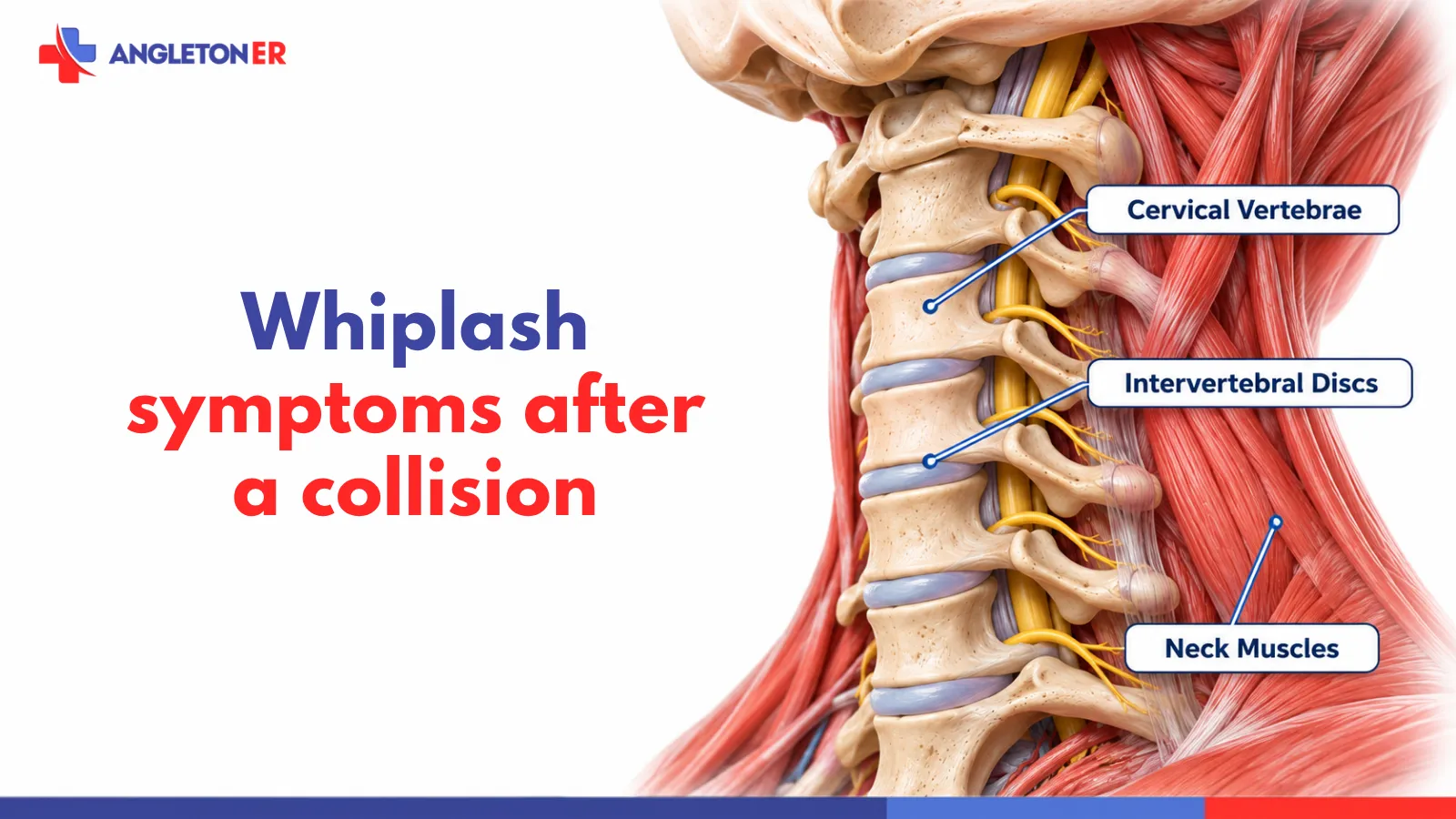
A driver leaves a rear-end collision feeling shaken but without much neck pain. By evening, turning the head is uncomfortable; the next morning brings stiffness and a headache. This sequence can happen with whiplash, but the timing alone does not establish that the injury is minor.
The useful questions are what appeared after the crash, whether it is changing, and whether symptoms suggest an injury beyond the neck’s soft tissues. Some changes need a routine medical assessment; others call for emergency help.
What Is Whiplash and Why Can Symptoms Be Delayed?
Whiplash describes a neck injury associated with a sudden back-and-forth movement of the head, often in a vehicle collision. Muscles, ligaments and other neck tissues may be affected. The Mayo Clinic’s overview of whiplash describes neck pain, stiffness and headache among the common symptoms.
Why Neck Pain May Not Start Immediately
Discomfort can be subtle at the scene and become noticeable as the hours pass. A person may first feel tightness while doing ordinary activities, then notice soreness or reduced comfort with movement. As the NHS guidance on whiplash notes, symptoms may take several hours to begin. A delay is not a reliable measure of injury severity.
Can Whiplash Symptoms Appear the Next Day?
Yes. Neck stiffness, shoulder discomfort or a headache may first stand out the following morning. The MedlinePlus explanation of whiplash also recognizes that pain may not appear immediately. A new symptom still needs to be judged by its intensity, progression and accompanying findings—not simply labeled “normal after a crash.”
How Whiplash Symptoms Can Change After a Collision
Immediately After the Collision
At the scene, someone may have neck tenderness, pain or a headache—or may report no obvious neck symptoms. Feeling well enough to talk and walk does not independently rule out a more serious injury. The circumstances of the collision, any direct head impact and other complaints matter. After significant trauma or suspected neck injury, do not deliberately twist or test the neck to see whether it is safe.
During the Following Hours
Neck soreness may build, stiffness may become more apparent and ordinary movements may become uncomfortable. Pain can extend toward the shoulders. A developing headache deserves attention, especially if it is getting stronger or follows a blow to the head. The trend matters more than a single pain score: is discomfort stable, improving or becoming harder to manage?
The Next Day or Over the Following Days
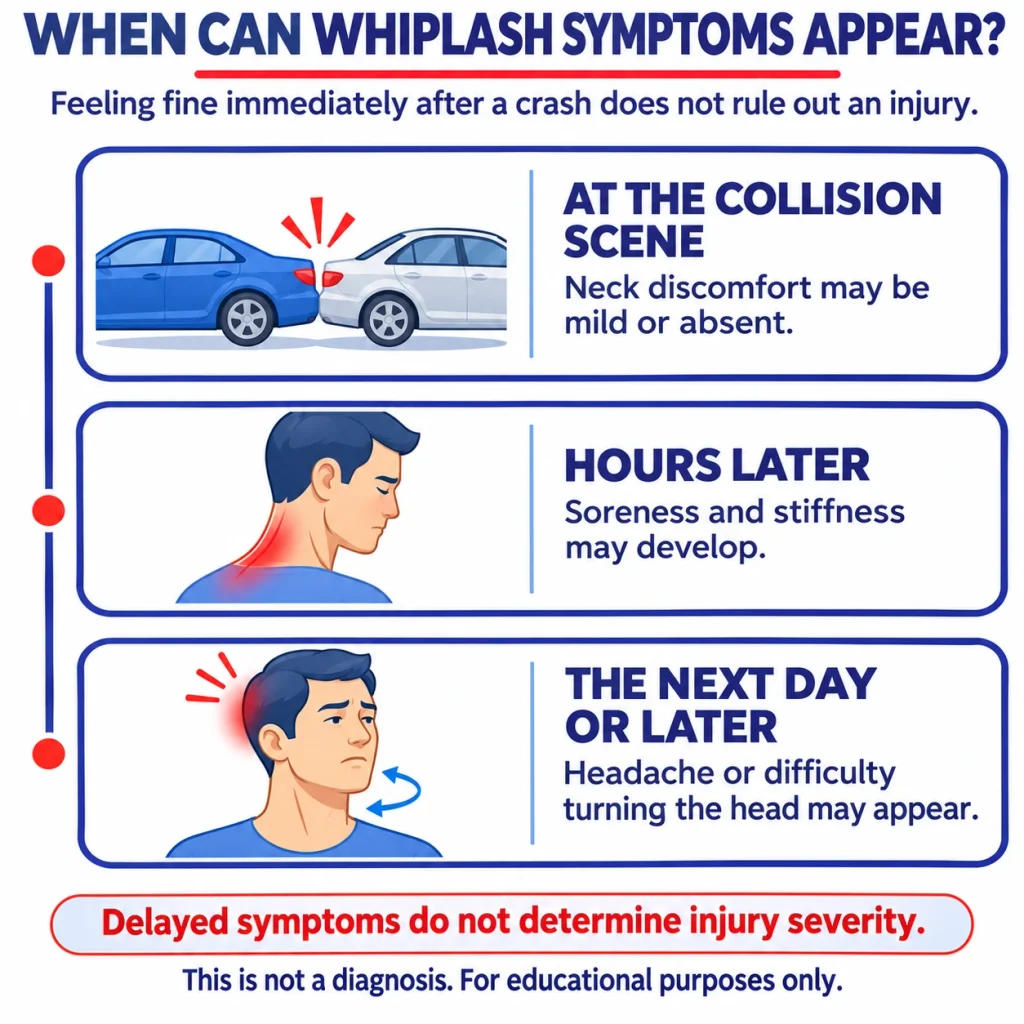
The next day may reveal difficulty getting dressed, working at a desk or looking over a shoulder. Symptoms can fluctuate, but new numbness, weakness, imbalance or worsening head symptoms change the decision. An emergency department guidance on neck injuries notes that pain, stiffness and headache can emerge hours or days later, without delayed onset itself proving whether an injury is serious.
Which Delayed Symptoms Need Closer Attention?
Neck Pain or Stiffness That Continues to Worsen
Pain that steadily increases, marked tenderness or stiffness that prevents normal activities warrants assessment after a collision. More severe pain after a substantial impact raises concern even when the first few hours were comfortable. A clinician can evaluate whether the pattern fits a soft-tissue injury or needs further investigation.
New or Worsening Headaches
Headache can accompany whiplash, but it can also reflect a head injury. Watch for a headache that becomes severe or keeps worsening, particularly with repeated vomiting, unusual sleepiness, confusion or visual changes. The CDC guidance on concussion warning signs identifies these as potential danger signs after a head injury; do not assume they all originate in neck muscles.
Tingling, Numbness, or Weakness in the Arms
New tingling in a hand, numbness traveling down an arm, difficulty gripping objects or noticeable arm weakness calls for prompt medical assessment after a collision. Progressive weakness or loss of limb function is an emergency. These symptoms do not prove a particular nerve or spinal diagnosis, but they are not explained away by the label “whiplash.”
When Should You Go to the ER After a Collision?
Symptoms That Require Immediate Emergency Help
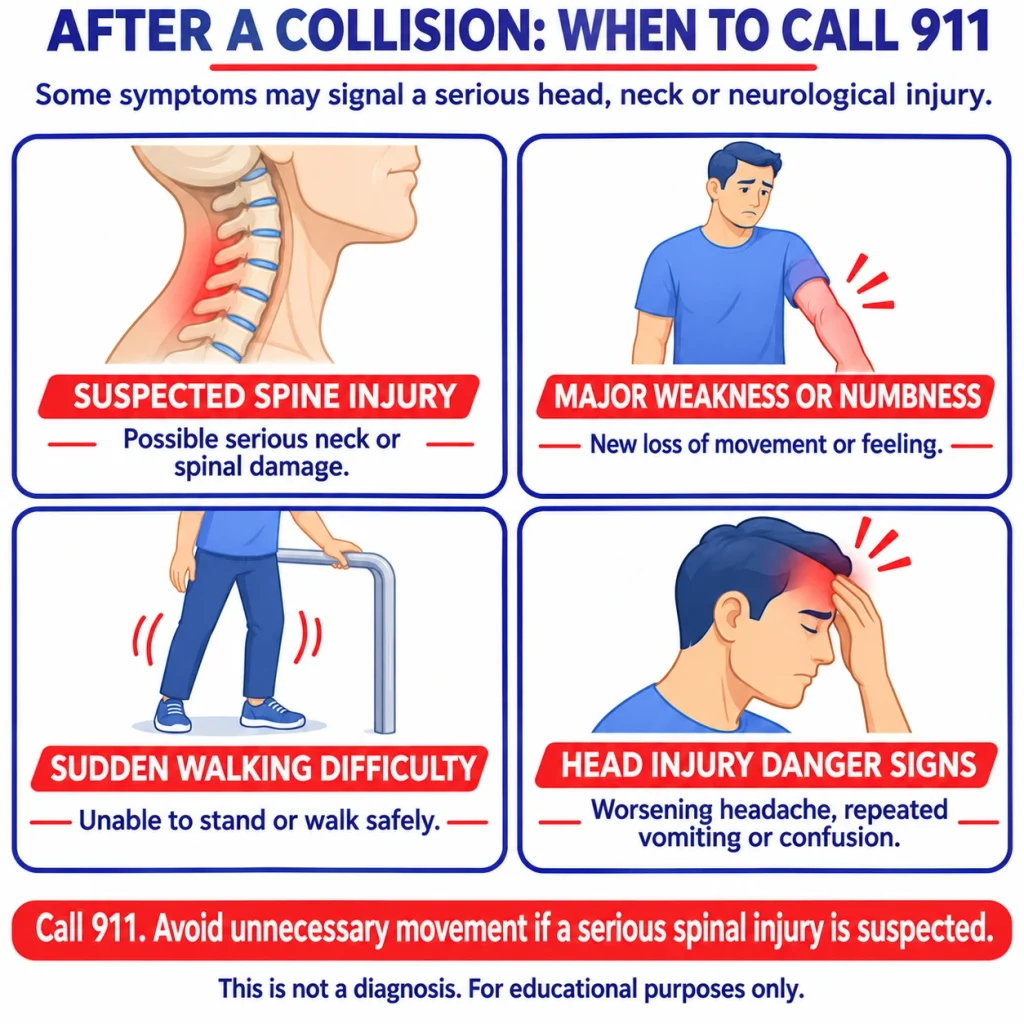
Call 911 for major trauma, suspected serious spine injury, new major weakness or loss of sensation, sudden trouble walking, seizures, loss of consciousness, or confusion that makes safe transport uncertain. A severe or worsening headache with repeated vomiting or neurological symptoms also needs emergency attention. The NHS advice on head injury distinguishes these higher-risk findings from ordinary post-injury discomfort.
If a serious neck or spinal injury is suspected, avoid unnecessary movement and do not have the person walk or turn the neck to “check” it. Follow emergency dispatch instructions; MedlinePlus first-aid guidance for suspected spinal injury advises keeping a potentially injured person still until help arrives, except when movement is essential for immediate safety.
When Delayed Symptoms Need Prompt Medical Evaluation
Arrange timely assessment for neck pain that continues to intensify, stiffness that substantially disrupts normal activities, a concerning new headache or altered arm sensation. The appropriate place to be seen depends on examination findings and how serious the collision was. New neurological symptoms, even without dramatic pain, favor urgent evaluation rather than self-monitoring.
When Follow-Up Care May Be Appropriate
After a low-risk collision, mild and stable symptoms without head-injury or neurological warning signs may be suitable for timely nonemergency care. A clinician can decide whether further assessment is needed. Do not use a fixed number of days as permission to wait after a significant impact, and do not substitute online guidance for an injury evaluation.
What Should You Do if Symptoms Appear After You Leave the Collision Scene?
Notice when the change began and whether it is spreading, intensifying or affecting strength, sensation, balance or concentration. If a symptom feels new or concerning, contact an appropriate medical service promptly; choose emergency care when warning signs are present. Avoid forceful stretching, neck manipulation or self-tests intended to prove that the neck is uninjured.
Do not keep driving if pain prevents safe head movement or if dizziness, confusion, weakness or slowed reactions could affect control of the vehicle. Arrange a safe ride when appropriate, and call 911 if serious injury is suspected. CDC clinical guidance on returning to driving cautions against driving with impaired attention or reaction time after possible concussion.
What Happens During a Medical Evaluation for Delayed Whiplash Symptoms?
Reviewing the Collision and Symptom Timeline
The clinician may ask when the crash occurred, whether the head was struck, what symptoms began first and what changed afterward. Mention new headache, numbness, weakness, dizziness or trouble with daily tasks. This sequence helps distinguish a stable complaint from one requiring additional assessment.
Examining the Neck and Neurological Function
When safe, an examination may assess neck tenderness and movement, along with arm and leg strength, sensation, coordination and alertness. If a significant cervical spine injury is suspected, clinicians take precautions before checking neck motion.
When Imaging May Be Necessary
Not every whiplash injury requires an X-ray, CT scan or MRI. Imaging decisions depend on the event, examination and established trauma criteria. The American College of Radiology guidance for suspected spine trauma describes when cervical CT or other studies may be appropriate. A normal scan does not by itself explain every symptom; clinical findings still guide the next step. Angleton ER describes its emergency imaging services as testing ordered when medically appropriate during emergency care.
What Information Should You Track When Symptoms Change?
A short symptom timeline is more helpful than trying to name the injury yourself. Record the approximate collision time, when discomfort began, whether it is improving or worsening, new headache or neurological symptoms, and any task that has become difficult. Include changes in walking, arm function or ability to drive safely.
For example, “I felt stiff that evening, but this morning the pain increased and my right hand started tingling” gives the clinician both a sequence and a new neurological finding. Do not spend time recording details instead of calling 911 when emergency warning signs appear. For broader injury-related neck-pain decisions, Angleton ER also provides neck-pain emergency guidance.
Emergency Assessment for Collision-Related Symptoms in Angleton
For drivers and families in Angleton and nearby Brazoria County communities, delayed neck pain after a crash may need evaluation when it intensifies or comes with headache, numbness, weakness or other concerning changes. Angleton ER provides 24/7 emergency care and injury and trauma evaluation, with assessment and imaging when clinically indicated. Call 911 for suspected serious head or spinal injury or whenever self-transport would be unsafe.
Frequently Asked Questions
How long after a car accident can whiplash symptoms appear?
They may begin within hours or become noticeable over the following days. Timing alone cannot determine how serious the injury is.
Can whiplash symptoms start the next day?
Yes. Someone who felt little pain at the scene may notice stiffness or headache the following morning. Pay attention to progression and any additional symptoms.
Why does neck pain sometimes get worse after a collision?
Soreness and stiffness can become more noticeable after the initial event. Increasing pain, however, deserves assessment rather than being treated as automatically harmless.
Is a headache after a car accident always caused by whiplash?
No. A headache may accompany a neck injury or a head injury. A severe or worsening headache with confusion, vomiting or neurological changes requires emergency attention.
Can whiplash cause delayed numbness or tingling in the arms?
Arm tingling or numbness may occur after a neck injury, but the cause cannot be established from symptoms alone. New or worsening changes after a crash need prompt evaluation.
When should I go to the ER for delayed whiplash symptoms?
Go for emergency evaluation when symptoms are severe, rapidly worsening or accompanied by concerning neurological or head-injury findings. Call 911 for major trauma, loss of function, confusion or suspected unstable spine injury.
Does whiplash always require an X-ray, CT scan, or MRI?
No. Clinicians choose imaging according to the collision circumstances, examination findings and trauma criteria. Some patients do not need a scan; others need testing to assess possible serious injury.