
A fast, irregular heart-rate reading can be alarming. The key question is not simply, “What number is dangerous?” It is whether the rapid rhythm is affecting blood pressure, breathing, circulation, alertness, or causing other concerning symptoms.
Atrial fibrillation can make the heart beat irregularly and sometimes rapidly. The National Heart, Lung, and Blood Institute notes that AFib can lead to serious complications such as stroke or heart failure. With rapid ventricular response (RVR), urgency depends on the whole clinical picture rather than one home heart-rate reading.
What Does AFib With RVR Mean?
AFib, or atrial fibrillation, is an irregular rhythm that starts in the heart’s upper chambers. RVR means “rapid ventricular response.” In AFib with RVR, disorganized electrical activity in the atria is conducted to the lower chambers, or ventricles, quickly enough that the ventricular rate becomes fast and irregular. Cleveland Clinic’s explanation of AFib with RVR describes this as an abnormal rhythm in which the upper and lower chambers are not beating in a coordinated way.
RVR describes what the ventricles are doing; it does not, by itself, tell you how sick someone is. People can tolerate similar rates very differently depending on blood pressure, heart function, and other medical conditions.
Why Can the Rapid Heart Rate Become a Problem?
When the ventricles beat very quickly, there is less time for them to fill between beats. A fast rate can also raise the heart muscle’s oxygen demand. The American Heart Association’s 2025 advanced life support guidance explains that uncontrolled tachycardia from AFib or atrial flutter can impair ventricular filling, cardiac output, and coronary perfusion while increasing myocardial oxygen demand.
That matters most when the rapid rhythm is sustained or the person has cardiovascular disease. A fast rhythm may contribute to low blood pressure, poor circulation, shortness of breath, or chest discomfort. Over time, persistently fast rhythms can also contribute to heart strain; Angleton ER’s article on how rhythm problems can contribute to heart failure covers that chronic relationship in more detail. The focus here is the acute decision: is the rapid rhythm making the person unstable or seriously unwell right now?
Is There a Dangerous Heart Rate With AFib?
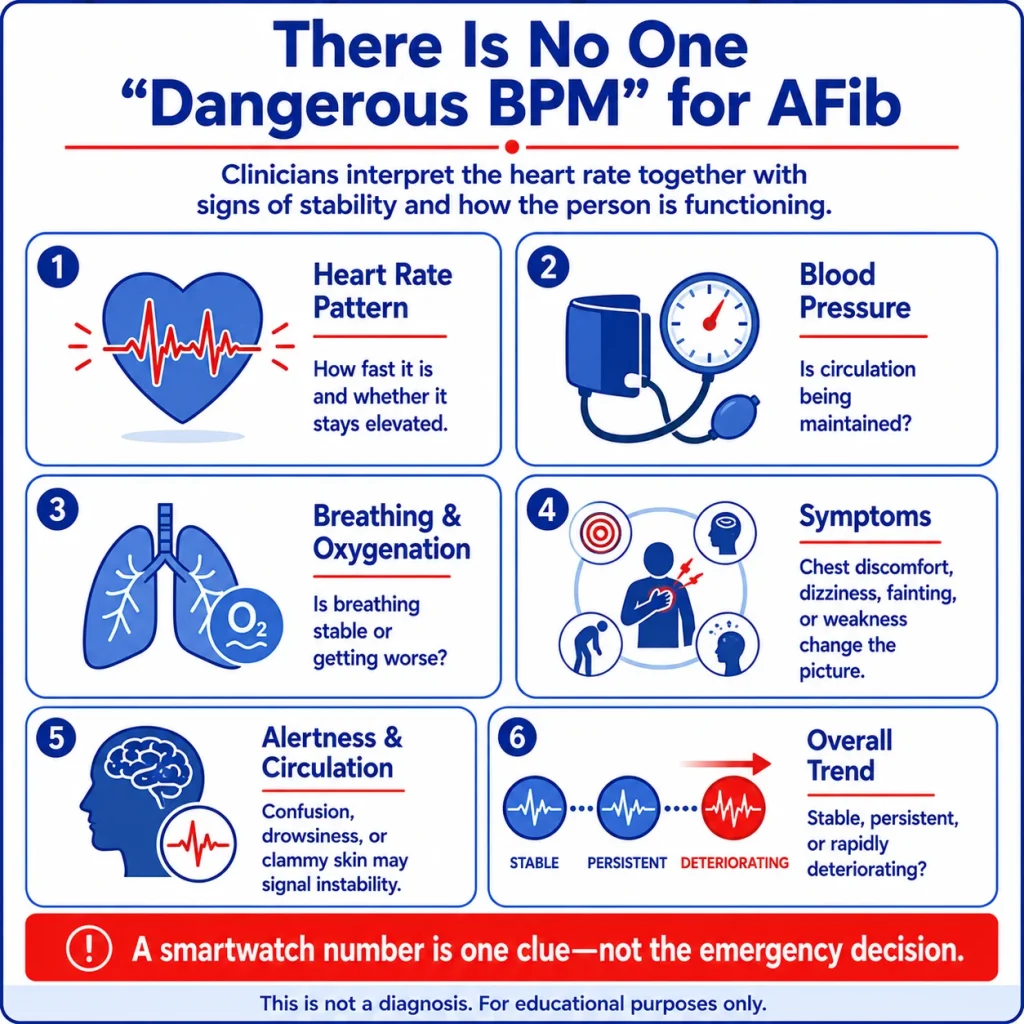
There is no single heart-rate number that reliably separates “safe AFib” from “emergency AFib” for every person. A rate can help describe what is happening, but the number alone does not determine whether AFib with RVR is an emergency.
Professional guidance emphasizes clinical stability. The 2023 ACC/AHA/ACCP/HRS atrial fibrillation guideline assesses rapid AFib in the context of symptoms and hemodynamic status, not as a stand-alone BPM cutoff.
Clinicians consider several pieces together:
• How fast the ventricular rate is for that individual and whether it remains elevated.
• Blood pressure and signs of adequate circulation.
• Breathing, oxygenation, and whether shortness of breath is significant or worsening.
• Chest discomfort, dizziness, fainting, weakness, confusion, or reduced alertness.
• Underlying heart disease, heart failure, recent illness, medications, and other medical conditions.
• Whether the person appears stable, is deteriorating, or has evidence of poor organ perfusion.
A smartwatch reading cannot make the emergency decision by itself. A fast rate deserves attention when it is new or persistent, while any rate can be concerning when chest pain, low blood pressure, fainting, breathing difficulty, or other signs of instability are present.
What Symptoms Make AFib With RVR More Urgent?
AFib can cause palpitations, fatigue, dizziness, shortness of breath, weakness, fainting, and chest pain. The American Heart Association’s AFib symptom guidance and NHLBI’s symptom overview both emphasize that symptom severity varies and that some people may have no obvious symptoms.
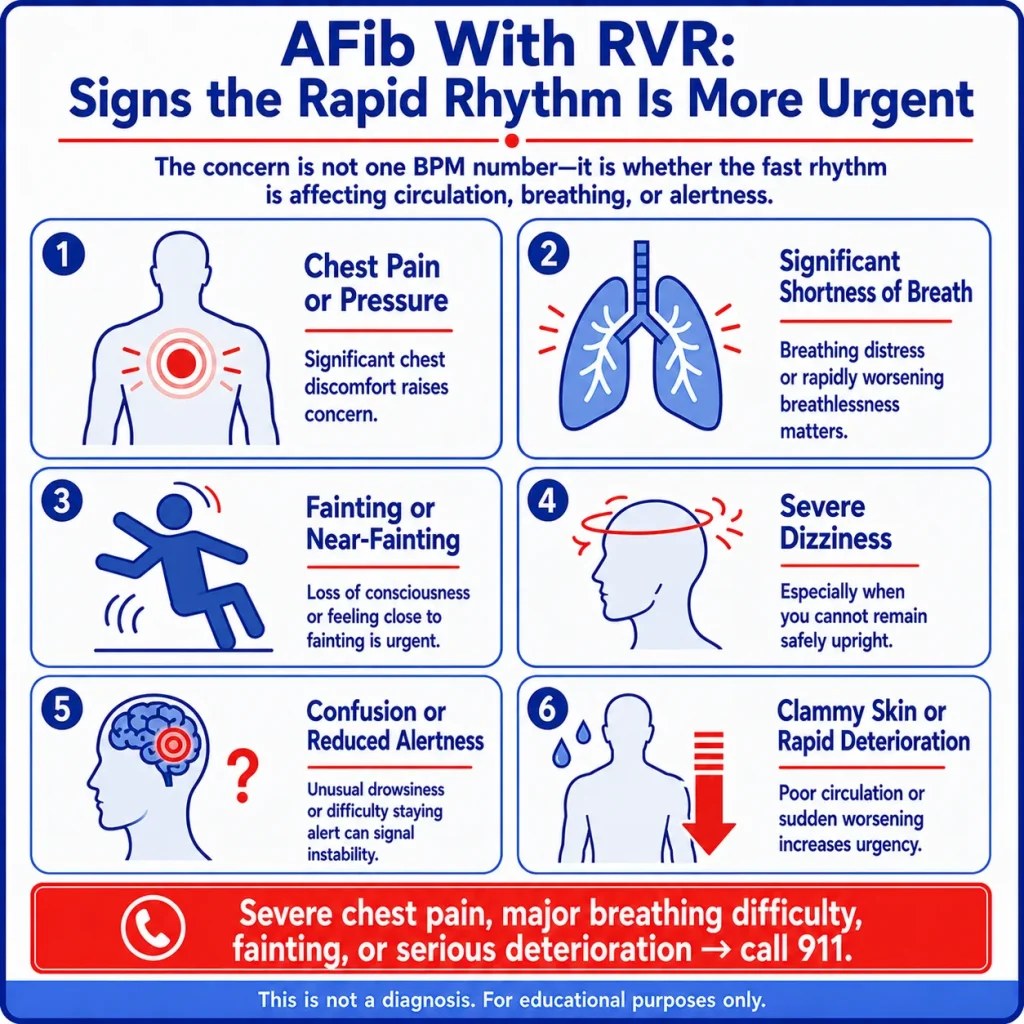
Urgency rises when the rapid rhythm comes with signs that circulation may not be keeping up, including:
• Chest pain, pressure, squeezing, or significant chest discomfort.
• Significant shortness of breath, breathing distress, or rapidly worsening breathing.
• Fainting or near-fainting.
• Severe dizziness or inability to remain safely upright.
• Marked weakness, especially if it is sudden or worsening.
• Confusion, unusual drowsiness, or difficulty staying alert.
• Cool, clammy, pale, or otherwise concerning signs of poor circulation.
• A rapidly worsening overall condition or a sense that the person is becoming seriously ill.
In hemodynamically unstable adults whose instability is attributable to AFib or atrial flutter with a rapid ventricular rate, AHA emergency cardiovascular care guidance recommends immediate synchronized cardioversion. That is a clinician-level treatment decision, but it illustrates the key principle for patients: AFib plus a rapid rate plus evidence of instability is fundamentally different from an isolated number on a monitor.
What If the Heart Rate Is Fast but You Feel Mostly Okay?
Feeling mostly okay does not make a new or persistent rapid AFib episode safe to ignore. Some people notice the rhythm before severe symptoms develop, while others tolerate a fast rate relatively well.
MedlinePlus guidance on atrial fibrillation notes that AFib can occur with few symptoms and may still require diagnosis and treatment because of potential complications. If the rhythm is newly detected, remains rapid, is substantially different from your usual AFib pattern, or you are unsure whether you are stable, medical assessment is appropriate. Do not panic because of one number, but do not dismiss persistent rapid AFib simply because severe symptoms have not appeared.
How Is AFib With RVR Evaluated in Emergency Care?
Emergency evaluation aims to confirm the rhythm, assess whether circulation is being compromised, and look for triggers or contributing conditions. The workup depends on the symptoms and medical history.
At a high level, clinicians may:
• Confirm the rhythm with an ECG/EKG.
• Check heart rate, blood pressure, breathing, oxygen level, mental status, and circulation.
• Review current medications, recent medication changes, and relevant heart or medical history.
• Look for contributing problems such as infection, dehydration, electrolyte disturbance, thyroid disease, heart strain, or other acute illness when clinically appropriate.
• Order additional blood tests or imaging when the symptoms or examination suggest a need.
Johns Hopkins Medicine’s AFib overview describes the ECG as a key diagnostic tool, with additional testing selected according to the clinical situation. If heart failure is part of the differential, Angleton ER’s separate guide to how heart failure is evaluated explains why clinicians combine symptoms, exam findings, ECG data, blood tests, and imaging rather than relying on one test.
Medication choice, cardioversion, anticoagulation, and long-term rhythm planning depend on individual clinical factors and are outside this article’s scope.
What About Stroke Risk With AFib?
AFib is associated with blood-clot and stroke risk because blood can pool in the atria. The American Heart Association’s AFib overview identifies stroke as a major AFib complication. Stroke-risk management and anticoagulation decisions are separate from deciding whether a current rapid rate requires urgent evaluation.
If sudden neurologic symptoms occur – such as facial drooping, one-sided weakness, speech difficulty, sudden confusion, or sudden loss of balance – treat them as a possible stroke emergency. Angleton ER’s stroke emergency guide explains the local emergency decision in more detail.
When AFib With a Rapid Heart Rate Should Not Wait
Urgent evaluation is appropriate when rapid AFib is new, persistent, substantially different from your usual rhythm, or accompanied by chest discomfort, significant breathing difficulty, fainting, severe dizziness, marked weakness, confusion, reduced alertness, or rapid deterioration.
If symptoms are severe, you are fainting or nearly fainting, have significant chest pain or difficulty breathing, or appear seriously ill, call 911 rather than driving yourself. The emergency question is whether rapid AFib is affecting stable circulation and function – not whether it crossed one magic number.
Emergency Heart-Rhythm Evaluation at Angleton ER
Angleton ER is open 24/7 for emergency evaluation of chest pain, breathing difficulty, irregular heartbeat, and other cardiac symptoms. Its cardiac emergency care services include physician evaluation, EKG, cardiac lab testing, monitoring, stabilization, and transfer coordination when needed. For new or persistent rapid AFib, the goal is to assess the whole clinical picture rather than rely on a home BPM reading.
Frequently Asked Questions
What does AFib with RVR mean?
AFib with RVR means atrial fibrillation with a rapid ventricular response. The upper chambers are fibrillating irregularly, and the lower chambers are responding with a fast, irregular rate.
Why does AFib sometimes cause a very fast heart rate?
During AFib, many disorganized electrical impulses arise in the atria. Some impulses reach the ventricles, and when enough are conducted quickly, the ventricular rate can become rapid.
What is considered a dangerous heart rate with AFib?
There is no universal BPM cutoff that determines danger for every person with AFib. Clinicians interpret the rate together with blood pressure, breathing, circulation, symptoms, underlying conditions, and whether the person is stable or deteriorating.
Can AFib with RVR happen without severe symptoms?
Yes. Some people have mild symptoms or notice mainly a fast or irregular pulse. A newly detected or persistent rapid rhythm still deserves medical assessment even when severe symptoms are absent.
Can AFib with RVR become life-threatening?
It can, particularly when the rapid rhythm contributes to low blood pressure, poor circulation, cardiac ischemia, worsening heart failure, or other hemodynamic instability. Not every episode is life-threatening, which is why the complete clinical picture matters.
When should someone with AFib and a rapid heart rate seek emergency evaluation?
Seek emergency evaluation when the rapid rhythm is new or persistent, substantially different from the usual pattern, or occurs with chest discomfort, significant shortness of breath, fainting, severe dizziness, marked weakness, confusion, reduced alertness, or rapid worsening. Call 911 for severe or life-threatening symptoms.