
Nipple changes can feel alarming, especially when they happen suddenly or only affect one breast. Discharge, bleeding, nipple pain, inversion, crusting, irritation, or visible skin changes do not always mean something serious is happening. Many nipple symptoms are linked to non-cancer causes such as irritation, infection, hormones, pregnancy, breastfeeding, medication effects, or benign breast conditions.
Still, some changes should not be ignored. A new symptom, a one-sided change, bloody discharge, a new inverted nipple, or discharge with a breast lump or skin change deserves medical attention. The goal is not to panic or diagnose yourself at home. The goal is to recognize when your body is showing a change that needs a proper medical evaluation.
Nipple Changes Can Be Concerning, But They Do Not Always Mean Cancer
Nipple symptoms can happen for many reasons. A person may notice fluid from the nipple, tenderness, swelling, redness, itching, crusting, bleeding, or a change in the way the nipple looks. Some changes are temporary and related to friction, hormonal shifts, breastfeeding, or skin irritation. Others may need closer evaluation.
It is not possible to know the cause of nipple discharge, bleeding, or inversion just by looking at it. Even color, pain level, or timing does not always tell the full story. A medical provider may need to ask questions, examine the area, and decide whether imaging, lab testing, or specialist follow-up is needed.
Why “new” or “one-sided” symptoms matter
A symptom that is new, unexplained, or only happening on one side often deserves more attention than a symptom that has been present for years or clearly connected to breastfeeding, pregnancy, irritation, or a known recurring issue.
For example, a nipple that has always been inverted may not be concerning on its own. But a nipple that recently became pulled inward, flattened, or changed shape should be checked. In the same way, discharge from both breasts may have a different meaning than discharge from only one nipple, especially if it happens on its own or is bloody.
Nipple Discharge: What Patients Should Pay Attention To
Nipple discharge means fluid coming from the nipple when you are not actively breastfeeding. Sometimes discharge happens only when the nipple is squeezed. Other times, it happens on its own and may stain clothing or appear without pressure.
Discharge can be clear, white, milky, yellow, green, brown, or bloody. While color may provide clues, it does not confirm the cause. The pattern matters, too: whether it is from one breast or both, whether it is spontaneous, whether it continues, and whether it comes with pain, a lump, fever, redness, or skin changes.
Discharge from one breast
Discharge from only one nipple should be taken seriously enough to discuss with a medical provider, especially when it is new, persistent, spontaneous, bloody, or associated with a breast lump or skin change.
One-sided discharge does not automatically mean cancer, but it may need a more careful evaluation than discharge that is clearly related to a hormonal or breastfeeding-related cause.
Spontaneous discharge vs discharge when squeezed
Discharge that happens on its own can be more concerning than discharge that appears only when the nipple is squeezed. Spontaneous discharge may show up on a bra, shirt, or bedding without pressure.
That said, discharge that only appears when squeezed should still be discussed with a provider if it is unusual, persistent, one-sided, bloody, or unexplained. Repeatedly squeezing the nipple to “check” the discharge can also irritate the tissue and make the symptom harder to interpret.
Clear, milky, green, brown, or bloody discharge
Discharge color alone does not diagnose the cause. Milky discharge may be related to pregnancy, breastfeeding, hormones, or medications. Green or brown discharge may occur with some benign breast conditions. Clear discharge can have several possible causes.
Bloody nipple discharge should be checked promptly, especially if it is from one nipple, happens without squeezing, keeps recurring, or appears with a lump, nipple inversion, skin thickening, crusting, dimpling, or pain.
Discharge with pain, swelling, redness, or fever
Nipple discharge with pain, swelling, redness, warmth, tenderness, fever, or feeling ill may suggest infection or inflammation. These symptoms can worsen if not evaluated and treated when appropriate.
If redness is spreading, pain is severe, fever is present, or you feel very weak or sick, do not wait for symptoms to “settle down” on their own.
Nipple Bleeding: When It Should Not Be Ignored
Bleeding from the nipple is not something to dismiss, especially if there is no obvious injury, cracked skin, or irritation to explain it. Sometimes bleeding may come from the skin surface. Other times, it may come from the nipple duct itself.
Because the cause is not always obvious, nipple bleeding should be evaluated, particularly when it is new, unexplained, repeated, or one-sided.
Bleeding with a lump or skin change
A lump near or behind the nipple should also be checked, especially if it feels hard, fixed in place, growing, or different from surrounding tissue.
Bleeding with signs of infection
Bleeding or drainage with redness, warmth, swelling, tenderness, fever, or feeling ill may point toward infection or inflammation. Prompt evaluation is important if symptoms are worsening or spreading.
Inverted Nipple: What It Means When the Nipple Turns Inward
An inverted nipple means the nipple turns inward instead of pointing outward. Some people naturally have one or both nipples inverted, and this may be completely normal for them.
The key question is whether the inversion is lifelong or new.
Lifelong inversion vs new inversion
A nipple that has always been inverted is usually less concerning than a nipple that recently became pulled inward, flattened, or changed shape.
A new change may happen gradually or suddenly. Even if there is no pain, a new inverted nipple should be discussed with a medical provider so the cause can be properly evaluated.
New inversion with a lump, discharge, or skin changes
New nipple inversion should be checked sooner when it appears with discharge, bleeding, a breast lump, swelling, skin dimpling, thickening, crusting, sores, or persistent irritation.
These symptoms do not prove cancer, but they are important warning signs that need a medical explanation.
Other Nipple and Breast Changes That Should Be Checked
Nipple symptoms often need to be considered along with the surrounding breast tissue and skin. A small visible change may matter more if it is persistent, worsening, or paired with another symptom.
Skin thickening, dimpling, crusting, or sores
Visible changes around the nipple or areola should be checked if they do not improve. This includes skin thickening, dimpling, scaling, crusting, sores, skin breakdown, or irritation that keeps coming back.
Dry skin or friction can cause irritation, but persistent changes should not be assumed to be simple irritation without evaluation.
A breast lump or swelling near the nipple
A lump near or behind the nipple deserves medical attention, especially if it is hard, fixed, growing, painful, or paired with discharge, bleeding, or nipple inversion.
Some breast lumps are benign, but a provider may recommend imaging or follow-up to understand what is causing the change.
Nipple or breast pain that is worsening
Pain alone does not automatically mean cancer. Breast and nipple pain can happen from hormones, infection, injury, cysts, inflammation, or skin irritation.
However, worsening pain with redness, swelling, discharge, fever, a lump, or visible skin changes should be evaluated promptly.
Common Non-Cancer Reasons for Nipple Discharge or Nipple Changes
It is important to remember that many nipple symptoms are not cancer. Medical evaluation is still useful because it helps identify the cause and determine whether treatment or follow-up is needed.
Pregnancy, breastfeeding, or recent lactation
Nipple discharge may occur during pregnancy, while breastfeeding, or after breastfeeding has recently stopped. Even then, unusual symptoms should be discussed with a provider, especially if discharge is bloody, one-sided, persistent, painful, or unrelated to feeding.
Infection or inflammation
Breast or nipple infection can cause pain, redness, warmth, swelling, tenderness, fever, drainage, or feeling unwell. Infection can occur during breastfeeding, but it can also happen outside of breastfeeding.
Prompt care may be needed if symptoms are worsening, spreading, or accompanied by fever.
Hormonal or medication-related causes
Hormonal changes and certain medications can contribute to nipple discharge. This may involve one or both breasts and may come with other symptoms.
A provider can review your medication history, pregnancy or breastfeeding status, and other health factors to decide whether lab testing or follow-up is appropriate.
Benign breast conditions
Some benign breast conditions can cause discharge, nipple tenderness, cysts, or changes near the nipple. “Benign” means non-cancerous, but that does not mean symptoms should be ignored. Testing or follow-up may still be needed to confirm the cause.
When Nipple Symptoms Need Medical Evaluation
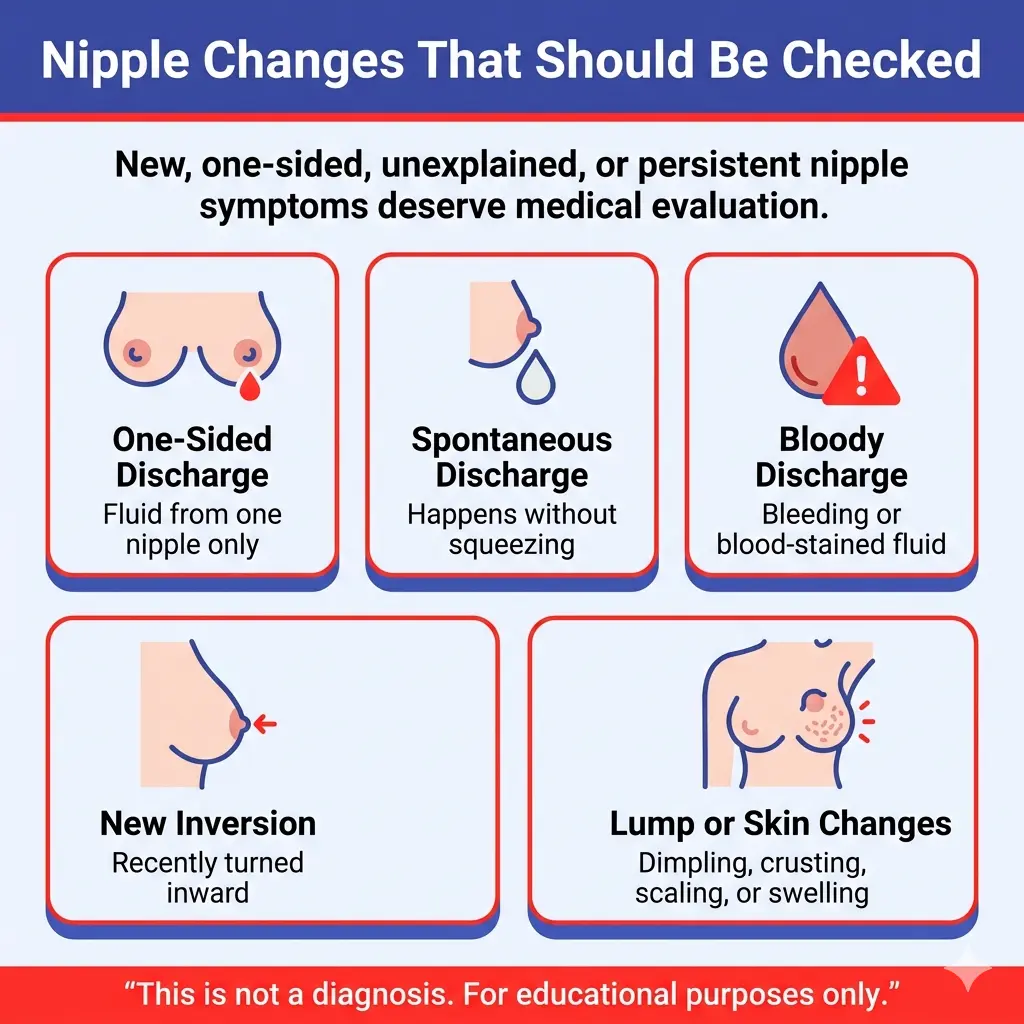
You should seek medical evaluation for nipple or breast symptoms such as:
- Bloody nipple discharge
- New nipple inversion
- Discharge from only one nipple
- Discharge that happens without squeezing
- A breast lump with discharge or nipple change
- Skin dimpling, thickening, crusting, scaling, or sores
- Persistent nipple irritation that does not improve
- Pain, redness, warmth, swelling, or fever
- Any symptom that is new, worsening, or unexplained
Getting evaluated does not mean cancer is expected. It means the symptom deserves a proper medical explanation. In many cases, the cause may be infection, inflammation, hormones, medication effects, irritation, or a benign breast condition. But the safest next step is to have concerning changes checked rather than guessing at home.
When Nipple or Breast Symptoms May Need ER Care
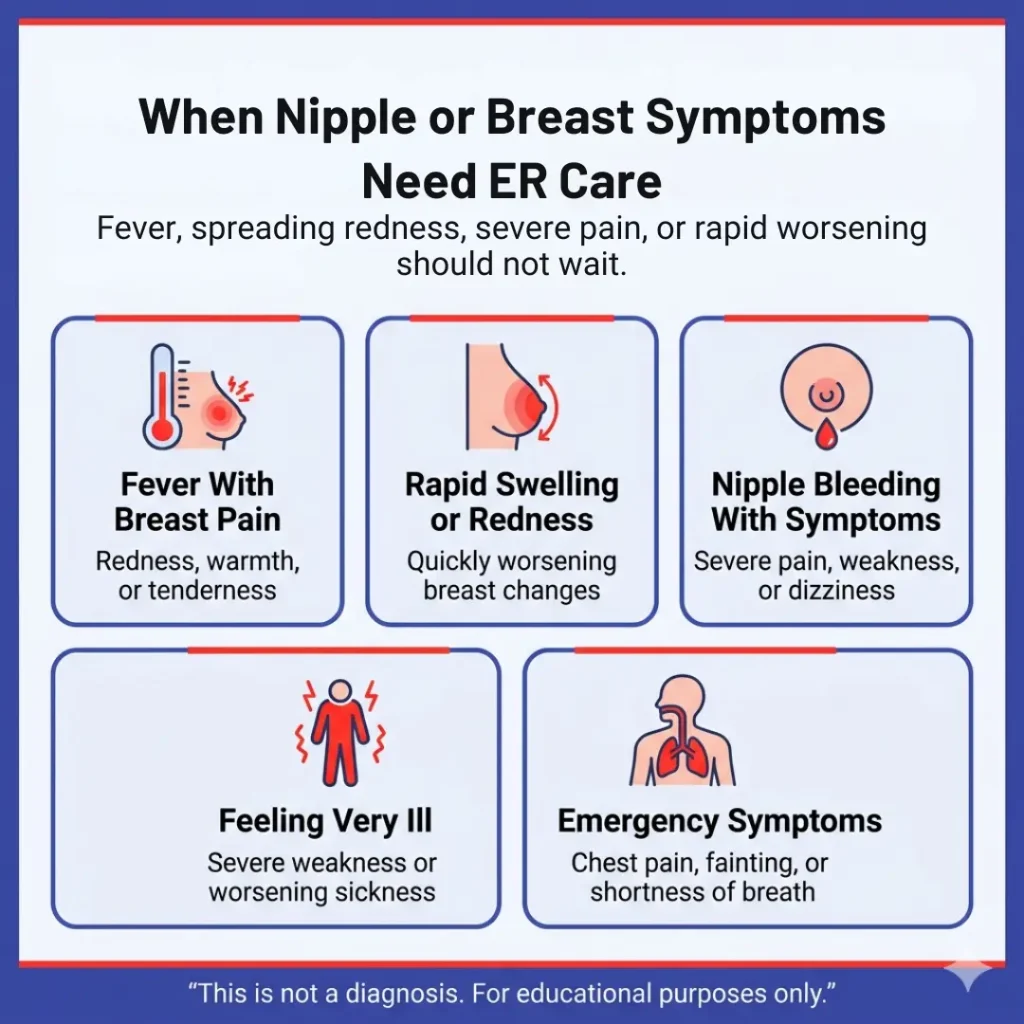
Some nipple or breast symptoms can wait for a scheduled medical appointment, especially if they are mild, stable, and not associated with urgent warning signs. Others should be checked more quickly.
Fever with breast pain, redness, or swelling
Fever with breast redness, warmth, tenderness, swelling, or increasing pain may suggest infection. This should be evaluated promptly, especially if symptoms are worsening or you feel ill.
Rapidly worsening pain, swelling, or redness
Spreading redness, severe tenderness, swelling, drainage, or feeling very sick should not wait. These symptoms may need timely medical evaluation and treatment.
Nipple bleeding with severe symptoms
Nipple bleeding should be evaluated. Urgent care is more appropriate if bleeding is heavy, recurrent, associated with severe pain, or paired with weakness, dizziness, fever, rapid swelling, or symptoms that are worsening quickly.
Chest pain, shortness of breath, fainting, or severe weakness
Chest pain, shortness of breath, fainting, severe weakness, confusion, or symptoms that feel life-threatening require emergency evaluation regardless of whether nipple symptoms are also present.
What to Expect During Evaluation for Nipple Discharge or Inversion
Evaluation depends on your symptoms, age, medical history, exam findings, and whether urgent signs are present.
Medical history and physical exam
A provider may ask when the symptom started, whether discharge is from one breast or both, whether it happens on its own, whether there is pain, whether you are pregnant or breastfeeding, what medications you take, and whether you have fever, skin changes, nipple inversion, or a breast lump.
Imaging or lab testing when appropriate
Depending on the symptoms and exam findings, a provider may recommend breast imaging, lab testing, or follow-up with the right specialist. Emergency care may focus on urgent concerns such as infection, severe pain, fever, significant bleeding, or rapidly worsening symptoms.
Not every nipple symptom can be fully diagnosed in one visit. Some concerns require outpatient imaging, breast specialist evaluation, or additional follow-up.
Follow-up matters
Follow-up is important even if urgent symptoms are not present. Persistent, unexplained, one-sided, bloody, or lump-associated nipple symptoms should not be forgotten after the first visit. If symptoms continue, change, or worsen, further evaluation may be needed.
What Not to Do When You Notice Nipple Discharge or Inversion
If you notice nipple discharge, bleeding, inversion, or a visible nipple change, avoid these common mistakes:
- Do not repeatedly squeeze the nipple to “test” the discharge.
- Do not ignore bloody discharge.
- Do not dismiss a newly inverted nipple.
- Do not assume discharge color alone tells you the cause.
- Do not delay care if symptoms come with fever, redness, swelling, or severe pain.
- Do not rely on online photos to decide whether a nipple change is serious.
Photos and online descriptions can be confusing because many conditions look similar. A medical exam gives you a safer path toward understanding what is happening.
If you are in Angleton or a nearby community and nipple discharge, bleeding, new inversion, or breast changes are paired with fever, severe pain, redness, warmth, swelling, a new lump, dizziness, weakness, or symptoms that are worsening quickly, Angleton ER provides 24/7 emergency care. Our emergency team can evaluate urgent breast or nipple symptoms, perform appropriate lab testing or imaging when needed, and help determine whether your condition needs immediate treatment, stabilization, or follow-up with the right provider.
Frequently Asked Questions
Is nipple discharge a sign of breast cancer?
Nipple discharge can be a sign of breast cancer, but many cases are caused by non-cancer conditions such as hormones, pregnancy, breastfeeding, medication effects, infection, or benign breast changes. Discharge should be checked if it is bloody, one-sided, spontaneous, persistent, or associated with a lump or skin change.
When should I worry about nipple discharge?
You should seek medical evaluation if nipple discharge is new, unexplained, bloody, from only one nipple, happens without squeezing, keeps coming back, or appears with pain, swelling, redness, fever, a breast lump, nipple inversion, or skin changes.
Is bloody nipple discharge always serious?
Bloody nipple discharge is not always caused by cancer, but it should not be ignored. It needs prompt medical evaluation, especially if it is one-sided, recurrent, spontaneous, or paired with a lump, skin change, pain, or nipple inversion.
What does it mean if my nipple suddenly becomes inverted?
A nipple that has always been inverted may be normal for some people. A nipple that suddenly becomes inverted, flattened, or pulled inward should be evaluated, especially if it happens with discharge, bleeding, a lump, swelling, or skin changes.
Can nipple discharge happen without cancer?
Yes. Nipple discharge can happen for many non-cancer reasons, including pregnancy, breastfeeding, recent lactation, infection, inflammation, hormonal changes, medication effects, or benign breast conditions. A provider can help determine whether testing or follow-up is needed.
Should I see a doctor for discharge from one nipple?
Yes, discharge from one nipple should be discussed with a medical provider, especially if it is new, persistent, spontaneous, bloody, or associated with a breast lump, nipple inversion, pain, or skin changes.
Can an infection cause nipple discharge or nipple pain?
Yes. Infection or inflammation can cause nipple or breast pain, redness, warmth, swelling, tenderness, fever, and drainage. If symptoms are worsening, spreading, or accompanied by fever or feeling ill, prompt evaluation is important.
Should I go to the ER for nipple bleeding or breast symptoms?
You should seek emergency evaluation if nipple bleeding or breast symptoms come with severe pain, fever, spreading redness, swelling, dizziness, weakness, shortness of breath, chest pain, fainting, or rapidly worsening symptoms. For non-urgent but concerning changes, such as persistent one-sided discharge or new nipple inversion, schedule medical evaluation as soon as possible.