
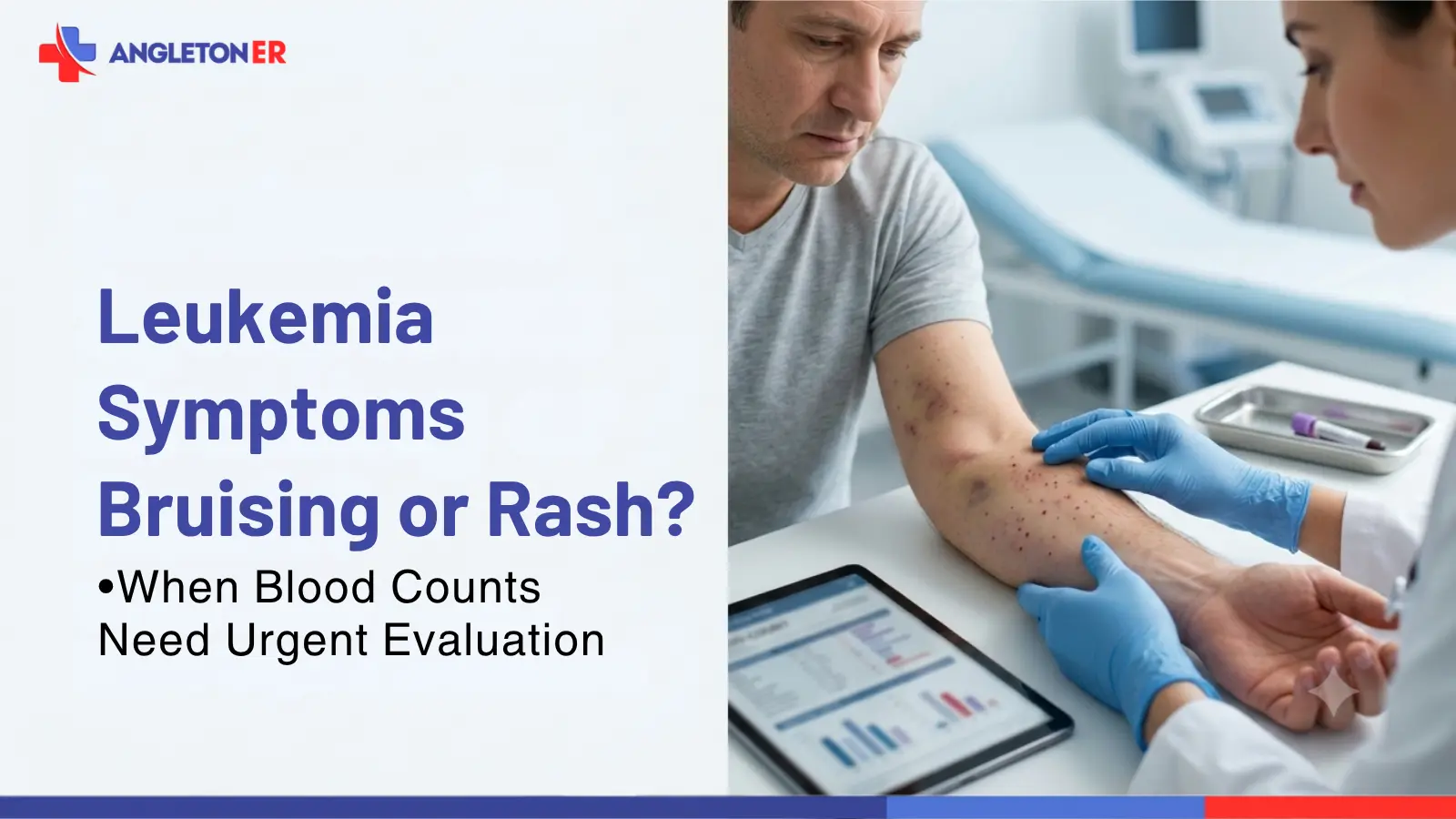
Leukemia symptoms can be difficult to recognize because they often look like common health problems at first. Fatigue, bruising, fever, infections, pale skin, or small red or purple spots on the skin can happen for many reasons. Most bruises or rashes are not leukemia. But when these symptoms are unexplained, keep returning, worsen over time, or appear together, they deserve medical attention.
What Is Leukemia?
Leukemia is a type of cancer that affects the body’s blood-forming tissues, including the bone marrow and blood cells. The bone marrow is where the body makes red blood cells, white blood cells, and platelets. When leukemia affects this process, the body may not produce healthy blood cells in the normal way.
That is why leukemia symptoms often involve problems such as fatigue, infections, bruising, bleeding, fever, weakness, or abnormal blood test results.
The goal here is not to explain every type of leukemia in detail. The most important point for patients is this: leukemia can affect the blood cells your body depends on for oxygen, infection defense, and clotting.
Why leukemia symptoms can be confusing
Leukemia symptoms can overlap with many non-cancer conditions. Easy bruising may happen after minor injuries, from certain medications, or from normal skin changes. Fatigue can come from poor sleep, anemia, infection, stress, dehydration, thyroid issues, or many other causes. Rash-like spots may be related to skin irritation, infection, allergic reactions, or blood-clotting problems.
Because symptoms can look similar, it is not safe to self-diagnose leukemia based on bruising, rash, or fatigue alone. What matters is the full picture: how long symptoms have been happening, whether they are worsening, whether multiple symptoms are present, and whether blood counts are abnormal.
Why Leukemia Can Affect Bruising, Bleeding, Fatigue, and Infection Risk
Leukemia can interfere with normal blood cell production. Different blood cells have different jobs, so changes in those cells can create different symptoms.
Red blood cells and anemia-like symptoms
Red blood cells carry oxygen throughout the body. If red blood cells or hemoglobin are low, a person may develop anemia-like symptoms.
These may include:
- Unusual fatigue
- Weakness
- Dizziness or lightheadedness
- Shortness of breath
- Pale appearance
- Fast heartbeat
- Feeling unusually tired after normal activity
These symptoms can have many causes, but they become more concerning when they are persistent, worsening, or paired with bruising, bleeding, fever, or abnormal blood counts.
White blood cells and infection symptoms
White blood cells help the body fight infection. In leukemia, white blood cells may be abnormal or may not function properly. This can make infections more frequent, persistent, or harder to recover from.
A person may notice repeated infections, fever, chills, feeling unusually sick, or infections that do not improve as expected. These symptoms do not automatically mean leukemia, but they should be taken seriously when they occur with severe fatigue, bruising, bleeding, swollen lymph nodes, or abnormal lab results.
Platelets and bruising or bleeding
Platelets help the blood clot. If platelet levels are low or platelets are not working properly, a person may bruise more easily or bleed more than usual.
This can show up as unexplained bruising, bleeding gums, nosebleeds, unusually heavy bleeding, or tiny red or purple spots on the skin. These symptoms should be evaluated, especially if they are new, repeated, spreading, or occurring with weakness, fever, shortness of breath, or other concerning symptoms.
Leukemia Bruising and Rash-Like Spots: What Patients May Notice
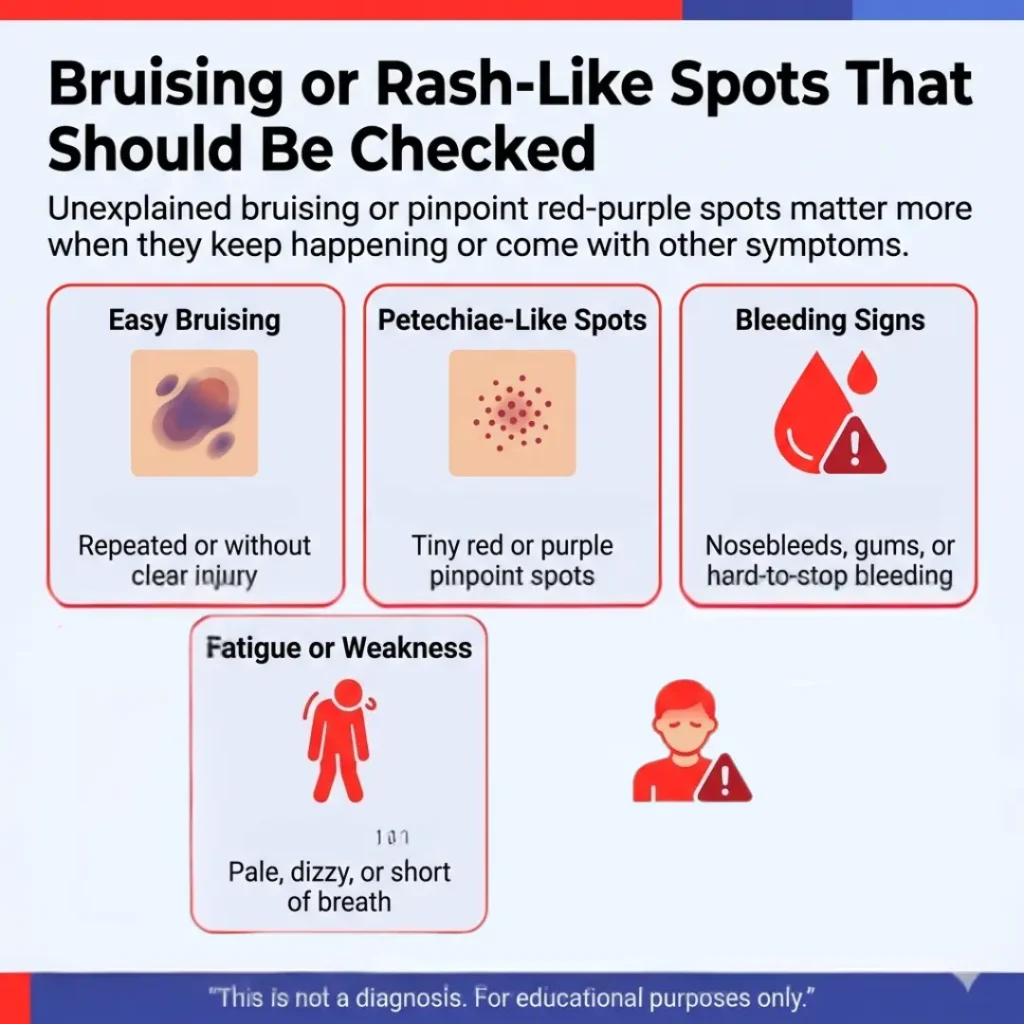
Bruising and rash-like spots are common reasons people become worried about leukemia. It is important to stay calm and look at the pattern. A single bruise after a known bump is usually less concerning than repeated unexplained bruising or bruising that appears with other symptoms.
Easy bruising without a clear injury
Bruising may be more concerning when it appears without a known injury, happens repeatedly, seems larger than expected, spreads, or appears in unusual places.
Easy bruising should be checked more promptly when it happens along with:
- Fatigue or weakness
- Fever or frequent infections
- Nosebleeds or bleeding gums
- Heavy bleeding
- Dizziness or fainting
- Shortness of breath
- Pale skin
- Abnormal CBC or platelet results
Bruising alone can have many explanations, but unexplained bruising plus other symptoms may point to a blood-count problem that needs medical evaluation.
Tiny red or purple spots that may look like a rash
Some people notice tiny red, purple, or pinpoint spots on the skin. These may look like a rash, but in some cases they can represent small areas of bleeding under the skin. These spots are often described as petechiae-like spots.
Not every red or purple spot is leukemia. Skin irritation, infections, allergic reactions, and other conditions can also cause rash-like changes. However, tiny red or purple spots should be taken more seriously when they appear suddenly, spread, do not fade as expected, or occur with bruising, bleeding, fever, weakness, or abnormal blood counts.
Online images are not a reliable way to diagnose the cause of a rash or spots. A medical evaluation is safer when the symptom is unusual, persistent, or paired with other warning signs.
Bleeding symptoms that should not be ignored
Bleeding symptoms can be especially important when platelets are low or clotting is affected.
Do not ignore:
- Nosebleeds that are frequent or hard to stop
- Bleeding gums without a clear reason
- Unusually heavy menstrual bleeding
- Blood in urine
- Blood in stool
- Black or tar-like stools
- Vomiting blood
- Bleeding after minor cuts that is difficult to stop
- Bleeding with weakness, dizziness, or shortness of breath
Heavy bleeding or bleeding that will not stop should be evaluated urgently.
Other Leukemia Symptoms That May Appear With Bruising or Rash
Leukemia symptoms are often more concerning when several symptoms appear together. The following symptoms can also occur with blood-count changes and should be considered in context.
Ongoing fatigue, weakness, or shortness of breath
Fatigue becomes more concerning when it is unusual for the person, does not improve with rest, worsens over time, or interferes with normal activity. Weakness, dizziness, pale skin, or shortness of breath may suggest anemia or another serious condition.
If fatigue is paired with unexplained bruising, bleeding, fever, or abnormal blood results, it should not be dismissed.
Fever or frequent infections
Repeated infections, persistent fever, chills, or feeling unusually sick can be important warning signs, especially when they occur with bruising, bleeding, weakness, or swollen lymph nodes.
A fever with rapid worsening, confusion, dehydration, or severe illness should be treated as urgent.
Night sweats or unexplained weight loss
Night sweats and unexplained weight loss can happen for many reasons, including infections, hormone problems, medication effects, and other medical conditions. They deserve evaluation when they are persistent, unexplained, or paired with swollen lymph nodes, abnormal blood counts, severe fatigue, or frequent fevers.
Swollen lymph nodes
Swollen lymph nodes are common during infections. However, lymph nodes should be checked when they are persistent, painless, hard, growing, or present in multiple areas.
A swollen node that does not improve, especially with fever, night sweats, weight loss, fatigue, or abnormal labs, should be evaluated by a medical professional.
Bone pain or abdominal fullness
Some people with leukemia-related symptoms may notice bone or joint pain. Others may feel fullness in the upper abdomen or feel full quickly after eating. These symptoms are not specific to leukemia, but when they happen with bruising, fatigue, fever, abnormal blood counts, or unexplained weight loss, they may need medical attention.
Acute vs Chronic Leukemia Symptoms: Why the Pattern Matters
Leukemia symptoms do not always appear the same way. Some symptoms develop quickly and feel severe. Others develop gradually and are first noticed through routine lab work or slow changes in energy, infection patterns, or bruising.
Symptoms that come on quickly
Some leukemia-related symptoms may develop rapidly. A person may feel suddenly very weak, short of breath, feverish, dizzy, or seriously ill. Bruising, bleeding, or infection symptoms may worsen quickly.
Prompt evaluation is important when symptoms are severe, rapidly worsening, or affecting breathing, alertness, hydration, or bleeding control.
Symptoms that develop gradually
Other people notice slower changes. They may feel tired for weeks, bruise more easily than usual, get repeated infections, notice swollen lymph nodes, or learn they have abnormal blood counts after testing.
Gradual symptoms still matter. If symptoms keep returning, worsen, or appear together, they should be discussed with a healthcare provider.
Why symptoms alone cannot tell the leukemia type
Symptoms alone cannot confirm leukemia or determine the type. A diagnosis requires medical evaluation and testing. Blood tests may raise concern, but additional testing and specialist evaluation are often needed to understand what is happening and what the next steps should be.
When Blood Counts Need Prompt Medical Evaluation
Blood-count problems can affect oxygen delivery, infection defense, and clotting. Medical evaluation is important when symptoms suggest that red blood cells, white blood cells, or platelets may be abnormal.
Prompt evaluation may be appropriate for:
- Unexplained bruising or bleeding
- Rash-like pinpoint red or purple spots
- Severe or worsening fatigue
- Shortness of breath, dizziness, or fainting
- Frequent infections or persistent fever
- Swollen lymph nodes that do not improve
- Night sweats or unexplained weight loss
- Known abnormal CBC results
- Multiple concerning symptoms happening together
One symptom alone may have many possible causes. But combinations of symptoms deserve more attention, especially if they are new, worsening, persistent, or not explained by a known injury or illness.
ER Red Flags: When Not to Wait
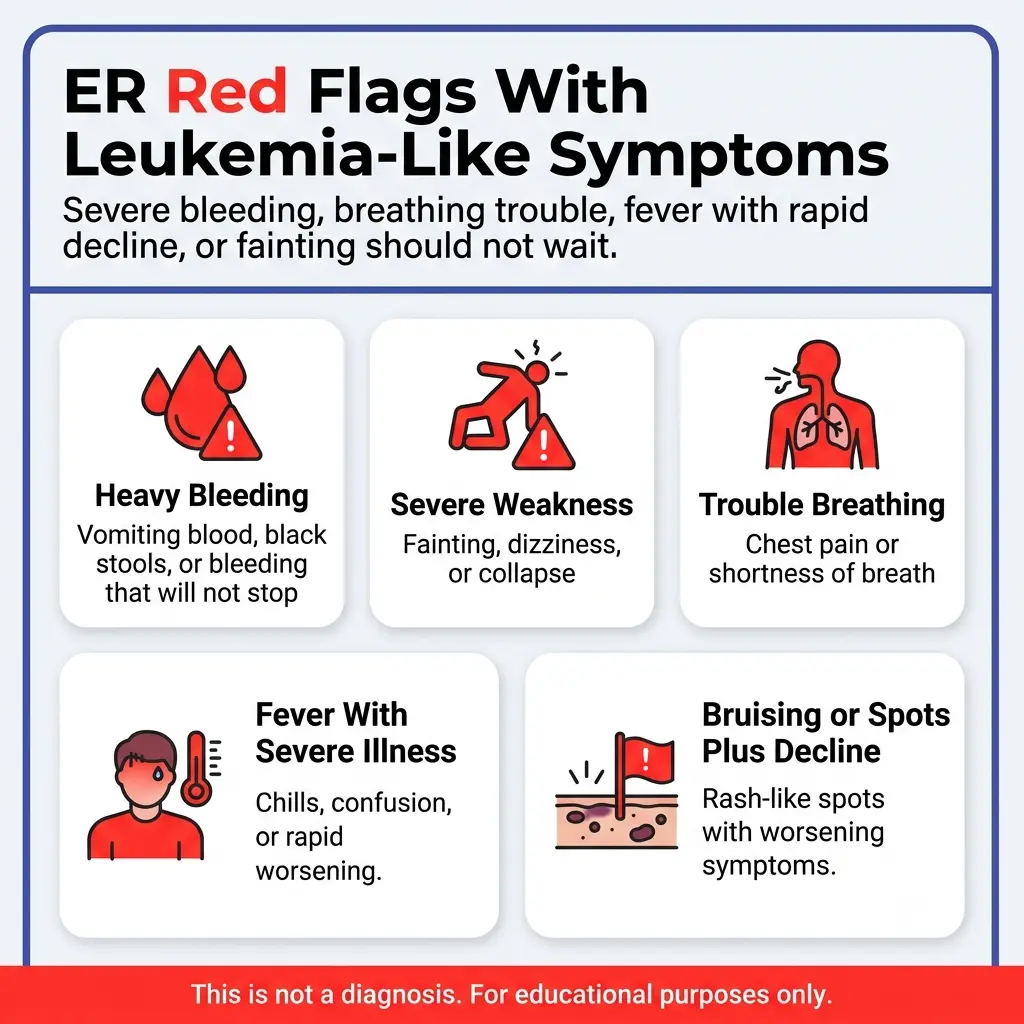
Some symptoms should not wait for a routine appointment. Emergency evaluation may be appropriate when symptoms suggest significant bleeding, serious infection, severe anemia, dehydration, breathing problems, or another urgent condition.
Heavy bleeding or bleeding that will not stop
Seek urgent evaluation for uncontrolled nosebleeds, vomiting blood, black stools, blood in urine, heavy bleeding, or bleeding that is difficult to stop.
Bleeding with weakness, dizziness, fainting, shortness of breath, confusion, or pale skin is especially concerning.
Severe weakness, fainting, chest pain, or trouble breathing
Severe weakness, fainting, chest pain, or trouble breathing can point to a serious blood-count problem, infection, dehydration, heart or lung strain, or another urgent condition.
These symptoms should be evaluated quickly, even if leukemia is only one possible concern among many.
Fever with severe illness or immune concern
Fever should be taken seriously when it occurs with chills, confusion, dehydration, rapid worsening, severe weakness, or feeling seriously ill.
This is especially important for patients with known abnormal blood counts, known cancer, recent chemotherapy, immune-system problems, or a history of serious infections.
Bruising or rash-like spots with worsening symptoms
Bruising or tiny red or purple spots become more urgent when they appear with fever, weakness, bleeding, shortness of breath, confusion, fainting, or rapidly worsening illness.
The concern is not only leukemia. The concern is that the body may be showing signs of a serious blood, infection, or clotting problem that needs timely evaluation.
What to Expect During Evaluation for Possible Leukemia-Related Symptoms
If you seek medical care for bruising, bleeding, fatigue, fever, or rash-like spots, the evaluation usually begins with a careful history, exam, and appropriate testing.
Medical history and physical exam
A provider may ask about:
- When symptoms started
- Whether bruising or bleeding is new or worsening
- Recent fever or infections
- Fatigue, weakness, dizziness, or shortness of breath
- Weight changes or night sweats
- Swollen lymph nodes
- Medications, supplements, or blood thinners
- Recent injuries or illnesses
- Prior abnormal blood tests
- Family or personal medical history
A physical exam may include checking the skin, mouth, lymph nodes, abdomen, breathing, heart rate, blood pressure, and overall appearance.
CBC and related blood tests
A CBC may show anemia, low platelets, abnormal white blood cell patterns, or other changes that help guide next steps. However, a CBC alone may not provide the full diagnosis. It can raise concern and help determine whether additional testing, urgent treatment, or specialist follow-up is needed.
Imaging or additional testing when symptoms point to it
Imaging may be considered if symptoms suggest another urgent issue, such as severe pain, abdominal fullness, swelling, breathing problems, injury, or other concerning findings.
Not every patient needs imaging. Testing depends on symptoms, exam findings, blood work, and clinical judgment.
Follow-up with the right provider
If leukemia or another blood disorder is suspected, follow-up testing is often needed. This may include evaluation by a hematology or oncology specialist. The ER may help identify urgent findings and stabilize serious symptoms, but ongoing diagnosis and management often require additional outpatient or hospital-based follow-up.
What the ER Can and Cannot Confirm
The ER can evaluate severe symptoms and urgent blood-count abnormalities. ER labs may identify anemia, infection patterns, platelet problems, or concerning CBC changes. Emergency care can also help stabilize serious symptoms such as bleeding, dehydration, infection, severe weakness, fainting, or trouble breathing.
However, leukemia diagnosis often requires additional testing beyond the ER visit. Some patients may need specialist evaluation, repeat blood tests, advanced testing, or hospital admission depending on the findings.
Follow-up remains important even if a patient is discharged. If symptoms continue, worsen, or new symptoms appear, do not ignore them simply because one evaluation did not provide a final answer.
Adult vs Childhood Leukemia Symptoms: A Brief Note
Children can have some symptoms that overlap with adults, including fatigue, bruising, fever, frequent infections, bone pain, pale appearance, or unusual bleeding. However, parent-focused guidance belongs in a dedicated childhood leukemia article because children may show symptoms differently and need age-specific evaluation.
Seek urgent care for a child with breathing problems, unusual bleeding, severe weakness, persistent fever, dehydration, confusion, severe pain, or rapidly worsening illness.
What Not to Assume About Bruising, Rash, or Leukemia Symptoms
It is natural to feel worried when you notice bruising, tiny red or purple spots, fatigue, or unusual bleeding. Still, it is important to avoid both extremes: do not panic, but do not dismiss persistent or worsening symptoms either.
- Do not assume every bruise means leukemia. Many bruises have simple explanations.
- Do not dismiss unexplained bruising if it keeps happening, spreads, or appears with other symptoms.
- Do not assume rash-like spots are harmless if they come with bleeding, fever, weakness, shortness of breath, or rapid worsening.
- Do not ignore abnormal blood counts, especially if your provider recommends follow-up.
- Do not delay care for heavy bleeding, severe weakness, fainting, chest pain, or trouble breathing.
- Do not rely on online images to diagnose leukemia rash or petechiae. Skin findings need medical context.
If you are in Angleton or a nearby community and you are experiencing severe weakness, fainting, shortness of breath, heavy bleeding, fever with worsening symptoms, confusion, dehydration, or unexplained bruising with other serious symptoms, Angleton ER provides 24/7 emergency care. Our emergency team can evaluate urgent symptoms, perform appropriate lab testing and imaging when needed, and help determine whether your condition requires immediate treatment, stabilization, or follow-up with the right provider.
Frequently Asked Questions
What are the early symptoms of leukemia?
Early leukemia symptoms can include fatigue, weakness, frequent infections, fever, easy bruising, bleeding gums, nosebleeds, pale skin, night sweats, unexplained weight loss, swollen lymph nodes, or abnormal blood counts. These symptoms can have many causes, so medical evaluation is needed to understand what is happening.
Can leukemia cause easy bruising?
Yes, leukemia can sometimes cause easy bruising if platelet levels are low or platelets are not working normally. Platelets help the blood clot. However, easy bruising does not automatically mean leukemia. It should be checked if it is unexplained, repeated, worsening, or happening with bleeding, fever, fatigue, or abnormal labs.
What does a leukemia-related rash look like?
Some people notice tiny red, purple, or pinpoint spots that may look like a rash. These can sometimes be related to small areas of bleeding under the skin. But many skin conditions can cause rash-like spots, so appearance alone cannot confirm leukemia. A medical evaluation is important when spots are unusual, spreading, or paired with other symptoms.
Are tiny red or purple spots always leukemia?
No. Tiny red or purple spots are not always leukemia. They may happen for several reasons, including infections, irritation, medication effects, or other blood or skin conditions. They should be evaluated promptly if they appear with bruising, bleeding, fever, weakness, shortness of breath, or rapid worsening.
Can leukemia cause fatigue and weakness?
Yes, leukemia can contribute to fatigue and weakness, especially if red blood cells or hemoglobin are low. Fatigue may also happen from infections, poor sleep, stress, dehydration, thyroid problems, anemia from other causes, and many other conditions. Persistent or worsening fatigue should be checked, especially when paired with bruising, bleeding, fever, dizziness, or shortness of breath.
What blood count changes may happen with leukemia?
Leukemia may affect red blood cells, white blood cells, and platelets. A CBC may show anemia, abnormal white blood cell levels or patterns, or low platelets. These findings do not always mean leukemia, but they can help providers decide whether more testing or specialist follow-up is needed.
When should bruising or bleeding be checked urgently?
Bruising or bleeding should be checked urgently if bleeding is heavy, will not stop, or happens with weakness, dizziness, fainting, shortness of breath, black stools, blood in urine, vomiting blood, fever, or confusion. Unexplained bruising with tiny red or purple spots and worsening symptoms also deserves prompt evaluation.
Can the ER diagnose leukemia?
The ER can identify concerning blood-count abnormalities and evaluate urgent symptoms, but a final leukemia diagnosis often requires additional testing beyond the ER visit. The ER can help stabilize serious symptoms, guide next steps, and determine whether hospital care or specialist follow-up is needed.
When should I go to the ER for possible leukemia symptoms?
Go to the ER if symptoms are severe or rapidly worsening, especially heavy bleeding, bleeding that will not stop, fainting, chest pain, trouble breathing, severe weakness, confusion, dehydration, fever with serious illness, or bruising/rash-like spots with worsening symptoms. These symptoms need urgent evaluation whether or not leukemia is the cause.
Are leukemia symptoms different in adults and children?
Adults and children can share symptoms such as fatigue, fever, bruising, infections, pale appearance, bone pain, or unusual bleeding. Children may show symptoms differently, and severe or rapidly worsening symptoms should be evaluated urgently. A child with breathing problems, unusual bleeding, persistent fever, dehydration, severe weakness, or confusion should receive prompt medical care.