
Noticing a swollen lymph node can feel unsettling, especially when it appears suddenly in the neck, under the jaw, armpit, or groin. The good news is that swollen lymph nodes are often related to infections or inflammation. They are part of your immune system, so they can enlarge when your body is fighting something nearby.
At the same time, some lymph node changes should not be ignored. A node that keeps growing, stays enlarged, feels very hard or fixed, or comes with symptoms like unexplained fever, night sweats, weight loss, severe fatigue, or unusual bruising may need medical evaluation.
This article is meant to help you think through swollen lymph nodes calmly and practically. It is not a substitute for medical advice or an exam from a healthcare professional.
What Are Swollen Lymph Nodes?
Lymph nodes are small immune-system structures found throughout the body. They help filter fluid, trap germs, and support the body’s response to infection, inflammation, and illness. When your immune system becomes active, nearby lymph nodes may swell.
A swollen lymph node does not automatically mean something serious. Many people notice enlarged nodes during or after a cold, sore throat, dental infection, skin irritation, or minor wound. The important question is not just whether a lymph node is swollen, but how it feels, where it is, how long it has been there, and what other symptoms are happening with it.
Common places patients notice swollen lymph nodes
Patients commonly notice swollen lymph nodes in the:
- Neck
- Under the jaw
- Behind or below the ear
- Armpits
- Groin
The location can sometimes give clues. For example, swollen nodes under the jaw or in the neck may appear with a throat, dental, sinus, or ear infection. Swollen nodes in the groin may happen with irritation, infection, or wounds in the legs or lower body. But location alone does not confirm the cause.
Why lymph nodes can feel tender, firm, or movable
A lymph node may feel tender when it is reacting to infection or inflammation. Some nodes feel soft and movable, while others may feel firmer. Size, tenderness, firmness, and movement can help a provider understand what may be happening.
However, patients cannot reliably diagnose the cause by touch alone. Infection, inflammation, lymphoma, leukemia, cancer spread, and other conditions can sometimes overlap in how they feel. That is why persistent, worsening, or unusual swelling deserves a proper medical evaluation.
Common Infection-Related Causes of Swollen Lymph Nodes
Infection is one of the most common reasons lymph nodes swell. When your body is fighting germs, lymph nodes near the affected area may become enlarged, sore, or noticeable.
Throat, sinus, ear, or dental infections
Lymph nodes in the neck, under the jaw, or near the ear may swell when your body is responding to a nearby infection. This can happen with a sore throat, sinus infection, ear infection, infected tooth, gum infection, or other irritation in the mouth or throat area.
These nodes may be tender, especially when touched. They may improve as the infection improves. If swelling continues after the illness has passed, grows larger, or is paired with worsening symptoms, it should be checked.
Skin infections or wounds
Lymph nodes can also swell near an infected cut, abscess, rash, insect bite, or irritated skin. For example, a skin infection on the arm may be associated with swollen nodes in the armpit. A wound or infection on the leg may be associated with swollen nodes in the groin.
Signs of a possible skin infection may include redness, warmth, swelling, pain, drainage, or spreading irritation. If these symptoms are getting worse, especially with fever or chills, medical care may be needed urgently.
Recent illness or inflammation
Sometimes lymph nodes remain enlarged for a short time after a viral illness or inflammatory reaction. A node may stay noticeable even after the sore throat, cold, or minor infection has started improving.
That can be normal, but it should continue moving in the right direction. A node that stays enlarged, grows, returns repeatedly, or comes with other concerning symptoms should not be dismissed.
Swollen Lymph Nodes and Cancer Concern: What Features Matter?
It is understandable for patients to worry about cancer when they notice swollen lymph nodes. Most swollen nodes are not cancer, but certain patterns deserve closer medical evaluation.
The goal is not to panic, but to know when it is safer to get checked.
Lymph nodes that stay swollen or keep growing
A lymph node that does not improve over time, continues enlarging, or keeps returning should be evaluated by a medical provider. Persistent swelling does not automatically mean cancer, but it does mean the cause needs to be understood.
This is especially important if there is no clear recent infection, sore throat, dental issue, skin wound, or other obvious reason for the swelling.
Hard, fixed, or painless lymph nodes
Nodes that feel very hard, do not move easily under the skin, or are painless but persistent may deserve closer evaluation. Some infection-related nodes can also feel firm, so this is not a diagnosis by itself.
Still, if a lymph node feels fixed in place, keeps growing, or remains enlarged without improvement, it should be checked rather than watched indefinitely.
Swollen nodes in more than one area
Swelling in more than one region, such as the neck and groin or the armpits and neck, may need medical assessment. Multiple swollen areas can happen with infections or immune responses, but they can also be seen with broader conditions that affect the body.
This is more concerning when multiple swollen nodes appear along with fever, night sweats, weight loss, severe fatigue, unusual bruising, or bleeding.
Swollen lymph nodes with night sweats, fever, or weight loss
Systemic symptoms matter. Medical evaluation is especially important when swollen lymph nodes come with:
- Unexplained fevers
- Drenching night sweats
- Unexplained weight loss
- Severe or ongoing fatigue
- Unusual bruising or bleeding
- Feeling increasingly weak or ill
These symptoms do not prove cancer, but they are reasons not to ignore the swelling. Conditions such as lymphoma, leukemia, significant infections, inflammatory disorders, and other serious illnesses may need to be considered.
Infection vs Cancer Warning Signs: How Patients Can Think About the Difference
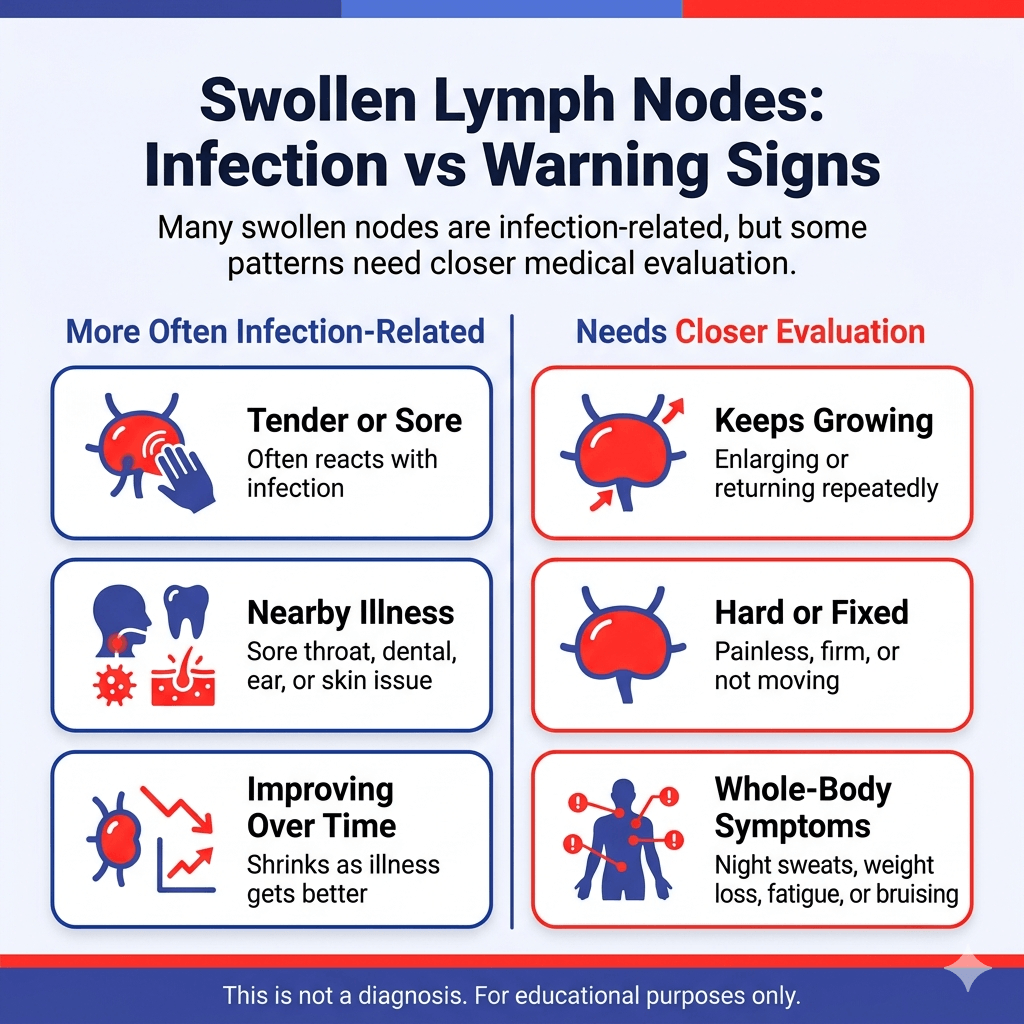
It can help to compare patterns, but swollen lymph nodes should not be treated as a self-diagnosis test. The same symptom can have different causes in different patients.
Signs that may point more toward infection
Swollen lymph nodes may be more likely related to infection when they are associated with:
- Tenderness or soreness
- Warmth or redness nearby
- Recent sore throat, cold, sinus symptoms, or ear pain
- Dental pain or gum swelling
- Skin infection, rash, bite, abscess, or wound
- Fever with a clear infection source
- Swelling near the area that seems infected
For example, a tender neck node during a sore throat may be part of the body’s immune response. A swollen groin node after an infected cut on the leg may also fit an infection-related pattern.
Signs that may require closer medical evaluation
Swollen lymph nodes should be taken more seriously when they are:
- Persistent or not improving
- Getting larger
- Very hard or fixed in place
- Painless but ongoing
- Present in multiple areas
- Paired with unexplained weight loss
- Paired with night sweats or ongoing fever
- Paired with severe fatigue
- Paired with unusual bruising or bleeding
- Worsening despite time or basic care
These signs do not mean a patient has cancer. They mean the swelling needs a medical explanation.
Why a medical exam matters
A provider can look at the full picture: the node’s location, size, tenderness, duration, associated symptoms, recent infections, dental issues, skin problems, medication history, immune status, and cancer history.
This matters because infections, inflammatory conditions, lymphoma, leukemia, cancer spread, and other causes can sometimes overlap. A medical exam helps determine whether watchful follow-up, lab testing, imaging, antibiotics, urgent treatment, or referral is appropriate.
When Swollen Lymph Nodes Need Urgent or Emergency Care
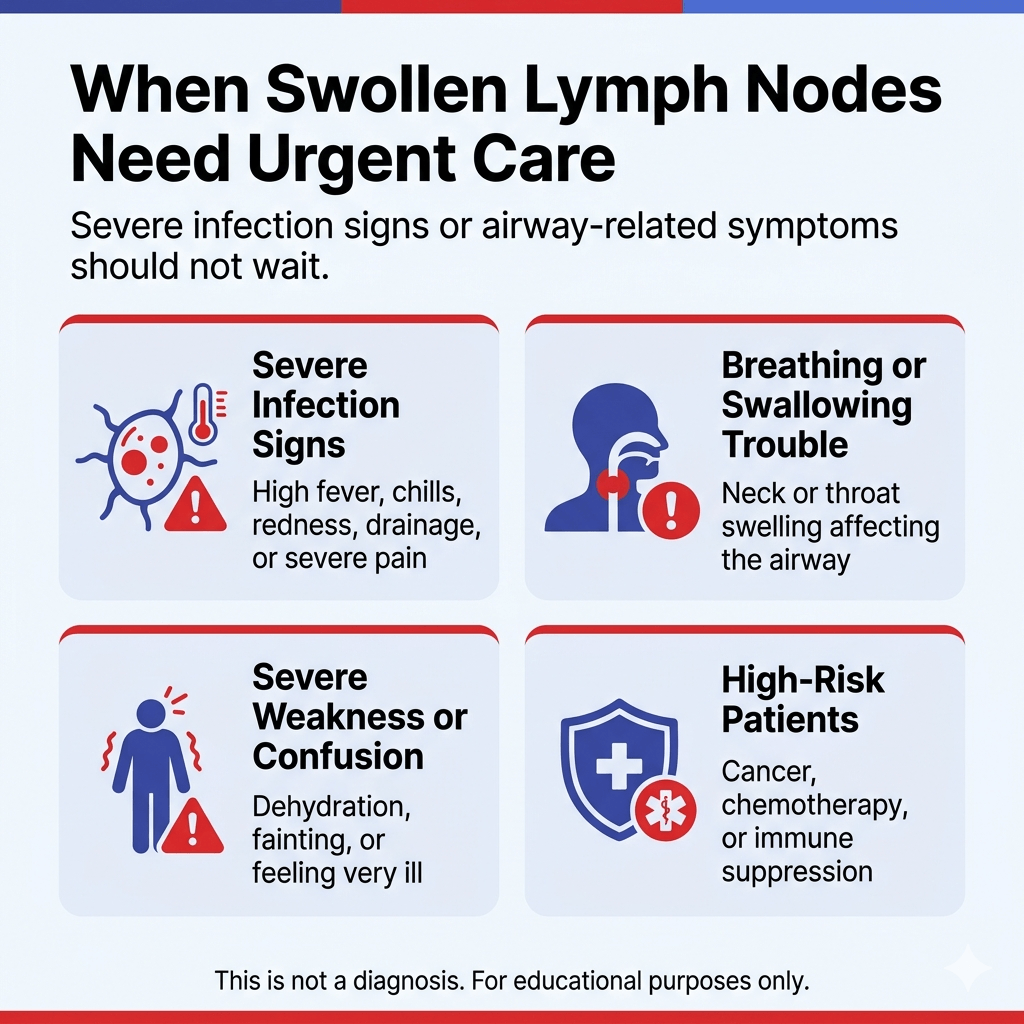
Not every swollen lymph node requires emergency care. But certain symptoms may signal a serious infection, airway concern, dehydration, or another urgent problem.
Severe infection symptoms
Seek urgent medical evaluation if swollen lymph nodes occur with high fever, chills, rapidly worsening swelling, spreading redness, severe pain, drainage, or feeling very ill.
These symptoms may suggest a more serious infection that should not wait, especially if the swelling is worsening quickly or the skin nearby looks increasingly red, hot, or painful.
Trouble breathing, swallowing, or moving the neck
Swelling that affects breathing, swallowing, voice, neck movement, or airway comfort should be treated as urgent. This is especially important if throat, jaw, or neck swelling is getting worse or if the patient feels tightness, pressure, drooling, difficulty speaking, or difficulty swallowing.
Airway-related symptoms should not be watched at home.
Swollen nodes with severe weakness, dehydration, or confusion
Swollen lymph nodes with severe weakness, dehydration, confusion, fainting, or inability to keep fluids down may mean the body is under serious stress. These symptoms need immediate medical evaluation.
Even if the lymph node itself is not the main danger, the overall condition may require urgent care.
Known cancer or immune system problems
Patients with known cancer, recent chemotherapy, immune suppression, transplant history, or serious chronic illness should be more cautious when swollen nodes appear with fever, worsening symptoms, or signs of infection.
In these cases, infections can become serious more quickly, and symptoms that might be mild in another person may need faster evaluation.
When Swollen Lymph Nodes Can Usually Be Checked by a Doctor
Some swollen lymph nodes can usually be evaluated through a regular doctor’s visit, especially when symptoms are mild and improving.
This may include:
- A small swollen node after a recent cold or sore throat
- Mild tenderness without severe symptoms
- A node that is shrinking as the infection improves
- Stable swelling without fever, severe pain, breathing trouble, or rapid growth
- A node near a known mild infection that is getting better
Even when emergency care is not needed, follow-up still matters. A swollen lymph node should be checked if it does not improve, gets larger, returns repeatedly, becomes hard or fixed, or appears with symptoms such as night sweats, unexplained fever, weight loss, severe fatigue, bruising, or bleeding.
What to Expect During a Medical Evaluation
A medical evaluation can help narrow down whether swollen lymph nodes are more likely related to infection, inflammation, or another condition that needs additional testing.
Medical history and physical exam
A provider may ask:
- When the swelling started
- Whether the node is painful or tender
- Whether it has grown, shrunk, or stayed the same
- Whether there has been fever, night sweats, or weight loss
- Whether there was a recent sore throat, cold, dental problem, skin wound, rash, bite, or infection
- Whether there is unusual fatigue, bruising, or bleeding
- Whether the patient has a history of cancer or immune system problems
The physical exam may include checking the size, location, tenderness, and movement of the lymph node, as well as looking for signs of infection nearby.
Lab testing when symptoms suggest a broader problem
Blood work may be used when there are signs of infection, abnormal fatigue, bruising, fever, or other systemic concerns. Lab testing can help identify signs of infection, inflammation, dehydration, or abnormal blood count patterns that may need follow-up.
Blood tests alone do not always explain swollen lymph nodes completely, but they can provide important clues.
Imaging or follow-up when needed
Depending on the node’s size, location, duration, and symptoms, imaging or follow-up testing may be recommended. Imaging can help evaluate deeper swelling or look more closely at an area of concern.
It is important to understand that one emergency visit may not confirm or rule out cancer. The ER can evaluate urgent symptoms, identify serious findings, perform appropriate testing when needed, and guide next steps. Some concerns may require follow-up with a primary care provider, specialist, or additional testing over time.
What Not to Do When You Notice Swollen Lymph Nodes
When you find a swollen lymph node, it is natural to keep checking it. But repeated pressing can irritate the area and make it feel more sore.
Try to avoid the following:
- Do not repeatedly press, squeeze, or irritate the lymph node.
- Do not assume every swollen node is cancer.
- Do not ignore swelling that is growing, persistent, hard, or fixed.
- Do not delay care if swelling comes with breathing trouble, severe pain, high fever, or rapid worsening.
- Do not rely on online photos or descriptions to decide the cause.
A calm, practical approach is best: notice the pattern, pay attention to symptoms, and seek care when the swelling is persistent, worsening, unusual, or paired with concerning symptoms.
How to Track Swollen Lymph Nodes Before Your Visit
If symptoms are not urgent, tracking a few details can help your provider understand what may be happening.
Before your visit, write down:
- When the swelling started
- Whether the node is growing, shrinking, or staying the same
- Whether it is painful or tender
- Any recent sore throat, dental pain, sinus symptoms, ear pain, skin wound, rash, bite, or illness
- Any fever, night sweats, weight loss, fatigue, bruising, or bleeding
- Whether swelling is in one area or multiple areas
- Any personal history of cancer or immune system problems
Do not use tracking as a reason to delay care if symptoms are severe. If swelling is rapidly worsening or comes with breathing trouble, swallowing trouble, high fever, confusion, dehydration, or severe pain, seek urgent medical attention.
If you are in Angleton or a nearby community and swollen lymph nodes are paired with high fever, severe pain, trouble breathing or swallowing, rapidly worsening swelling, dehydration, confusion, or other serious symptoms, Angleton ER provides 24/7 emergency care. Our emergency team can evaluate severe symptoms, perform appropriate lab testing or imaging when needed, and help determine whether your condition needs urgent treatment, stabilization, or follow-up with another provider.
Frequently Asked Questions
Are swollen lymph nodes usually caused by infection or cancer?
Swollen lymph nodes are more commonly caused by infection or inflammation than cancer. They may enlarge when your body is fighting a sore throat, cold, dental infection, skin infection, or recent illness. However, nodes that stay swollen, keep growing, feel hard or fixed, appear in multiple areas, or come with symptoms like night sweats, unexplained fever, weight loss, severe fatigue, or unusual bruising should be medically evaluated.
What do cancerous lymph nodes feel like?
There is no safe way to diagnose cancer by touch alone. Some concerning lymph nodes may feel hard, fixed in place, painless, or persistent, but infections and inflammatory conditions can sometimes cause firm or enlarged nodes too. If a lymph node is not improving, is growing, or feels unusual, it is best to have it checked by a medical provider.
When should I worry about swollen lymph nodes in my neck?
Swollen neck lymph nodes should be checked if they continue to grow, do not improve, feel very hard or fixed, or appear without a clear infection. You should also seek care if neck swelling comes with high fever, severe pain, trouble breathing, trouble swallowing, voice changes, night sweats, unexplained weight loss, severe fatigue, or unusual bruising.
Can swollen lymph nodes be painless and still serious?
Yes. Some swollen lymph nodes are painless and still need evaluation, especially if they are persistent, growing, hard, fixed, or present in more than one area. Painless swelling does not automatically mean cancer, but it should not be ignored if it does not improve or comes with concerning symptoms.
How long is too long for a swollen lymph node to stay enlarged?
A lymph node that stays enlarged without improvement, continues to grow, or returns repeatedly should be checked by a healthcare provider. The exact timing can depend on the situation, especially if there was a recent infection. If the swelling is persistent, unusual, or paired with fever, night sweats, weight loss, severe fatigue, bruising, or bleeding, do not wait to seek medical advice.
Should I go to the ER for swollen lymph nodes?
You should consider emergency care if swollen lymph nodes are paired with high fever, chills, rapidly worsening swelling, spreading redness, severe pain, drainage, trouble breathing, trouble swallowing, confusion, dehydration, or feeling very ill. Patients with known cancer, chemotherapy, immune suppression, or serious chronic illness should also be more cautious when swollen nodes appear with fever or worsening symptoms.
Can blood tests help explain swollen lymph nodes?
Blood tests can sometimes help identify signs of infection, inflammation, abnormal blood counts, dehydration, or other concerns. They may be especially useful when swollen lymph nodes come with fever, severe fatigue, bruising, bleeding, or symptoms affecting the whole body. Blood tests are one part of the evaluation and may need to be combined with a physical exam, imaging, or follow-up.
What symptoms with swollen lymph nodes should not be ignored?
Do not ignore swollen lymph nodes that are growing, persistent, hard, fixed, or present in multiple areas. Also seek medical evaluation for swollen nodes with unexplained fever, drenching night sweats, unexplained weight loss, severe fatigue, unusual bruising or bleeding, high fever, severe pain, spreading redness, drainage, trouble breathing, trouble swallowing, dehydration, confusion, or rapidly worsening symptoms.