
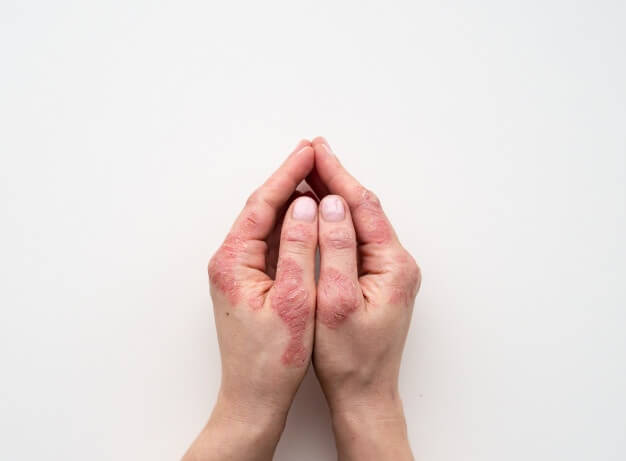
Psoriasis is an autoimmune skin condition that causes skin cells to build up rapidly on the skin’s surface. A common sub-type of psoriasis is pustular psoriasis. Pustular psoriasis can be life-threatening when it is widespread.
Pustules are pus-filled bumps. They can appear under the skin, in the mouth, or inside the nail. The pus-filled bumps join together and burst open about 24 to 48 hours after they appear. Read on to learn more about pustular psoriasis.
These bumps are typically white or yellow and can be quite painful, often surrounded by areas of inflamed or reddened skin.
It’s important to know that the pus in these pustules is not caused by an infection—it’s a result of inflammation. The pustules are sterile, which means they do not contain bacteria and are not contagious. So, while they may look alarming, you can’t catch pustular psoriasis from someone else.
Is pustular psoriasis something you can catch?
No need to worry—pustular psoriasis is not contagious. Even though the pus-filled bumps might look alarming, they don’t carry bacteria or infectious agents. That means you can’t catch it from someone else, and it won’t spread to others through touch or close contact.
What is Pustular Psoriasis?
Pustular Psoriasis is also known as Pustulosis. This skin condition is a rare form that mainly shows up on the palms of the hands and the soles of the feet. It affects about 3% of Psoriasis patients. It usually affects people between the ages of 15 to 35 years old.
It can also affect younger children, but it is uncommon for children under 10 years old to have it. Pustular Psoriasis is painful and can be destructive.
What are the Types of Pustular Psoriasis?
Palmoplantar Pustulosis (PPP)
Palmoplantar Pustular Psoriasis is characterized by blisters on the palms and soles of the feet. The pus-filled patches can brown, peel off, or crust over. Cracks can also appear on your skin. Smokers are most likely to get PPP. Psoriasis of this kind may appear and disappear.
Von Zumbusch Pustular Psoriasis
General pustular psoriasis (GPP) or von Zumbusch [vahn zuhm-BOOSH] psoriasis presents widespread symptoms. This type appears suddenly and rapidly and is often associated with a fever, chills, severe itching, alterations in heart rate, exhaustion, and weakness. Psoriasis of the gingival plaque type is the most serious, potentially fatal form.
Acropustulosis
Small, very painful lesions pop up on your fingertips or toes. The pain can make it hard to use your fingers or toes. It can sometimes cause harm to nails or even to bones.
Acrodermatitis Continua of Hallopeau (ACH)
ACH is another uncommon form of pustular psoriasis. It usually targets only the tips of the fingers and toes, often around the nails. ACH tends to start after minor trauma or an infection in the area, and is sometimes mistaken for a stubborn infection rather than a skin condition.
Typical signs include persistent pustules, redness, and scaling at the very ends of the fingers or toes. Over time, ACH can cause nail changes or even lead to damage to the underlying bone if left untreated. This type is extremely rare, but it’s important to recognize since it can become long-lasting and hard to treat.
How is Pustular Psoriasis Diagnosed?
If you observe any blister, pus-filled patches, or a rash that does not get better in a few days, you need to consult your doctor, who will help you find a solution before it gets worse.
If you visit an Angletoner emergency room, our doctors may perform a comprehensive blood count to check for signs of elevated inflammation or abnormal white blood cells.
If you have pustular psoriasis, your blood work may indicate decreased lymphocytes, a white blood cell. When evaluating a pustule, our doctors might take a sample and examine it.
What Triggers Pustular Psoriasis?
While the precise cause of pustular psoriasis remains a bit of a medical mystery, we do know that the immune system plays a starring role. In pustular psoriasis, your body’s defense system goes into overdrive, causing skin cells to multiply at a breakneck pace. Normally, skin cells renew themselves about once a month. But with psoriasis, this process accelerates, leading to a rapid pileup of extra skin cells that can result in inflamed, pus-filled patches.
But why does this happen? Several triggers can push the immune system into action and set off an outbreak of pustular psoriasis, such as:
- Certain medications (including some antibiotics, steroids, or when suddenly stopping prescribed drugs)
- Too much sun exposure or severe sunburn
- Bacterial infections (like Strep or Staph)
- Hormonal changes, particularly during pregnancy
- Periods of high stress
It’s also worth noting that people with psoriasis sometimes face other related health concerns. For instance, joint pain or swelling may accompany skin symptoms—a condition called psoriatic arthritis—which occurs in about one in three individuals with psoriasis.
So, if you experience new symptoms or ongoing flare-ups, be sure to speak with your healthcare provider to explore possible triggers and find the best approach for managing your condition.
Many factors may trigger Pustular Psoriasis. They include:
- Exposure to too much ultraviolet (UV) light
- Stress
- Injury
- Alcohol
- Pregnancy
- Certain drugs like Penicillin (antibiotic), Nonsteroidal anti-inflammatory drugs (ibuprofen, naproxen), Calcipotriol (a psoriasis drug), etc.
- Steroids
- Unidentifiable reasons
How Do You Treat Pustular Psoriasis?
Several treatment options exist for pustular psoriasis, including phototherapy, topicals, oral medications, and biologics. Depending on the severity of your symptoms and your medical history, you and your healthcare provider will decide on the best treatment plan.
How Can You Prevent Pustular Psoriasis?
It can be highly distressing physically and emotionally when you have pustular psoriasis. Because it has such a wide range of causes, you have little control over it. However, you can lower your risk by doing the following things:
- Quit smoking
- Manage your weight
- Avoid stress
- Avoid excessive sunlight
- Reduce your alcohol intake
What Is the Long-Term Outlook for Pustular Psoriasis?
Pustular psoriasis is a lifelong condition that tends to come and go. You may go through stretches where your symptoms disappear, only to have them show up again later. There isn’t a cure yet, but the good news is that treatment options have improved a lot over the years, making it easier to get flares under control and reduce discomfort.
Proper treatment and ongoing care can help you manage symptoms and lower your risk of other health problems linked to psoriasis, such as joint pain (psoriatic arthritis), heart issues, or even depression. Staying on top of your treatment plan and working closely with your healthcare team can make a big difference in your quality of life.
With the right approach and some lifestyle changes—like those mentioned above—many people are able to keep pustular psoriasis in check and live active, fulfilling lives.
Conclusion
It is common for pustular psoriasis to make you feel anxious, but treatment can help manage it. There are several ways to treat it, depending on the type, how often it flares, how you respond to treatment, and how healthy you are.
While there is currently no cure for pustular psoriasis, today’s treatments are more effective than ever and can help improve your symptoms, reduce inflammation, and lower the risk of developing related conditions such as psoriatic arthritis, heart disease, obesity, diabetes, and depression. Ongoing research continues to advance treatment options, giving hope for even better management—and possibly a cure—in the future. Managing your psoriasis isn’t just about controlling skin flare-ups; it’s also about protecting your overall health and well-being.